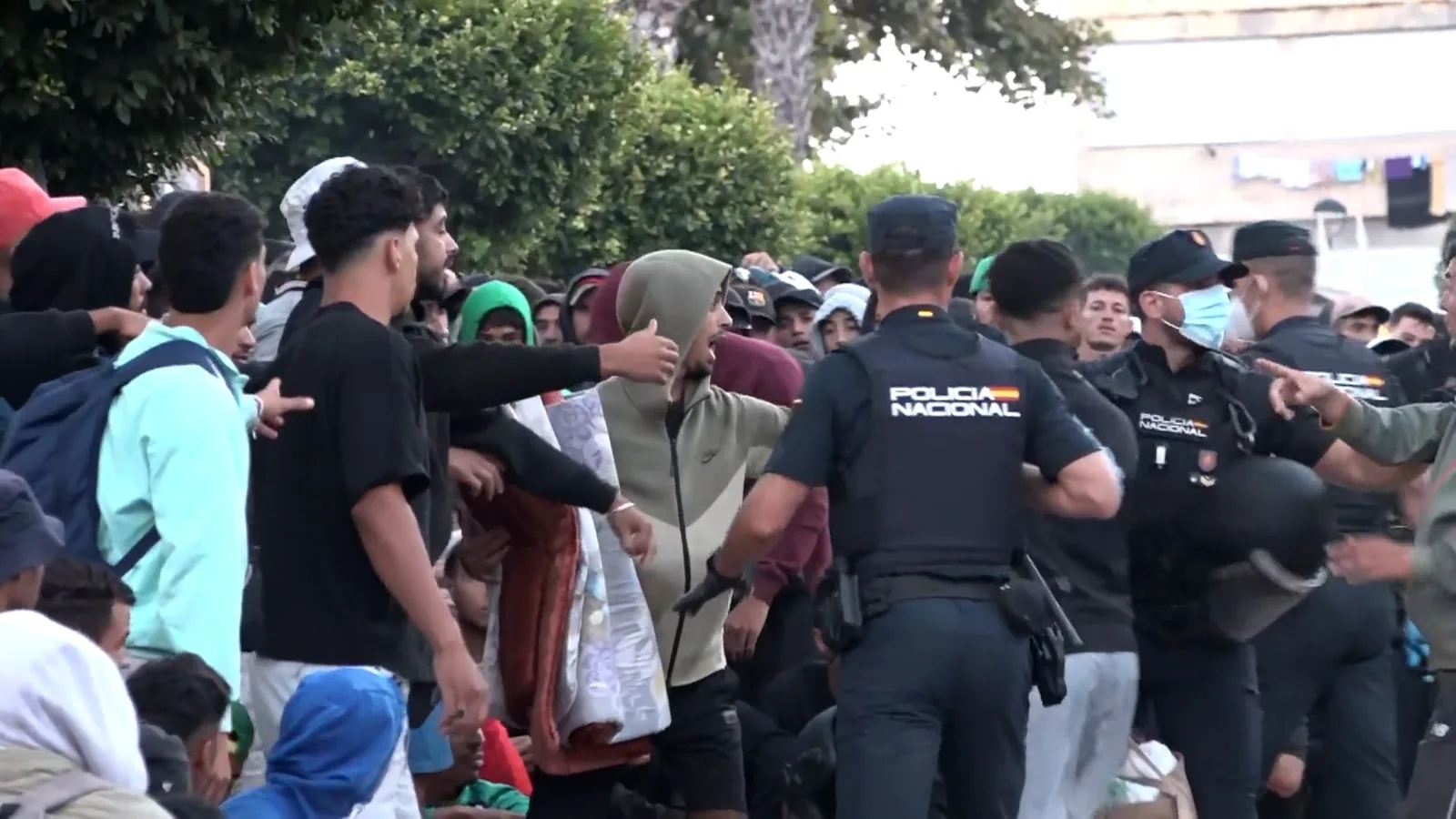






It is already noon at the Spanish-Moroccan border when two buses from Nejme Chamal, a transport company based in Tangier, start their engines. About fifty riot police officers board, still carrying their shield, baton, and a thick brown wool blanket. They move quickly and silently, with exhausted expressions after 48 hours of deployment in the hills surrounding the border city of Castillejos. “Come on, come on,” the driver shouts in Arabic while banging on the window just before speeding off from the square. They are eager to finally return home.
Read more Margarita Robles, sobriety amid the general madness
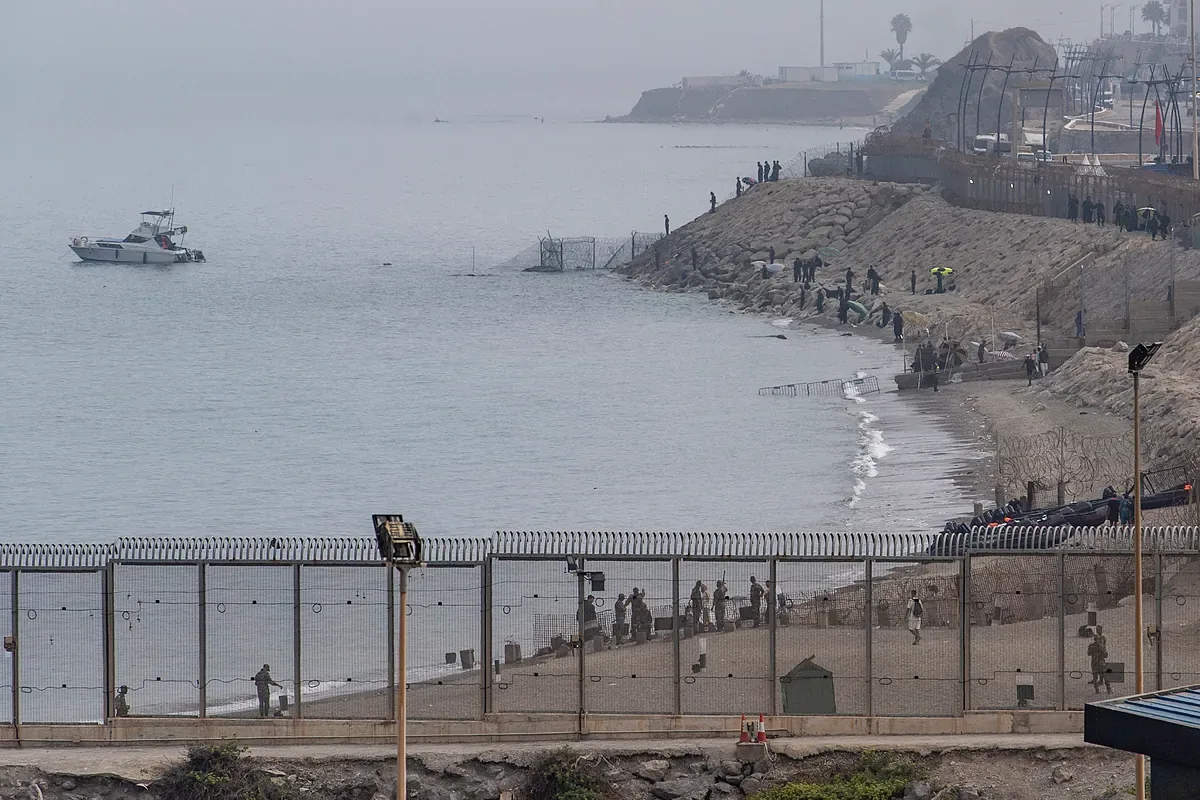
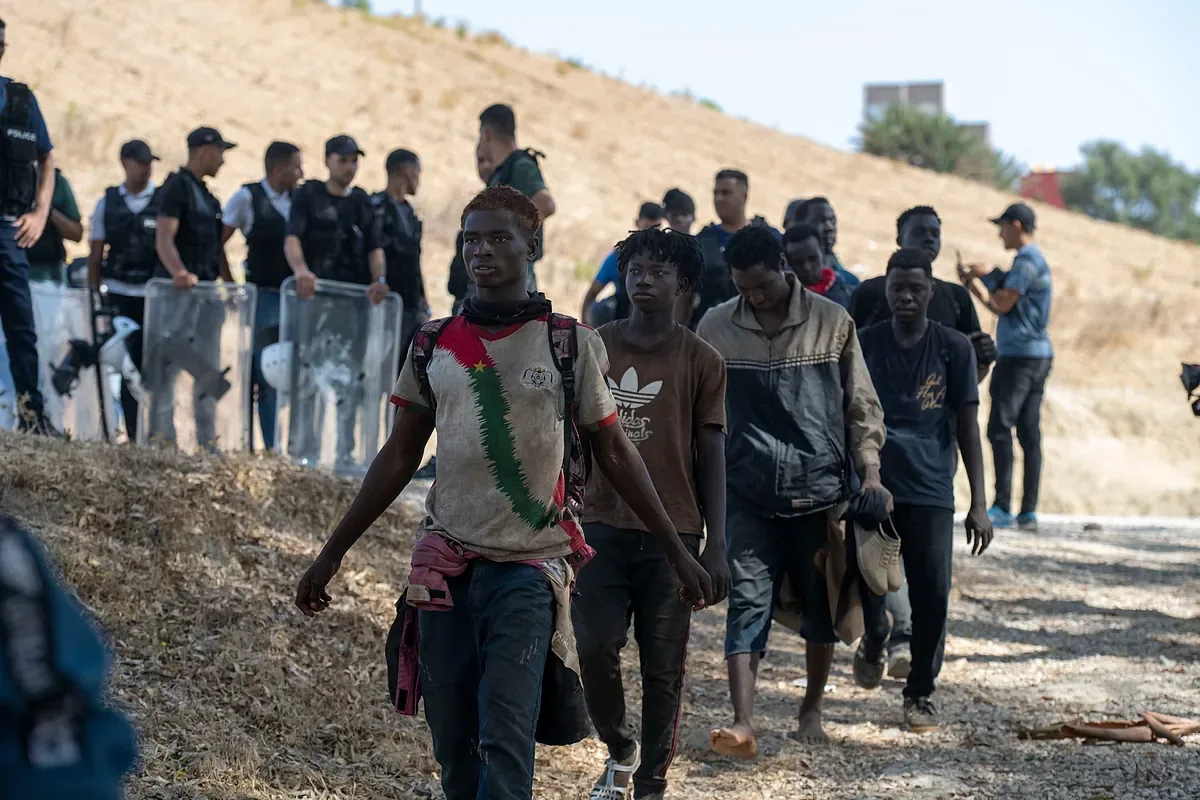
It is the day of the major de-escalation of the operation set up by the Alaouite regime to show its muscle in border control. On Friday, thousands of police, soldiers, and spies were amassed in every corner of the border city of Castillejos. On Saturday, this operation reached its peak, including a choreographed battle against three hundred sub-Saharan Africans who were allegedly trying to reach Ceuta. And today normality returns to the border post, where the bosses smile relaxed after having fulfilled their mission: that the call of the #haraga, the viral campaign to cross the border en masse on April 15, would be a resounding failure.
Where there were previously six riot trucks, this Sunday only two remained. Instead of a hundred ‘milk trucks’, about twenty were enough. And Abdel’s little stand, which literally made a fortune with the operation these days, served dozens of strong coffees to celebrate the ‘new normal’ that now reigns at the border.
Gone was the ghostly Saturday, when the border crossing was almost deserted due to the panic caused by the #haraga. This morning, however, dozens of cars crossed into Ceuta loaded with smiling passengers, who were preparing to spend a day shopping and having coffee in the Spanish enclave. “I want a dress for a friend’s birthday,” said Fátima, a Moroccan woman in her twenties traveling in one of the taxis transporting pedestrians from the Moroccan checkpoint to the border.
Everything went according to the plan drawn up by the bigwigs in Rabat. Two weeks ago, a crowd of 75,000 migrants broke through all controls to ‘storm’ the streets of Ceuta. Right after, rumors spread that Moroccan youth would repeat the move on April 15, taking advantage of the holiday in Spain that Saturday. And the subsequent proto-war display at the border achieved exactly what it sought: hundreds of headlines in the European press so that the bureaucrats in Brussels are clear that, if it wishes, the Rabat regime is capable of vacuum-sealing its borders with Ceuta and Melilla.
The pending question is what will happen when the Moroccan government completes its de-escalation, the borders start to become porous, and the autonomous cities again seem desirable to the local youth. Migration experts say that the misadventures of the tens of thousands of young people who lived a few days of misery in Ceuta before returning home will serve as a “vaccine” for a limited time. Its long-term effect, however, is more than doubtful.
“The Moroccan government has sent its message loud and clear: the Ceuta border operates at its whim,” says a Spanish official specialized in illegal immigration. “Now it is up to us to react and show what cards we hold.”
Read more Raúl Martín (Martínez Family): «The need to eat prepared dishes keeps growing and will not stop»