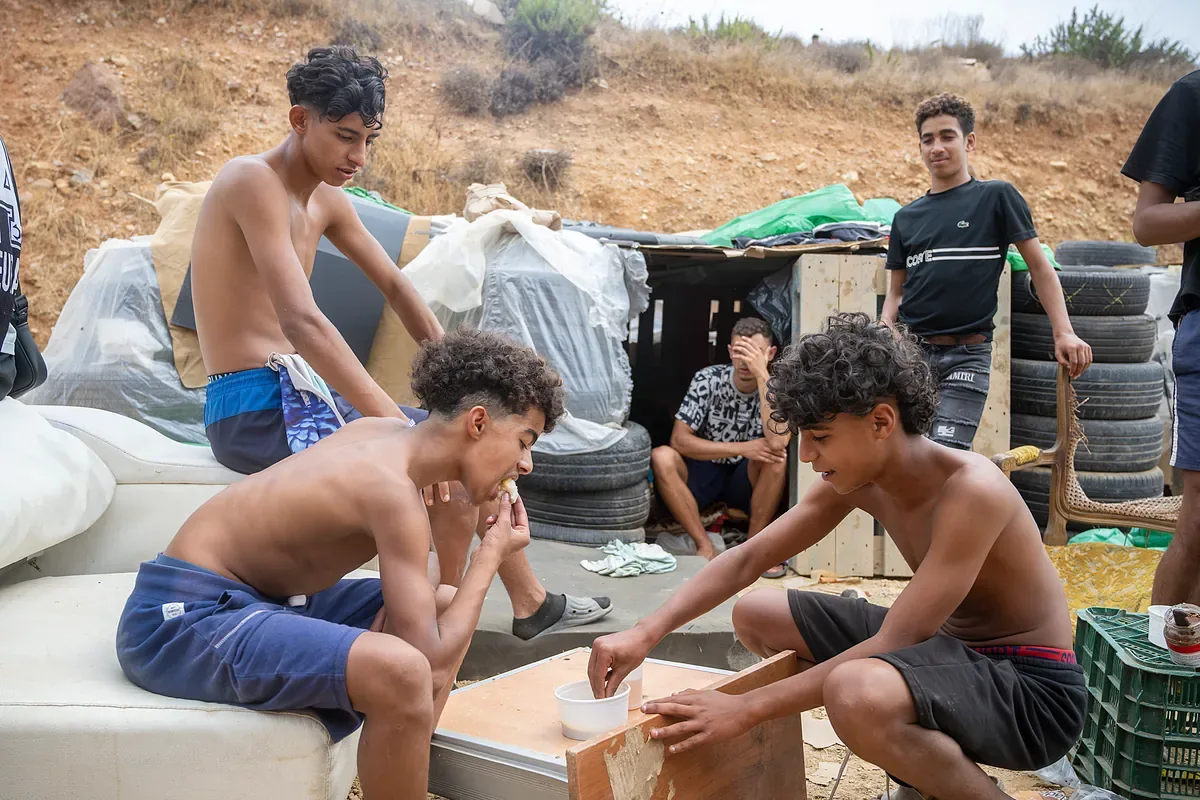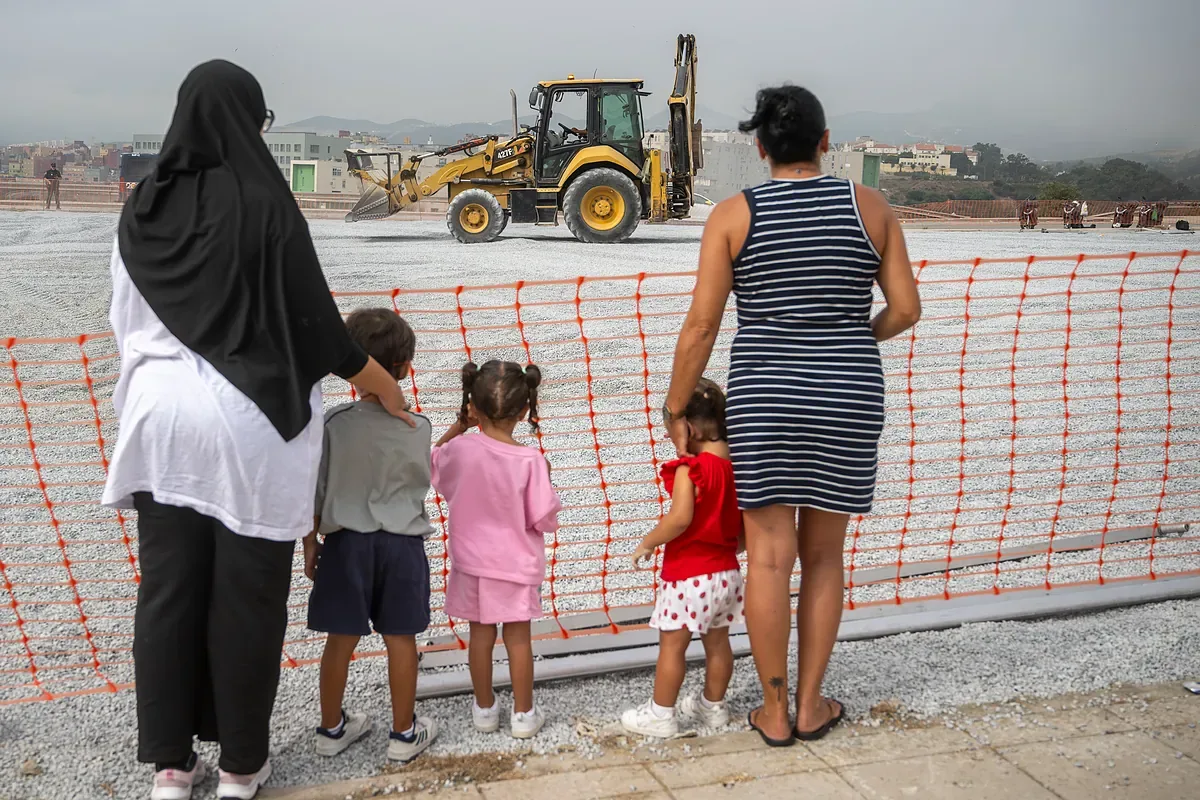






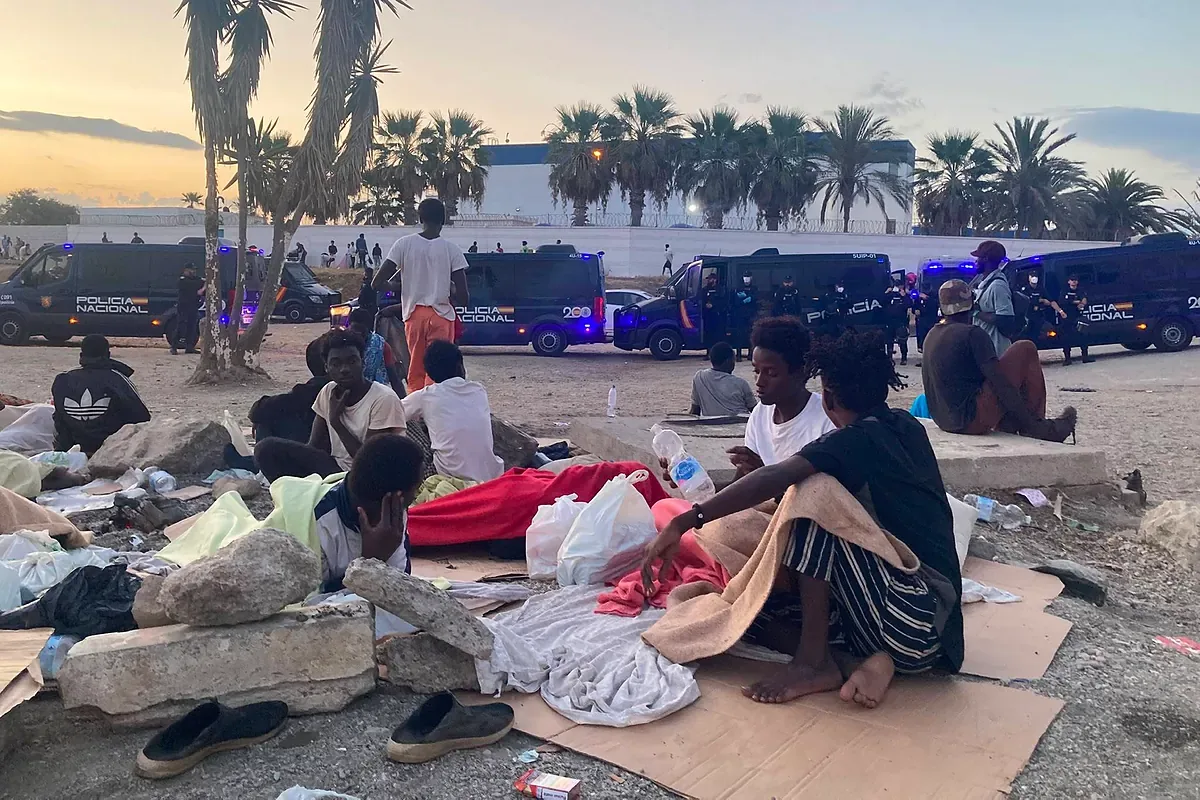
A huge operation by the National Police and Civil Guard cordoned off, at 7:30 a.m. this Thursday, the Trampolín beach, in Ceuta, to evacuate the more than 3,000 sub-Saharan and Maghrebis who occupy it entirely, all of them coming from the jump from Morocco on July 30.
Read more Israel plans the construction of a death corridor for Palestinians with a spectator stand
About thirty police vans arrived at the site just at dawn, at 7:21 a.m., closing off a half-kilometer-long perimeter around the migrants, who had been camping on the beach for nearly a week in an improvised shantytown built in record time with reeds, ropes, and cardboard.
The Interior Ministry’s intention is to transfer the Maghrebis and sub-Saharans to one of the four temporary stay centers being set up in the city of Ceuta, to assess their asylum requests, and for most of them to begin the process for their return to Morocco.
The operation, however, was extremely risky. The gathered migrants have been living in inhumane conditions for three weeks, receiving only one meal a day, relieving themselves in the sea, and living in absolute precariousness, which could logically hinder their cooperation—aside from the fear of being deported again, which they themselves express to anyone who asks.
EL MUNDO was able to verify from inside the camp how ministry officials shouted at the migrants to remain calm at the start of the deployment, which is taking place as these lines are written.
Equipped with masks, the agents deployed around the gathered migrants. All of them men, since no women sleep in the shantytown. The migrants, who were still stretching, began to walk in all directions, but two ministry technicians, helped by a translator, urged them to sit down and wait. The migrants obeyed the order.
The decision to evacuate the beach and take the migrants to the two new centers was made, according to EL MUNDO, on Wednesday night, when the city’s police chiefs and members of the State Secretariat for Security decided to dismantle the place, where the migrants had been living for almost a week, with some groups staging an aborted hunger strike to request asylum, and others establishing everything from a small clothing exchange market to a kind of improvised mosque/prayer space.
Read more Cover of EL MUNDO on Thursday, August 20, 2026
Neighborhood protests
The unsanitary conditions at the site are total. Every afternoon, the Red Cross distributed about 4,000 food rations after a long control ritual with which the Police seemed almost to want to sedate the sub-Saharans and Maghrebis. The shantytown was also set up next to a residential area of villas in Ceuta, La Colina, whose neighbors have been complaining for weeks about coexistence problems.
The absolute unsanitary situation threatened to cause very serious humanitarian problems in Trampolín, where Red Cross teams and volunteer doctors have been working for days. Only a few makeshift showers had been installed, and the more than 3,000 migrants used two urinals and the two showers on the beach. The situation was potentially very dangerous and the Government could not risk a greater public health problem.
Ministry officials performed the same ritual with the migrants as is used to give them food, but this time to get them off the beach. First, they were asked to sit down, and then they were asked to start getting up, in groups of about thirty, to herd them towards a pier in groups, in a typical scene from refugee camps and large war exoduses. The migrants, asking if they were being taken back to Morocco, obeyed, and the operation, for now, is proceeding without incidents.
The migrants will be taken to the Loma Margarita and El Embolsamiento centers, hastily built by the Government due to the extreme situation. “No Morocco, no Morocco!”, the technicians shouted to the migrants to lead them to the centers where their data will be reviewed and expulsion processes will begin.
The operation, directed in non-police matters by the Ministry of Inclusion, will rehouse 1,800 people in public resources, but the evacuation affects all the migrants on the beach and also those in nearby hills such as Loma Colmenar.