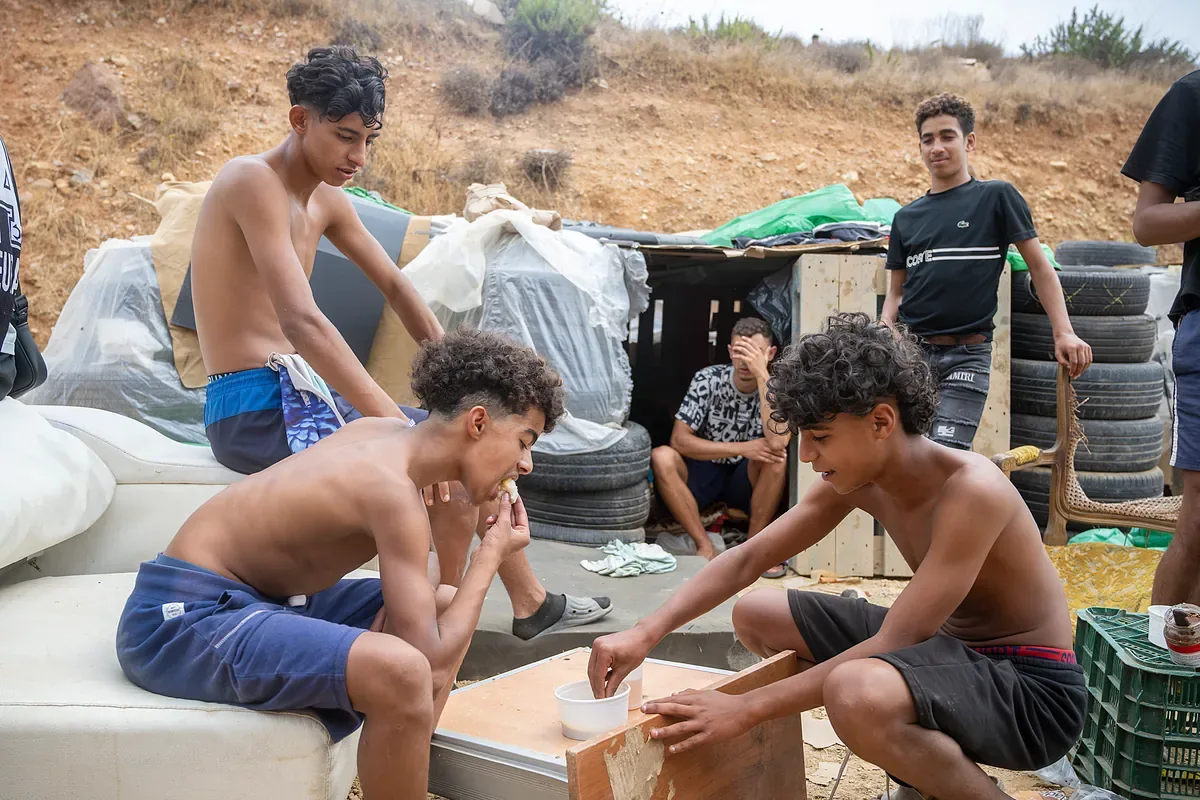







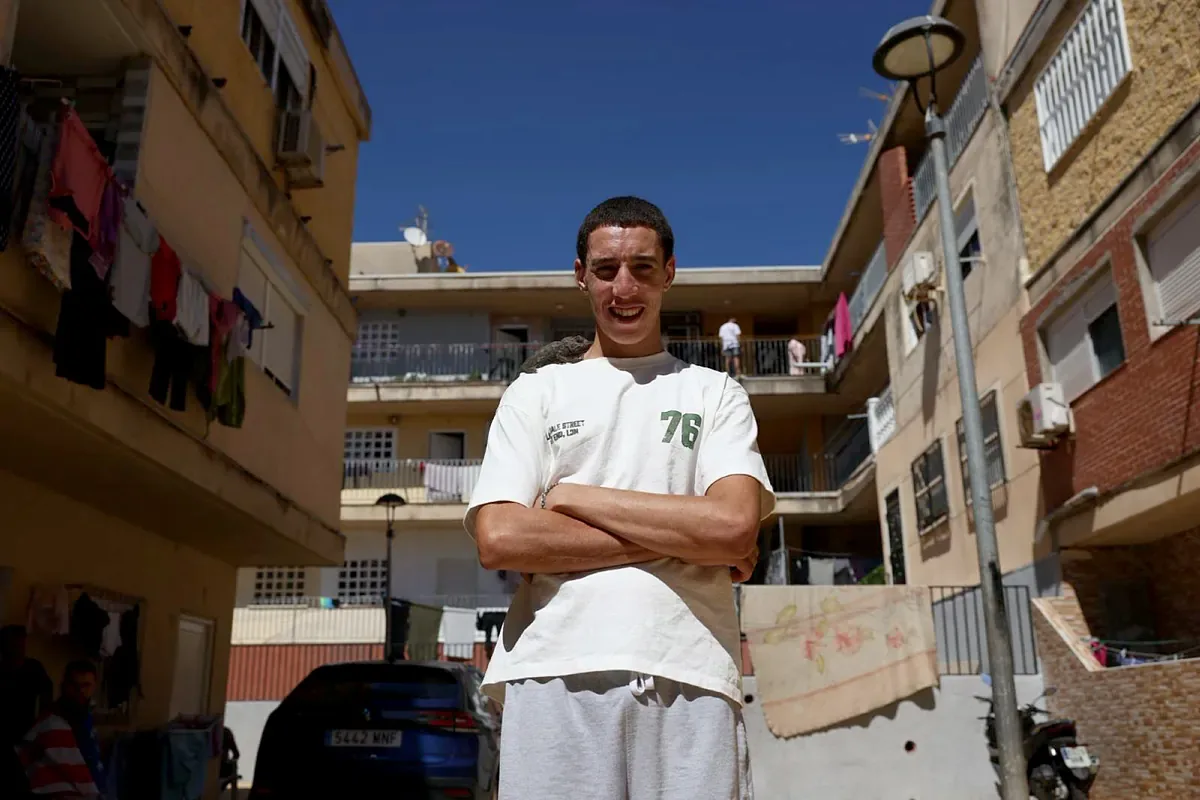
The family of Dina, 23 years old, is the most hospitable in all of Loma Colmenar, a working-class neighborhood less than a kilometer from the border with Morocco. Without prior notice, two large trays of delicious lamb couscous come out of the kitchen destined for the communal courtyard of their block. The immigrants who have been gathering there for days devour the stew almost unable to believe their luck, at such a pace that they seem like cartoons in double speed.
A third steaming tray awaits us in the living room, filled with Arabic ornaments and with a huge sofa that occupies three of the four walls. The young hostess, who works as a flight attendant on the Ceuta-Algeciras ferry, encourages tasting the mother’s stew before it cools: “Don’t be shy!”.
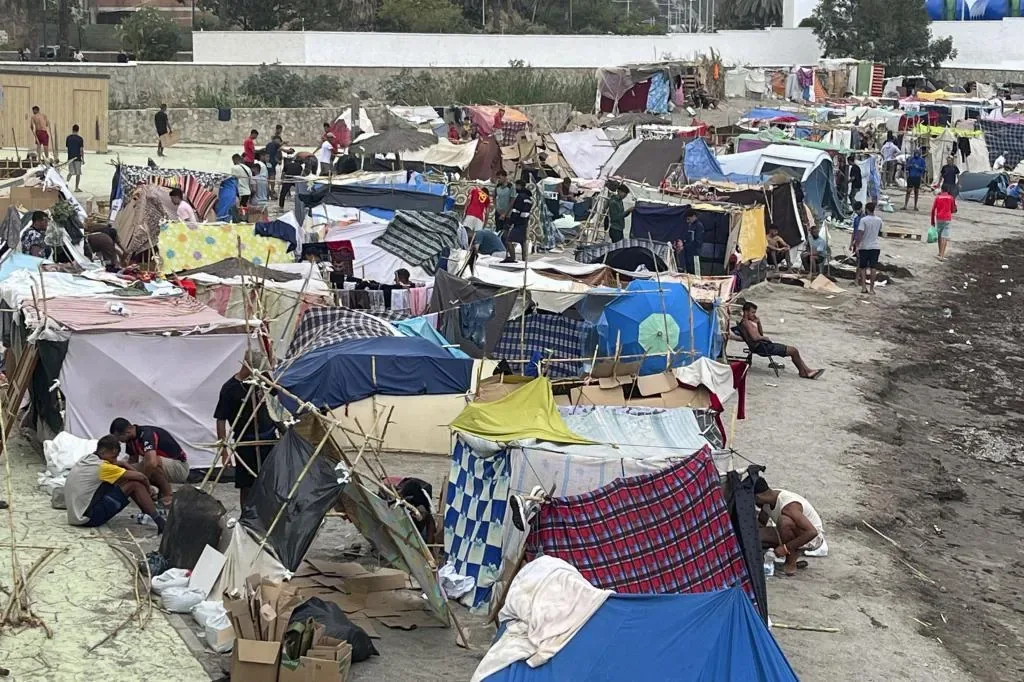
But no one should confuse the warmth of Dina’s family with any kind of support for the “invasion” that the neighborhood is suffering. More than a thousand immigrants have been crowded through this maze of streets for days, waiting to get a spot in the tents being set up there. So far, the enclosure only shelters about 700 souls, but it is expected to soon double its capacity.
“I want them out of here”, she exclaims. “Let them all go back or, if not, put them on a boat bound for the Peninsula, which is very big. We need to recover normality.” It was Dina herself who a few days ago, when the authorities brought the migrants from Playa del Trampolín there, called 112 to demand more police presence. And, although she is not a fan of demonstrations, she led the neighborhood protest in the streets against the arrival of the Moroccans. “Don’t call this normality, because it isn’t,” she states. “Ask any Ceutan, and they will tell you the same: that the only thing they want is for them to leave wherever.”
Her diagnosis is unanimous among the residents of Loma Colmenar, full of working-class Ceutans and more than accustomed to the mix of creeds, languages, and skin tones. It is difficult to label the residents of a neighborhood where most are descendants of Moroccans as simple racists. Here Arabic is not only spoken privately in the majority but also facilitates conversations between neighbors and newcomers. It also helps defuse conflicts at nightfall, when fights among migrants abound and drug dealing helps to stir up tempers.
“I’m not racist, I just want to recover my neighborhood”, agrees Hudefia, 19 years old, who today boasts a new pet: a chameleon given to her by “an old man” from the center. Son of a cleaning worker and a Carrefour stocker, the young man chats kindly with the Moroccans crowded in the courtyard of his block, a kind of three-story corrala painted yellow. Next to him, however, a friend says he carries a pepper spray can and has not hesitated to use it against more than one Maghrebi.
Hudefia confesses that he was upset by the images on Thursday, with shacks set on fire by an exalted minority, but even so, he has attended the protests and defends the “vast majority” of neighbors who demonstrate peacefully every afternoon. “I know migrants are human too, but we need them all to leave,” he concludes.
A medical emergency interrupts the chat with the neighbors. A 17-year-old red-haired Moroccan nearly loses consciousness while trembling wrapped in a blanket despite the August heat. The immigrants say no one pays attention when they call 112, so they ask for Spanish help. They are right: when a voice with a peninsular accent calls for help, a patrol soon appears.
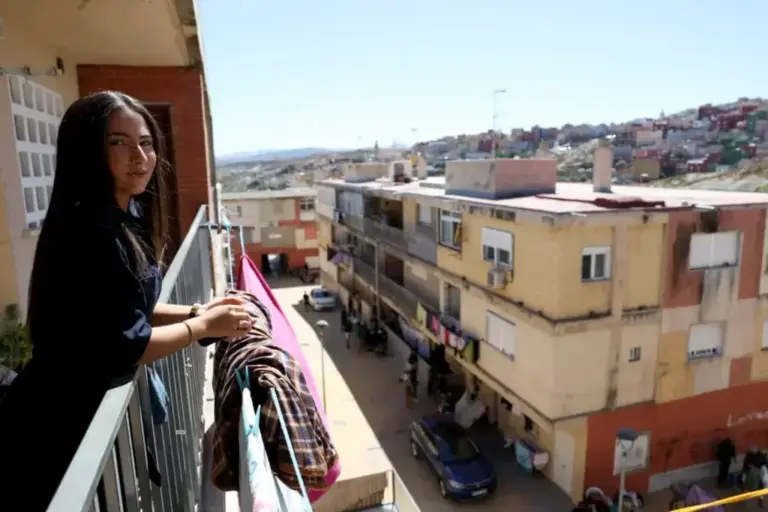
On the third floor, a neighbor literally makes her August with her small grocery store, turned into the most popular corner for newcomers. Next door lives Naryis, 19 years old, a saleswoman at a perfume shop downtown, who attends us after finishing her shift. She says she no longer goes out after dark. She is terrified of the crowd waiting for a spot in the shelter. “Now they call us racists for being Ceutans, but at the same time there are Christians who insult us for being Muslims,” she laments. “There is a lot of confusion, but I only have one thing clear: we need them out of our neighborhood.”
It is true that the day dawned poisoned by the images from the previous day, with stalls on fire and a sit-in against food distribution by an NGO. Volunteers had to listen to chants against them –“The Red Cross is a mafia!”– from the same people with whom they share bars, beaches, and schools all year round. “We are 95% of Ceutan origin and it hurts us, but we only think about the good of the city and do not want to fuel the controversy,” says one of the volunteers who were able to carry out their work without problems yesterday over the phone.
Deep down, it is all part of the “cognitive dissonance” that Marina Villarrúa, a 29-year-old psychologist, detects in herself and most of her neighbors. She thinks a thousand different things at once, depending on whether compassion for migrants or anger at daily discomfort dominates her. But above all, she feels a viscous sadness that stains everything. “The Marina from a few months ago would hate the Marina of today, who even empathizes with the feelings of those who burn shacks of poor people,” she admits.

It is the logical conclusion of the calculation that thousands of caballas have reached in these 30 days of impossible coexistence with migrants: that to recover their city, the newcomers must leave on their own. And, to achieve this, the only way they can think of is to make life as uncomfortable as possible for them, even if by questionable methods.
Last night, for example, a massive protest was called next to Playa Benítez, where hundreds of Moroccans are crowded. However, the police seemed better prepared to keep distances between both sides than on previous days.
“What does make me laugh, and I cannot tolerate in any way, is one thing,” Marina concludes. “That people from a TV studio who have not lived with women wearing hijabs since they were little come to call us Ceutans racists.”