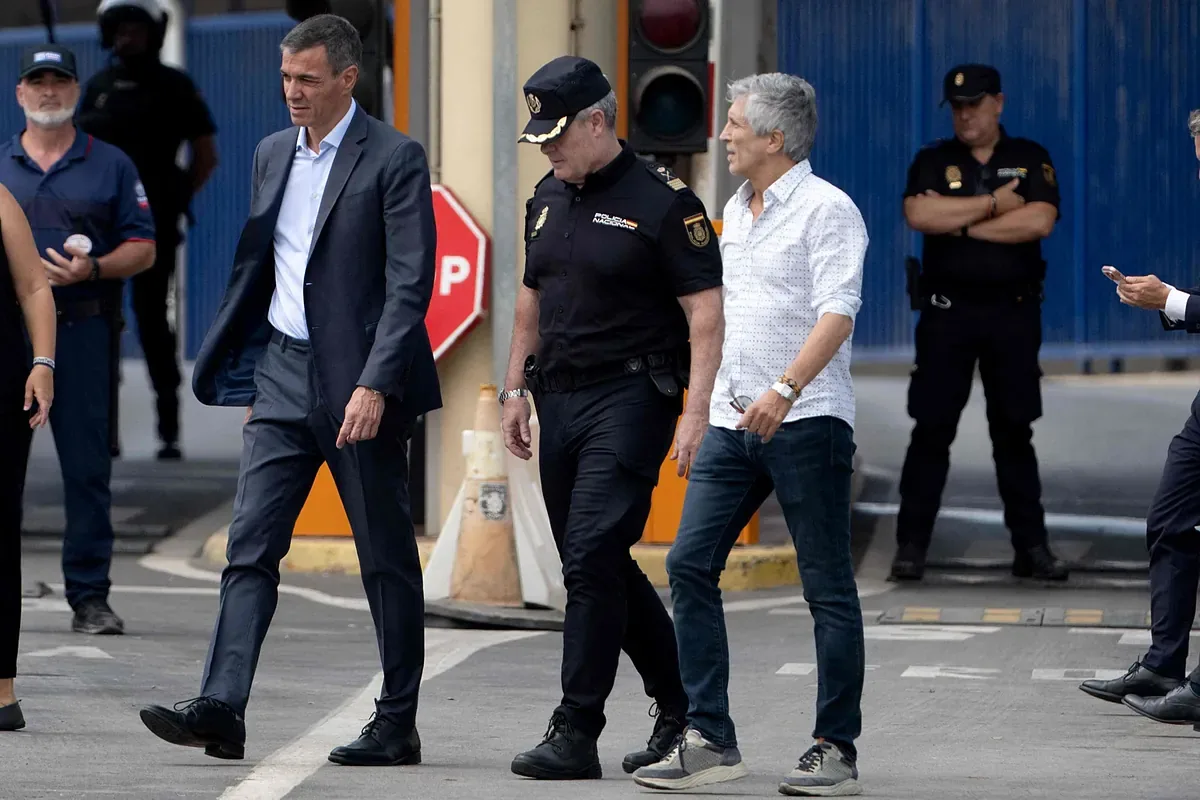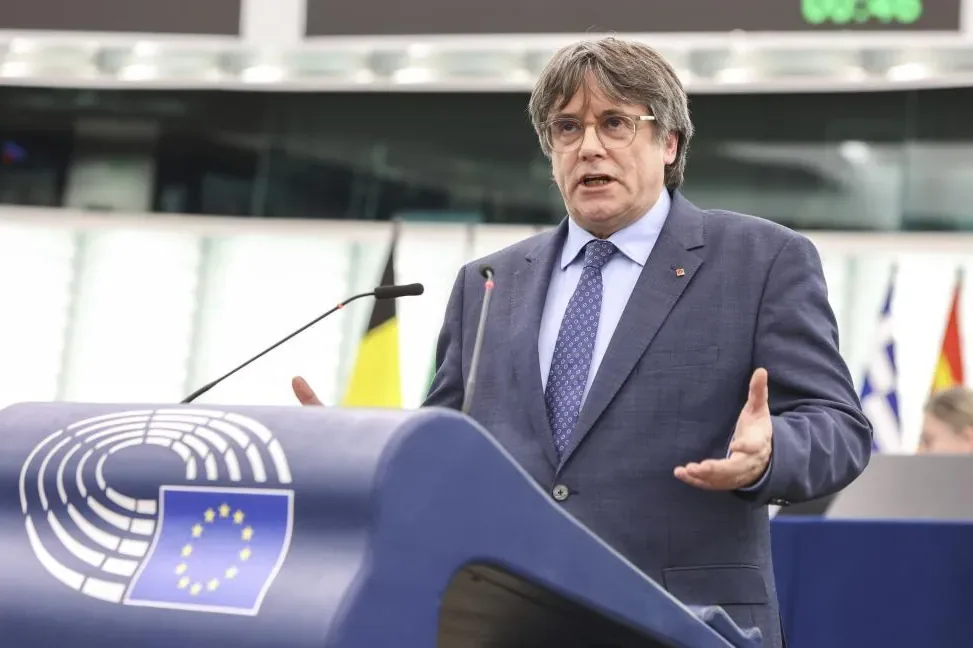



If anyone thought that the Ceuta disaster or the evident collapse of the Government during this summer was going to change the course of Pedro Sánchez, even a little, the answer lies in the hour and a bit interview he gave yesterday to Cadena Ser to welcome the new political season: more polarization, more confrontation, and more division. Hard Sanchism until the final minute.
What happens with Sánchez is that arguments that sound ridiculous the first time they are formulated end up becoming part of the normal conversation through the technique of repeating them over and over. Only in this way can it be explained that a president who sees no indication of responsibility in Morocco for the assault on Ceuta perceives clear evidence that allows him to point to Russia and Israel in full prime time radio. And only in this way can it be glimpsed that despite all the suffering accumulated by the Ceuta population for more than a month, he does not admit a single mistake, defends his vacation disconnection, and starts talking about hoaxes and social networks.
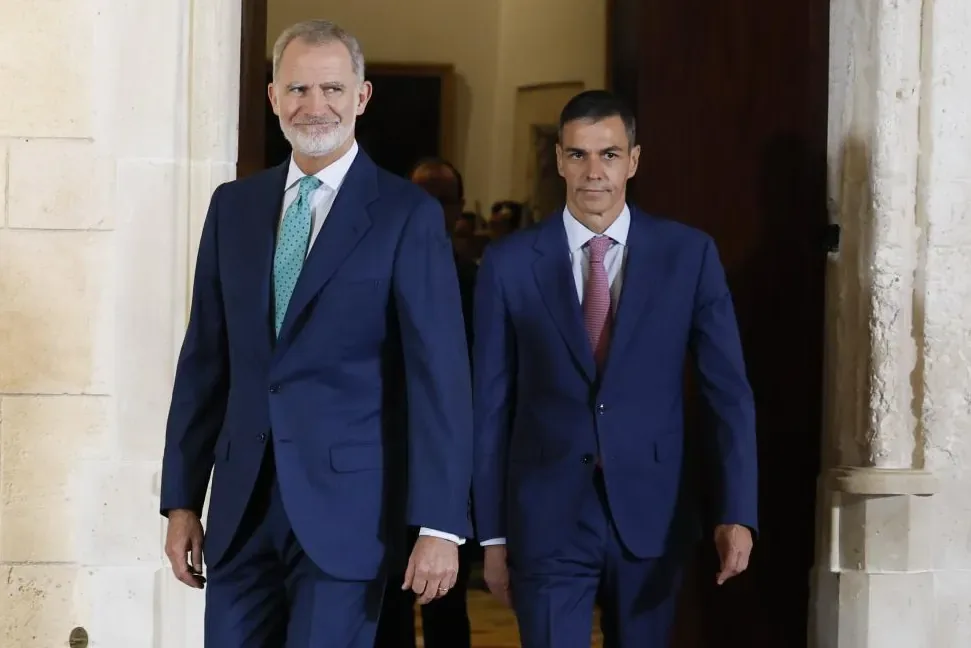
There were two particularly aggressive moments in the interview. One was the undisguised hostility towards the King, with an unusual reproach for not having visited Ceuta and with that fake news that Felipe VI, proclaimed in 2014, “has been reigning for more than 20 years.” But above all, for the eagerness in the comparison: between the King and me, I am the best. The Presidency of the Government against the Head of State, in a quite revealing mental scheme.
The summer attack by Óscar Puente against the monarch was thus the vanguard of something more, now we know. And it is not so much about questioning the Crown, although there is always some of that in the irredeemable left, as about maintaining a constant pressure on institutions that escape their control. A president who has eliminated any sign of impartiality in institutions and public bodies does not hesitate to try to intimidate those he cannot reach, whether called the Royal House or the Supreme Court.
The second defining thing Sánchez said yesterday was to present next year’s elections not as ordinary elections of a Western country, nor even as a plebiscite on his management and person, but as a choice between democracy or “involution,” according to the term he used.
Read more Reality exceeds Sánchez’s calculations and there are still 4,000 more places missing in Ceuta
Political alternation is one of the most basic democratic foundations, it should not be necessary to say. Recognizing the adversary, considering them as a legitimate option, and developing political confrontation with shared rules are immovable pillars of free societies and, in Spain, one of the great achievements of our history after centuries of civil wars. When Sánchez says that “today we do not have a proposal for alternation, but for involution,” he is dynamiting the most basic consensus on which our democracy was built.
It is in this climate of exceptionality that Sánchez wants next year’s elections to be held, and he and his party will devote themselves to it for the rest of the legislature. More than before, I mean. It is really hard to see that the PSOE has nothing more to offer Spaniards, but this is the situation and it has been formulated since the first day of the political season.
Everything is subordinated to this strategy. Foreign policy too. Ceuta too. Yesterday, for more than an hour, Sánchez was not heard to offer even the slightest apology to the people of Ceuta. Not a timid gesture of understanding for their anguish, not a show of warmth, not a message of encouragement. None of that can be allowed from a president who does not want to be president of all Spaniards, but only of himself.
Read more Immigrant expulsions to Morocco stuck: «Officials do not want to sign»