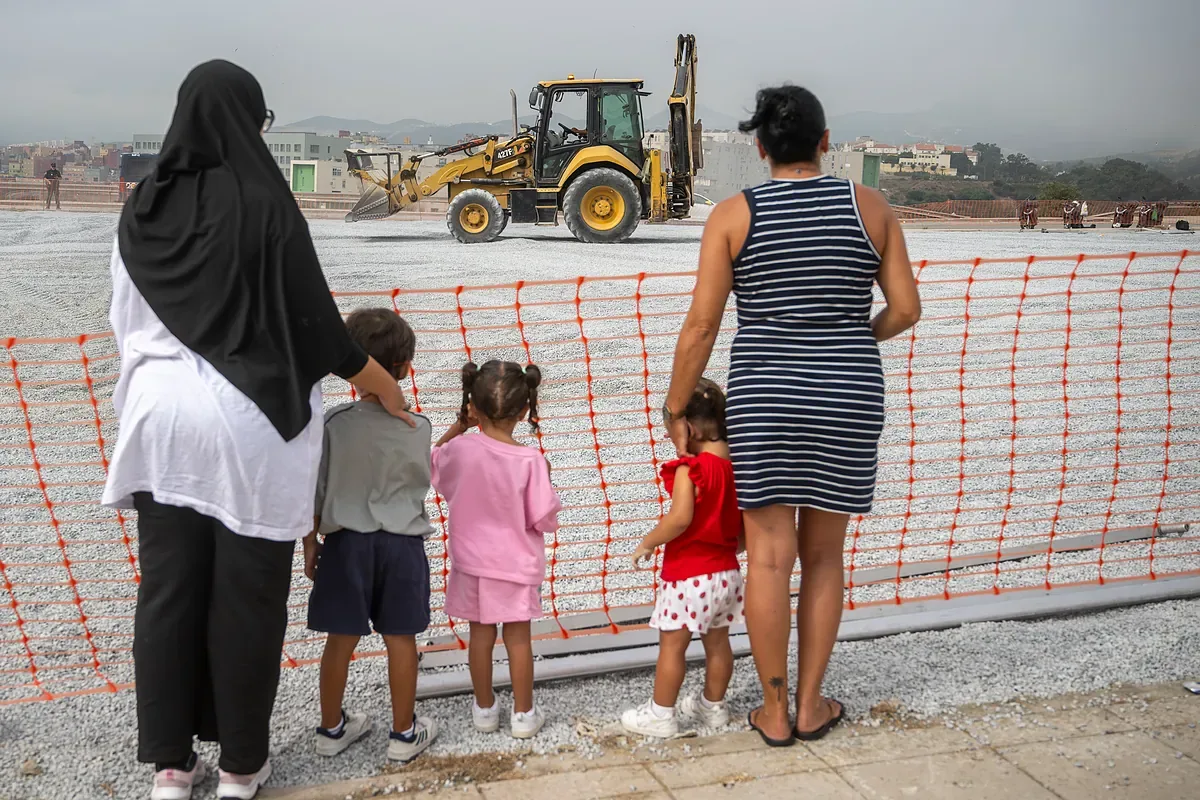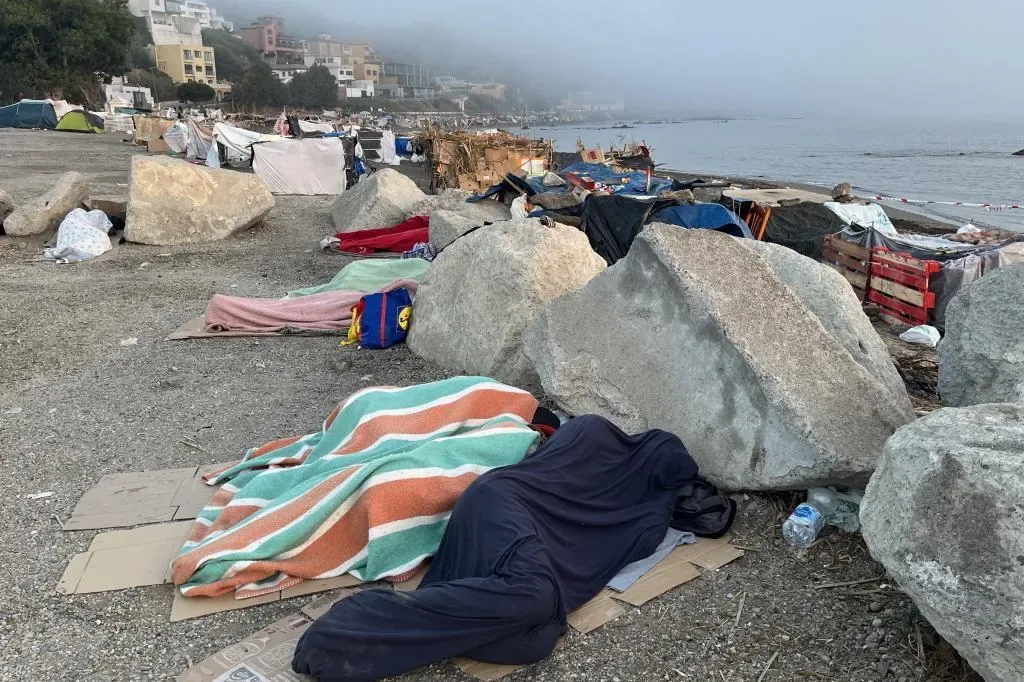





If Lord of the Flies came to life, it would do so in the shantytown settlement next to the Tarajal docks. Just a few meters from the Ceuta beach that was stormed by 80,000 people, several dozen kids roam the camp they themselves have set up on a triangular area of just over 1,000 square meters.
Read more Still doesn’t know what a nation is
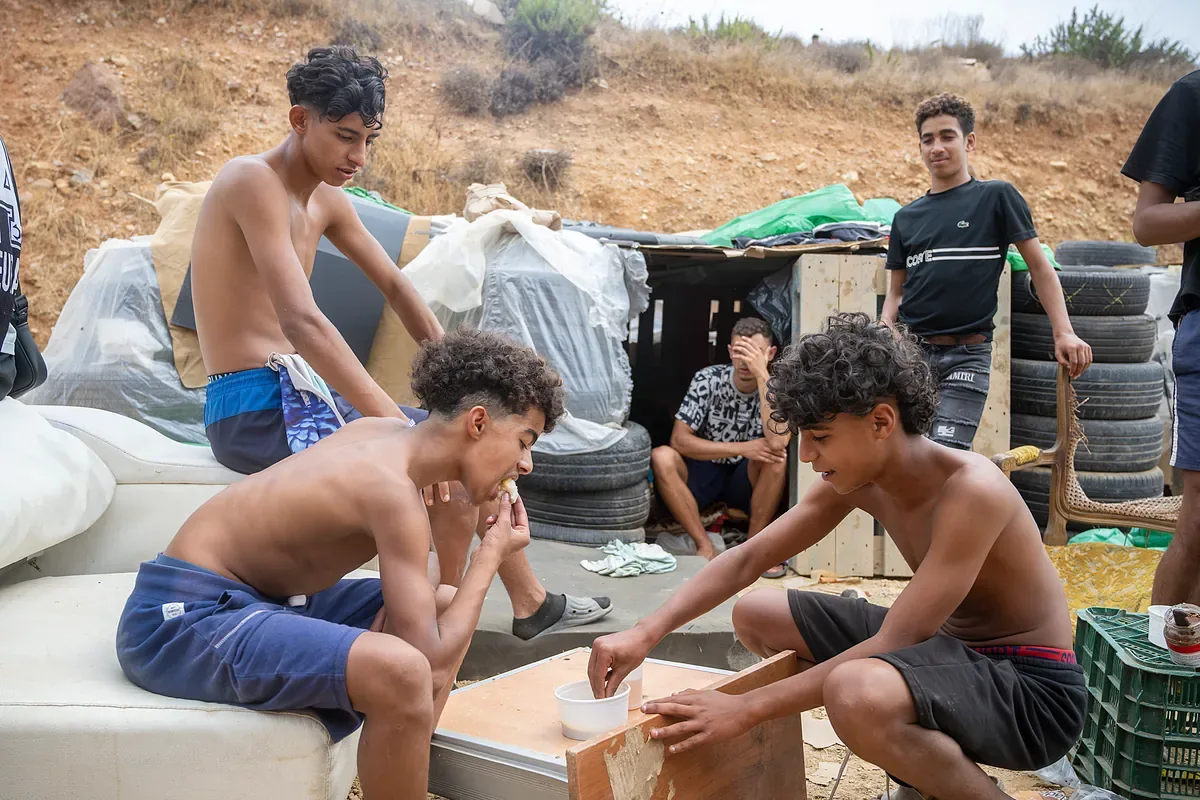
At noon many are still dozing. Others watch the hours pass sitting on broken furniture that “comes from the street” and, generally, the t-shirt is optional. A kind of teenage anarchy reigns where they have loaves of bread dipped in spiced soup for breakfast. On the table – made up of an overturned drawer and a green Mercadona box – where Mohammed (25) and his tribe sit, a luxury: a jar of Nutella. “We eat how we want,” he boasts.
But it’s not true. Going a little deeper into the camp, we reach the adult area. There, crouched between two burnt car doors, is Mohami Amin (51 years old), who manages the makeshift fire between the asphalt and the metal of a grill to cook breakfast. On one side, he cooks scrambled eggs in a medium pan. On the other, he boils water in a large pot in which at least a dozen eggs float; the cooked ones are placed inside a paint bucket. On the asphalt, a kettle. And that’s the menu: “One day, one meal,” the man explains to us. Adam, his middle son, invites us to drink a sip of tea.
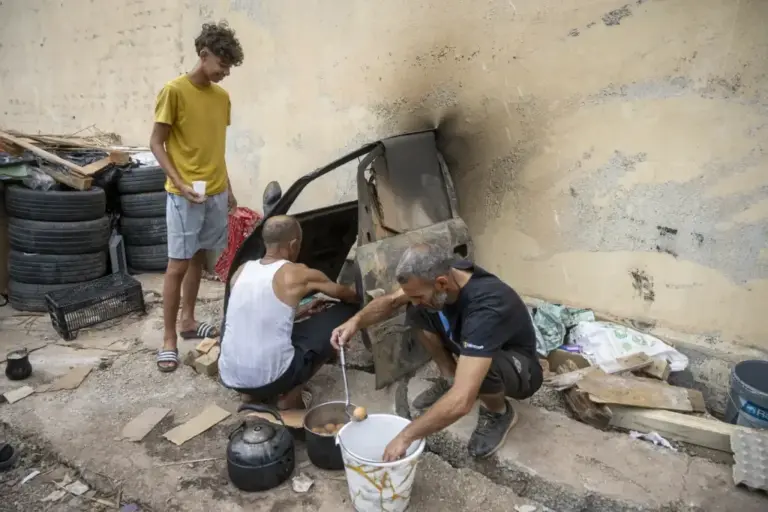
“He entered swimming with his brother on the 31st,” his father explains in broken Spanish. They have been here for “a few days,” although he doesn’t keep track. “Some days you sleep somewhere else, it’s no problem.” He is one of the few who master the language; the most accessible, if anything, is English. His boy, who understands a bit, confesses his age prematurely: “Diesinove“, 19, although the father insists he is 17 and a minor. Then he admits that it will be better for him to say he is younger.
The vast majority of the kids in the settlement come from Tangier – like Mohami and his son – and are between 14 and 26 years old, although occasionally there is an older male. Of the minors, who are many, none want to go to a reception center: “Not that, we want freedom!” they shout, crossing their forearms high to symbolize their will.
There are many boys who, like them, hide in the barracks or the countryside areas of the Ceuta hills to avoid being intercepted. This Monday, the Minister of Youth and Childhood, Sira Rego, estimated that 1,200 could be pending identification. However, she emphasized that this is an “estimate” since it is a complex calculation.
Adam, however, does not separate from his father, who tries not to deal too much with the other kids because they kicked out his eldest: “There were fights, but he’s a smart boy, he’ll be fine outside.” He guesses he sleeps on one of the beaches, possibly the one they entered through, but there is no way to know. They haven’t seen each other for days, although Midi – that’s his name – sends him a message saying “everything is fine.”
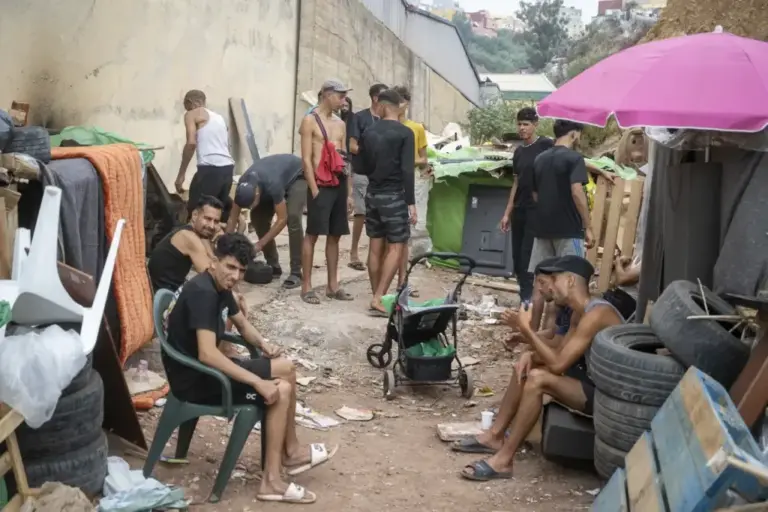
Two of the boys who sleep in the camp admit they were repatriated from Germany for committing theft or trafficking “some drugs.” Amin, for his part, wants to teach his offspring “a better life.” The third, Terco, is 15 and still in Morocco with his mother, who works cleaning houses. Although he knows achieving his goal “is very difficult,” he will look for “work in the fields or something.” And as a cook? He smiles at the suggestion. He likes it, but “it’s not enough to live on.”
In Tangier, “I worked with merchandise” at the border with Ceuta. He talks about vehicle parts and other materials but laments that the customs closure ruined his entire business. A month after the jump, he admits that his expectations of life in Spain have not been met. This time, he relies on a companion who speaks better Spanish to express himself: “It wasn’t what we expected and we are fed up.” But he rules out returning to Morocco: “If they don’t kick me out of Spain, I’ll stay here happy.” The young people have lost faith that the Spanish state will help them: “What are they going to do? They haven’t done anything.” But he doesn’t, and insists: “We have to wait for them to do something with us.”