



At the end of August, Margarita Robles (Minister of Defense), José Manuel Albares (Foreign Affairs) and Fernando Grande-Marlaska (Interior) left their seats empty in the Senate committee to which each had been summoned to explain their management of the crisis in Ceuta. The PP, with an absolute majority in the Upper House, already responded politically to this no-show by announcing the censure of the three members of the Government – something that will be formalized in this week’s Plenary session -. And now, it is preparing to censure the ministers’ actions also through the judicial route, before the Constitutional Court.
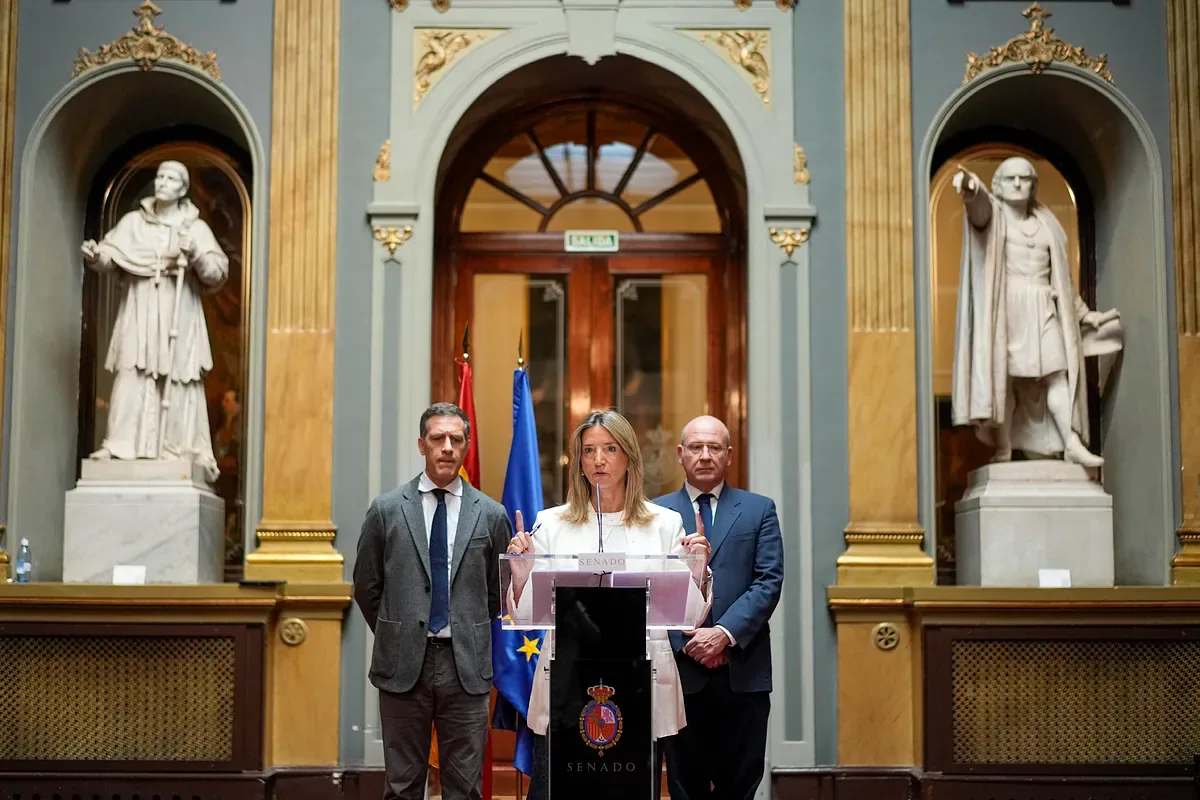
The popular party brings to this Wednesday’s parliamentary session a new conflict of powers so that the constitutional court can rule on the “absences” of Robles, Albares and Marlaska in the Senate. According to the party of Alberto Núñez Feijóo, which already announced it would also take the “no-shows” to the Supreme Court, these no-shows to the Senate constitute a “trampling” of the law. They accuse the Executive of having “prevented the Senate from exercising one of the constitutional powers entrusted to it: the function of controlling the Government”.
“The empty seats of the ministers cannot go unpunished, and we will continue to take the Government’s decision to hide from the Senate and to flee from the Spanish people to the courts,” said the popular spokesperson in the Upper House, Alicia García, in statements sent to the media in which she calls what happened an “authentic shame”.
The ministers justified their absence in the Senate by stating that, days later, they appeared before the Congress under the same backdrop. The Government informed the Senate that it considered “its obligation to submit to control and explanations to the General Courts fulfilled through the appearances requested on its own initiative before several commissions of the Congress,” according to the PP, which however is not convinced by this argument: it reproaches the three Government officials for offering explanations “that suit them, on the date that suits them and under the conditions that suit them”.
“The Government cannot unilaterally choose which Chamber controls it, when it appears or under what conditions it does so,” protests García, recalling that the summons to give explanations in the Senate “is not an invitation,” but “a constitutional and parliamentary obligation”.
Read more 21 arrested after a new stone attack on soldiers in Ceuta
The Rules of the Upper House establish that members of the Government “are obliged to appear before the commissions and their bodies” in accordance with two articles of the Constitution: 76 and 110. The first refers to the regulations for investigative commissions, while the second, more general, states that “the Chambers and their commissions may demand the presence of members of the Government”. The PP clings to all this to now turn to the Constitutional Court seeking censure of the ministers’ no-show.
This is not the first time the popular party has taken this route – they have raised 13 institutional clashes in this legislature -. They even did so against the President of the Government, Pedro Sánchez, when last February they brought a conflict of powers against him to the Constitutional Court after he did not appear at the extraordinary Plenary session convened following the Adamuz railway accident. It is the first time in the history of democracy that such a clash has been initiated against a head of the Executive, although the Constitutional Court has not yet ruled on it.
The conflict of powers is a mechanism that different State bodies – such as the Senate – can resort to when they consider that another institution “makes decisions assuming powers” that belong to them – according to current legislation -. This clash between State bodies is regulated in the Organic Law of the Constitutional Court, which states that the court of guarantees “will determine which body corresponds to the disputed constitutional powers and will declare null the acts carried out by invasion of powers”.
Read more Jordan Bardella: «In Ceuta there was a migratory invasion and the role of Morocco must be examined»