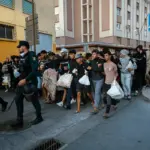





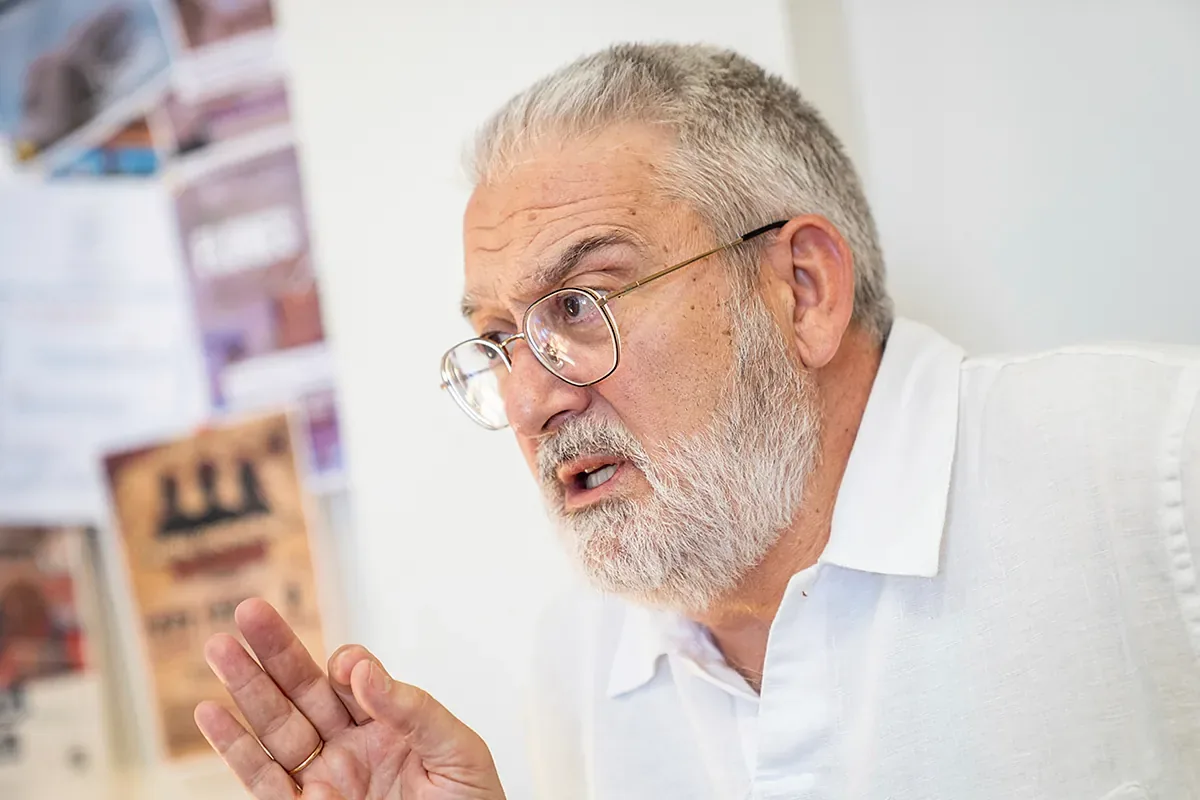
«The declassification of reserved documents violates national security but the Government has carried it out anyway, opportunistically, with the intention of evading its serious responsibilities»… «From my previous experience I can affirm that the quarrels between ministers have prevented a quick solution to the problem. Above all, ministers Fernando Grande-Marlaska and José Manuel Albares behave like prima donnas. Sometimes they don’t answer the phone or delegate to a subordinate or simply keep postponing the solution to the problems»… «It is unfair that the president has treated the CNI agents this way, trying to shift all the responsibility for what happened in Ceuta onto professionals who are very good, who know Morocco like no one else. It is unfair to denigrate them, it is not right, they deserve respect». The person speaking to Crónica in this way knows the Spanish secret services in depth.
Read more The police transfer hundreds of migrants from Ceuta to a newly equipped facility
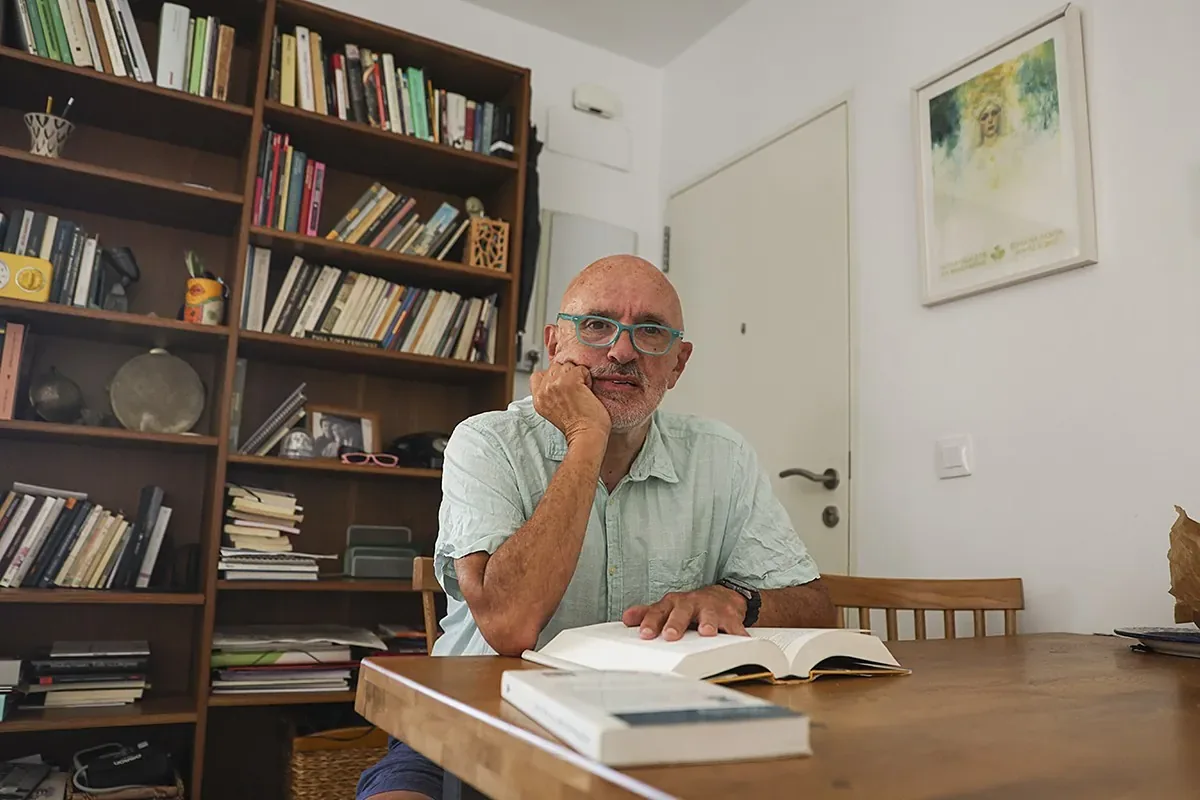
Colonel Luis Romero, now retired, worked more than 40 years in the Army and of these, 33 in the CNI. At the beginning of 2025 he was promoted to Director General of Intelligence of the CNI. He left his position at the end of March and retired. We can intuit that his anger extends to the rest of the officers and agents of the intelligence center, which is even acting as their spokesperson since their delicate position and work prevent them by contract from speaking out while active (a circumstance that Moncloa has wanted to take advantage of to point to them as responsible in this crisis), but he, as appropriate, denies it categorically. “These are my personal opinions,” he clarifies.
An Infantry officer graduated from the Toledo Academy, which is the city where he receives us, he keeps fond memories of the Autonomous City because it was there that he served in Regulares 54 in 1986. Later, his work as a CNI official would lead him to spend most of his professional life outside Spain. He is an expert in Arab countries and the Middle East, having been stationed in Syria, Iran, Afghanistan, before passing through Brussels and, finally, the Valencian Community. And precisely this last location, before rising to the general intelligence directorate, allows him to have some knowledge of how the communication structure works at the regional level.
The first thing he does is reaffirm the content of a letter he sent to some of his friends, as usual, pointing out the consequences of the declassification, on Wednesday, of 40 documents about the Ceuta crisis which included reports from the Civil Guard, National Police and Armed Forces, emails, charts and WhatsApp conversations dated between July 1 and 31. «This declassification violates national security. The declared intention was to show that no one anticipated to the authorities the real dimension of the massive entry through the Tarajal border and thus evade their serious responsibilities. Declassifying in bulk to win a narrative battle may provide a headline, but it can also give foreign adversaries and distrustful partners an excellent x-ray of our procedures and shortcomings in the intelligence field. The sum of small data allows perfectly reconstructing the functioning of a national intelligence ecosystem. With this documentary declassification, Spain has explained what it knew and has shown how it knows it, who it warns and how long it takes to react,» he says. «I am not surprised by Margarita Robles’ reaction refusing to applaud the president when he announced it,» he adds.
THE CATECHISM
Colonel Romero has broken down in his personal notes the damage caused in five points. The first: «These documents openly show surveillance priorities, communication circuits, recipients, schedules, reaction times, alert procedures and criteria to assess a threat. That is, they offer a dangerous manual on how Spain observes its most sensitive border, its southern border».
Second: «The organizers of future actions against Spain already know which networks were controlled, which units monitor those networks, which messages caught attention and what volume of mobilization was not enough to provoke a proportionate preventive response. Now they can change platforms, fragment calls, delay their dissemination or introduce false alarms intended to saturate analysts».
Third: «The documentation also allows identifying the interval existing between detection, communication and political decision: information especially useful for anyone wishing to exploit our Command and Control weaknesses».
The fourth point analyzed by the former number three of the CNI refers to the distrust this move may cause in foreign intelligence services. Since communications with Moroccan services have been revealed, «any other foreign service may wonder if the information exchanged with Spain will end up published six weeks later to resolve a parliamentary dispute». «When that doubt arises,» he warns, «allies reduce details, delay warnings or seek more discreet interlocutors». Finally, the colonel refers to the internal damage inflicted, to the change in attitude that the CNI analysts themselves may adopt if they suspect that their notes or provisional assessments will be publicly displayed «to distribute political responsibilities». «Reports will become more cautious, less clear and full of formulas intended to avoid commitments. In short, defensive intelligence will replace useful intelligence».
Question. Do you think the declassification may violate laws or is it an irresponsibility without criminal scope?
Answer. I am neither a lawyer nor a judge. I believe it has been a very serious indiscretion, creating vulnerabilities in national security and not compensating any political satisfaction. I think it is very easy to blame the CNI, which is a very reserved institution and whose members are subject to an oath of discretion from which they cannot at all withdraw, which dignifies them. It has been a frequently used way out by many governments, but intelligence services are the eyes of governments. Denigrating them is like pouring acid on your own eyes. What has happened goes against the catechism of Intelligence.
Q. The CNI has faced very serious situations. Both internal, decades ago, and caused by more recent external circumstances, and here I refer to 11-M or the Pegasus case, which took down its director. There have been situations in which it has been used. Of all you remember, which is the most serious?
A. This one. Documents have been published photographed and in a very high number. Our legal system sufficiently establishes parliamentary, judicial and administrative control of our intelligence bodies and allows determining responsibilities without the need to resort to public declassification of reserved documentary material. It is common for governments to use intelligence services as scapegoats, as fuses thanks to which we do not all end up electrocuted in our homes. In this case the Government has used the CNI as a fuse to avoid being electrocuted. But it has compromised not only the CNI, which is the most important, but the entire Spanish intelligence ecosystem, the Police information service, the Civil Guard’s and the military Information service. It is outrageous.
Q. From what is known, except Robles, the Government lied when it said the CNI had not informed and when it assured that Morocco had behaved as a loyal partner because the CNI warned its Intelligence services before the avalanche and we have seen images of its gendarmes directing it. But, was warning the Government delegation enough?
A. I am not in the details, but there is information that the government delegate must receive, others that the president of the Autonomous Community must receive, others destined for central bodies and others that must be coordinated by Police and Civil Guard. There are many levels, which must receive information, process it and pass it to the higher level. The CNI is a strategic service, its prediction about things is long-term. The Civil Guard and Police must work more immediately on the ground. Also, it must be taken into account that the State is a transatlantic ship that is hard to start and that the days when everything happened, as well as at Christmas or Easter, the Administration runs at half speed. It is a dreadful situation. Try to find protocols on those days… And most importantly: the CNI can pass the information, but if no one does anything….
Q. It is a failed protocol.
A.It is a protocol that must be reviewed, obviously, and that must have emergency channels. The phenomenon is there and we must prepare for the next wave.
Q. At this point, should the CNI already know who was behind an assault that constituted an invasion of national territory? Should the report already be done? Is it possible that what happened happened and the Alaouite king did not know?
A. Yes, they must already be conducting deep lessons learned evaluations. The experience of CNI members in the Maghreb and their international prestige in this matter is very high. No public or private institution in Spain knows Morocco better than the CNI. On the other hand, in Morocco, from my experience, the Royal House could not not know what was being planned and what was happening.
Q. We are then at the mercy of the next time they want to send us their message by introducing 80,000 people into Ceuta and Melilla. Are we unprotected?
A. No, we are not. If they were soldiers, Spain would respond immediately with total efficiency. It is more difficult when those crossing come barefoot or with a little duck swimming. In the 21st century and in Spain, in Europe, stopping that is more difficult.
Q. The Army can be deployed as a deterrent, reinforce the border by land and sea, combat social media calls with counterintelligence…
A. It is a phenomenon that entails difficulties.
Q. It has been speculated that the CNI has been deactivated for political reasons in recent years.
A. I have not seen that under any circumstances.
Q. Should Director Casteleiro resign, or the Defense Minister?
A. That must be decided by them.
Colonel Luis Romero ended his task at the CNI at the end of March 2025. Used to working on the ground, he did not adapt to management and resigned three months after being appointed Director General of Intelligence. The dismissal, not sealed, came by phone. Perhaps it was not the best farewell. However, he has no problem explaining that when he entered at six in the morning and when he left at ten at night, Casteleiro was still working. And that the minister could call him at any time or on a holiday. «I have never seen either civilian or military with more involvement and work capacity than them», he says. In his personal notes he has written that he is aware that some would like an imminent resignation of Robles. «Most likely the president will wait to make a government reshuffle preparatory to the next elections to make her leave through the back door without the Ceuta issue appearing among the motivations,» he pointed out. He has also written that, once it has been shown that the CNI warned «with sufficient precision», the focus of the discussion has ceased to be Robles versus Marlaska to become a question: “Who knew what in Moncloa and since when did they know it?”
«Margarita Robles is a person activated 24 hours a day…», he continues.
Q. Is it understandable in any way that the president went on vacation?
A. That is unheard of, it is negligence. It is not normal that there is an urgency of this level in Spain and you go on vacation. You have to cancel them and return to the command post.
Read more Alberto Núñez Feijóo: «Morocco’s aggression continues and Ceuta will be Sánchez’s epitaph»