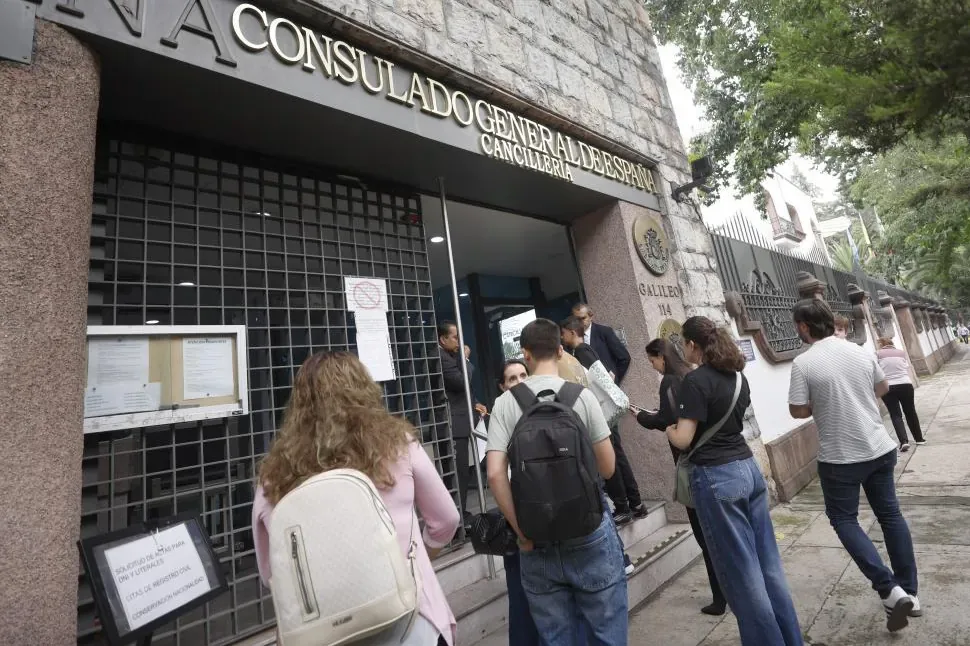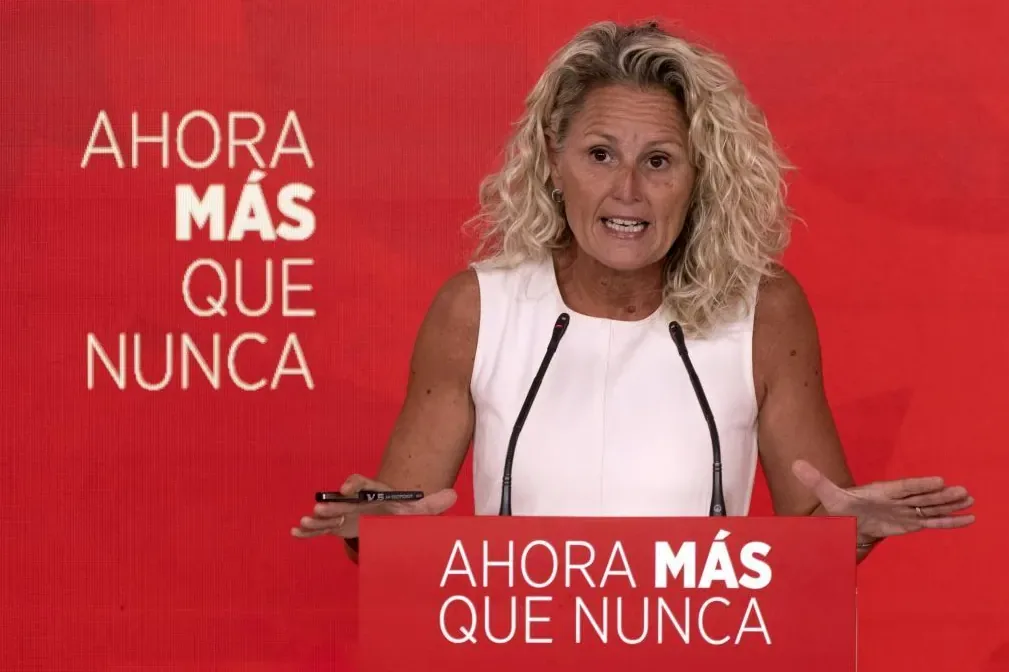










“No more giving away passports.” The Popular Party is preparing an organic law proposal to tighten the requirements for access to Spanish nationality. If approved, the regulation would imply a more rigorous language and constitutional “values” exam for those seeking Spanish citizenship, but above all, it would open the door to revoke nationality from people who, after obtaining it, commit serious crimes, according to EL MUNDO.
Read more The pending vote and vetoes among partners condition the return of the left in Sweden
Among the novelties of this legislative proposal—which will be approved if Alberto Núñez Feijóo reaches La Moncloa in 2027—stand the cases in which a foreign person who obtained Spanish citizenship would lose their passport immediately. In general, it will be taken away from all those who commit serious crimes—murders, sexual assaults, terrorism, or organized crime, among others—or who accumulate a certain criminal recidivism.
Sources from the PP leadership reveal this to this newspaper as follows: “Citizens who have acquired nationality by the time elapsed or by international treaties we have with their countries of origin and who commit crimes or are part of organized crime, or are members of terrorist organizations, or are repeat offenders in sexual abuses, or are perpetrators of murders with aggravating circumstances will lose their nationality.”
These conditions will be specified and assumed beforehand, according to the sources. That is, in the very process of acquiring nationality. So they will apply to future cases. “The cases in which nationality will be lost must be known from the very moment the passport is granted,” they specify in Génova.
Additionally, the legislative text, which is already near completion, will impose new requirements on foreigners regarding language knowledge and an exam that positively scores “positive inclusion” and respect for the country’s fundamental democratic values.
This proposal comes at a time of maximum polarization of the migration debate, not only in Spain but throughout Europe. Even more so after the influx of immigrants who entered Ceuta on July 30, more than 10,000 of whom still remain in the Spanish city, the southern border of the European Union. This crisis, which far exceeds mere migration issues, has nevertheless sparked strong opposition from many community partners. Italy has even suspended the application of the Schengen area with Spain.
Moreover, this proposal fits into the shift in the PP’s migration stance. It is a front on which it competes with Vox without losing votes in the center. In fact, Génova has polls showing that the majority of socialist voters also advocate being more restrictive. This aligns with the trend of migration tightening sweeping across Europe, including some social-democratic governments, such as those of Great Britain and Denmark.
Read more Storm in the debt markets: US bond soars and Spain’s exceeds 4% for the first time since 2013
Sources from the Popular Party leadership detail what the rule Feijóo is preparing to further restrict passport granting will consist of: “We are going to take nationality out of the Civil Code and, given the [migration] situation the entire EU is experiencing at this moment, we need an organic law where nationality is regulated. Nationality is an honor, it is not an administrative procedure. Secondly, nationality will be more demanding regarding language knowledge, with positive and active inclusion in the constitutional democratic values of our country.”
The “spirit of the rule” is summed up in one phrase: “Nationality is not given away, nationality is earned.” “Giving away Spanish passports, which is the greatest document a State can have? That’s over. Using nationality for purposes other than integration into a country and compliance with that country’s legal system? That’s over,” conclude the consulted sources.
The “legal route”
On February 15, Feijóo already announced in this newspaper that he was going to prepare a rule to delimit access to nationality but did not want to reveal its content: “When we have it, we will make it public.” At that time, he pointed out that “those who can come with a work contract, those who have no criminal or police record, and those who socially integrate in Spain have chances to live with Spaniards.” “Certainly, I will not be the one to give away Spanish nationality nor the one to grant permits to everyone. I am not going to do it,” he warned then.
The PP not only advocates revoking nationality from citizens who commit crimes but also wants to deport “regular” immigrants who commit crimes before having a passport. In July 2025, Feijóo already pointed to that possibility. “When the immigrant is irregular, they will be expelled immediately. When they are regular, depending on the crime committed, they may be expelled immediately, or on the contrary, they will have to be judged and the appropriate penalty sought,” he said. Now he goes further and puts his plan to make access to Spanish citizenship more difficult in black and white.
On the other hand, it should be remembered that the PP will tighten residence permits for social integration to the maximum if it comes to government. Feijóo’s Immigration Plan, which he will detail in the coming months, proposes to “recover” the “exceptional” nature of social integration as a “legitimate, effective, and verifiable” mechanism to regularize the situation of immigrant persons. In this way, the Popular Party argues, “the legal route” will be further encouraged.