




Bob Sinclar says he is no longer interested in DJing in Ibiza because on the island the clubbing has died and the scene has become a show for VIPs. It turns out that for these VIPs, the only thing that interests them is taking selfies and popping very expensive bottles. Dancing, singing along, sharing the highs and, in short, participating in the ritual of the session, sweat against sweat, is not their thing. And that, if you are a DJ, hurts.
Sinclar’s words remind us that live music, whether a DJ set or a concert, is necessarily a matter of two: the one on stage and the audience, and that there must be chemistry between them, a mutual exchange, because in musical performances energy flows both ways; the audience is also the show. So a bad concert is just as bad as a bad audience.
But in recent years, that pact has deteriorated. A more and more passive audience has proliferated, less focused, more attentive to their phones than to the music and the environment. Andrea Rosa del Pino, Chilean, 35 years old, 11 in Madrid, partly attributes this to generational issues: “Last year I went to Boombastic in Asturias. Average age? From 17 to 22 years old. I was a dinosaur there. When I looked at the audience I wanted to die. I don’t remember seeing people more dull in my life. Generation Z lacks some seasoning. They say they are fans of certain artists and then don’t know any songs. I don’t know. It’s annoying.” But there is something worse than an absent audience; an audience that is too present. “Yes. I am that lady who complains because people go to chat and not to listen. I think it’s wonderful that you want to talk to your friends…, but do you have to do it right when Alanis Morissette is playing?” Andrea complains. Marta Kornelski, 31 years old, from Madrid, shares the lament: “You don’t talk during concerts. It doesn’t matter if it’s classical music or punk. If you want to talk, go outside. It’s a matter of respect for the audience and the artists.”
Andrea Rosa, Marta Kornelski, Rocío Guille, and Irene Nadal, voices of this report, belong to that type of audience that supports and defends the integral spirit of the festival show. The four know well the ecosystem, the one generated in each of the more than a thousand festivals held annually in our country (about 750 in summer). Not all reach Andrea’s level, who attends about 20; but the four share their devotion to the same idea: that a festival is not about being there, but about participating. Listening. Dancing. Getting emotional. And allowing those around you to do the same.
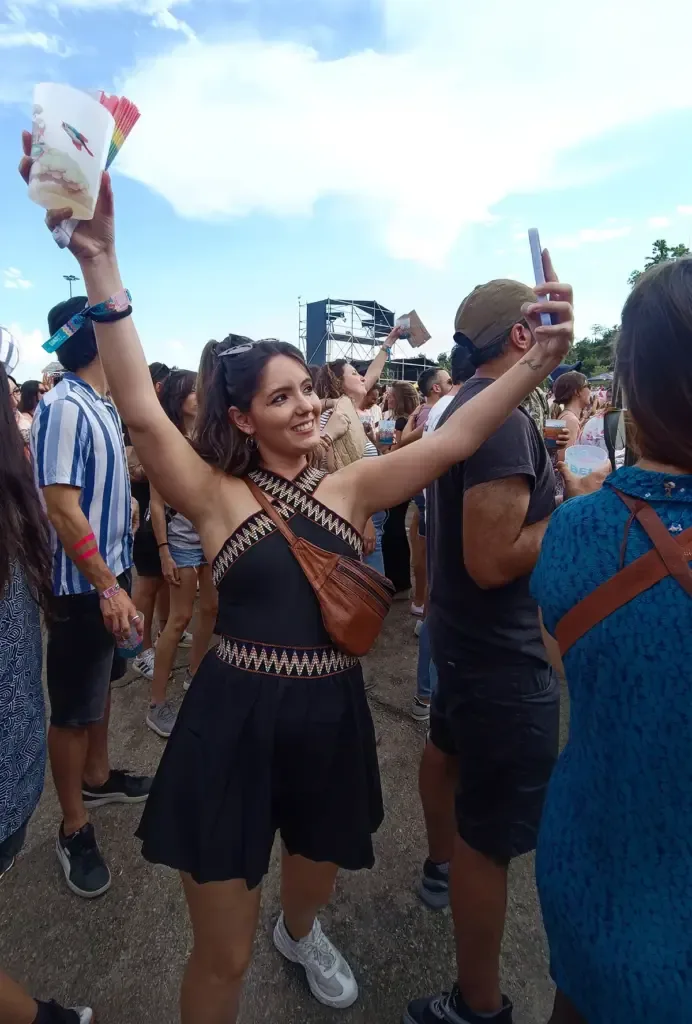
Irene Nadal, from Almería, 33 years old, considers the festival a place to meet people and share time and chat with friends. But above all, to dance: “For me, dancing is always mandatory.” Like the others, she believes in basic festival coexistence rules. “If you are in the front rows, it is understood that you don’t want to have the typical annoying person whispering in your ear about what they did over the weekend or who they want to hook up with tonight. Further back, in the open areas, talking is not a problem.” Although among 55,000 people there always has to be someone willing to annoy. “I have argued with many people: with those trying to sneak in, with the typical annoying guy who won’t leave your friend alone, and even with the one who was my boyfriend for a few years. Fatigue, alcohol, and jealousy are usually not a good combination,” shares Rocío Guille, 32 years old, from Madrid. In any case, what is clear is that despite those who always seem ready to spoil the party, it is still worth it.
The first festival of creative director and manager & PR Marta Kornelski happened half a lifetime ago: “It was the Brujas Festival in Daimiel. I was 15 years old. I went with my whole group of friends. I remember it as an incredible experience; and the first time I got on someone’s shoulders. I think every time I go to a festival I return a bit to that feeling of discovery…”.
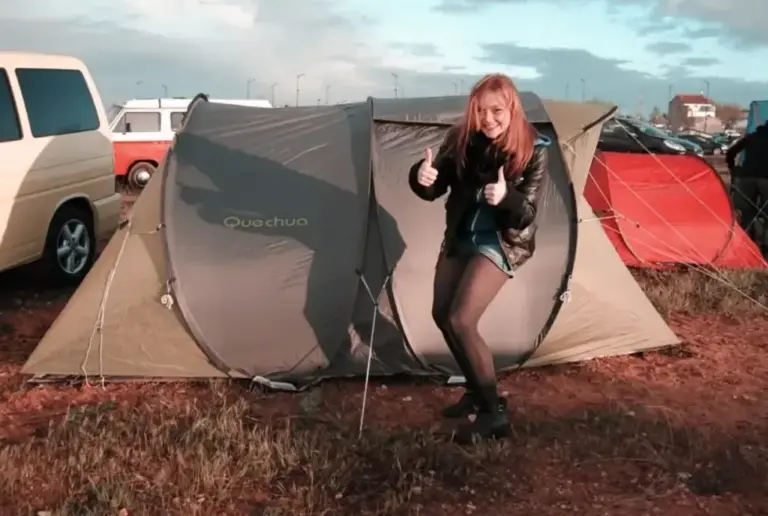
The oldest memory Rocío has is almost a survival adventure. “We were like a joke: two naive redheads with a suitcase full of dreams – and SPF 50 sunscreen – but nothing really useful to survive four days.” She and a friend arrived at Arenal Sound (in Burriana, Castellón) with a second-hand tent without a cover or instructions. It was the neighbors who ended up setting it up for them. They had camped so far from the entrance that it took them more than an hour to get to the venue. They missed half the schedule waiting in line at Mercadona and their sneakers didn’t survive the trip. “I remember it being very hot during the day, cold at night, showers that were a torture device…, but it was also very fun.”
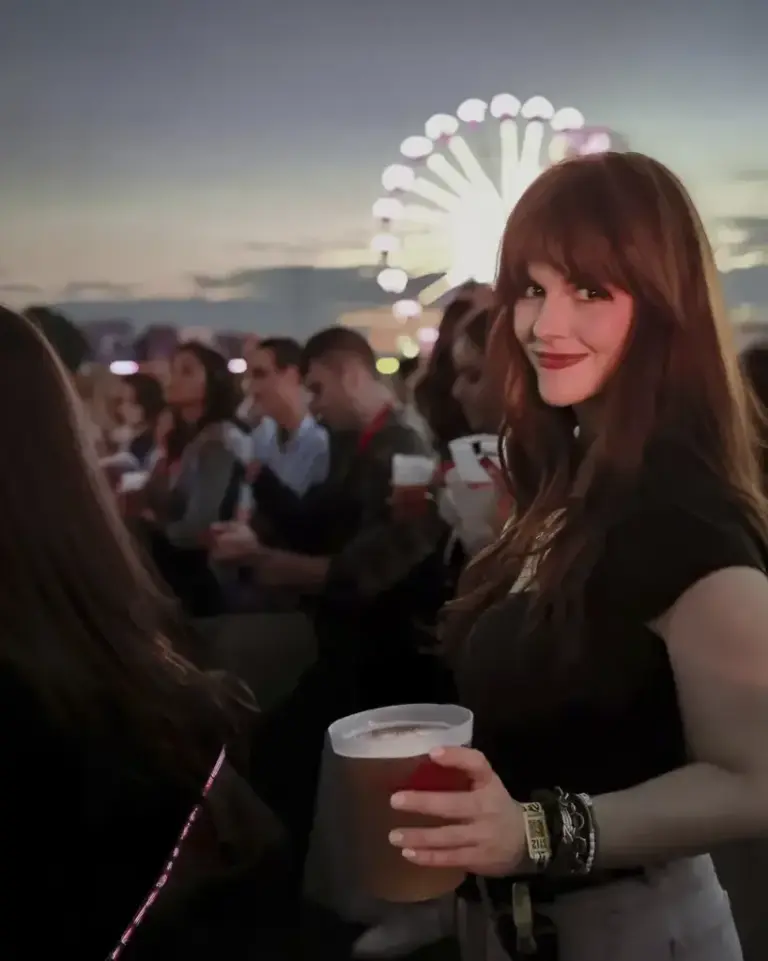
Anecdotes, as much or more than musical experiences, build festival memories. Marta explains it better than anyone when she talks about that “box of memories” that fills up again every year. “For me,” she says, “festivals are ephemeral cities. Places that never repeat exactly the same. The lineup never matches, nor the date, nor the weather, nor the same people go. That’s why I like them so much. I feel they represent music and life in their fullest.” The image shifts focus. Suddenly the festival stops being a sum of concerts to become a territory, real but also symbolic. Irene talks about a “camp feeling, three or four days where anything goes.” And she adds: “I love music and I think festivals amplify that magical feeling it causes in humans, not only because of the party, but because of sharing the space with thousands of strangers who have your same musical taste.”
Strangers who sometimes stop being strangers. For Rocío, there are friends who appear in the bathroom line and disappear before dawn. And then, “inherited friends”: people she doesn’t see all year but ends up meeting summer after summer at some festival. Then there are, of course, romances, many of which are born and die in the duration of a song. “I have lived several love stories at festivals,” says Marta Kornelski. “There is one I will never forget: The Strokes playing at Cala Mijas. That’s all I can say. My friends know the rest,” she sums up mysteriously. Rocío Guille confesses that Cupid hasn’t been lucky with her: she even bought an extra pass for the guy she liked and he ended up ditching her to go see Dua Lipa. Irene Nadal laughs remembering how a close friend and she thought they were flirting with another couple of friends during a Peces Raros set, only to discover the other two were a couple themselves.
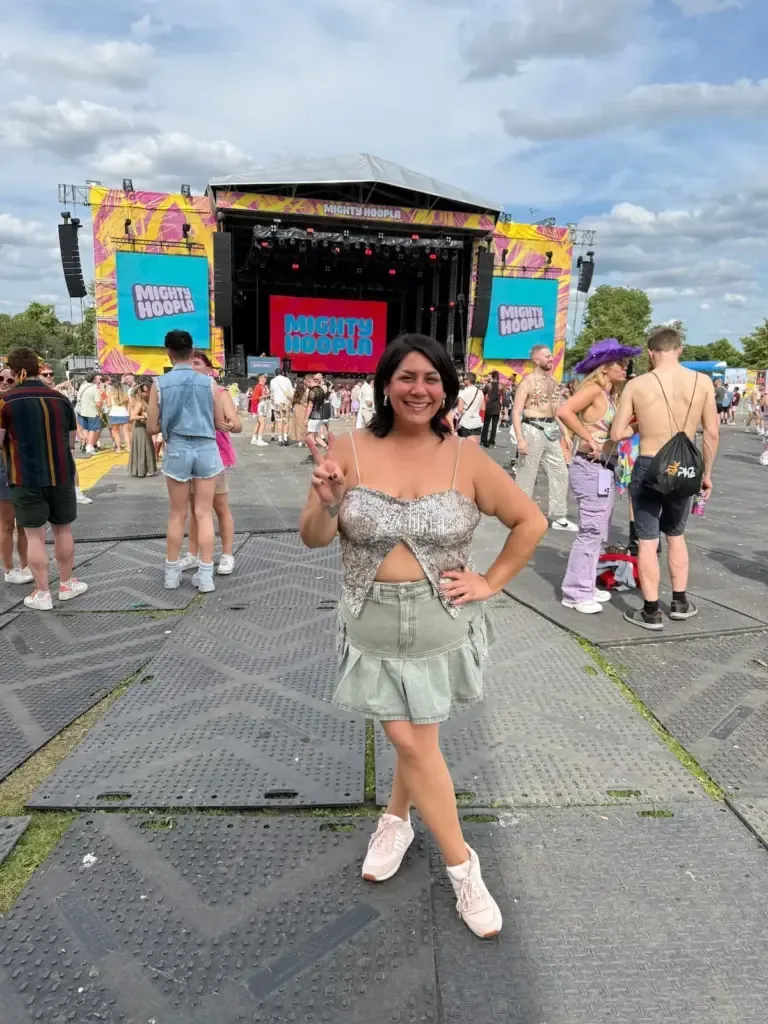
Andrea places herself at the opposite extreme. “I don’t interact with anyone at festivals,” she assures. Not because she is unsociable, she clarifies, but because “I couldn’t go every year to Mighty Hoopla in London if I depended on friends. Or to Bésame Mucho in Los Angeles. So I go alone… and always for the music.”
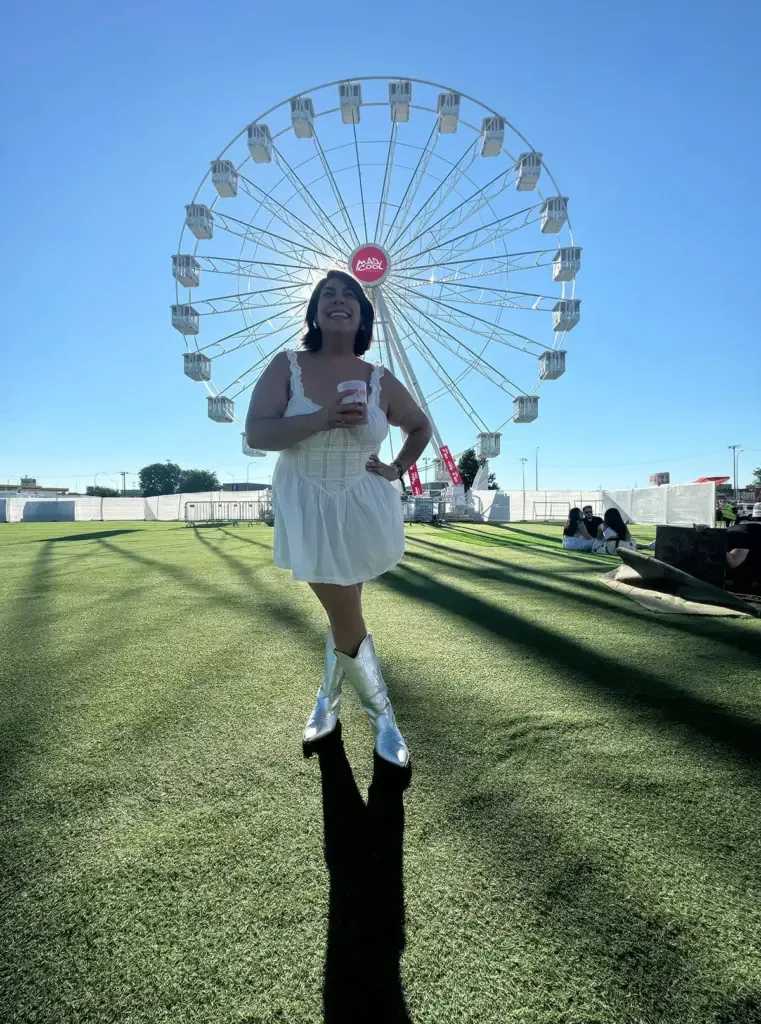
Rocío Guille also does not shy away from solitude in the crowd. In fact, one of her tips for surviving a festival is to lose the fear of separating from the group. “Going alone to a concert is also a great plan, especially when there are so many people that finding your friends is mission impossible. And don’t stop seeing a band you’re excited about just because the rest want to go to another stage,” she recommends. The idea contradicts one of the big festival clichés: the inseparable gang. The four talk continuously about friends, yes, but none seems willing to sacrifice a concert to not detach from the group. Maybe because they have all learned that a festival is also a place where one ends up finding oneself (for better or worse).
Independence allows you to use the festival as a laboratory. Like Andrea: “I go to see a musician or a band and I don’t care if before that I have to watch death metal. In fact, I usually stay for concerts of bands I had never heard just to see what it’s about.” That’s how she ended up at a K-pop concert “to understand the phenomenon.” Now she says she understands it perfectly, “although I wouldn’t listen to it again in my life,” she adds.
Curiosity even leads her to concerts of musicians who a priori don’t interest her: “You have to go see Katy Perry. How could I criticize her if I’ve never seen her?” The phrase sums up well her way of understanding live music. It’s not about confirming prejudices, but dismantling them. That explains why she accepted to go to the Bollywood awards without understanding a word of Hindi or even admits she would gladly go to a Hakuna concert: “I need to see that Catholic ecstasy some people enter.”
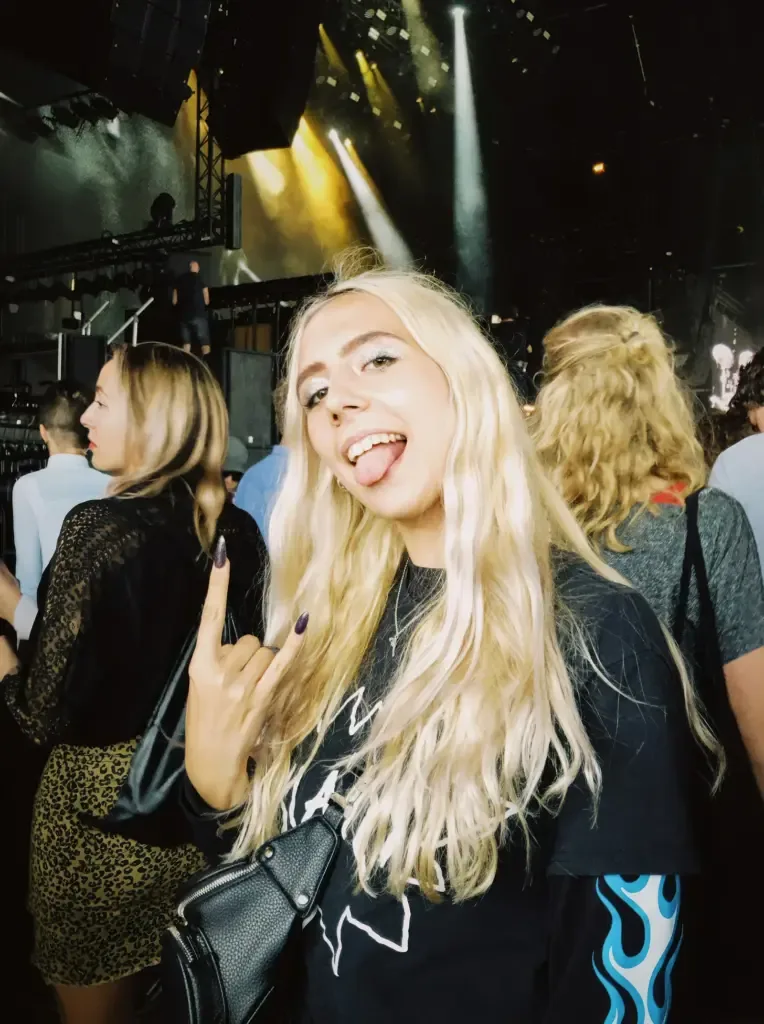
Marta shares the curiosity, although from another place. “I always pay a lot of attention to the small print on the lineup because that’s where I usually discover new bands. I think one never stops growing as long as one keeps discovering music,” she opines. Rocío sums it up with the simplicity of someone who has been doing it for years without thinking too much: “One of the things I like most is discovering new bands and letting myself be surprised by them without risking too much.”
First step: dream about the festival
That willingness to be surprised starts, curiously, many months before the first stage opens. It happens when the first lineup confirmations appear and one starts calculating, organizing vacations, convincing friends, or accepting that, once again, one will have to travel alone. “I really enjoy the moment of the confirmations,” Marta says, “it’s something that brings excitement to winter because you’re already imagining everything you’re going to live in summer.” She follows the announcements of Primavera Sound, Mad Cool, but also small European festivals to see how the lineups evolve and even make bets with her friends about who will end up signing whom. Now she already dreams of going next year to Glastonbury.”
Andrea also turns the lineups into a kind of map of the world. Only hers is much broader. If it’s warm in Europe, she tours Spanish festivals. If it’s winter here, she crosses the Atlantic to link the Lollapalooza festivals in Chile, Argentina, or Brazil. “For the last six years I have managed to arrange my calendar so that it’s always summer in my life,” she explains. Traveling to go to a festival seems so natural to her that last year she ended up at OverOslo, in Norway, a destination she probably would never have chosen without music involved. “Festivals give me the perfect excuse to travel to random places,” she admits.
Hunger for emotions
If the four, in one way or another, talk about curiosity, they also talk about emotion. And here another difference appears regarding the current way of consuming music. Because on digital platforms everything is immediate but cold. Quite the opposite of a festival. “I think there is nothing that makes me feel more alive than music,” Andrea sums up. The four describe very different memories, but all have something in common: the concert is never just the concert. Marta remembers that storm that emptied the stage before Bikini Kill and allowed her and her friend Víctor to get to the front row to see a band that hadn’t played in Europe for 30 years. Also the return of festivals after the pandemic, with fireworks included. Rocío doesn’t forget the day a friend lifted her on his shoulders during the Olivia Rodrigo concert at Mad Cool. Her heart had just been broken. “I sang good 4 u until I lost my voice. It was quite therapeutic.”
Irene remembers exactly the opposite. During a C. Tangana concert she ended up dancing with her friends… with their backs to the stage. “What we wanted was to live it together, not so much to see Puchito’s face,” she says. And Andrea still gets emotional remembering the day she finally saw A*Teens perform in Chile, the Swedish group that marked her adolescence. “I cried a lot. A lot.” In the end, a festival is one of the few places where no one is surprised that someone ends up crying while thousands of people sing exactly the same verse.
That intensity runs through everything they say to the point that Andrea includes among her three essential tips “cry if you feel like it. There is nothing worse than holding back emotions. Nor anything more tragic than seeing a forty-year-old wanting to cry watching Red Hot Chili Peppers and holding back stoically.” The four also talk continuously about freedom. The freedom to get emotional without shame. Or to sing without thinking if you’re off-key. Or to dance even if no one else does. Or to hug a stranger after a song.
There is a moment, however, when all that epic clashes with reality. Just ask them what is the worst thing about a festival for the tone of the conversation to change. “This year I’m a bit disillusioned,” admits Irene Nadal. “I think the headliners repeat a lot and that they are all increasingly overcrowded, so the experience is not enjoyed the same,” she says. She remembers with special affection the Sonorama from a few years ago “for the respectful and close atmosphere, for the concerts and for the daytime party in the town.” Bad memories remain, however, from the same festival two editions ago, when, she says, “they sold more tickets than they could and it was a mess: there was no security, there were stampedes to go from one concert to another, bars packed with hours and hours of lines…”.
Marta shares the diagnosis. “Problems related to security and capacity cause me a lot of anxiety. Seeing a venue too full and thinking a tragedy could happen is probably the worst thing I experience at a festival.” She also regrets that such basic issues as sound, access, or transport continue to fail even at big events: “Big festivals have enough budget to avoid certain mistakes and I think they must assume that responsibility.”
Andrea doesn’t even need to think about it when asked about the worst festival she has been to: “The Primavera Sound Madrid 2023. I think about it and it even gives me a headache. There was no human way out of there. It was better to stay camping than to wait for one of the transfers or find a taxi.” She also doesn’t understand that some venues force you to walk kilometers from the metro or that a festival is organized in a closed pavilion with pyrotechnics: “I think it’s very dangerous.”
The four also agree on another criticism less visible to the general public: the sound. Irene is especially blunt: “It’s a topic that outrages me. Just like the sound in Madrid’s venues. We don’t have a single one that sounds decent.” Andrea believes that “90% of festivals sound terrible” and that if you want true quality, you have to go to smaller formats.
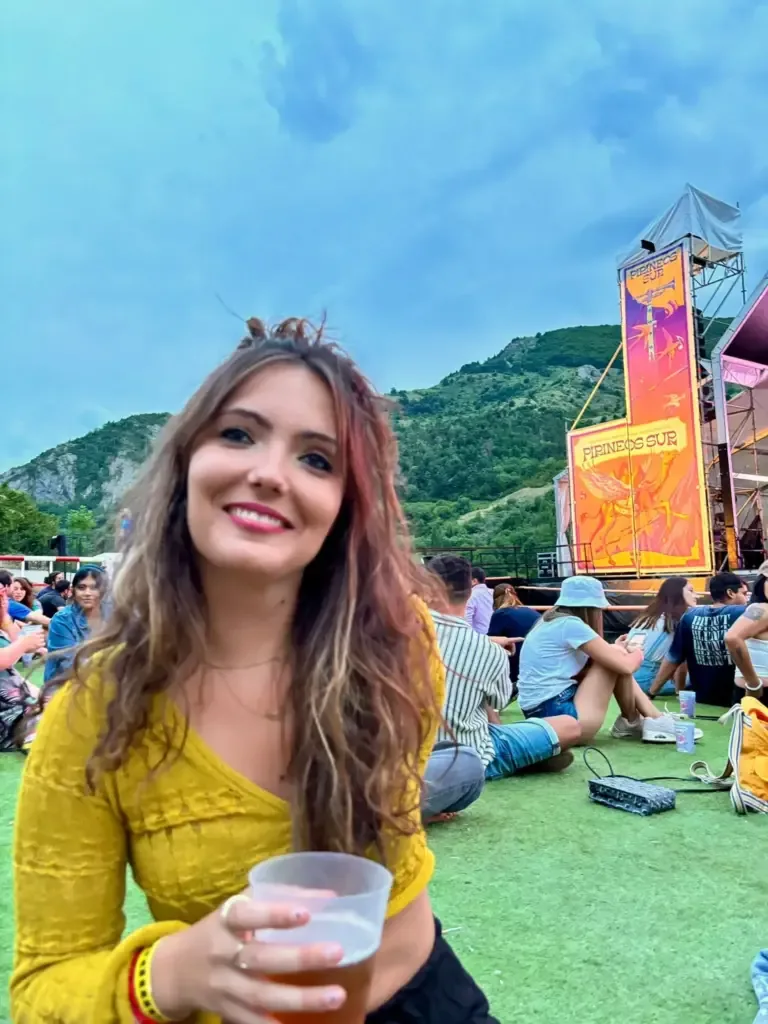
But as soon as the conversation leaves the organization and returns to the people, humor reappears. Rocío still remembers the day she tried to lift on her shoulders, for the first time, a friend’s girlfriend: “It didn’t go well. Now we are very good friends, but we had a very bad 90s movie start.” Or that festival where she inevitably ran into a guy who had ghosted her months before. “We greeted each other cordially, pretended to be oblivious, and each went their own way,” she says.
Then there are those little lessons that you only learn through festivals. Rocío recommends befriending the people who work at the bars, never losing the cord of the reusable cup, and waiting for the venue to empty before leaving to avoid taxi and VTC collapse. Andrea never forgets the hand sanitizer. Irene always carries sweets “because of the heat.” Marta never forgets the phone charger and a portable battery. And the four agree that sooner or later, one learns that comfort ends up prevailing over any other aesthetic consideration.
That doesn’t mean clothes are irrelevant. On the contrary. They all recognize that the festival has its visual codes, although none seems willing to sacrifice the experience for good styling. Rocío, for example, has trusted the same Dr. Martens for years: “You never know how the bathroom floor will be and I’d rather die of heat than disgust.” Like her, Marta emphasizes footwear that can withstand the unbearable. Irene will never wear a jumpsuit to a festival again and Andrea always wears a skirt for the same reason.
It is likely that, at this very moment, the four voices of this report and their respective bodies are dancing deep in the guts of a festival or maybe already thinking about the next one. Andrea will devour it. Rocío will live it as a factory of stories. Irene will feel it as community. And for Marta it will be a city to discover. Enjoying the experience as they do is the best we can wish for anyone who has reached this final point. Happy summer and a very happy festival.
Read more Felipe VI and Milei coincide at the inauguration of De la Espriella and protagonize a unique moment