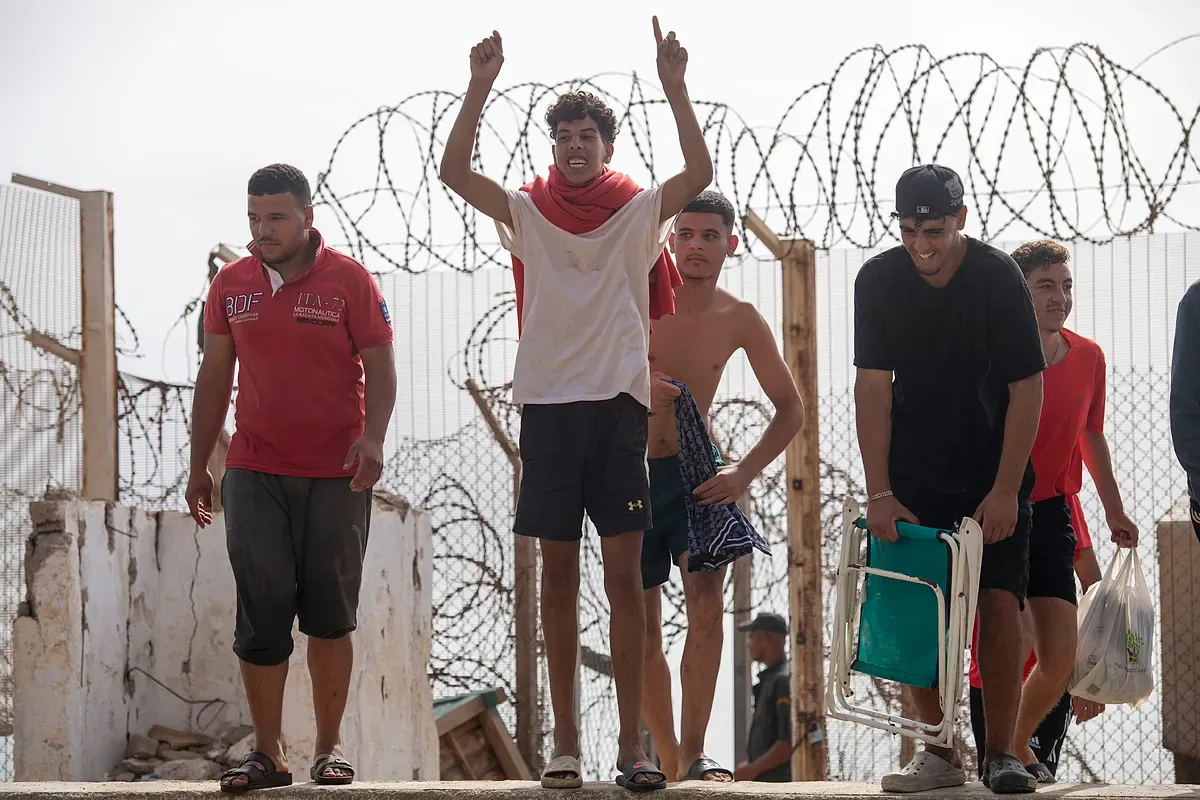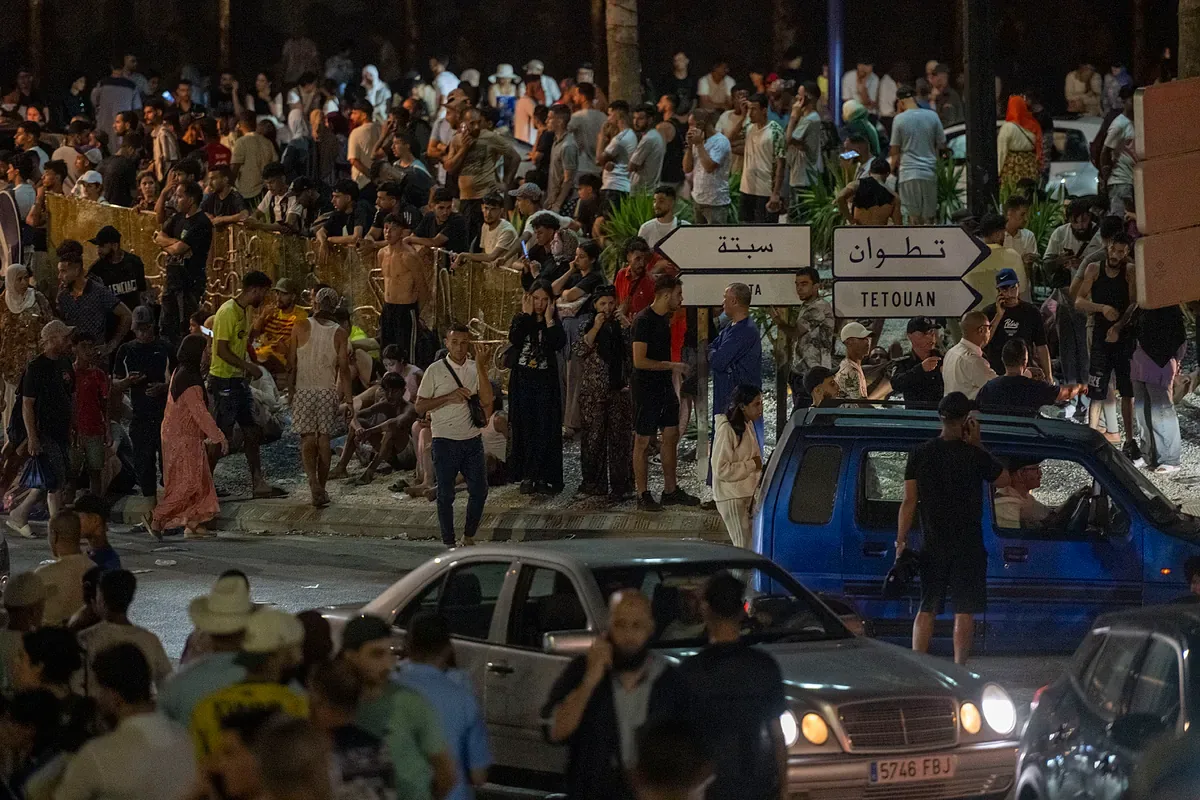





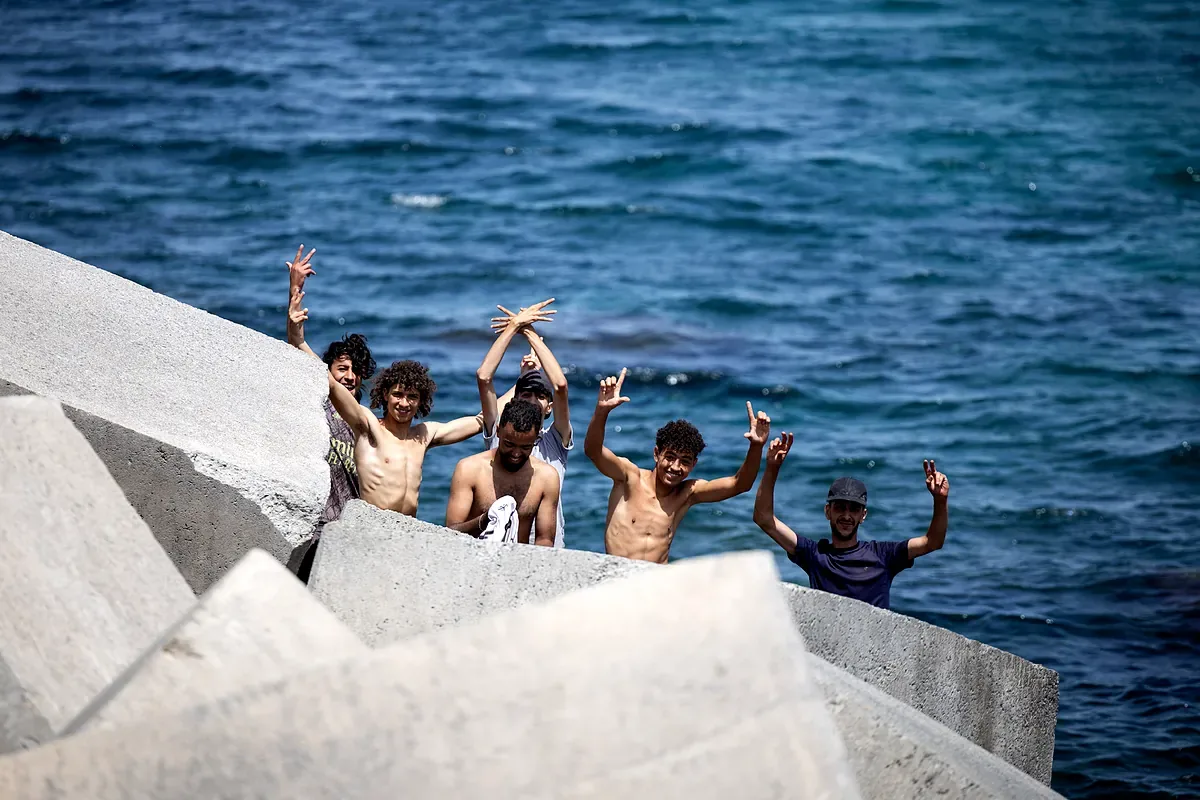
Fernando Grande-Marlaska appeared after the extraordinary meeting of the Interior Ministers of the European Union by videoconference to address the migration crisis in Ceuta and assured that the “work and immediate response of the Spanish authorities” has been recognized and that “it has become clear that in no way has the Schengen area been compromised.”
Also, Marlaska raised to 72,000 the number of immigrants who crossed irregularly from Morocco, assured that 70,000 have already returned to their country, and insisted that “there was no report that anticipated anything like what happened in 2021.” Furthermore, the Government delegation raised to 75 the number of bodies found in the migration crisis.
This Tuesday, the Minister of Inclusion, Social Security and Migration, Elma Saiz, announced an extraordinary allocation of 25 million euros to care for unaccompanied minors who arrived in Ceuta in last week’s influx, without detailing how many children and young people have been counted.
The Schengen area was not “compromised,” said Marlaska
The Schengen area was not “compromised” during the migration crisis in the enclave of Ceuta, assured the Spanish Interior Minister on Tuesday, after an extraordinary meeting of European Union ministers on the subject.
“In no way has the Schengen area been compromised in this crisis,” said Fernando Grande-Marlaska in a statement in Madrid, responding to criticism from several European leaders about this unprecedented situation in Ceuta.
Marlaska insists there was no report anticipating the massive arrival
Marlaska: “My recognition of the CNI is total. That said, I insist that there was no report anticipating anything like what happened, not even what occurred in 2021 (when 10,000 people arrived). What had been said was that there was an increase due to the summer season or even an increase due to the ruling, but nothing like what happened in 2021.” Marlaska emphasized that “if there had been any possibility of something like this” happening, it “would have had much more complementary information channels” and would have reached the “highest levels.”
Marlaska raises the number of immigrants arriving from Morocco to 72,000
Marlaska: “Entries have completely stopped.” Marlaska raised the number of arrivals in Ceuta to 72,000. The last official government figure was between 50,000 and 60,000. “Of those 72,000, 70,000 have already returned.” He explained that work is underway for the return of those remaining in Ceuta. “It has become clear that in no way has the Schengen area been compromised.”
Marlaska: “Everyone has recognized the immediate response of the Spanish authorities”
Marlaska: “All interventions from all states have been in a constructive tone, recognizing the work and immediate response of the Spanish authorities.” ·We have highlighted collaboration before and also after July 30 with Moroccan authorities for the return of most of the people who entered illegally.”
Over five hundred migrants, mostly sub-Saharan, wait to enter Ceuta’s CETI
More than five hundred migrants, mostly sub-Saharan, remain outside the Temporary Stay Center for Immigrants (CETI) in Ceuta to occupy a place in this facility, which is overwhelmed after filling its 512 places.
The migrants have been moved to Trampolín beach, located just 500 meters from the CETI, to prevent incidents between these people and those inside the facility.
The Government delegate in Ceuta, Miguel Ángel Pérez, has already stated that no extraordinary procedure will be enabled but that the exits of residents from the CETI will be expedited to allow the progressive entry of those outside, prioritizing sub-Saharan people and the most vulnerable.
The migrants are being monitored on the beach by National Police patrols while the Red Cross has launched a special device to provide food and drink to those waiting on this beach. The sub-Saharan migrants spent this morning playing football or swimming on the beach, as confirmed by EFE.
The Ceuta government estimates “about a thousand” migrant minors hosted after the massive arrival
The Government of Ceuta estimated this Tuesday “about a thousand” unaccompanied foreign minors currently hosted by the Autonomous City, after the massive migrant entry recorded last week. This was explained by the local government spokesperson, Alejandro Ramírez, during the press conference following the Government Council, where he admitted it is not possible to provide “an exact figure” because the process of locating and incorporating minors into the protection system is ongoing.
“As of today, we are at about a thousand. We cannot give the exact figure, since many minors are still in different neighborhoods and on the streets of our city,” he said. Ramírez described the situation in Ceuta as “very complicated” and warned that both the minor protection resources and the Temporary Stay Center for Immigrants (CETI) remain “overwhelmed.”
“The situation at the CETI is total chaos and overflow, which makes the current situation very unsustainable and very complicated for the city,” he stated, according to Europa Press.
The Government raises the death toll to 75 during the massive migrant entry in Ceuta
The Government Delegation in Ceuta confirmed this Tuesday the discovery since Monday of three new bodies related to the massive entry the city suffered last Thursday, raising the death toll in the attempt to cross to Ceuta from Morocco during the migration crisis to 75.
The Civil Guard’s maritime service has not ceased in the search for all victims left by last week’s migration emergency. Sources from the armed institute assured Europa Press that the number will continue to rise in the coming days.
The Government works to place containment barriers at sea in Melilla like in Ceuta
The Government is working on installing “containment elements” at sea in Melilla, just as it has done in Ceuta with the floating barrier, although “adapted” to Melilla’s needs and reality.
In a press conference, the Government delegate in Melilla, Sabrina Moh, reported that the Civil Guard has been working “intensely” on this “from the first moment” the Supreme Court ruling was known, which prevents border rejections of migrants trying to enter Ceuta and Melilla by sea.
The Civil Guard chief colonel in Melilla, Jesús Rueda, also present at the briefing, explained that there was “a joint study process” for the two autonomous cities, but “Ceuta was the top priority due to the volume and the challenge’s magnitude,” according to Efe.
The Civil Guard opens an office in Ceuta to receive information about missing persons
The Civil Guard set up an office this Tuesday morning in Ceuta to collect reports of missing migrants who tried to enter Spain last week, as well as an email for the same purpose.
The reporting point is located in the customs premises of El Tarajal and will be open from 8:00 a.m. to 9:00 p.m. for in-person procedures, according to the Civil Guard. In parallel, the armed institute has enabled the email ce-cmdceuta-pjlaboratorio-identificacion@guardiacivil.org to receive reports.
According to police sources consulted by EFE, at least 44 people, mainly young and minors, are missing after the massive migrant entry in the autonomous city of Ceuta and are being searched for by their families.
Ceuta will open two schools to host migrant minors arriving during the crisis
Ceuta will open two schools to host migrant minors who have arrived in the autonomous city since the migration crisis began. The opening of these schools was made at the request of the Ministry of Youth and Childhood, according to sources from the department led by Minister Sira Rego, confirmed to Europa Press.
A total of 862 migrant minors are currently hosted in Ceuta, according to data provided this Monday by the Government of Ceuta. “The ordinary capacity assigned to us by the Ministry is 29. We are therefore talking about an over-occupancy of almost 3,000 percent. 2,872 percent,” said the Presidency counselor in an interview with Cadena SER.
This Monday, sources from the Ministry of Youth and Childhood informed Europa Press that they were working “to enable spaces and infrastructures” that offer “a dignified first care” to these minors; and pointed out that “extraordinary financing and credit allocations will be enabled for this.” Additionally, the same sources explained that they are working to activate “all available mechanisms” to provide “a dignified reception” to all children and adolescents who have arrived in recent days in Ceuta.
Specifically, they assured that they were considering both transfer to the Peninsula — provided for in the Immigration Law, which establishes binding and supportive reception by autonomous communities in extraordinary migration contingency situations — family reunification — “as long as there are relatives in their countries of origin and it is verified that conditions guarantee the best interest of the minor” — and agreements with NGOs dedicated to the protection of minors, also provided for in the law.
Tellado: “Intelligence services had information that a rush was heading to the Tarajal border and no one acted”
Tellado: “Intelligence services had information that a rush was heading to the Tarajal border and no one acted. If the intelligence services did not fail, then the Interior Ministry and the Defense Ministry failed. Then they must inform us why they did not deploy the Army before the invasion. Ceutans live in fear because thousands of people roam the city, through the city’s hills. The Government must guarantee security to our compatriots living in Ceuta·.
Elma Saiz: “The Government of Spain will enable an allocation of 25 million euros for minors” after the Ceuta crisis
The Minister of Inclusion, Social Security and Migration, Elma Saiz, announced this Tuesday an extraordinary allocation of 25 million euros to care for unaccompanied minors who arrived in Ceuta in last week’s influx, without detailing how many children and young people have been counted. According to Elma Saiz, this amount adds to the 5.5 million euros already transferred to the autonomous city at the Childhood Sectoral Conference last July, where a total of 35 million euros were distributed for the entire territory.
Saiz insisted that there was no prior report warning of the massive arrival of migrants on July 30 and 31 and again thanked Morocco for its cooperation.
Tajani criticizes Spain for not consulting the EU on migrant regularization
Italian Foreign Minister Antonio Tajani criticized Spain for not consulting other European Union countries about the recent regularization of 500,000 migrants, in an interview published this Tuesday in ‘Corriere della Sera’.
“Spain is regularizing 500,000 undocumented foreigners and doing so without sharing this decision with any of its European partners, and this is not right. Now we know there are even a million regularization requests, and who prevents these people from moving freely within the Schengen area?” said the government vice president.
In the interview, he also defended Italy’s suspension in August of the free movement treaty with Spain by conducting controls at ports and airports on those arriving from that country after what happened in Ceuta, and assured that this decision was based on “objective elements, analyzed by competent institutional committees.”
Some NGOs denounce forced returns to Morocco
The NGOs No Name Kitchen and Asociación Elín, which have been assisting migrants who entered irregularly last week in Ceuta, have denounced inhumane treatment by the Government, including lack of access to water and food and the use of violence in returns to Morocco.
The coordinator of No Name Kitchen, Francesca Fusaro, told EFE that due to hunger, thirst, and the unsanitary conditions of being on the street, people are “desperate” and on the verge of fainting, so they end up accepting to return to Morocco: “It is a very ugly way of doing things,” she lamented.
According to her field experience, many people have not eaten anything since last Thursday because, although there have been some occasional food distributions, these have been “very small” compared to the people in need remaining in the city.
In her opinion, there is a “political will” to use “more violence than reception,” and the returns of people to Morocco are being carried out through a citywide search based on racial profiling by the Army and security forces, who put people in vans and take them to the neighboring country.
Asociación Elín, which has worked in Ceuta since 1999 protecting migrants, has also denounced through its social networks the “dehumanization” and “systematic neglect” suffered by people still in the city, many from highly vulnerable contexts such as Sudan or Chad. “Pushing a person to the limit of their physical and psychological endurance is cruelty with irreversible consequences for their health and integrity,” they stressed in a statement collected by Efe.
Ceuta’s vice president calls for solutions to prevent a new massive migrant arrival: “The fear exists”
Ceuta’s second vice president, Kissy Chandiramani, has called for “solutions” to prevent a new episode of massive migrant arrivals through the border with Morocco like those on July 30 and 31.
“The fear exists, this is the second time. It is clear that if Morocco wants, this will repeat whenever they want,” she said in an interview this Tuesday on ‘La mañana de Andalucía’ on Canal Sur Radio, as reported by Europa Press, where she echoed a possible new entry on August 15 “according to alerts in media and social networks.”
She also focused on the meeting of the European Union Interior Ministers this Tuesday and calls for solutions to what she called “an attack on territorial integrity.” “We believe this situation should not remain as it is, because then we would be doomed to have it repeat every time there is any incident or misunderstanding with the neighboring country,” she emphasized.
In this regard, she advocated for “a change in border management.” “Europe must assume border control, ensuring regulated and orderly migration to prevent these situations that are humanitarian dramas,” she stressed.
Hazte Oír files a complaint against Moroccan commanders and the Government delegate in Ceuta
Hazte Oír has filed a complaint against “Moroccan intelligence agents,” commanders of the Royal Gendarmerie and Auxiliary Forces of Morocco, as well as against the Government delegate in Ceuta, Miguel Ángel Pérez Triano, following the massive incursion of tens of thousands of people in Ceuta on Thursday and Friday through the Tarajal breakwater.
The association communicated this in a press release explicitly naming Fouad Ali El Himma, advisor to the King of Morocco, Mohamed VI, “whom various reports place as the alleged mastermind of the operation.” They request his inclusion in the preliminary proceedings opened regarding the events in Ceuta and to appear as a popular accusation to investigate whether the massive entry of people “was a concerted operation.”
The complaint is directed at “four levels of responsibility,” Hazte Oír states: the “Moroccan intelligence agents identified as infiltrators in Ceuta”; commanders of the Royal Gendarmerie and Auxiliary Forces; “the organizers of the operation”; and “the Spanish authorities who ordered, transmitted, or executed the orders of non-intervention.”
Additionally, they request an investigation into who gave the order to “be seen but not intervene” and “who sent the military without ammunition and without authorization to use force.” On the other hand, according to sources from the association to Europa Press, they have also filed a complaint against Pérez Triano and requested the testimony of the Government subdelegate in the autonomous city.
Melilla activates the procedure for the transfer of minors
Sabrina Moh, the Government delegate in Melilla, reported that between Thursday and Friday “1,323 entered and 1,063 were returned.” “These are significant figures that required special coordination,” Moh assured, specifying that the city of Melilla has received reinforcements. “Article 5 has been activated for the transfer to the peninsula of minors who arrived in the city. We have counted 140 minors,” she said.
The Spanish PPE delegation calls for “a strong European response” to the crisis
The Spanish delegation of the Popular Party (PPE) in the European Parliament has sent a letter to all MEPs to alert about “the seriousness of the crisis” triggered in Ceuta and Melilla after the “massive and irregular entry” of more than 60,000 people. The 22 parliamentarians of Alberto Núñez Feijóo’s party demand “a strong European response” to what they consider “a violation of the European Union’s external border.”
In their letter, the ‘populars’ argue that what happened in the autonomous cities “goes beyond a migration crisis and constitutes a threat to Spain’s territorial integrity and the credibility of the Schengen area.” “Ceuta is not just a Spanish border; it is Europe’s external border,” they emphasize.
In parallel, the PPE has requested an “urgent debate” in the next plenary session of the European Parliament on the migration crisis in Ceuta, its implications for the security of the 27, and “the need for a common European response.” The debate will take place the week of September 14 in Strasbourg, in the same plenary where the traditional State of the Union speech will be delivered by the President of the European Commission, Ursula von der Leyen. Reports Marta Belver.
“It causes me great frustration to see how European solidarity has died in Ceuta”
Additionally, Borrell criticized the response of 22 of the 27 EU partners led by Italy who questioned Sánchez’s migration policy. “It causes me great frustration to see how European solidarity has died in Ceuta because some countries have put their national electoral interests ahead of solidarity and loyal cooperation. It is absolutely the opposite of what was expected,” he stressed, highlighting, in contrast, France’s position for refusing to sign that letter alongside Portugal and Ireland.
Finally, the socialist politician compared the “hybrid attack” he believes occurred on the Spanish autonomous city with what happened in 2021 when “Belarus began recruiting people in Iraq, Syria, Arab countries… desperate people who wanted to flee at all costs” and “promised to take them to a place where they would have a job, chartered planes, took them to Belarusian airports, and when they arrived there, pushed them against the Polish border.” In this regard, he highlighted that then “Europe reacted with extraordinary solidarity” which he now misses in a “terrible” situation where around a hundred people have drowned at sea. Reports Marta Belver.
Borrell defends the non-critical stance towards Morocco: “If you need someone’s cooperation, the best is to get along”
Josep Borrell, former High Representative of the European Union for Foreign Affairs and Security Policy, defended this Tuesday the decision of Pedro Sánchez’s Government to avoid conflict with Morocco after the massive arrival of thousands of immigrants to Ceuta by sea. “If you need someone’s cooperation, the best is to get along with them. It is useless to enter a war of words and reproaches while the problem of returning those still there has not been resolved (…). This is the immediate tactical response to seek the solution to the problem in practical and operational terms,” he argued in an interview on Cadena Ser.
However, the former head of European diplomacy pointed out that “another thing is the review of border control problems.” In his opinion, “it seems evident that on the Moroccan side more could surely have been done to prevent that human flow from passing through their side.” To which he added: “I do not say they provoked it, they surely did not plan it, but when this stampede occurred, they also did not have the means to face it or the capacity to do so.” Reports Marta Belver.
The Ceuta Food Bank has worked “24 hours” nonstop since the crisis broke out
The Ceuta Food Bank has worked nonstop since the start of the migration emergency in Ceuta last Thursday, distributing to migrants “basic products” such as “water, milk, cookies, or prepared food,” and encourages citizens to collaborate.
The president of the Ceuta Food Bank, Pedro Mariscal, told Europa Press that they were “the first to arrive at the hot spot” and have been “24 hours” a day nonstop “with quite good flow” since they had “enough food.”
“We set up a supply point inside. We have not distributed anything on the street because nothing should be distributed on the street; people must be channeled to a point, and that is where distribution happens. That is how we have done it with quite good flow; we were lucky to have enough food,” Mariscal explained.
He specified that when the crisis broke out, they had many “basic products” easy to distribute such as “milk, water, juices, cookies, pastries” as well as a “good shipment” of “prepared food.” Specifically, he explained that “warehouses were opened in the Ceuta industrial park” to host unaccompanied minors and mothers with children who had arrived, and there they set up “a supply point.” Mariscal detailed that the weekend “calmed down a bit” and they have been “supporting people gradually little by little.”
Returns to Morocco continue
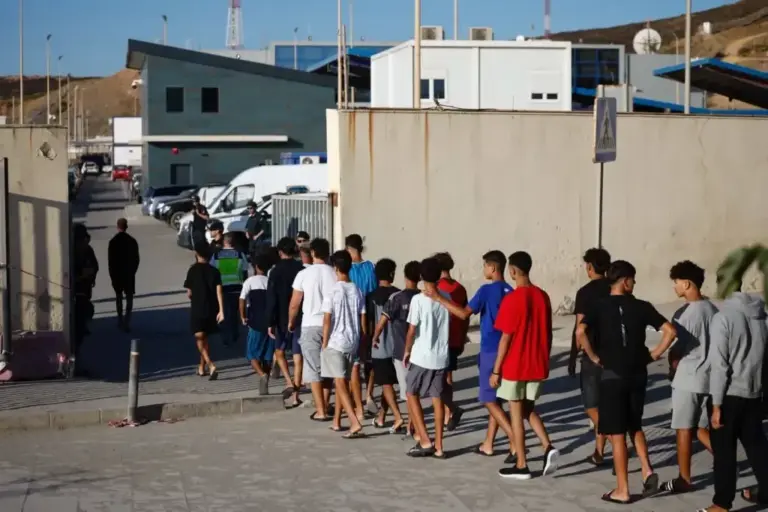
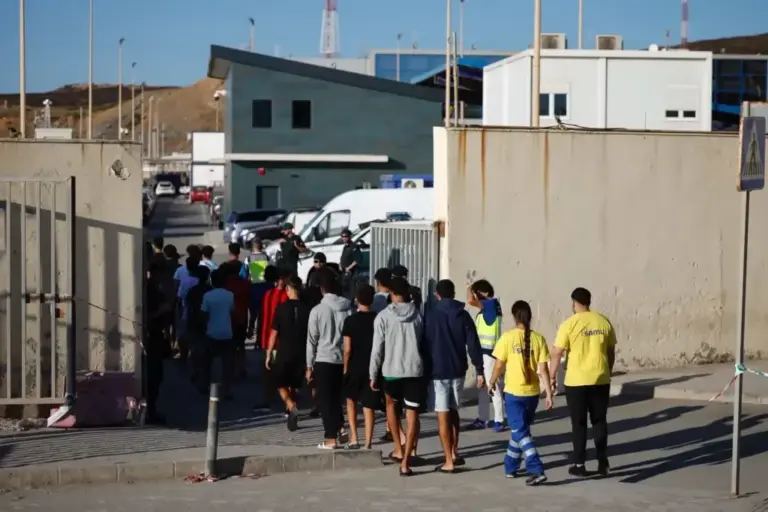
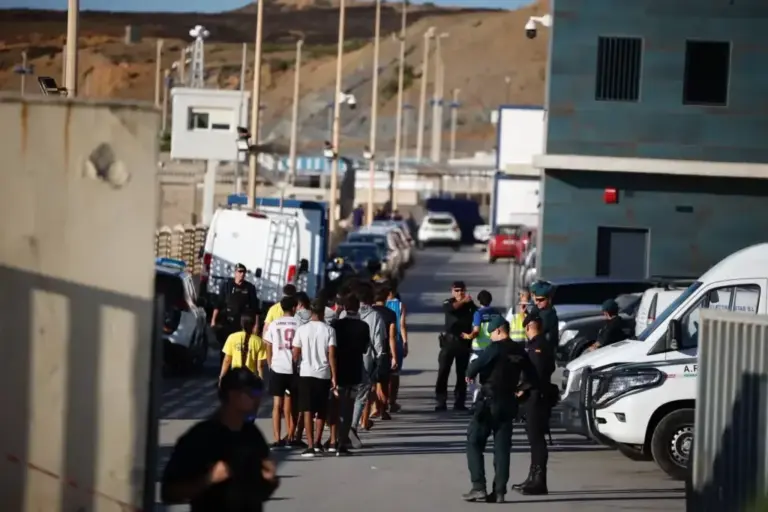
Members of SAMU along with Police agents are taking groups of unaccompanied minors to the border to be returned to Morocco. Reports Alberto di Lolli.
The floating border has already been repaired
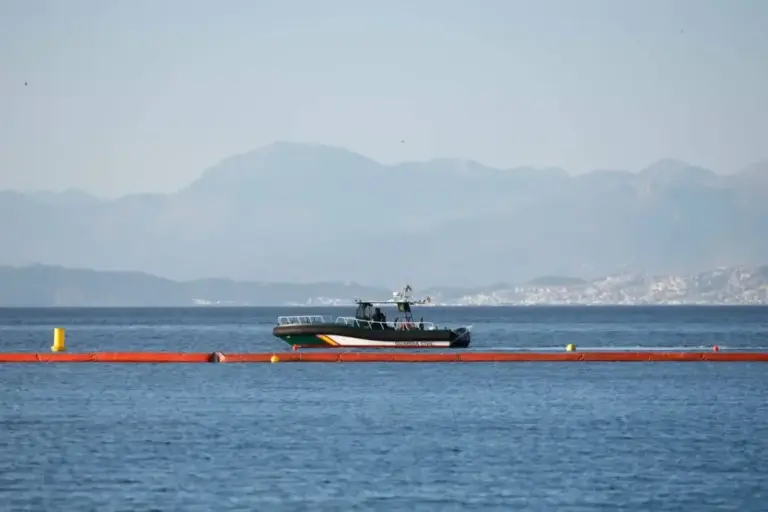
The containment barrier that Spain installed on the Ceuta breakwater last Saturday had suffered its first damages this Monday, according to El Faro de Ceuta. However, early this Tuesday the floating border has already been repaired. A Civil Guard boat is monitoring the area, according to Alberto di Lolli.
Margarita Robles talks this Tuesday with the general commanders of Ceuta and Melilla
The Minister of Defense, Margarita Robles, will hold a videoconference meeting this Tuesday with Major General Luis Fernández Herrero, general commander of Ceuta, and Major General Luis Cortés, general commander of Melilla, from the headquarters of her Ministry.
Robles insisted this Monday that “Spanish territorial integrity and sovereignty are untouchable” and guaranteed that the army will remain in the autonomous city to support the Civil Guard “in the tasks that need to be carried out” after the irregular entry of tens of thousands of people from Morocco into the autonomous city of Ceuta.
Ceuta resumes acts in honor of the Virgin of Africa “despite the exceptional situation”
The Government of Ceuta has agreed to hold the acts in honor of the Virgin of Africa scheduled for August 4 and 5, despite the “exceptional situation” the city is experiencing due to the migration crisis. The Minister of Education, Culture and Youth, Pilar Orozco, and the Minister of Presidency and Governance, Alberto Gaitán, have confirmed the celebration of the religious acts, according to the Ceuta Government in a statement.
Thus, on Tuesday the traditional floral offering to Ceuta’s Patroness will be held, while on Wednesday the procession through the city’s streets will take place. The Government of Ceuta has celebrated that these acts “so rooted in the tradition and feeling of Ceutans” can be held and has thanked the collaboration of all institutions and entities involved to make their development possible with the proper guarantees.
Extraordinary meeting of European interior ministers
The Interior Ministers of the European Union will meet this Tuesday by videoconference to address the evolution of the migration crisis in Ceuta, after both the Prime Minister, Pedro Sánchez, and the leaders of 22 other member states requested the urgent convening of an extraordinary meeting to analyze the situation and coordinate the bloc’s response.
Starting at 10:00 a.m., the Interior Ministers of the bloc will meet along with other members of countries associated with the Schengen area, the European External Action Service, Frontex, the European Asylum Agency, and Europol. Interior Minister Fernando Grande-Marlaska will participate in the meeting from the department’s headquarters in Madrid and will later make statements to the media, according to Europa Press.
According to diplomatic sources, the meeting will serve for Interior Ministers to exchange positions on the crisis’s evolution, express their support for Spain, and address the coordination of the community response, both in protecting external borders and in dialogue with third countries.
First damages to Ceuta’s containment barrier
The containment barrier that Spain installed on Ceuta’s breakwater last Saturday as a deterrent measure for the irregular entry of immigrants from Morocco has suffered its first damages, according to El Faro de Ceuta, which shows an image where part of that inflatable structure has disappeared.
The Government Delegation confirmed to that media that “an anchor of the buoy has broken but the net has held and there is still a physical maritime border,” so the effect to fulfill the physical maritime border required by the Supreme Court ruling remains. Additionally, they insisted it will be repaired today.
Read more Is the Government responsible for the Ceuta crisis?