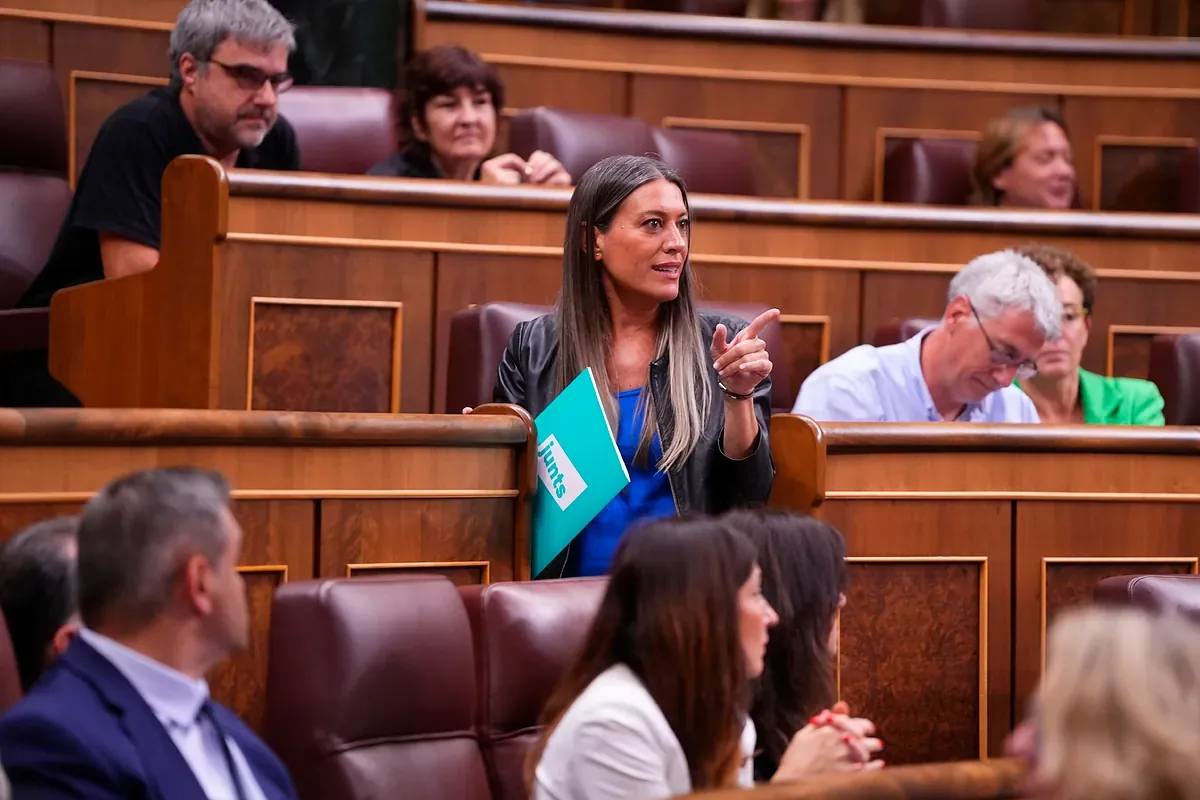





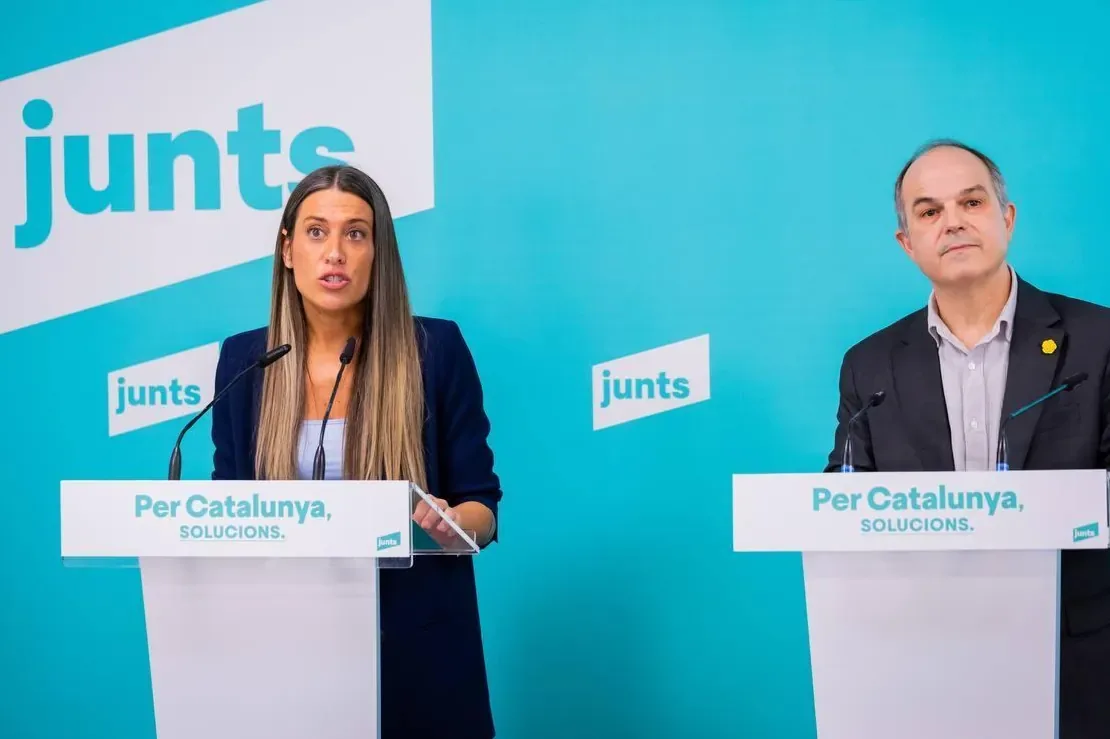
Jordi Turull, Míriam Nogueras and Salvador Vergés. They are the latest leaders of Junts who have called to “openly confront” the Aliança of Sílvia Orriols and have once again placed immigration at the center of their discourse less than a year before the municipal elections, key to deciding the first direct battle between the two parties. A dominant trend that coincides with the Ceuta crisis, which the neoconvergents have used to once again demand the transfer of border competences and to insist that Catalonia be excluded from the distribution of minors.
Read more Granada starts to tremble: “First the ground roared and then the sky”
The last to do so was Vergés, a deputy in the Parliament and a rising leader within the party. Close to Carles Puigdemont, he has been the clearest speaker and has called to “confront” the Aliança Catalana with “arguments” against voices like David Madí, former CDC leader, who has positioned himself in favor of reaching possible agreements with Orriols. In other words, Vergés calls to engage in a head-to-head with the mayor of Ripoll nine months before the local elections. “Personally, I think confronting them, since we have clear ideas and well-prepared files, is a good option,” he said in a recent interview with Efe.
Immediately after, he detailed his immigration proposal: to condition the granting of certain social aids on the newcomers “demonstrating their capacity for integration” into Catalan society. As an example, he mentioned benefits related to access to housing, which “should be a reward” for the “duties” fulfilled. “If the newcomer does not demonstrate this willingness and capacity for integration, these benefits should not be available to them,” he concluded after assuring that “the most basic rights,” such as health, must be guaranteed to any immigrant.
Measures that align with the internal ideology Junts handles regarding tightening requirements for immigrants to access public aid.
“Traditional parties have surely not emphasized enough issues like immigration or insecurity,” added the leader as an explanation for the rise of Aliança.
And he is not the only one: the leader of Junts in Congress, Míriam Nogueras, also repeats and spreads this argument coinciding with the Ceuta crisis, and has focused on demanding again the competences in immigration and insisting that Catalonia must be excluded from the distribution of minors. “When there are problems and no solutions, unrest is generated. And when there is unrest, the extremes appear. And our responsibility is to provide solutions, because if we solve a problem, the extremes run out of narrative. And if they run out of narrative, they run out of votes”, warned Nogueras this week referring to Aliança.
An explanation identical to Vergés’ that highlights the battle for the narrative and the open struggle with Sílvia Orriols’ party at the doorstep of a new high-voltage political course. In fact, the general secretary of the formation, Jordi Turull, spoke of “confronting” the mayor of Ripoll at the National Council that Junts held after the European Union Court of Justice ruling on amnesty. Specifically, the neoconvergent leadership bets on “politically confronting all those projects that threaten the values” of their party and leading the “alternative” to Salvador Illa’s Government.
“The time has come to stop reacting and lead again. We must politically confront all those projects that threaten the values we represent and the model of country we defend,” proclaimed Turull before the main cadres of the formation, a strategy that Junts calls to carry out to counter the attacks of Aliança due to the failure of the ‘procés‘ and the criticisms towards the “old” pro-independence parties.
However, the shadow of Orriols seems long according to the polls and despite the controversy over the hiring of her daughter as a local police officer in Ripoll. The latest Generalitat poll, published in early July, was a blow to the neoconvergents: the far-right pro-independence force would go from having 23-25 seats in the Parliament – from the current two – in its second encounter with the polls in an autonomous election and would be third behind the PSC and neck and neck with ERC. On the other hand, Junts would fall from second place to fourth, losing almost 20 seats (from 35 to the 16-18 now forecast by the CEO).
Not only that. The survey also warns of changes that explain these new trends among Catalans: immigration is the second most concerning issue when two years ago, in 2024, it was seventh. And the survey detects that the transfer of voters from Junts to Aliança has increased – there is a 28% vote transfer – but Orriols’ formation also captures 23% of support from people who in previous elections chose the Vox ballot.