





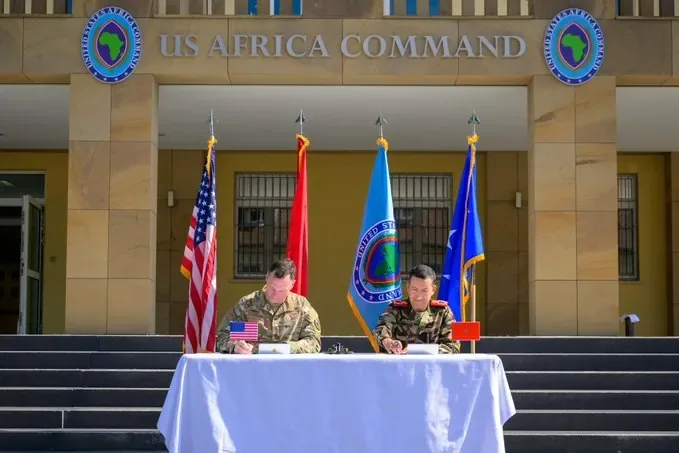
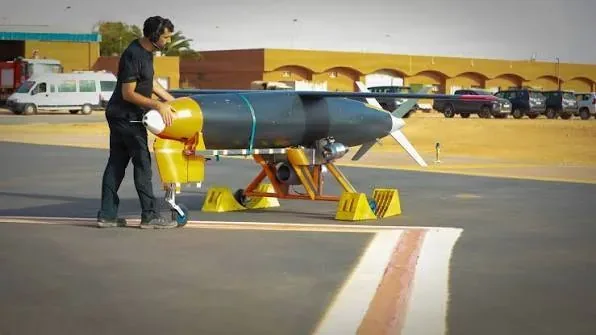
“The first live-fire demonstration of AMTEC (Africa Multidomain Training and Experimentation Center) in Morocco tested a long-range, low-cost cruise missile system, showing how AFRICOM and Morocco quickly connect the operational needs of combatants with technological industry innovation.” This announcement from the U.S. military command for Africa further elevates the alliance between the two countries, not so much for the revelation of the missile tested (Anthem) but for the new testing and exercise center in the African country.
Read more Vivas will go to the Judiciary for the Government’s «passivity» in the Ceuta crisis
Located in Tan-Tan (southwest Morocco), the complex is intended, among other missions, to test new systems and technologies, which also certifies the strategic importance that Washington grants to Rabat. In the words of its military, the demonstration “strengthened Morocco’s role as a regional security benchmark.”
For Morocco, it is equally relevant since the U.S. is not only a prominent partner on the shifting international board but its main arms supplier (around 60%). “The vision is to consolidate AMTEC as a regional center of innovation, strategic cooperation, and industrial development, as well as a center of excellence dedicated to experimentation, validation, evaluation, and development of advanced technologies,” summarizes Moroccan Colonel Zouhair El Hamdani the sessions between August 3 and 7. According to this officer in charge of coordination, “the first live-fire demonstration marks an important milestone to turn that vision into reality.”
What is expected to be a military testing ground for the United States and its allies (starting with the hosts) as well as for defense companies and startups (shortening manufacturing, testing, and operational use times), the AMTEC structure should be completed before 2030. Three major components will dominate the site: a Multidomain Training Area (MDTA), an Innovation and Experimentation Center, and a Drone Academy.
It is the result of the signing in July in Stuttgart (AFRICOM headquarters) between the U.S. general, Dagvin Anderson, and inspector general of the Royal Armed Forces of Morocco, Lieutenant General Mohamed Berrid, three months after a bilateral Defense agreement for the next ten years. This document, signed at the Pentagon, constitutes the Roadmap of their military cooperation, taking over from the 2020 agreement.
Anderson, AFRICOM commander for a year, points out that the center in Tan-Tan “demonstrates that partnerships based on trust are the way we can face together the security challenges we share.”
“The partnership with Morocco provides a crucial stage that accelerates the readiness of the joint forces of the United States and our African partners,” he adds. Like the one they led in the twenty-second maneuver “African Lion” that brought together 5600 military and civilian personnel from several dozen countries.
Read more Final stretch of a lost term
The cruise missile, already tested in July at Project Convergence-Capstone 6 in California, has been developed by Covenant Industries in the U.S. Founded in 2024 by the American-Israeli Michael Kaufman, who acted as an investor in Thiel Capital, it is a low-profile American technology company with a subsidiary registered in Israel focused on the development of low-cost missiles and weapons systems. According to various reports, part of Covenant Industries’ equipment and personnel in the missile test in southern Morocco came directly from Israel.
Anthem aims to be an attractive resource in a global context marked by the war between Russia and Ukraine since February 24, 2022, and the one shaking the Middle East since October 7, 2023, with all its effects on the production, supply, and reserves of weapons. It could be an alternative to the Tomahawk missiles, which are more expensive. According to the U.S. media “Politico,” it is among the options studied by Germany in the urgent search for long-range, low-cost attack capabilities.
The U.S.-Moroccan alliance, dating back to 1777 when Morocco became the first country to recognize the U.S., received a boost with the arrival of Trump at the White House. The relationship, which goes beyond his rapport with King Mohamed VI, includes military collaboration, private company contracts, joint training, and of course the politically significant strategic declaration such as the U.S. recognition of Moroccan sovereignty over Western Sahara within the framework of the Abraham Accords in 2020.
The close relationship between Rabat and Washington contrasts with tensions between both and, for different reasons, with Madrid. While the crisis around Ceuta after the massive influx on July 30 examines the sensitive Spanish-Moroccan relationship, Trump has not hidden his anger towards a country that is a member of NATO like Spain. One of the latest episodes this year was the rejection by Pedro Sánchez’s government to allow the use of the Rota and Morón bases for operations linked to the offensive against Iran.
Trump has been decisive for the military strengthening of Morocco also indirectly as a godfather of the Abraham Accords. Normalizing relations with Israel officially opened the door for Rabat with the offer of defense industry systems and technologies from both state and private Israeli companies.
Following the outbreak of the Second Intifada, Morocco broke diplomatic relations with Israel. In 2021, eleven months after the Abraham Accords, then Israeli Defense Minister Benny Gantz visited Rabat for the first time to relaunch cooperation in security matters. Morocco supports the Palestinian cause and the creation of a Palestinian state while becoming Israel’s main military partner in Africa.
Read more A Congress paralyzed with fewer laws than ever while Sánchez breaks decree records


