



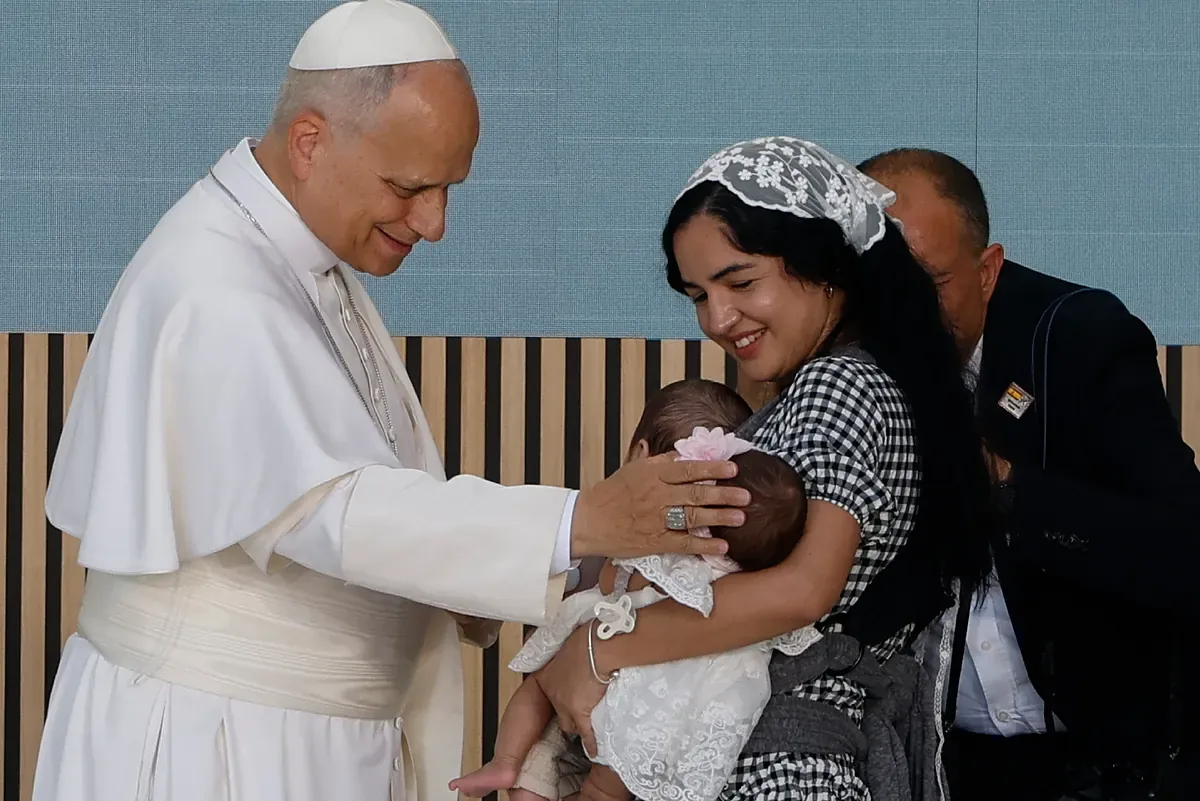
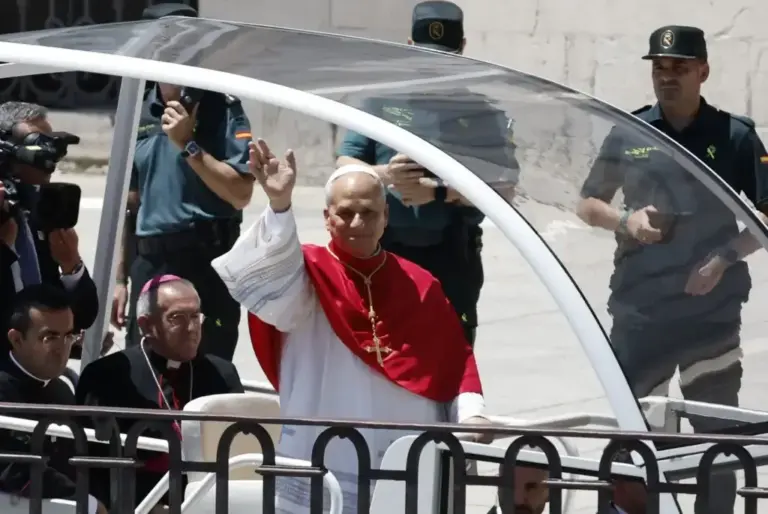
Pope Leo XIV visited this afternoon the CEDIA 24 Hours Information and Welcome Center of Cáritas Madrid, located in the Lucero neighborhood (Latina district). The meeting, of a marked social nature, took place in the final stretch of the first day of his official visit to the capital, after holding institutional meetings during the morning.
The Pontiff arrived at 18:10 at the facilities on Cullera street, accompanied by the Archbishop of Madrid, Cardinal José Cobo. Leo XIV toured the center’s facilities, including the soup kitchen, the outdoor patio, and the dormitories, which currently offer stable residential places for 47 men and 20 women.
During the event, the Holy Father learned firsthand about the reality of homelessness in Madrid through the testimonies of three people assisted by the resource. The interventions presented trajectories marked by residential exclusion, economic precariousness, and administrative vulnerability.
The residents conveyed to the Pope the importance of the comprehensive support they receive through socio-labor insertion plans and training workshops. After the users’ statements, the meeting featured a musical performance by the artist Niña Pastori in the central section of the patio.
In his welcome, the cardinal highlighted the significance of the Pontiff beginning his journey in the capital from the outskirts of Madrid, describing the center as “a singular door: small in appearance, but immense in mercy.” Cobo recalled the archdiocese’s welcoming identity: “This is a city whose identity says that if you are in Madrid, you are from Madrid: thank you, Holy Father, for also being from Madrid today.”
The Archbishop of Madrid emphasized the theological and social value of the work carried out in the Lucero neighborhood, at a crossroads connecting Carabanchel, Latina, and Aluche. “The evangelical mandate of prioritizing the last gives us the most complete vision of the state and progress of a society. Starting in these places is not just a pastoral option, but an authentic confession of faith,” Cobo defended, appealing to the need to keep “feet firm in the neighborhood and the mud trodden by those who lack a roof and dignified work,” since, as he affirmed, “the City of God begins its construction from the invisible cities.”
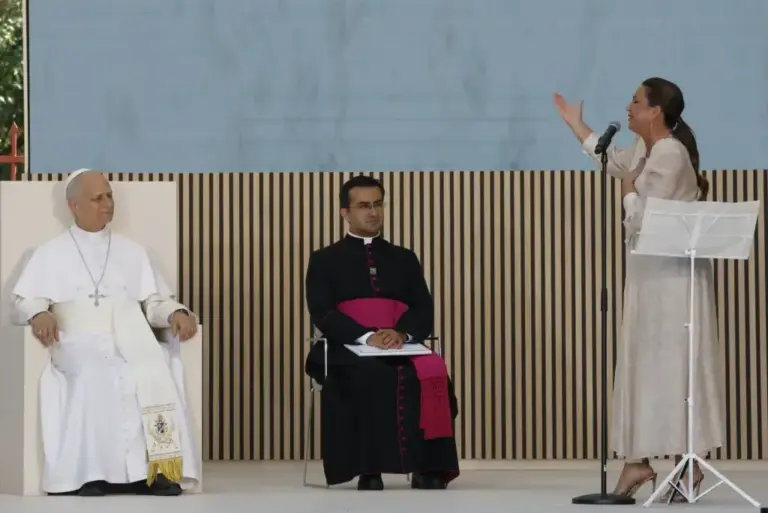
In his closing speech, Leo XIV praised the work of the 29 professionals and 71 volunteers who support the initiative and issued a warning against currents that undervalue the social action of the Church. “The exercise of charity is despised or ridiculed, as if it were the obsession of a few and not the incandescent core of the ecclesial mission,” affirmed the Pope, who asked to “re-read the Gospel so as not to run the risk of replacing it with a worldly mentality.”
Making explicit allusion to the names of the assisted individuals and the center’s volunteers, the Pontiff described the resource as a “simple and welcoming nativity scene” that assists the most needy 24 hours a day. He also called for a direct model of help free from indifference: “Almsgiving is not charity. The one who receives more grace from almsgiving is the one who gives it, because they are seen through the eyes of the Lord,” he asserted, urging people to look into the eyes and touch the hands of those who suffer.
The Holy Father made explicit reference to the stories that reside in the center and that he was able to learn firsthand. Leo XIV cited the names of Niurka and her two children, Ares and Atenea, as well as Khadri and the volunteer named Alicia, using them as examples of overcoming vulnerability, helplessness, and difficulties arising from social exclusion.
The event concluded at 18:40 with the presentation to the Holy Father of the Tree of Hope, a handcrafted structure made by users of the Cáritas Addiction Treatment Center that collected messages and requests from the center’s community. After a brief ascent to the adjacent parish church to impart the blessing, the Pope left the Latina district to continue with his official agenda in the capital.
The work of the center
The Cáritas Madrid CEDIA 24 Hours center operates 365 days a year as a comprehensive care resource that addresses users’ health, administrative status, and employment. In 2025, the center assisted a total of 2,562 people. Currently, the resource faces saturation of the capital’s care network, maintaining a structural waiting list of approximately 180 people to access residential places. Furthermore, the center’s managers point out the impact of new realities of exclusion derived from the housing market and the lack of documentation, which affects almost 60% of those assisted.