


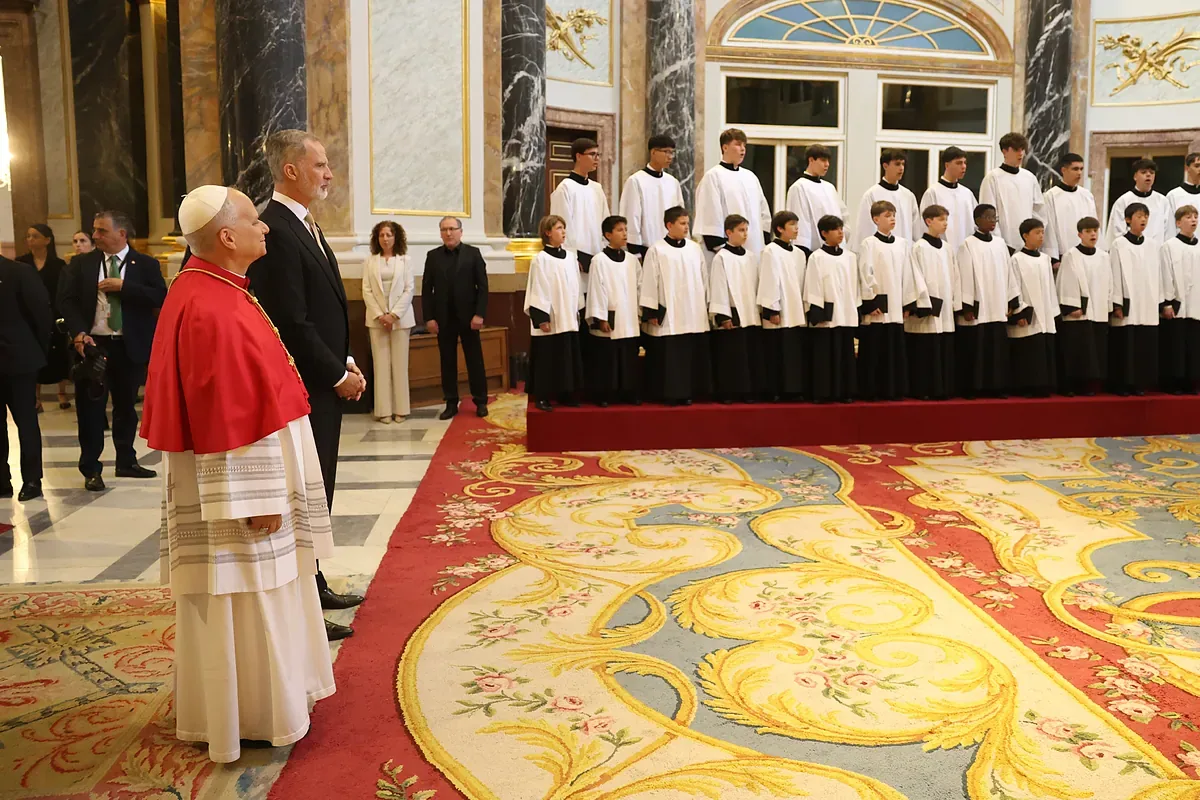
Victims of abuse in the Church have expressed their disappointment at King Felipe VI’s mention of “pain” over abuses within the Catholic Church, the first time the head of state, who has also said that “they are not representative of the entire institution,” has referred to this issue.
In this regard, the spokesperson for the National Association of Stolen Childhood (ANIR), Juan Cuatrecasas, found King Felipe VI’s speech “very good,” but reminds the Monarch that victims of sexual abuse in the Church are still “without news from God,” in reference to the fact that, despite the Vatican and the Pontiff himself having confirmed a meeting with Spanish victims, they have not been called.
Along the same lines, the first complainant of abuse in Montserrat, Miguel Hurtado, criticized King Felipe VI’s words, accusing him of “whitewashing” the Church. “Very unfortunate statements saying that the abuses are not representative, thus denying their structural and systemic nature,” he pointed out.
Hurtado warned that it has been “a disastrous intervention that helps little or nothing” in the fight of abuse victims in the Church for justice.
Meanwhile, regarding the Pope’s words on the plane concerning abuses within the Church, in which he specified that he would meet with victims but not all of them, the founder of l’Associación Mans Petites and father of one of those who reported the Maristas case, Manuel Barbero, ironically remarked that León XIV cannot meet with all of them because “there wouldn’t be a space large enough to meet.”
“But there are a couple of dozen entities in Spain that fight against pedophilia, and he hasn’t called any of them. We have been requesting an interview (with the Pope) for two months,” Barbero recalled.
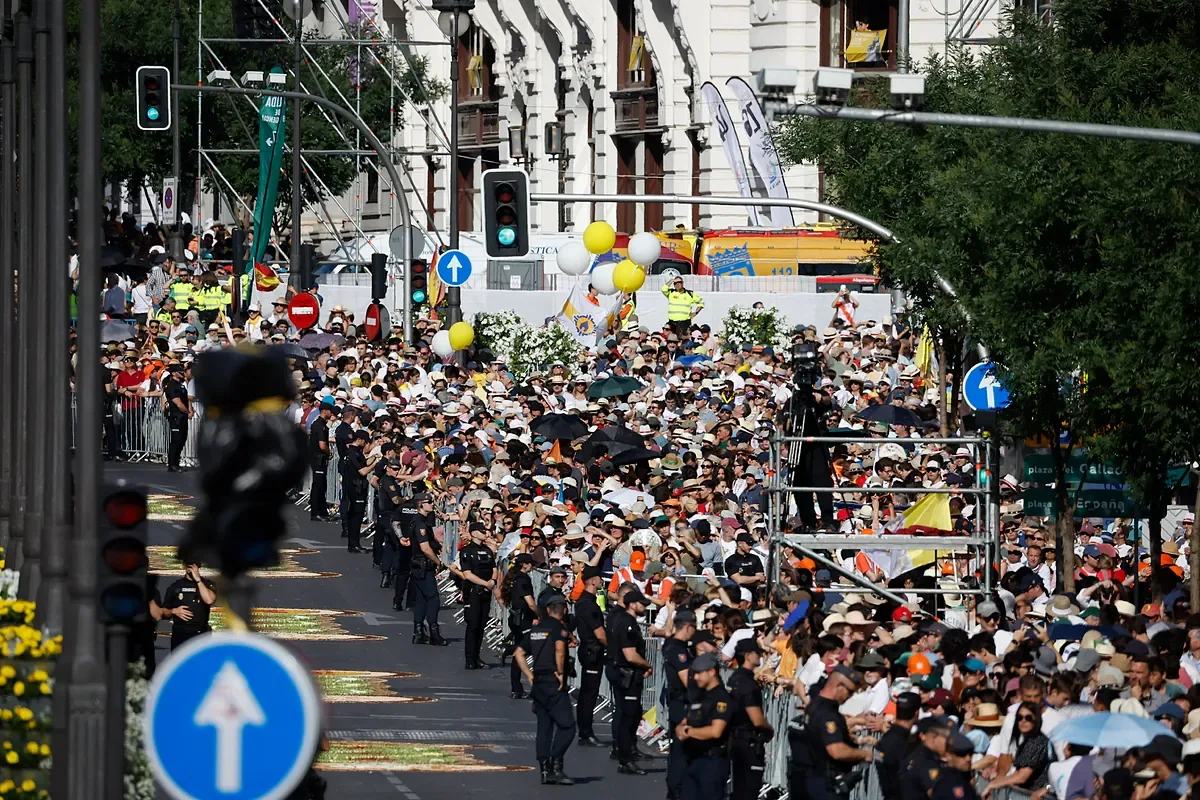
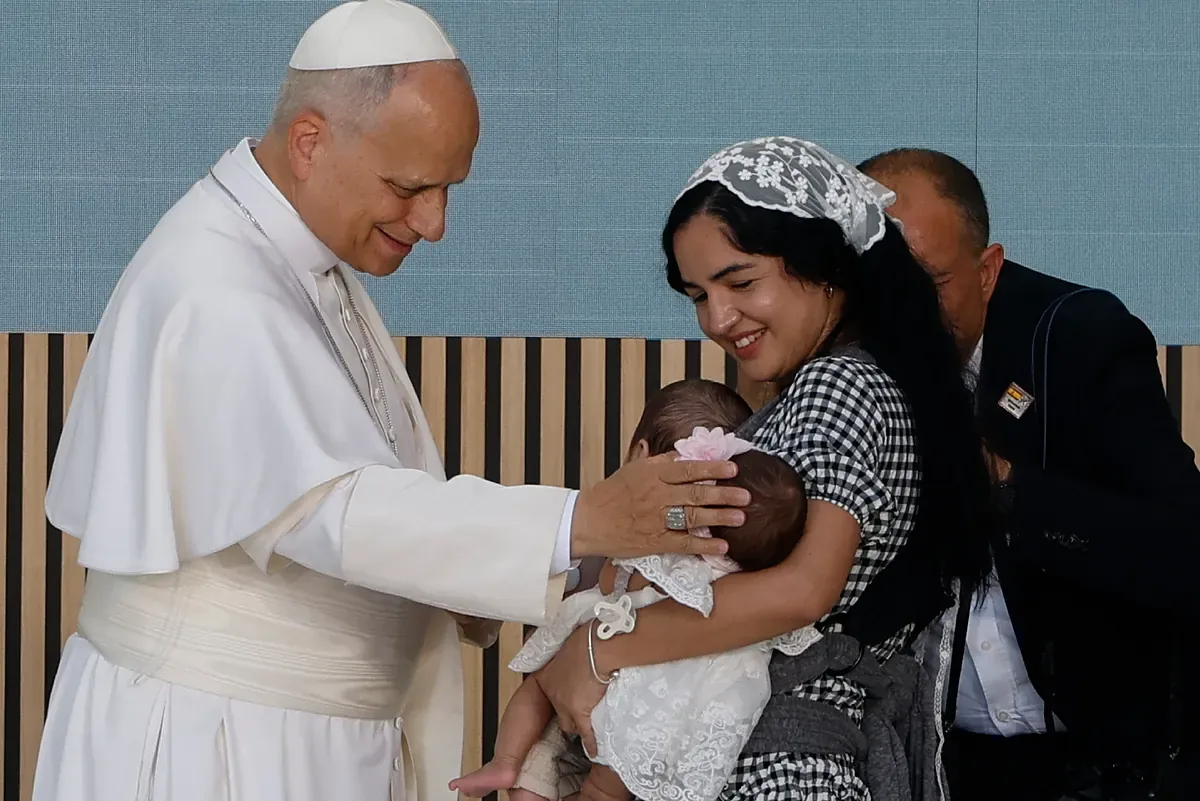
The Pope will meet with abuse victims during his trip to Spain, which began this Saturday. A meeting that was not included in the trip’s itinerary, which will end on June 12, and in which “some victims of abuse by the Spanish clergy” will participate.
The Spanish Church has been responsible for organizing this meeting, demanded by the victims, for which neither the day nor the time has been revealed.
Furthermore, a group of associations, including ANIR, AVA, Justive Iniciative, Infancia Robaba Madrid and LulaCris, have demanded a “truly inclusive” listening from the Pontiff and have denounced the exclusion of groups they consider representative of the victims and who have been working for years for truth, justice, and reparation.
The organizations have expressed their “deep concern” about the lack of plurality and representativeness in the planned meetings with the Pontiff. “We don’t want a photo with the Pope: we want rights and reparation for all victims,” said the entities, emphasizing that their goal “has never been a photograph or an empty gesture.”
Likewise, they emphasize that with their appeal they do not intend to pit victims against each other and stress that all “deserve respect and consideration” and demand that no survivor be “invisibilized.” “If those who have spoken out for years are not heard, the message thousands of survivors receive is that there are still invisible victims,” they point out.
In this regard, they point out that an institutional greeting “lacks value if it is not accompanied by real listening and effective responses.” “What we demand is a commitment to the claims of all survivors and a profound, not merely superficial, change in the way this reality is addressed,” he stressed.
“We ask for the recognition of victim status that grants effective rights to survivors, including specialized psychiatric and psychological assistance on demand and for life, as well as support measures for educational and labor integration. Likewise, we demand fair compensation proportionate to the harm suffered,” they indicated.
Furthermore, they show special concern about the response that will be offered to people who have been “excluded from the current agreement between the Church and the State.” “If we talk about an inclusive Church, it is legitimate to ask whether that inclusion truly reaches all victims or only a part of them,” he pointed out.
“We also demand answers for those who, after undergoing judicial processes with all guarantees, have seen their cases provisionally archived due to lack of evidence or procedural defects. These people cannot be asked for more than those who could not resort to justice due to the statute of limitations on crimes. In many cases, in addition to proving the harm suffered, they are required to identify their aggressor to access the recognition and care they need,” they denounced.
The signatory associations recall that for years they have collaborated with official investigations, with the Ombudsman’s Office, and with the development of prevention and reparation proposals and protocols. In their opinion, there is a risk that public opinion will interpret that all victims are satisfied with the planned meetings with the Pope, when in reality “there are diverse sensitivities and numerous groups that have not been taken into account.”
“The exclusion of representative associations and survivors who have been working for years for truth, justice, and reparation only contributes to increasing the feeling of abandonment and weariness in the face of negligence that has lasted too long,” they state.
In this context, they consider that, if León XIV has decided to meet with victims during his visit to Spain, it is “essential” that he also listen to those who have assumed the personal and social cost of reporting abuses, as well as to the organizations that have promoted changes and protection measures to prevent new aggressions.
“Truly universal listening requires stepping out of any comfort zone and opening spaces for all voices,” they maintain.