




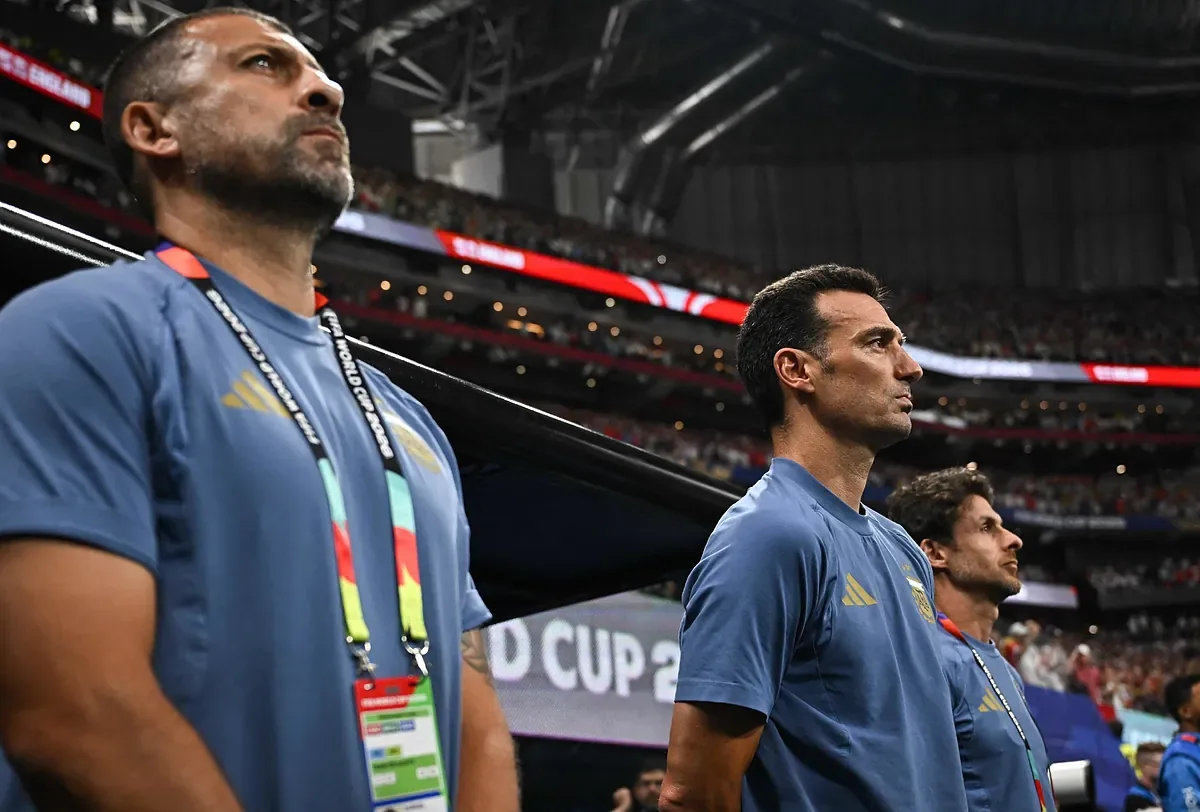
“We are never lost.” This phrase from Leo Messi after one of the agonizing victories in this World Cup encapsulates the philosophy that Lionel Scaloni wanted to bring to the Argentine national team when, after the 2018 Russia World Cup, he received the call from the AFA to take charge of the “senior team.” He had experienced as an assistant to Jorge Sampaoli the shock of falling in the first round of the round of 16 against France. He had seen the wear and tear of the coach, consumed by the responsibility of having a squad of stars led by Messi that was not enough to fight for the World Cup. Scaloni had his diagnosis of why.
He did not expect the call from president Claudio Tapia nor did he question why it came, whether due to the AFA’s financial constraints or the need for a change after 25 years without winning a title. They gave him six friendlies, as a test, and freedom to recruit a coaching staff that he turned into his praetorian guard.
The first call was to Pablo Aimar. “Pablo, we’re going to take over the national team,” he told him. “You’re crazy,” replied the former Valencia player. It was precisely in L’Alcudia, a Valencian town that organizes the COTIF, a prestigious U-20 tournament, where they both sat together on a bench for the first time. That Argentine youth team, led by Lautaro Martínez, was crowned champion. “The project of any former player who gets into coaching is to reach the senior national team or some important club. Right now, we just want to lend a hand to the AFA,” the coach said then.
Calling Aimar for the challenge had two explanations. The first is that both are representatives of the so-called Pékerman Generation that rose to fame in 1997 after winning the U-20 World Cup in Malaysia. Although above all, they soaked up the philosophy that gives prominence to the game, but opts to have a very close, almost paternal relationship in some cases, with the player, relieving him of tension.
“like a marriage”
The second comes from that vision: Aimar had been Messi’s idol and made him present in the conversation he had with him to enlist him in his project. He needed the number 10 to be his standard-bearer and to surround him with whatever he needed to bring out his football, as happened at Barça. “I tell Pablo that it’s wonderful to enjoy this, to see everything he does,” he explained a few days ago. Scaloni and Aimar have a bond that makes them understand each other “like a marriage,” they say in their country. They are calm, thoughtful, they are the ones who build the tactics, “and the ones who sleep the least,” Scaloni joked during this long stay in Kansas City from where, together on bikes, they have escaped to visit their families, staying 10 kilometers away.
The grounding of the coach is completed by two other former internationals, with brilliant careers in European football. That connection with the way of working in the big European clubs has also been key in Scaloni’s new Argentina. That’s why he chose Walter Samuel and Fabián Ayala. The former Inter player is from his generation and shared that U-20 World Cup under Pékerman. In this World Cup, his role has emerged with set pieces and was evident with Mac Allister’s goal against Switzerland. “I’m happy for Walter because it’s a play he has prepared a lot,” Scaloni confessed after the narrow win.
That freedom to propose and reach consensus on decisions is something that characterizes this coaching staff in which he takes refuge. Ayala is his voice in the pre-match and during breaks, when FIFA seeks the technical point of view, because everyone knows what goes through the coach’s mind after what they call his “pensieri,” in Italian, his reflection. “He plays the match many times beforehand and then tells us ‘there are changes, there are changes,’” explains the former Valencia defender. He tells them, as happened in Qatar, on a walk after lunch. On that occasion, it was his proposal to load the attack against France on the side of Ángel di María.
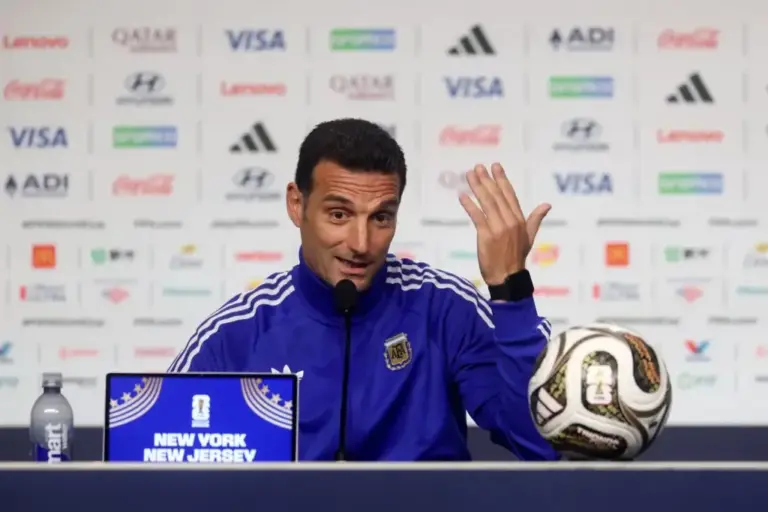
Scaloni analyzes with them—and adds analyst Matías Manna and physical trainer Luis Martín, El Profe—any decision he makes before and after matches. This happened in Qatar, when after the defeat against Saudi Arabia he asked his teammates for discretion: “Let the players not see us upset.” It has also happened in the United States, where the coach evaluates the matches with his coaching staff as a balance. That’s why, when Argentina played their worst match of the World Cup, against Switzerland in the quarterfinals, Scaloni got angry with his players for taking too long in the mixed zone. He got off the bus and told them to go to the hotel to rest. A scolding he always compensates with a barbecue, “because sometimes it’s worth more than 20 tactical sessions,” argues Manna.
That need to ease the tension, to give voice to players like Messi, also comes from the long camps that, as internationals, the coach and his four assistants experienced, who are not exempt from wear and tear. In fact, Scaloni hinted in 2023, after his first Copa América title and lifting the World Cup, at a farewell. “Now it’s time to stop the ball. I need to think a lot about what I’m going to do because the bar is very high,” he confessed. Those were weeks in which this praetorian guard rearmed and added another Copa América and a world final.
Read more A final to embrace and an exception: the giant screens that will unite Spain