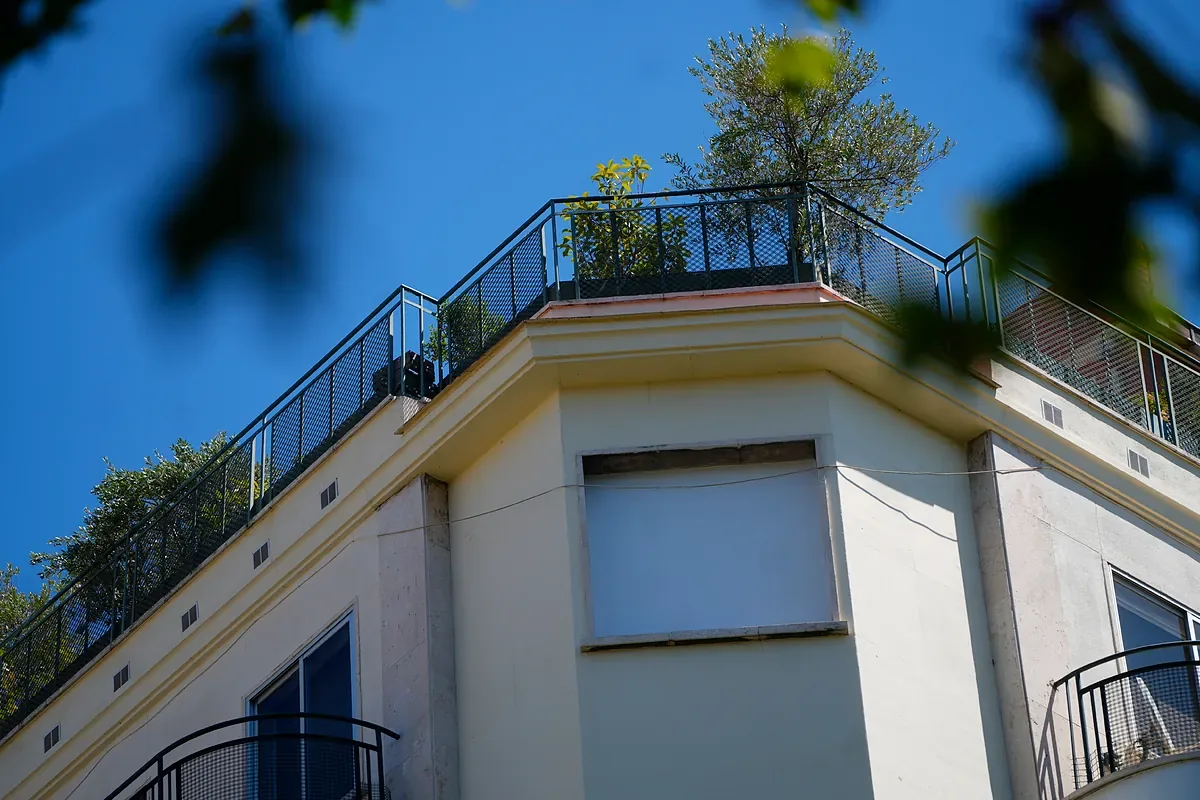





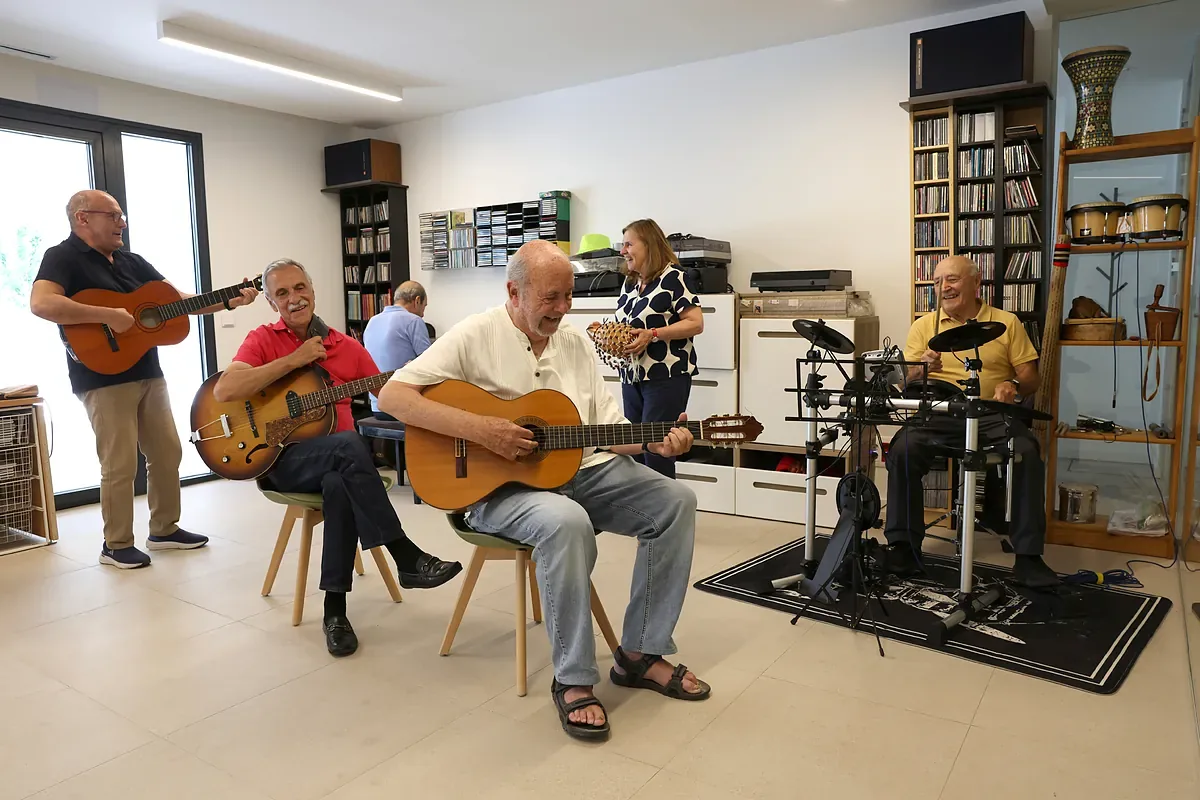
A movement is growing in the region. Self-managed cohabitation models for seniors who seek to age accompanied, active, and away from the traditional residential model. This is how Madrid receives a new wave of senior collaborative housing projects, also known as cohousing.
Read more Norris dominates Mercedes at Hungaroring and Aston Martin feels competitive again
It is a housing creation and administration model that was born in Spain more than a decade ago, but which has gained greater momentum over the years. “Barcelona experienced the first wave and now the second is happening in Madrid,” explained José Antonio García at a conference on community care at La Casa Encendida.
García is part of the cohousing Villa Rosita, located in Torrelodones, a complex of 29 homes where 41 people live together, organized as a cooperative that bought their land and managed the construction of the homes. The project was born in 2016, when a group of older friends began to imagine what it would be like to live together.
They sought help from Jubilares, an association that advises cooperatives and institutions on the Danish model of small private homes that combine ample common areas. Over time, these types of projects have incorporated elements typical of the Spanish context, such as the transfer of use: in which the ownership of the homes belongs to the cooperative and not to each resident.
“What we pay is the right of use, that is a guarantee against speculation. As it is not private property, it cannot be rented or sold. If the person decides to leave or if they stay until they die, the money they put in for the right of use (approximately 260 thousand euros) is recovered, but without increment or at most it is updated according to the consumer price index,” clarifies Fernando, a resident of Villa Rosita.
Maluque is a member of the Entrecantos senior cohousing, built in Tres Cantos and which has 35 housing units. She decided to participate in this housing model after accompanying her father’s old age. “He lived to be 100 years old and when I told him I had to take him to a residence, he asked me to take him where his last friend was. That’s when I understood the importance of dying near friends.”
Juan Perdomo, president of the cooperative, also did not want to age as previous generations have, so he summarizes this alternative thus: “Coming to a cohousing allows you to choose where and how you want to live your last years when you can still decide.”
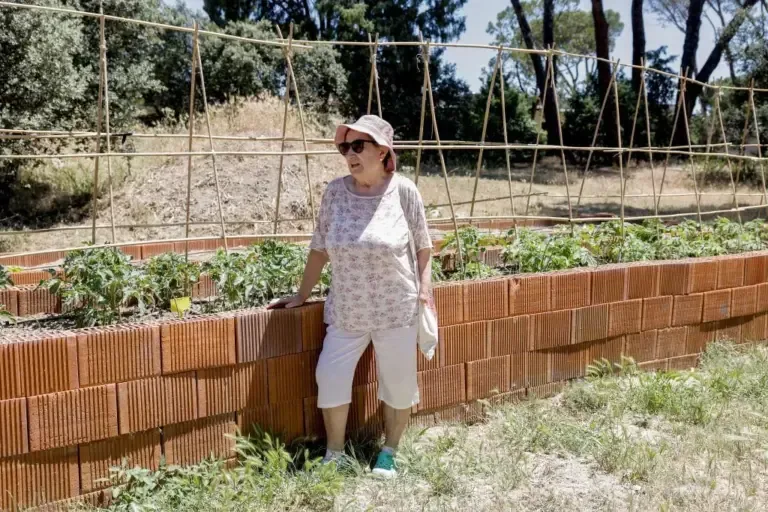
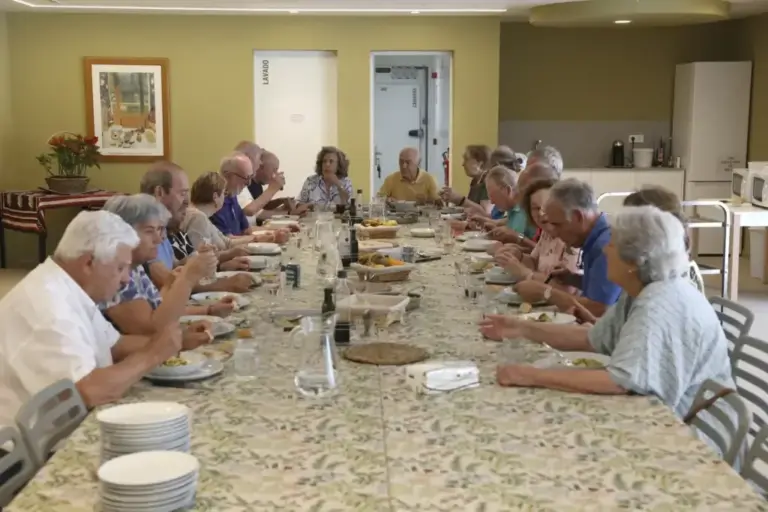
Both communities began living together between late 2024 and mid-2025. Their facilities include a dining room, communal kitchen, music and reading rooms, gym, vegetable garden, and swimming pool. Activities – film forums, reading, hiking, dancing, or textile workshops – are organized by the residents themselves, who contribute their professional and personal knowledge.
The philosophy is based on social interaction, physical activity, and good nutrition as fundamental pillars of healthy aging. That is why they seek profiles capable of participating in community life. “People don’t come here looking for assistance. We want proactive people who can contribute,” they explain from Villa Rosita.
However, they are aware that care needs will increase over the years. Given this future outlook, at Entrecantos, for example, they have a collaboration agreement with the San Camilo Foundation, which is responsible for the care of people with functional or social dependency.
Another aspect taken into account in these types of projects are age criteria. At least 50% of the cooperative members must be between 50 and 75 years old to maintain the collaborative dynamic, even as some members age. “We are a community that offers something more, like in villages. If there is an elderly person who needs to go to the doctor and a family member cannot accompany them, someone from the community takes them. It’s more than a residence,” explains José Antonio from Villa Rosita.
Although these plans span between 8 and 10 years until the occupation of the homes, more projects continue to emerge. In Rivas Vaciamadrid, La Corrala was created in 2019, an initiative that came from a group of friends who wanted to live close to each other to support one another. After years of procedures, in 2025 they secured the transfer of municipal land.
“We had to learn a lot about the world of cohousing and what to do to be recognized as a social interest group, in order to be able to opt for land with demesne right, that is, with exclusive use for 75 years. After that period, the plot will return to the domain of the city council with everything built on it,” explains Marina.
In Guadarrama, Ad Petrum has been advancing since 2021 in its collaborative housing project for seniors with a use-cession model, focusing on combining cohabitation with care services, through a personal commitment of mutual aid among members. Since 2025, they own a public service plot of land and still have some vacant spots for future members.
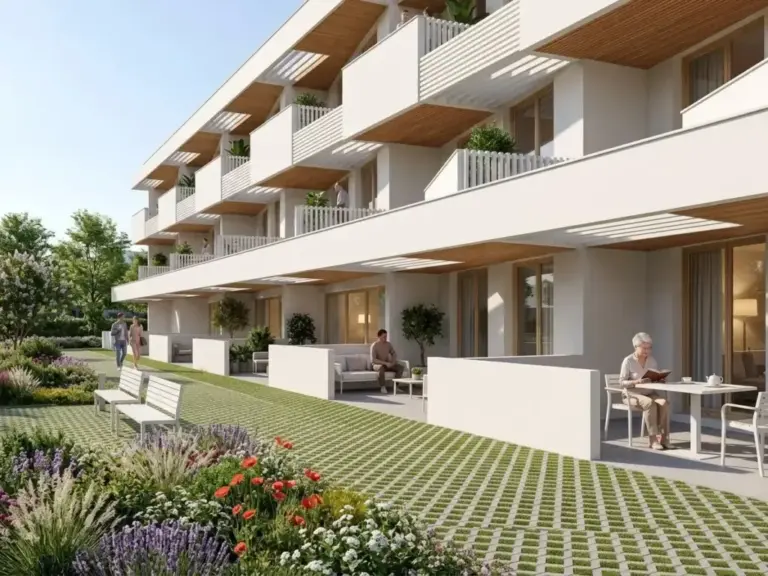
“This project is about putting life into years, not years into life. We are a non-profit cooperative, a social welfare facility. We contemplate the possible situations of deterioration and dependency that may arise throughout the journey of our Senior Cohousing. We are committed from the building design stage to universal accessibility to facilitate mobility and safety in Ad Petrum,” assured Fernando García, founding partner.
The Madrid benchmark for this type of housing is Trabensol, in Torremocha de Jarama, where they have been living together for 13 years. Their experience shows that cohabitation requires management and transparency. “The first thing to know is that there is no perfect social organization. Cohabitation is a difficult challenge. You have to lose your fear of conflict because it is inevitable. Manage it and understand that it is an opportunity to learn. The more abundant and quality information shared with partners, the fewer conflict situations,” explained Luís Abad, communications coordinator.
Regarding dependency, Trabensol has a three-level system and qualified staff according to the dependency care law. Those who receive these additional services pay an extra, and if someone demonstrates they cannot pay, the cooperative assumes that contribution. Although the challenges are numerous, the assessment is positive. “We receive visits from institutions and always say that it is a good alternative, especially in an aging country with a low birth rate,” Abad summarized.
Whether enjoying this type of cohabitation or starting in a cooperative, the obstacles usually coincide: little to no support from governmental bodies and a lack of knowledge about these types of projects in both banking and various public administrations.
“We have had meetings with the embassy of Denmark and they are surprised that we don’t have aid. In that country, cohousing is done by the State, which places people who apply to enter this type of housing,” explains Juan Perdomo, from Entrecantos.
Another obstacle is with banks. “They don’t quite understand the process involved in a project of this type, which is why it’s difficult to get funding. The alternatives we have are Ethical Banking and the Official Credit Institute,” assures Marina, from La Corrala.
Learning from previous generations, facing the challenge of obtaining funding or aid, and at the same time combating isolation, demonstrates the resilience of those who do not give up on having the decision of how to live their last years in their hands.
Read more Exodus of horses among the flames: “They were very agitated, neighing like crazy”