




At the beginning of the year, lawyer Antonio Sánchez Marquet addressed the Second Section of the Criminal Chamber of the National Court to request the revocation of the precautionary therapeutic internment in a closed regime of his client: a 15-year-old boy whom the Prosecutor’s Office was investigating for an alleged crime of terrorist self-indoctrination. The Public Prosecutor had no doubt that the accused consumed, edited, and disseminated propaganda from Daesh, sought manuals to make explosives, glorified attacks, and tried to contact members of the Islamic State.
The defense did not deny the facts but emphasized that this did not imply that he had committed criminal actions. Literally, Sánchez Marquet described the minor’s statements as “the adolescent fantasies of someone suffering from a psychiatric problem” and “who feels fascination for murders and violence in general, which in turn implies a strange pathology”.
Seen this way, he was a poor boy with mental problems who had turned murder into an obsession, just as others spend afternoons watching parkour videos.
But the National Court did not buy the lawyer’s thesis. For the judges, the teenager was not an occasional curious person peering into horror from his mobile screen. He had already been detected at thirteen years old in the same ecosystems and, two years later, he was still managing accounts from which he consumed and distributed that disturbing toxic propaganda.
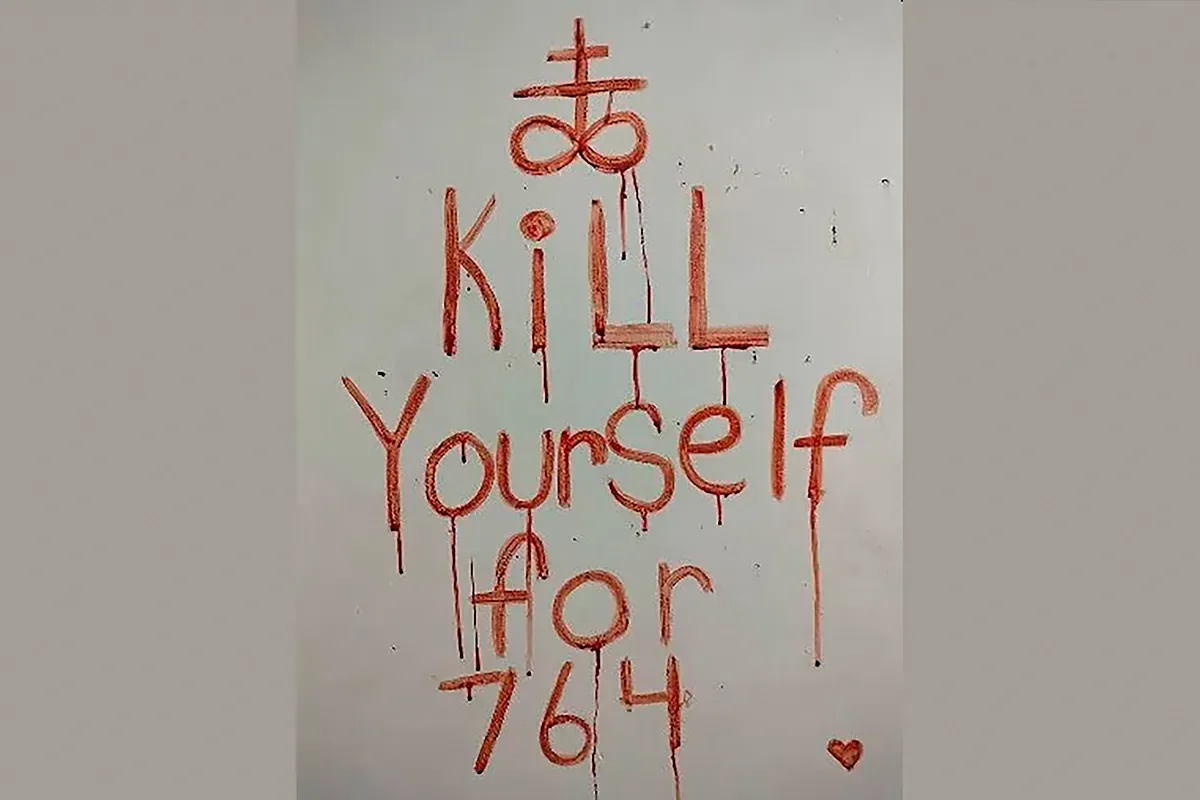
The minor not only sought to join the Islamic State. He also claimed to belong to the 764 network, which is a community born in the basements of the internet where prestige is measured by the ability to humiliate, manipulate, or destroy other teenagers.
In one of his messages, he proposed taking action and wrote: “We would be the coolest if we did it”. His mental universe seemed like a filthy shelf where jihadism, neo-Nazism, and fascination with massacres coexisted without order or reason. There was no solid ideology in that boy’s head, but a completely broken identity, a cage of furious crickets connected by hyperviolence.
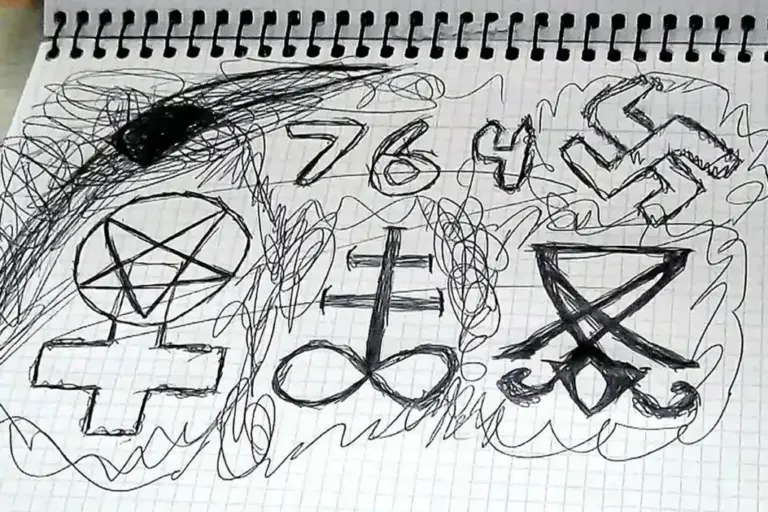
Are minors who have been invoking the name of the 764 Network in Spain for a couple of years really dangerous? Let’s say the Spanish police are taking it very seriously.
On August 2, the case of another 17-year-old minor from Gipuzkoa was made public, who had been leaving violent messages on the internet for months like someone marking the doors of his future victims with chalk. Between January and April, he announced shootings against schools, town halls, libraries, associations, public bodies, and leisure centers.
The arrest actually took place on July 16, when the Civil Guard, Mossos d’Esquadra, and Ertzaintza raided two properties linked to the teenager. The Interior Ministry later presented him as the “main reference in Spain” of 764. Again, the episode led to questioning whether the minor was truly a budding terrorist or a poor devil with a messed-up head (or a mix of both).
Moreover: what does it really mean to “belong” to 764? Because, unlike ETA, Al Qaeda, or Daesh itself, no one fills out a membership form, no one receives a card, and no one swears allegiance to a leader. 764 resembles less an organization and more a virus. It does not occupy territory: it colonizes imaginations.
Read more Ukraine mourns archaeologist Oleksi Yukov, the «soul collector»
Authorities attribute to him campaigns of “doxing” —obtaining and disseminating personal data— and “swatting” —false reports of serious emergencies— against at least two people, one in Basque Country and another in Catalonia, and maintain that he participated in chats where vulnerable minors were pushed towards extreme humiliations.
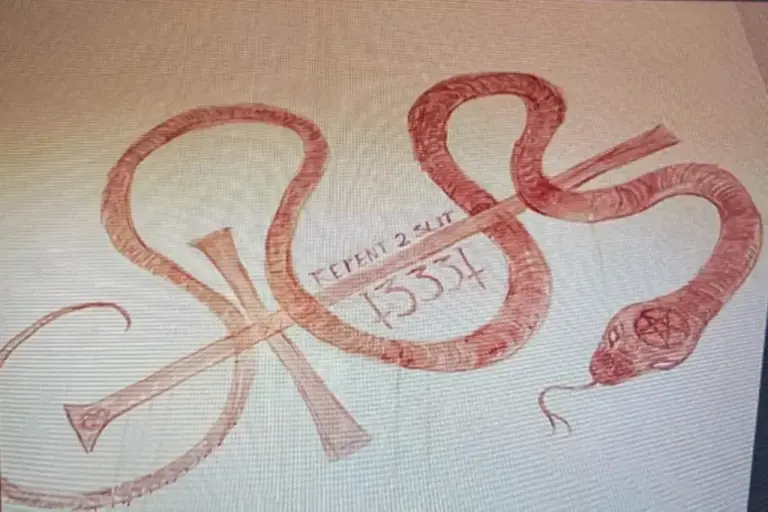
No weapons, explosives, or material preparations for a massacre were reported. But that is precisely the scenario that worries specialists who follow 764 and The Com: that one of these teenagers obtains a weapon and that cocktail of psychic disturbance and nihilism leads to something like Southport.
Before the Gipuzkoa case and the National Court file, the 764 brand had already appeared twice in Spain.
Specifically, on November 27, 2025, at the Tafira campus of the University of Las Palmas de Gran Canaria, an email signed by a supposed member of the network announced a massacre and forced the preventive evacuation of two faculties. As far as is known, all there was was an email inbox, an individual in need of therapeutic help, and an international signature used to instill fear. He was never identified.
That same year, on February 27, 2025, a 23-year-old young man caused the suspension of classes in 27 educational centers in Chiva, Cheste, Buñol, Yátova, Turís, and Siete Aguas by sending an email in which he promised to kill “as many people as possible.” He also claimed to belong to 764.
The Civil Guard arrested him at a psychological care center in Paterna. Two days later, after being examined by a forensic doctor, a judge ordered his admission to a psychiatric hospital unit.
In sum, four known cases, a lot of verbal violence, much mental imbalance, and no fully illuminated Spanish structure, which does not mean that 764 is an oddity. The network was created in 2021 by Bradley Chance Cadenhead, a teenager from Stephenville, Texas, who took the name from the first three numbers of his city’s postal code. Cadenhead ended up sentenced to 80 years in prison, but by then he had built a grammar of sadism that any user could copy without asking anyone’s permission.
764 operates as a franchise without a central headquarters. Its members and admirers seek vulnerable minors on social networks, gaming platforms, and messaging apps. They approach with the language of friendship, obtain an intimate image or a compromising confession, and close the trap. From there begins the descent: sexual photographs, self-harm, names carved into the skin, tortured animals, broadcast humiliations, and threats against family members.
Read more Colombia facing earthquakes: when the risk is also built