

Colombia has had seismic-resistant construction regulations since 1998, which represented a huge advance in disaster risk prevention and reduction. The existence of this standard has allowed a good part of the buildings constructed over the last decades to incorporate technical criteria aimed at protecting the lives of their occupants against seismic events.
Read more The PSOE has lost 23,388 members since Pedro Sánchez came to La Moncloa in 2018
However, a standard, no matter how rigorous, cannot immediately transform a country’s existing building stock.
Colombia has millions of buildings constructed before the seismic-resistant regulations came into effect. Some are several decades old and were built under technical standards very different from the current ones. Added to this is a much more complex reality: the informal growth of our cities.
As happens in much of Latin America, Colombian cities have grown under enormous social and economic inequalities. The need to access housing has led millions of families to build progressively, often without technical support, without adequate structural designs, and in some cases, without complying with urban planning and construction regulations. Urban informality is not only a planning problem: it is also a determining factor of vulnerability to disasters.
That is why, when an earthquake occurs, it is not enough to ask what its magnitude, depth, or the intensity with which it was felt was. There is another factor that can be decisive: the duration of the seismic movement.
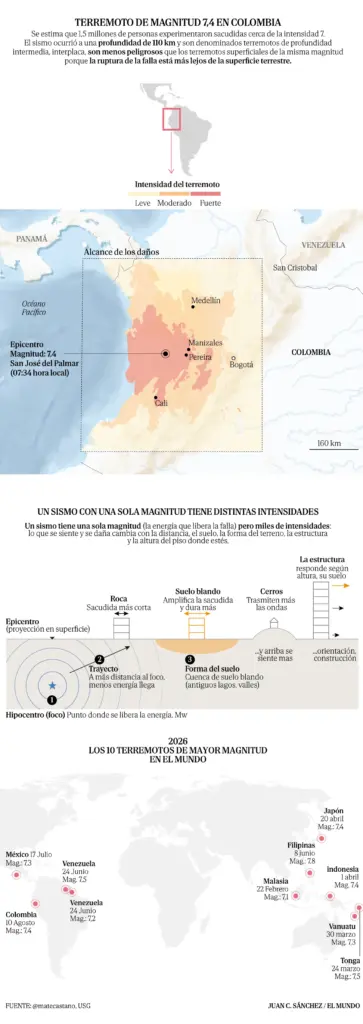
In the event that occurred this Monday, the duration of the earthquake was particularly relevant. A building can withstand certain levels of acceleration, but being subjected for a prolonged time to repetitive movements increases the demands on its structural elements and can push to the limit – or exceed – the capacity of buildings that already had vulnerability conditions.
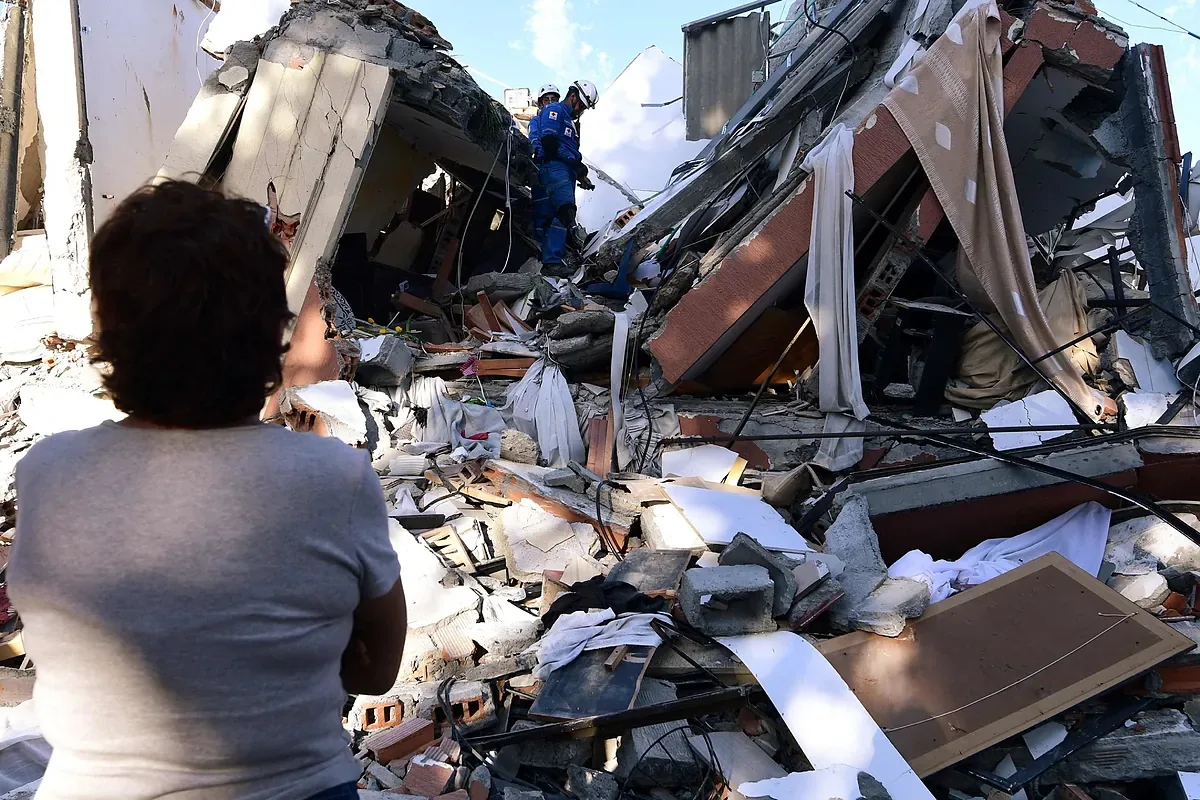
This helps to understand why cities like Cali, Pereira, Manizales, and Quibdó were among the areas where the greatest damage was reported. It is not only about the force with which the seismic wave arrived. It is about how that energy interacted with an urban territory built over decades, with buildings of different ages, construction systems, materials, soil conditions, and levels of compliance with regulations.
The real problem, then, is not only the earthquake.
The problem is the risk we have built before the earthquake occurs.
The seismic threat cannot be avoided. Colombia is located in a geologically active region and earthquakes are part of our natural reality. What we can transform is our vulnerability.
This means going far beyond building new buildings well. It means identifying which existing structures present the greatest risk, evaluating their seismic behavior, establishing structural reinforcement programs, and developing public policies that allow progressively intervening in the most vulnerable buildings.
It also means decisively confronting construction informality. We cannot continue to understand informal housing only as a problem of land legalization or access to public services. A structurally vulnerable home is also a threat to the lives of those who live in it.
Latin American cities therefore need a new generation of risk reduction policies: massive programs for building evaluation and reinforcement, technical assistance for popular housing, financial mechanisms to improve existing structures, and information systems that allow knowing where the most vulnerable buildings are.
The experience of each earthquake should serve us to learn, not just to react.
Colombia has made enormous progress in seismic-resistant construction since 1998. But a safe city is not built only with a good standard. It is also built by identifying its past, intervening in its present, and anticipating its future.
Because when the next big earthquake comes – and we know it will – the difference between a tragedy and a catastrophe will not be determined solely by the magnitude of the event. It will be determined, to a large extent, by how vulnerable we decide to allow our cities to remain.
Mauricio Facio Lince is a Colombian architect expert in risk management and Circular Economy manager at the Antioquia Science and Technology Center (CTA).