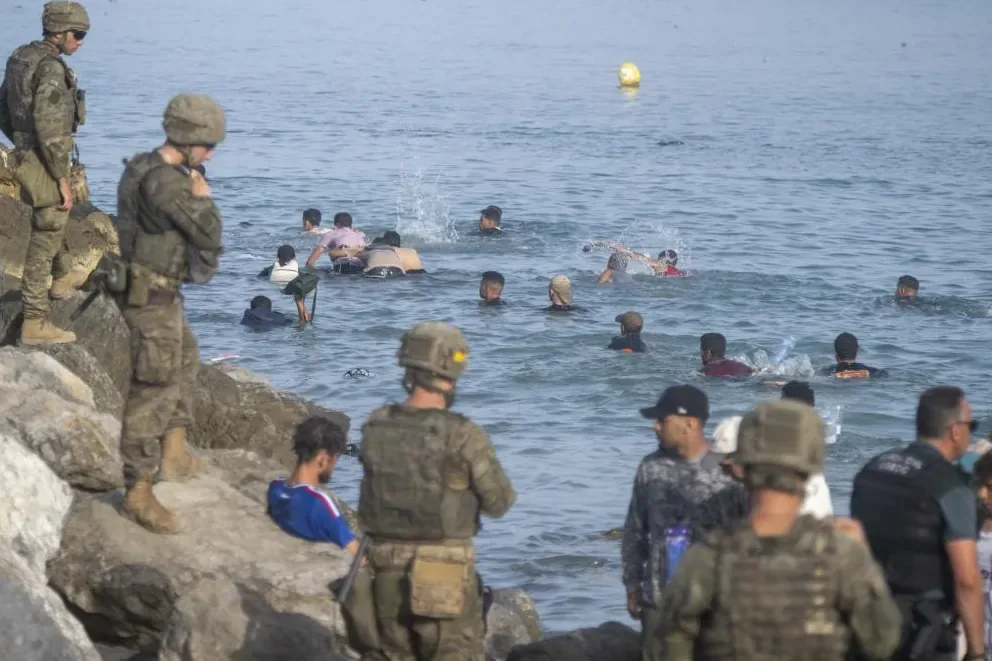




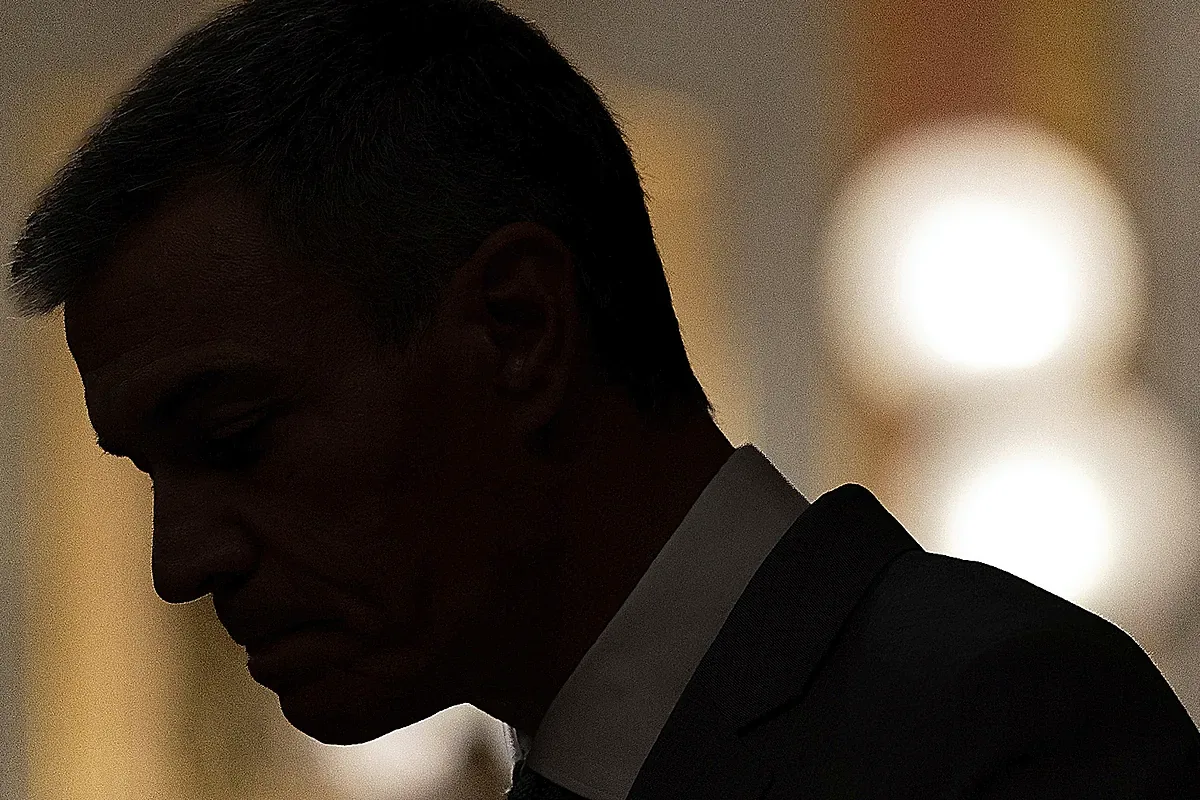
Ceuta wants to go back to July 29, when it was a normal city. And the Prime Minister would like to turn back the arrow of time and return to the afternoon of Saturday, August 1, when he believed that everyone who entered Ceuta had already left. “Another crisis resolved by Pedro Sánchez,” certified his Minister of Transport.
Neither will Ceuta recover normality in the short term because there is no guaranteed plan to remove the irregular immigrants who have overwhelmed the city, nor will Pedro Sánchez be able to return to his Saturday that he thought was glorious and ended up being the beginning of a political ruin. The misjudgments made by the Prime Minister, who for at least three weeks of vacation rest believed the crisis would resolve itself and that the immigrants would leave on their own, are a dead weight in his backpack. A weight he cannot get rid of. In the plenary of his appearance before Congress, it became clear that this crisis is different from all the others. His parliamentary loneliness was portrayed in all its splendor. Nine months before the municipal elections and eleven before the general elections.
One should wonder how the story would have changed if the Prime Minister had stood before Parliament in the first week of August, announced an investigation to find out who was responsible for the attack on Spain’s territorial integrity, and presented a plan to free the people of Ceuta from the nightmare. He could have done so without giving up his right to rest, returning immediately to La Mareta after fulfilling his duty.
The whole of Spain believed from day one that Morocco was responsible for the attack on Ceuta. Except its president, who was full of enthusiasm and praise for the neighboring country. Four weeks until he realized that with that implausible story he was going nowhere. On Monday, in the interview with Aimar Bretos he was still in that daydream. What happened from Monday to Thursday? Our colleague María Peral published in El Español a police report that stated, black on white, a stubborn reality that had been denied from Moncloa and the Ministry of the Interior: Morocco’s responsibility in the avalanche. Against all common sense, Pedro Sánchez wanted us to believe that 80,000 people can head to a country’s border without the police noticing them even from afar. The Ceuta crisis has turned Spanish politics upside down. No one was prepared for something like this.
Read more The key report of the “mass entry” arrived three days late and with the invasion unleashed
A couple of weeks ago, deputy Carlos Aragonés, former Chief of Staff to President Aznar, wrote in La Vanguardia. “The summary question is whether the democratic regime, a group somewhat larger than its Government, is capable of taking charge of Ceuta and Melilla, hit as never before since July 30, in their will to be European territorial brands.” That is, whether we would be able to treat Ceuta like Toledo, Málaga, or Badajoz.
After more than a month of poor government management and after the Prime Minister’s appearance in Congress, the answer to the question is no. The people of Ceuta will have to wait until who knows when to recover their city. Ceuta is an open-air refugee camp and a set of settlements inhabited by irregular immigrants who do not fit anywhere. There is no plan for the people of Ceuta, nor is there a plan for the homeless. Not even the left’s narrative about the rights of the helpless holds up in Ceuta.
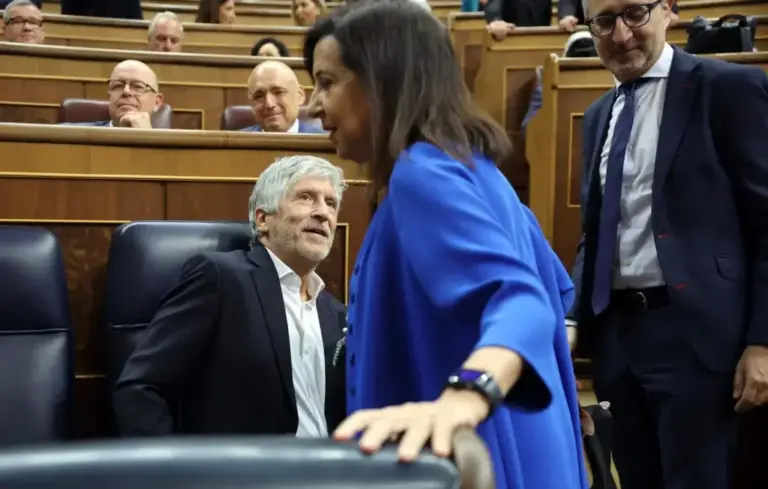
The Spanish stand with Ceuta. But the plenary of Congress was light years away from the daily anguish of the people of Ceuta. The spotlight was on Minister Marlaska, tough as steel, whom no one knows how he endures on the blue bench. And on the Minister of Defense asserting her opinion with courage. And the shadow of the management of 11-M by Aznar walked through the hemicycle. It was Rufián who reminded that governments fall more because of lies than other things. There is an emotional shake-up in Spain. To lead, according to the classic saying, is to take charge of the citizens’ mood.
Read more Lights and shadows of the ‘Ozempic era’: the business that threatens progress against obesity