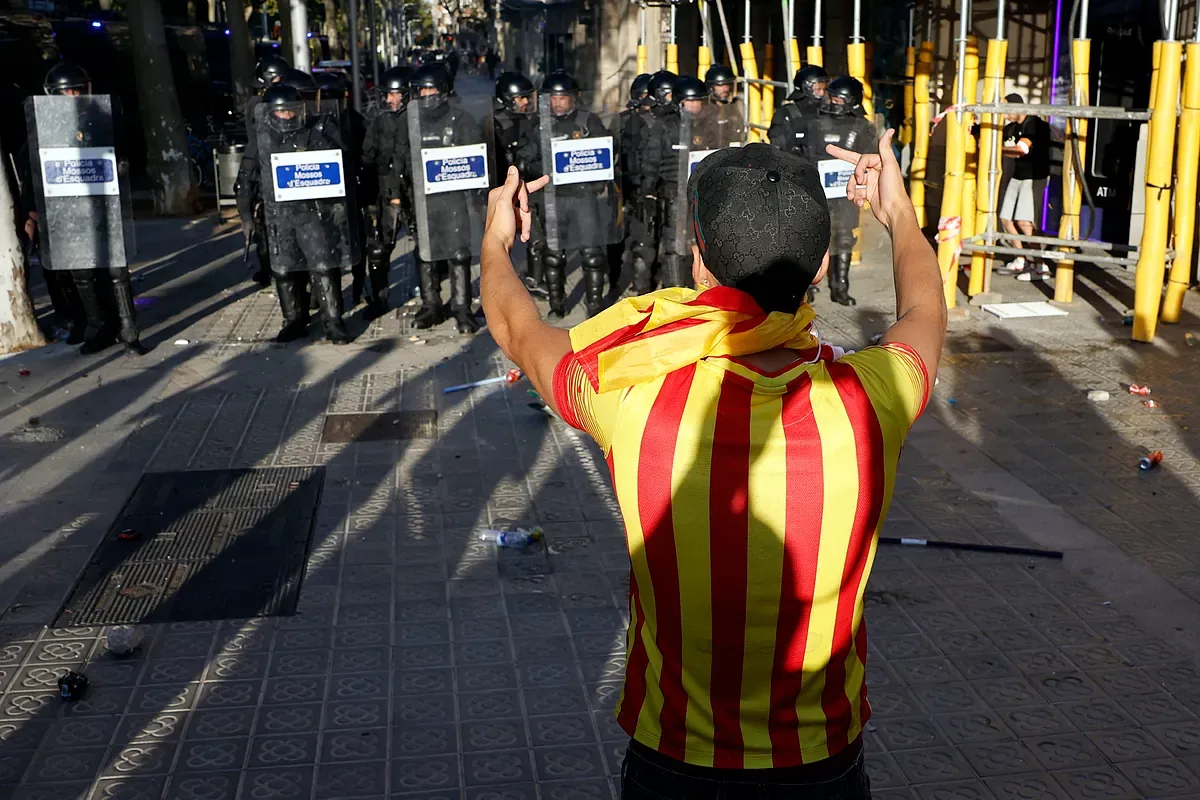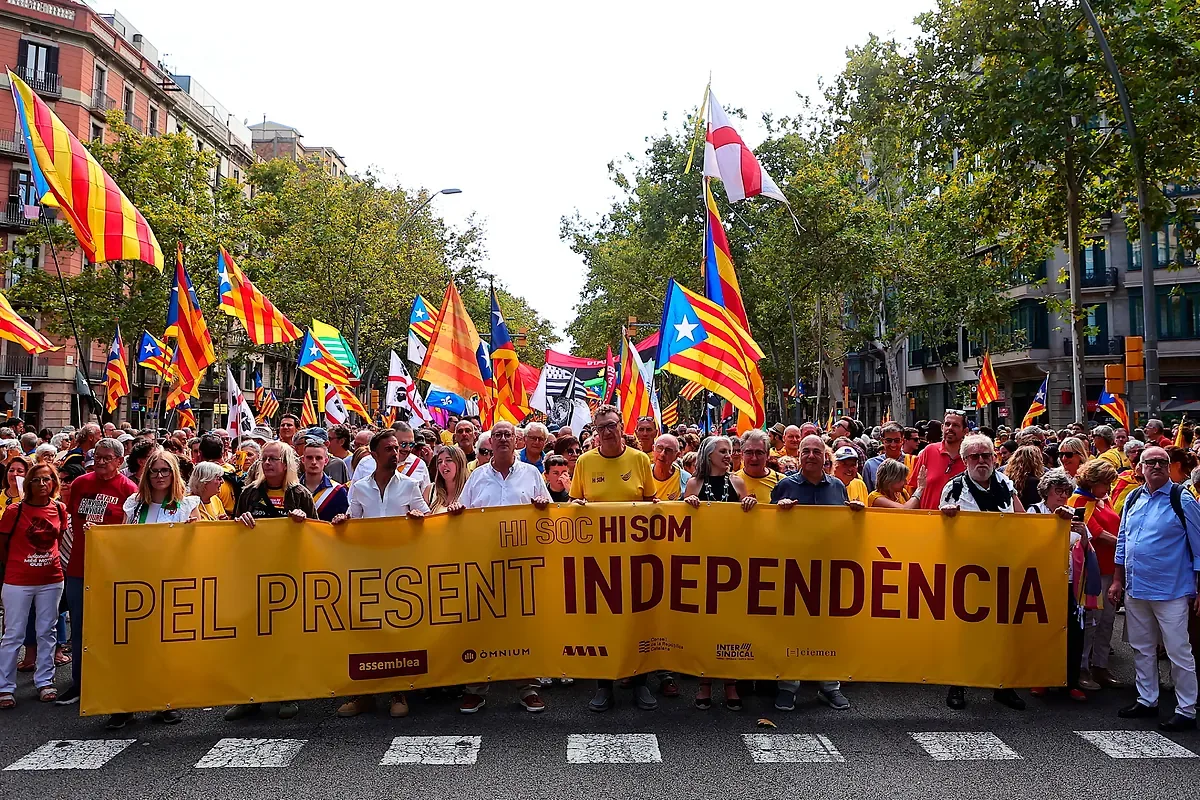
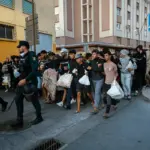



Tension between the two extremes on the right and left of Catalan independence. Located just a few meters apart, members and supporters of Aliança Catalana and the so-called Esquerra Independentista, formed by several groups linked to the CUP, exchanged insults at the Fossar de les Moreres, a traditional meeting point for secessionism on the eve of the Diada on September 11.
The party led by the mayor of Ripoll (Girona) and deputy in the Parliament, Sílvia Orriols, has chartered eight coaches from different counties of Catalonia and several organizations such as Arran, Endavant, Alerta Solidària or the Sindicat d’Estudiants dels Països Catalans (SEPC) have called for a protest at the same location.
“We have come to save Catalonia,” Orriols proclaimed amid the cheers of her supporters and boos from the opposing side. “We are not going to Ithaca nor Switzerland nor Waterloo, we are heading straight towards the Catalan state, free, prosperous, safe and Western,” she continued in a criticism of the political leaders of the procés.
“Neither the rulers who have bowed to the will of our enemies nor the islamo-leftism that threatens to take away our Western values and freedoms will be able to divert us from the shortcut we have taken.”
Established as the equivalent to the tombs of the unknown soldier that exist in several cities, the Fossar de les Moreres became a mass grave for the Austrian supporters who died in the fall of Barcelona in 1714, at the end of the War of Succession, against the Bourbon troops of Philip V.
Last year, Aliança already made its offering on September 10 in this space and clashes occurred with left-wing groups, which foreshadowed a greater risk of conflict on this year’s day.
Both groups have been separated all afternoon by cordons of the Mossos d’Esquadra, although at close distance. The Catalan police riot squad (Brimo) charged at some point of tension against the front line of those gathered in the Esquerra independentista block and have arrested at least four people, according to TV3. Some of them had thrown powder paint bags after breaking through the police cordon.
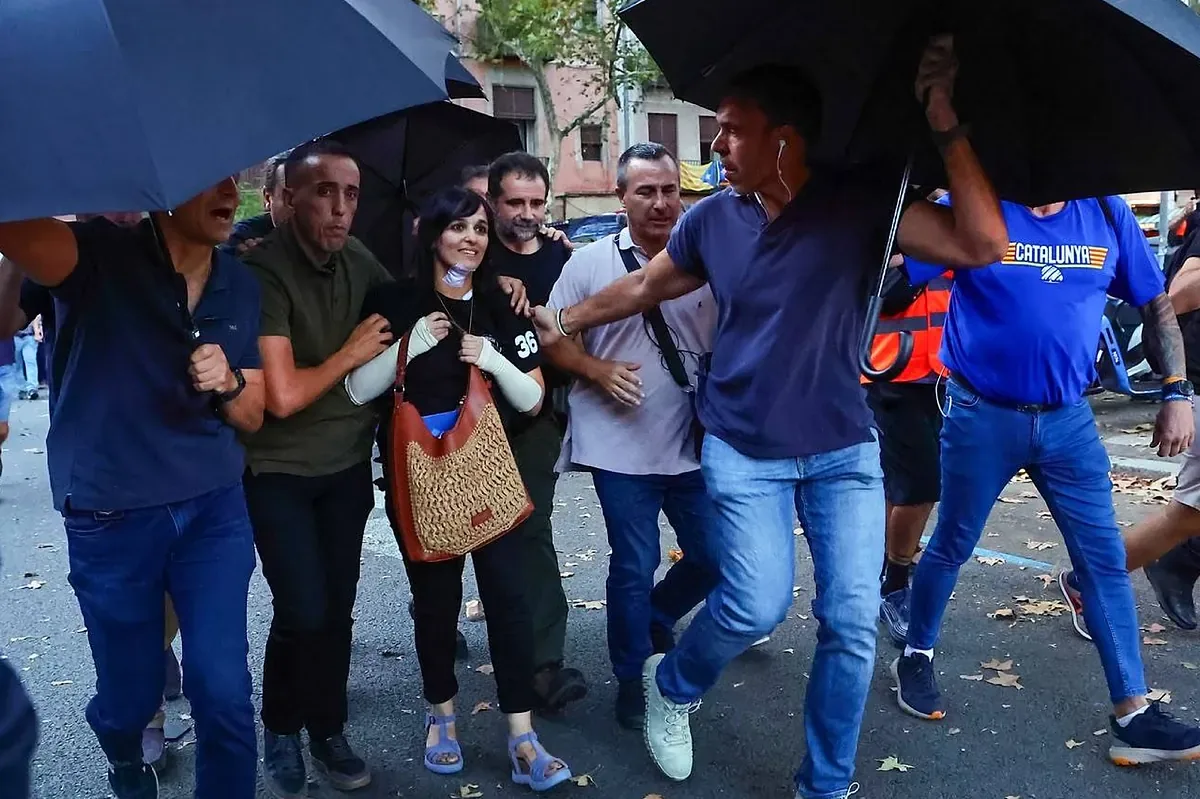
Another moment of greatest tension came at the exit of the Aliança leader. Some protesters threw objects and her escort protected her with umbrellas while the Mossos agents secured the area where the coaches chartered by the party were located.
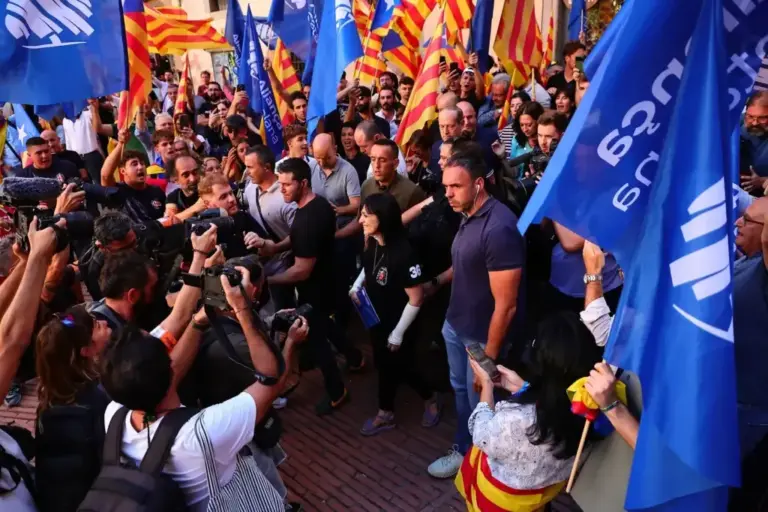
Minutes earlier, from the center of the square, Orriols, the candidate for Mayor of Barcelona, Jordi Aragonès, and the party’s regional leader in Barcelona, Jordi Amela, took the floor while attendees shouted “Catalonia Catalan” or “Sílvia Orriols is the solution.” The singing of Els segadors, the anthem of Catalonia, was the only coincidence between the two groups, although never in unison.
Under the brazier dedicated to “those who died defending the freedoms and constitutions of Catalonia in the siege of Barcelona (1713-1714)” estelades and flags with the Aliança Catalana logo were seen, alongside identity symbols, such as the phoenix bird emblem over the Cross of Saint George or the inscription “33” (for the third letter of the alphabet (ce) and the motto “Catalonia Catalan”).
Institutional message from Illa
The rise of Aliança Catalana unsettles Salvador Illa. The president of the Generalitat took advantage of the traditional institutional message he delivers before the Diada to ask Catalans not to support the xenophobic theses of the party led by Sílvia Orriols. “We cannot allow anyone to endanger the coexistence of Catalonia. In our home, hatred has no place,” said the socialist.
The head of the Catalan government maintained that Catalonia is “a diverse country,” a “nation” – here is the nationalist nod – with “a shared sense of belonging” in which people born in different places can feel Catalan “from Andalusia to Extremadura, from Morocco to Colombia.” “No one is more Catalan than anyone else. Catalonia is all of us,” he insisted to clash with Aliança’s discourse, which, supported by an anti-Islam manifesto, is on its way to becoming the majority independence force, burying Junts and surpassing ERC.
To claim that pluralism, the Generalitat will organize Diada events this year in Extremadura on September 16 and 17, a decision harshly criticized by the independence movement, which is not convinced by the export of the “national festival of Catalonia.”
Illa emphasized that Catalonia has been built “thanks to the human bonds generated between Catalans and people from other places who have found their home and country here.” “The Diada is an invitation to make Catalonia the best place in Europe to live together,” the president concluded.