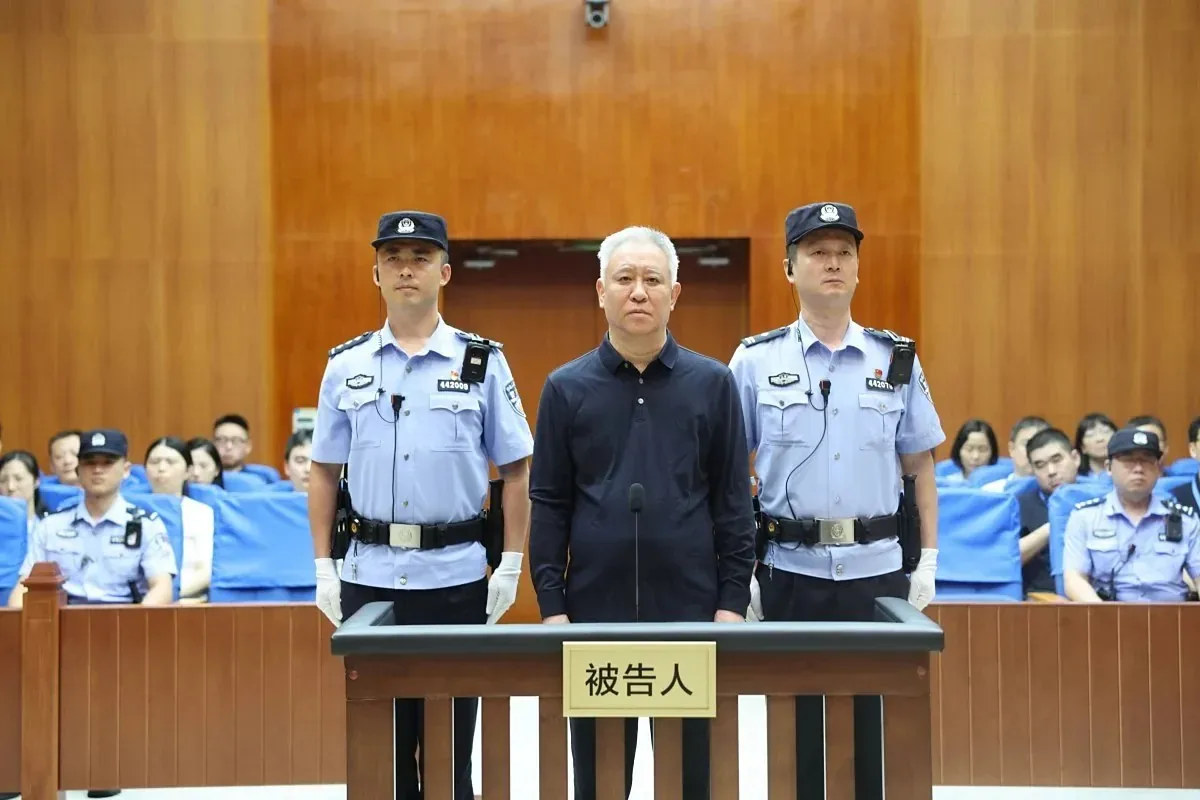





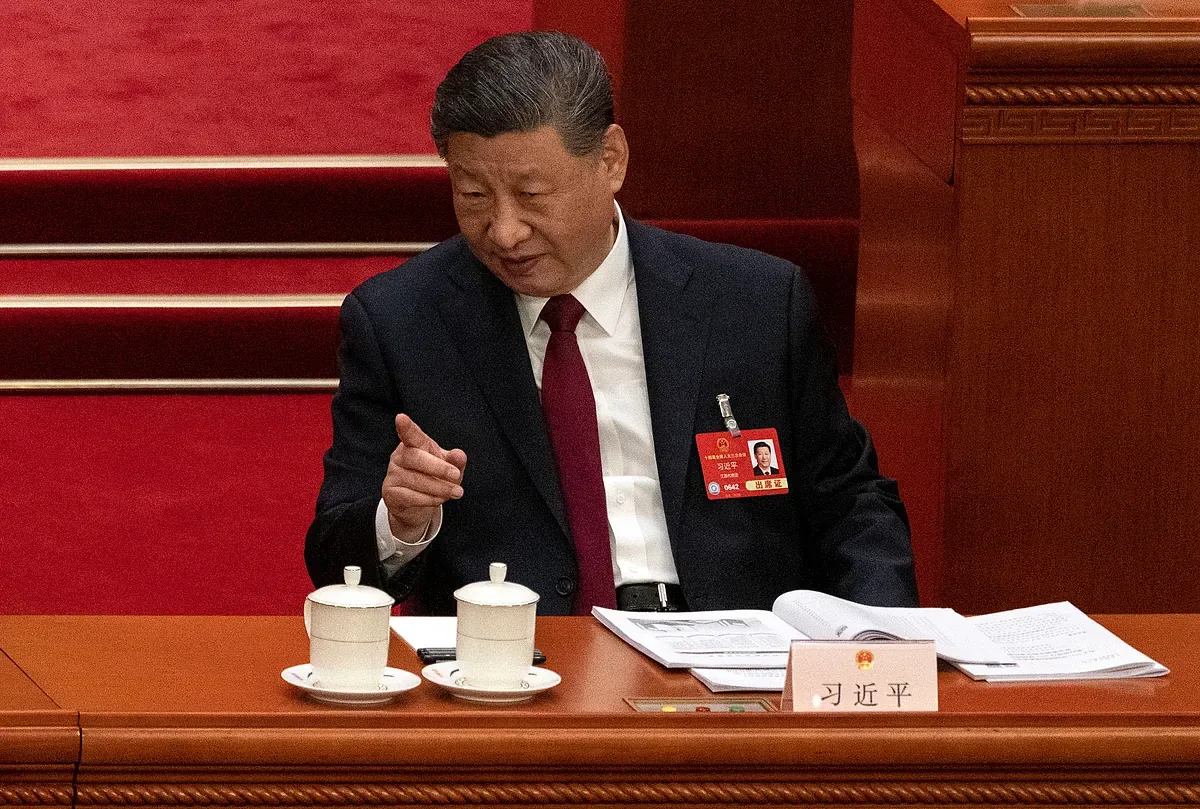
In China, there are people paying to know who will be the next leader to fall. The business operates in private social media groups, mainly on WeChat – the equivalent of WhatsApp – and the merchandise consists of rumors, clues, and alleged leaks about officials under the scrutiny of the ruling Communist Party (CPC) inspectors.
Read more Trump evaluates the ideological loyalty of NATO allies to consider whether to cut troops
Sometimes, the information arrives long before the official announcement. And behind some of these scoops is something that particularly worries Beijing: “moles” within the system itself.
After almost 14 years of anti-corruption purges under Xi Jinping’s leadership, a peculiar black market for insider information has emerged around the secrecy with which officials fall. The more exclusive the chat and the better its sources seem, the more expensive the entry.
An investigation by Banyuetan, a magazine linked to the official agency Xinhua, has lifted the curtain on this digital underworld where real leaks, rumors, political bets, and a lucrative business built around Xi’s massive anti-corruption campaign mix. The report starts with a rather explicit question: “Who is making money speculating on corruption?”.
The investigation has found accounts and chats that trade information about Party cadres supposedly under the watch of disciplinary bodies. In the more modest groups, only a few dozen yuan are paid. Access to the most exclusive rooms can reach 400 yuan, about 50 euros.
The account administrators continuously move members from one chat to another to evade censorship. A kind of digital guerrilla war against the regulators of one of the most monitored internet spaces on the planet.
The merchandise is especially delicate because it exploits one of the black holes of Chinese politics: the interval between the moment the apparatus knows a leader is being investigated and when the CPC officially announces their fall.
Operators use codes to try to get through the filters. One of the most widespread is gua jianli (hanging the resume). They publish the professional trajectory of an official without making any direct accusation. They also use photographs, drawings, and code names. Technically, no one is stating that this person will be purged. But those who frequent these circles perfectly understand the insinuation.
The case of a politician named Zhou Xianwang explains why someone would be willing to pay to enter. On July 6, 2025, a WeChat account unexpectedly published the resume of the former mayor of Wuhan, then a senior official of the political consultative body of Hubei province. Two days later, authorities announced that Zhou was being investigated for “serious violations of discipline and law”.
This year something similar happened with Tu Yan, former president of the Guizhou Women’s Federation. On April 24, cryptic content about her began circulating. Five days later, the official statement confirming her investigation arrived.
Read more Cover of EL MUNDO on Saturday, August 15, 2026
Not all predictions are correct. But the investigation points to a much more uncomfortable detail: some leaks seem to come from inside the system itself.
Known as neigui (moles within the Administration) circulate through these groups, who have access to reserved information and transmit it to intermediaries. In Guiyang, the capital of Guizhou province, an official identified only by his surname, Duan, would have created since August 2025, along with six relatives, a network of nine WeChat accounts. They used personal information of officials to publish resumes that hinted at future dismissals, investigations, or promotions to attract followers.
Xi’s campaign
This business is an unexpected consequence of the purge machinery that President Xi launched shortly after coming to power at the end of 2012. His promise was to simultaneously pursue the “tigers” — the big corrupt leaders — and the “flies” — the lower-ranking officials. What initially seemed like just another anti-corruption campaign ended up becoming one of the pillars of the political system built by the Chinese leader.
Ministers, generals, bankers, governors, heads of giant state enterprises, and leaders of some of the most powerful bodies in the country have passed through the disciplinary grinder. And the offensive shows no signs of exhaustion. During 2025, 967,000 cases related to corruption were investigated.
Xi has repeated that corruption represents an existential threat to the Party. The official narrative presents the offensive as a permanent battle to clean the organization from within and regain the trust of a society that for decades watched many officials turn their positions into sources of enrichment.
This year, the president has also called for improving the ability to detect increasingly sophisticated forms of corruption by resorting to “new investigative techniques”.
Besides its effectiveness, the campaign has also carried a second political reading since its inception. The enormous expansion of disciplinary bodies has strengthened Xi’s control over the CPC and sidelined leaders linked to old power networks. His critics consider that the fight against corruption sometimes functions as a powerful tool of discipline and political loyalty.
Precisely that mix of power and secrecy fuels the business. In China, the fall of a leader usually begins long before it is announced. A senior official stops attending a meeting. Disappears from official photographs. Their name vanishes from an agenda. For days there is no explanation.
Rumors begin to circulate through the Party corridors until, finally, the brief public statement appears. By then, certain circles may have been talking about their fall for days, even weeks. In that space between secrecy and official announcement, the new purges merchants have found their niche.