

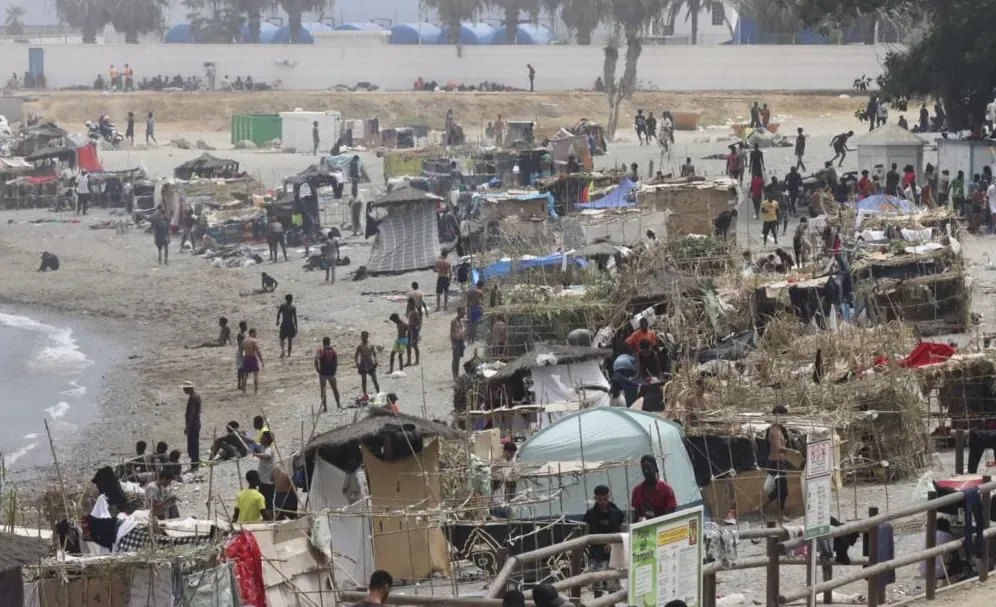
The tiny stall of Cafés Carrión, a stand located just across the border from Ceuta to Castillejos, had never recorded such a turnover as accumulated this Friday. By mid-afternoon, a line of police officers, gendarmes, soldiers, and secret agents wound in front of its thriving business. Strong coffees, sweet palmiers, and above all, half-liter bottles of very fresh water that were already scarce in its fridge flew off at full speed.
Read more The black market for bets on Xi Jinping’s next purge
-Is there double the usual security?-, we asked Abdel, its only clerk.
-No, no, much more.
-Five times more?
-More, more, more…
Abdel has just served a coffee to a couple of soldiers, glances around, and quickly folds the ten fingers of his hand a couple of times: “Twenty times more!”.
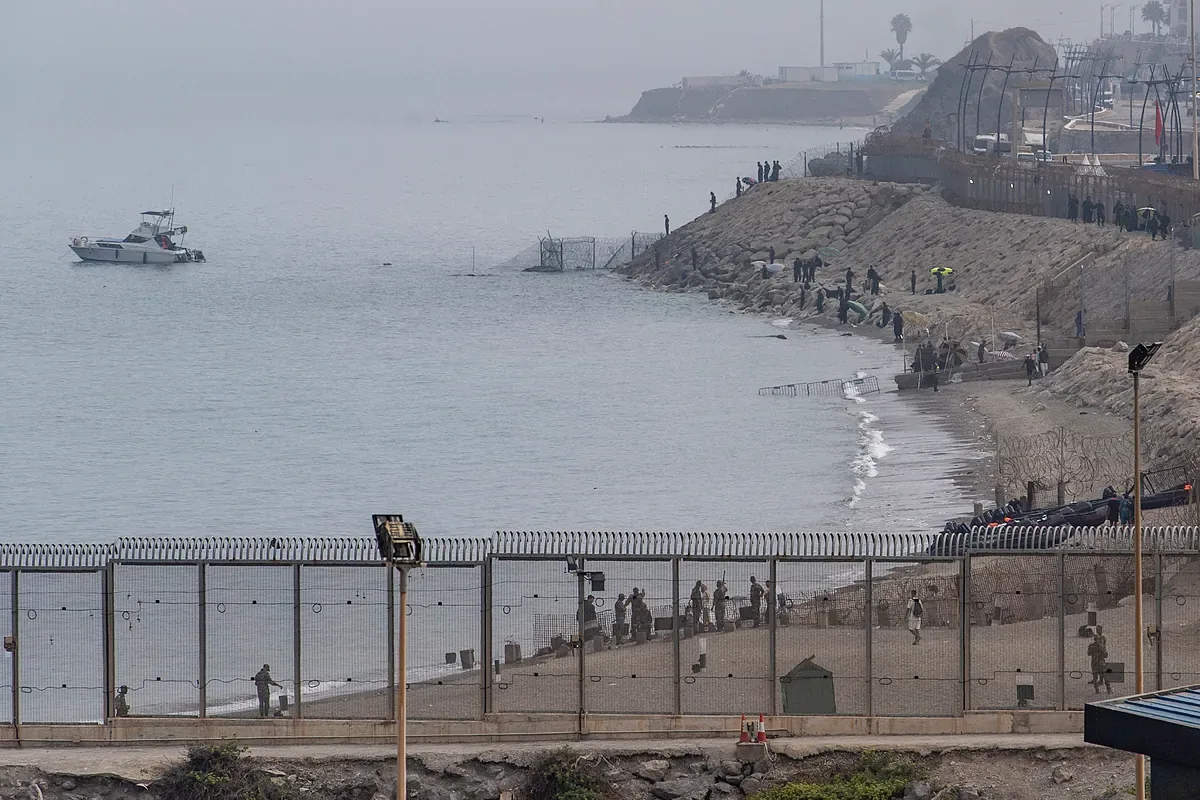
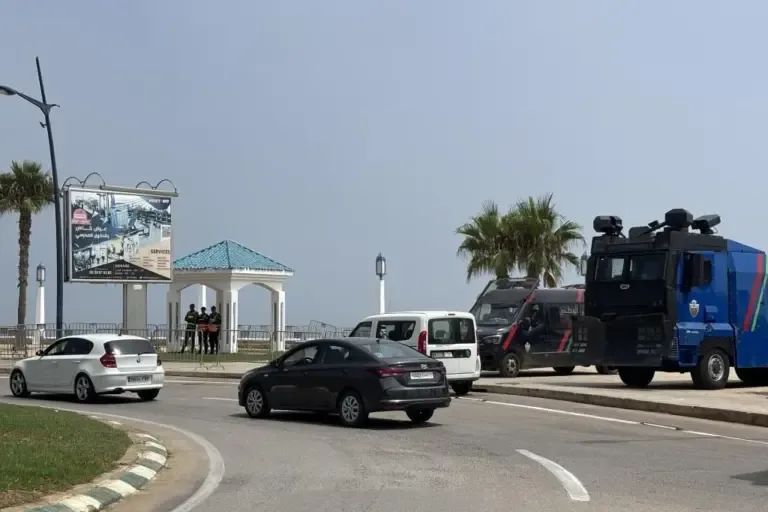
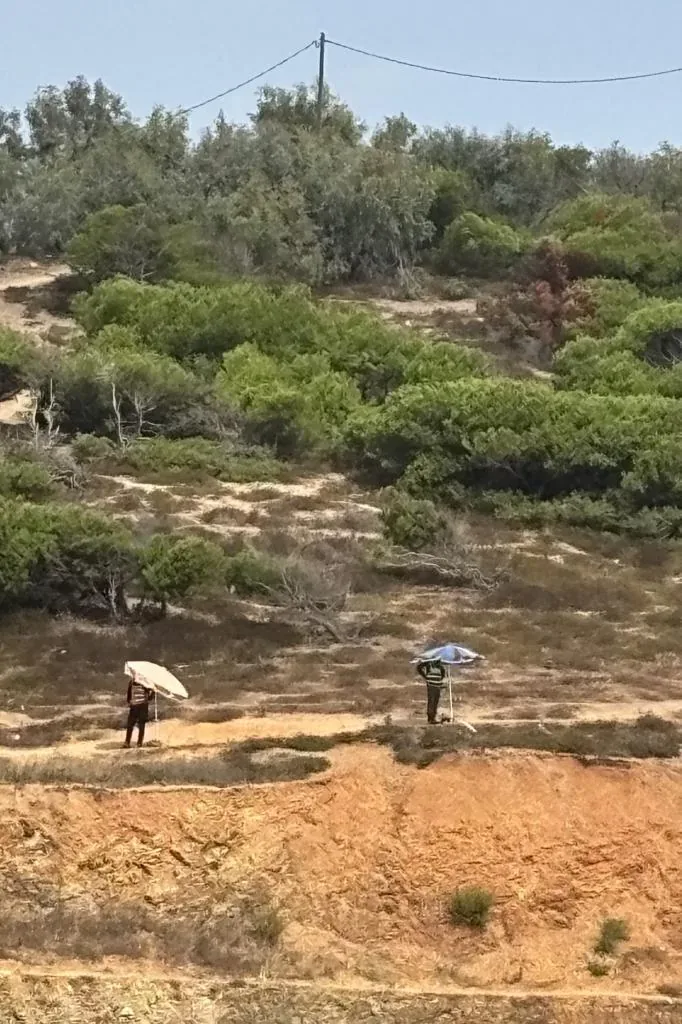
Just a look around his stall’s surroundings makes his figures not seem exaggerated. At first glance, there are about fifty police cars, as many milk trucks, as well as numerous ambulances, armored vehicles, and four massive riot trucks, with the red and green stripes of the Moroccan flag clearly visible on their blue backs. Also, a hundred meters further up, on the hills surrounding the border, dozens of lookouts watch everything happening sheltered from the scorching sun under white umbrellas, while hundreds of meters of newly installed concertina wire block access to the beaches stretching at their feet.
‘Milk trucks’, four riot trucks… Total lockdown
All this deployment is part of Morocco’s lockdown ahead of the feared 15-A. It is the day marked by tens of thousands of internet users to, supposedly, try to cross into Ceuta uncontrollably. But it seems the Alaouite regime does not want a repeat of the massive invasion from a couple of weeks ago. “15-A is a very important day for us,” confirms the chief of the police deployed at the border, dressed in civilian clothes with a navy blue polo shirt, while sipping from a bottle of water.
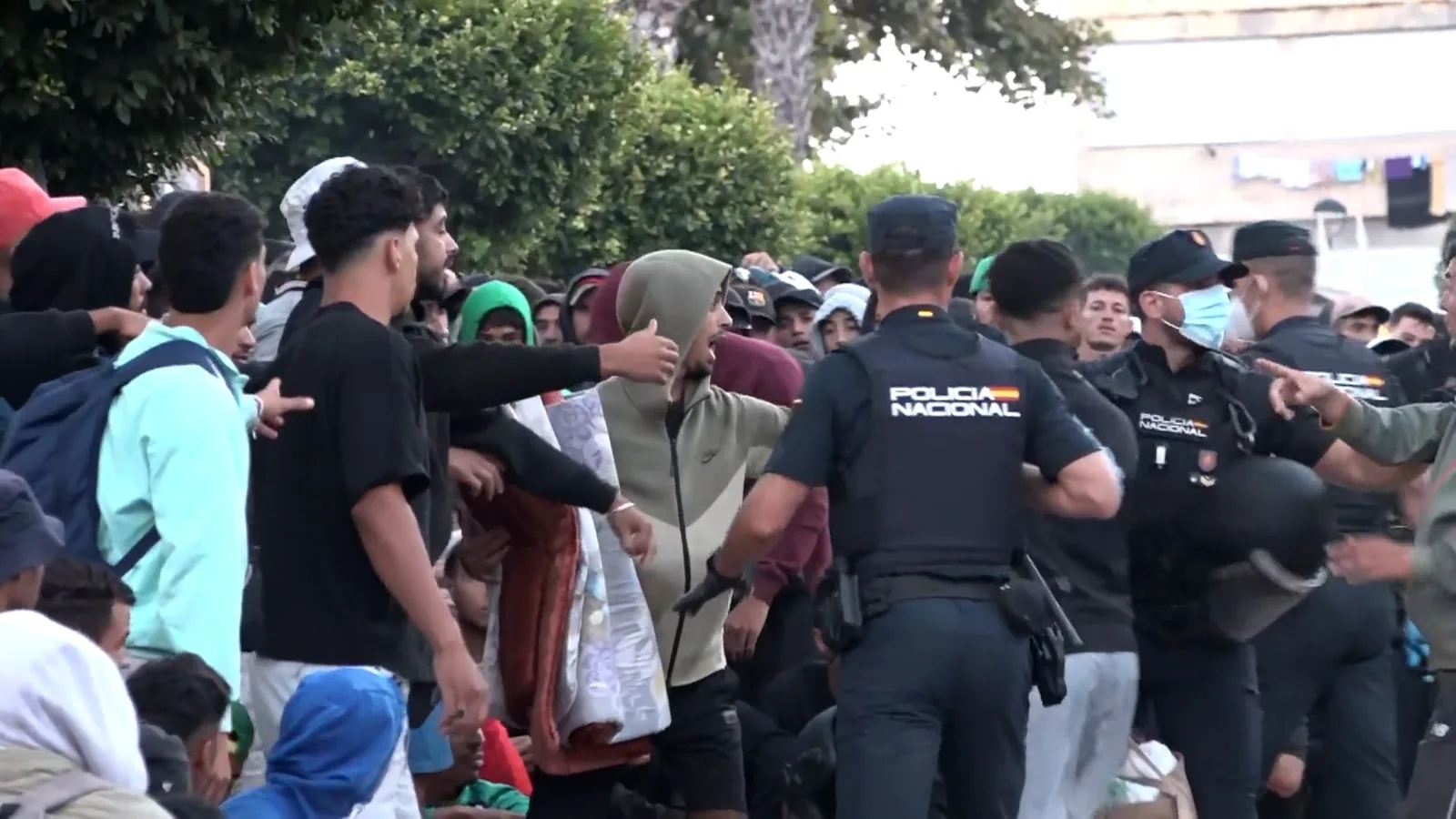
The questions arise on their own. Why is such an overwhelming device set up right now? Why was there so much passivity towards the human tide 15 days ago? And what has changed between the two dates for the regime to have turned Castillejos into a quasi-warlike ground zero in such a short time?
“We are facing the second part of a perfectly designed strategy by Morocco,” diagnoses Luis Mayandía, head of the Central Unit of Illegal Immigration Networks and Document Falsifications (UCRIF) of the National Police until his retirement three months ago. “First, the regime allows a huge avalanche in Ceuta after a social media campaign. Two weeks later, it imposes absolute control after spreading a similar threat… In other words, it is a textbook hybrid warfare action. And the recipient of this message is the European Union: they want to make it clear that if they are interested in controlling illegal immigration, they must negotiate directly with Rabat. For that, they hint, it would be convenient for Ceuta and Melilla to be in their hands.”
#haraga is the key for the jump today and has millions of views
For this second phase to go as planned, Moroccan security forces have set up a device so strict it borders on paranoia. Just seeing someone filming in the border area is enough for a police officer to immediately demand to see the images and delete them at once.
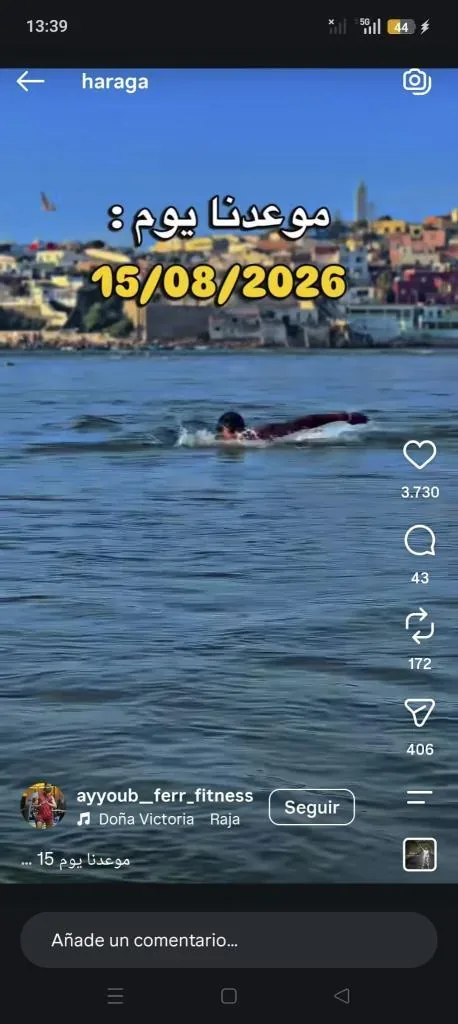
The presence of thousands of agents is perceived not only at the border crossing but throughout the border city. There are orders to monitor groups of young people, the most likely to swim across on 15-A seduced by messages on social media. The hashtag code #haraga (burners) and today’s date accumulate millions of views on X, Instagram, and TikTok. The messages try to convince the youngsters that the Ceuta border will be open for 24 hours, coinciding with the holiday in Spain, despite the authorities’ categorical denial.
Read more Trump evaluates the ideological loyalty of NATO allies to consider whether to cut troops
Even stricter is the control over minors, who cannot walk the streets without an adult companion. “The kids who want to reach Ceuta are more hidden than ever,” says a local businessman with ties to the secret services of both countries. “The police and military presence is unprecedented.”
It is hard to believe that just 15 days ago, tens of thousands of residents crossed this border in broad daylight. Today, however, no one admits their Spanish dream and much less in front of a stranger. “You won’t find them, but they are all around you,” says the mentioned businessman. “The kid from the store, the parking attendant, the one who serves you at the café… They would all emigrate illegally if they could, but they must wait for the right moment.”
“Such a police and military presence is unprecedented”
Along the seafront, a sturdy teenager, stuffed into a Madrid jersey of Mbappé, is the first to dare to break the omertà. Using the phone translator, he details an apartment block on the outskirts where a group of friends plans to swim to Ceuta this very Saturday. “I’m the security manager, go there and they will tell you,” he says with a smile.
The meeting takes place in a social housing neighborhood with whitewashed walls, sky-blue borders, and rooftops full of satellite dishes. On the block’s stairs, Friday chants, the Muslim holy day, sound while women cook dinner. Several neighbors peek through the curtains and withdraw as soon as they are spotted. But no one answers the doorbell of the indicated apartment: if the future migrants are inside, they have decided to remain in the shadows.
Upon leaving the building, it becomes clear that the word has spread about the presence of an outsider. A well-groomed twenty-something, the one who speaks the best English in the neighborhood, makes clear the official line of his government. “Morocco is the best country in the world and no one would want to leave here,” he states. “Besides, it is illegal to ask people questions on the street. Better for you to leave here now.”
“Those who want to go to Ceuta are more hidden than ever”
A beautiful neighbor follows our steps until she is alone and approaches discreetly. Only then does she dare to come closer to tell what, according to her, is happening, a version curiously aligned with the regime’s message. “My two nephews swam to Ceuta two weeks ago, but they have returned because life there is impossible,” says the woman, named Fatimouri. “This time, the Moroccan authorities found out in time about the conspiracy and are collaborating with the Spanish to avoid another tragedy. It is all the work of foreign powers wanting to sow chaos in this country, taking advantage of a youth without education or economic resources.”
Her diagnosis is shared by Juan Randó, a former Spanish agent in northern Morocco, who also denounces the “abandonment” of the area by our secret services since the beginning of the century. “A suggestion on social media is enough for tens of thousands of people to try to cross to Ceuta, where they believe they will live like Messi, have a mansion, and drive a luxury car,” he says. “We are completely at the service of Morocco’s wishes: when they decide to send us migrants, their people respond like a pack.”
Evening falls in Castillejos. The cafés fill with customers under the discreet surveillance of hundreds of agents. A young man suspiciously resembling the kid in the Mbappé jersey from hours before rests sitting on the seafront. However, he puts on a poker face when asked about his friends eager to swim to Ceuta this 15-A: “Only Arabic, I don’t speak Spanish, friend.”