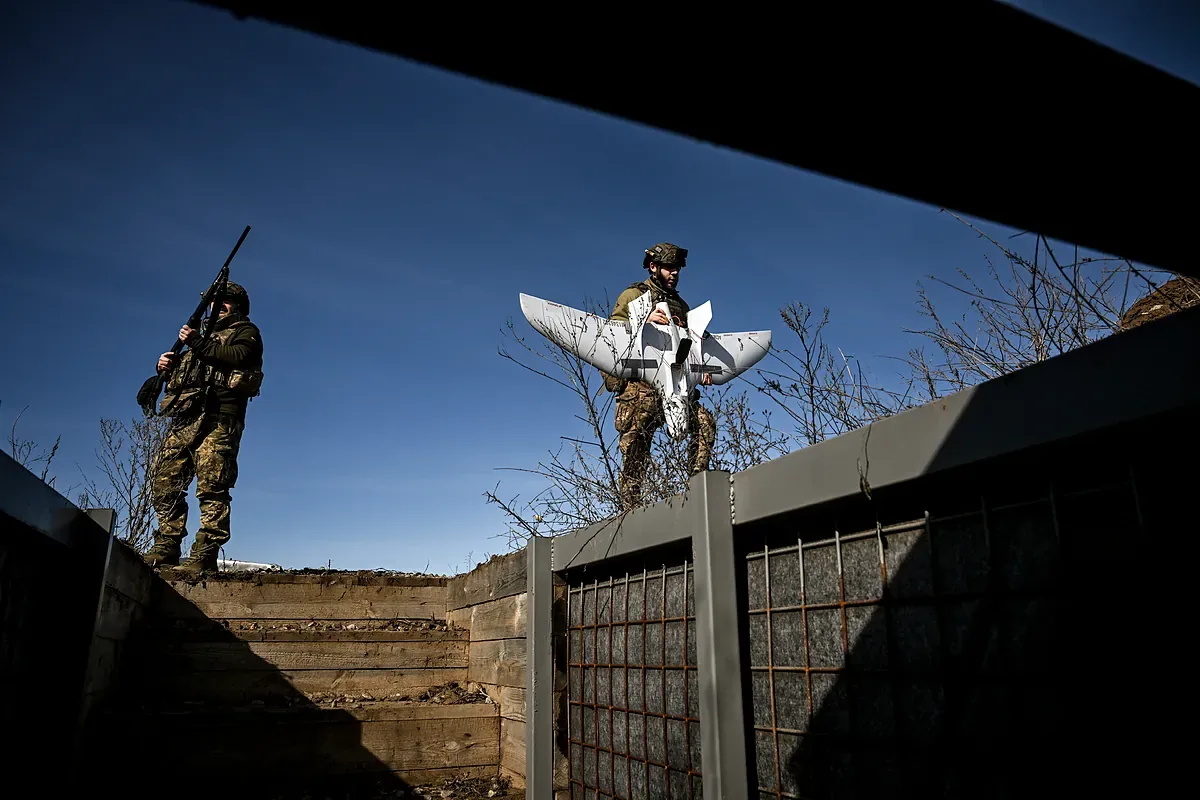





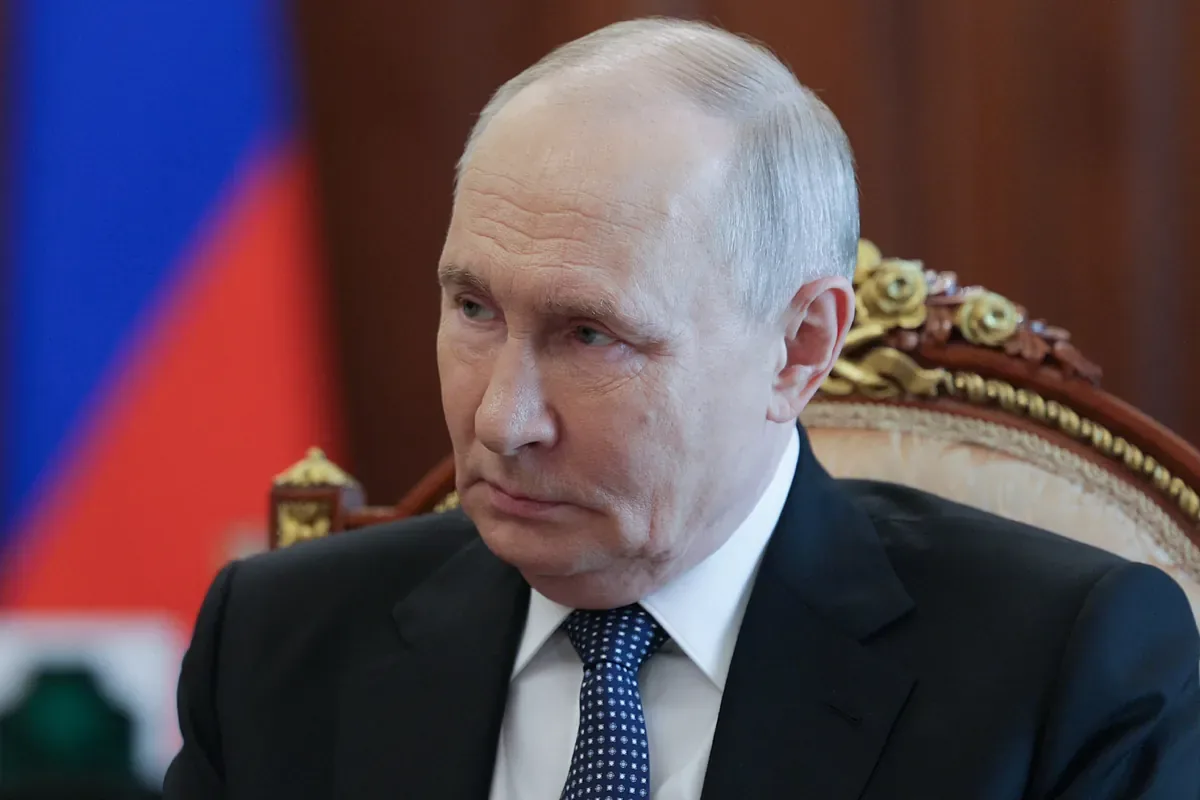
US media such as The Wall Street Journal, CBS, or Bloomberg have reported that the reason for the surprise visit of CIA director John Ratcliffe to Moscow was to issue a warning to Vladimir Putin’s regime about its intentions to carry out an armed attack on a NATO country. Donald Trump said early this morning that the trip was “semi-routine” to try to downplay the importance that these newspapers give it.
Read more Raphinha and Fermín dress up as ‘9’ to beat an Athletic that clung to Unai Simón
The Wall Street Journal, which was the first to reveal the real purpose of the trip early this morning, reports that Ratcliffe traveled to Moscow to warn Putin not to attack any NATO country, following new assessments by US intelligence concluding that the Russian president might try to test the Alliance’s resolve with a limited assault on an allied country in the coming months, even weeks. It is worth remembering that the last trip of a CIA director to Moscow, that of William Burns, took place in November 2021, months before the large-scale invasion of Ukraine, also as a warning.
European and US intelligence point to the Baltics as the most threatened area. The newspaper specifies that the warnings focused specifically on Estonia, Latvia, and Lithuania, the three NATO members bordering Russia. According to the gathered information, Russia plans a small-scale ground incursion, serious enough that it is no longer considered sabotage, but limited enough for the Alliance to consider whether it should intervene.
CBS News, which was the first to reveal the existence of the trip before its purpose was known, provides additional details about the context. The latest intelligence assessments indicate that Putin’s risk calculation may be changing with the current military stalemate in Ukraine, a war that has lasted almost five years, and the damaging bombings of Russian refineries by Kiev.
Now, according to this information, the Russian autocrat is more willing to authorize provocative actions against NATO members, including hybrid operations and other deniable measures below the threshold of conventional military conflict. The network also revealed a significant detail about coordination with Ukraine: before the trip, the US informed Ukrainian officials that a high-level delegation would travel to Moscow and asked Kiev to suspend its attacks until the delegation left Russia. The Kremlin confirmed that Ratcliffe met with Russian intelligence officials but denied that he met with Putin, who, according to spokesman Dmitry Peskov, was informed of the talks afterward.
Analysts from the Institute for the Study of War (ISW) have long argued that “Putin continues to show that Russia is not interested in serious peace negotiations with Ukraine and remains firm in its aggressive intentions toward the Baltic countries. Putin has intensified Kremlin efforts to create an informational base for a future escalation against the Baltic countries, probably as part of his broader attempts to weaken NATO.”
Fabian Hoffman, a security researcher, states in Foreign Policy: “A Russian operation against NATO would begin with a limited incursion into allied territory at a point perceived as weak, for example in one or more of the Baltic states. After the initial attack, Russia could declare that any attempt to retake the occupied area would trigger a nuclear escalation.”
Bloomberg published early this morning, citing three sources close to the Kremlin, that Russia is preparing to escalate its attacks on Ukraine after concluding that peace negotiations have reached a deadlock. According to the agency, Moscow is considering intensifying attacks with high-powered ballistic missiles against Kiev, including the city center, and against infrastructure in other Ukrainian cities. Four sources close to the Kremlin explained that, in the absence of diplomatic efforts, Moscow sees few alternatives to further escalation to achieve its military objectives. In reality, the country that has most opposed a complete peace in Ukraine has been Russia, which demands Kiev’s surrender without having militarily achieved its goals.
The most disturbing element of the report is the nuclear dimension: the intensification of Ukrainian attacks inside Russia has led a growing number of Russian officials to believe that Putin could take the extreme step of using tactical nuclear weapons in Ukraine, although Bloomberg specifies that there are no signs that Russia is preparing such use. The agency also adds that Moscow increasingly considers Ukrainian attacks as attacks by NATO member states, because the allies supply Kiev with weapons and intelligence, and that the current phase of hostilities is not the peak of military escalation.
Security and Defense analyst Christian J. Ehrlich states: “Two years ago, during a visit to European staff academies, it was clear that Russia could attack Europe directly before 2030. A strategic window of 6-7 years was discussed. Europe needed to rearm urgently to regain conventional deterrence, lost after the ‘peace dividend’ of the 90s. But Europe is rearming faster than expected then, and that makes Russia nervous. The immediate effect is that this strategic window is closing on the Kremlin sooner than expected, and that offers two scenarios: Russia undertakes a limited-scale military adventure, testing Europe’s and NATO’s response. The Baltics would be the most likely scenario. And the second: Russia opts for hybrid gray zone actions, not necessarily in the Baltics. So far, it seems that option two is the path taken by the Kremlin. But the West knows something that worries everyone.”
Read more The Camp Nou fills with esteladas like in the most heated moments of the ‘procés’