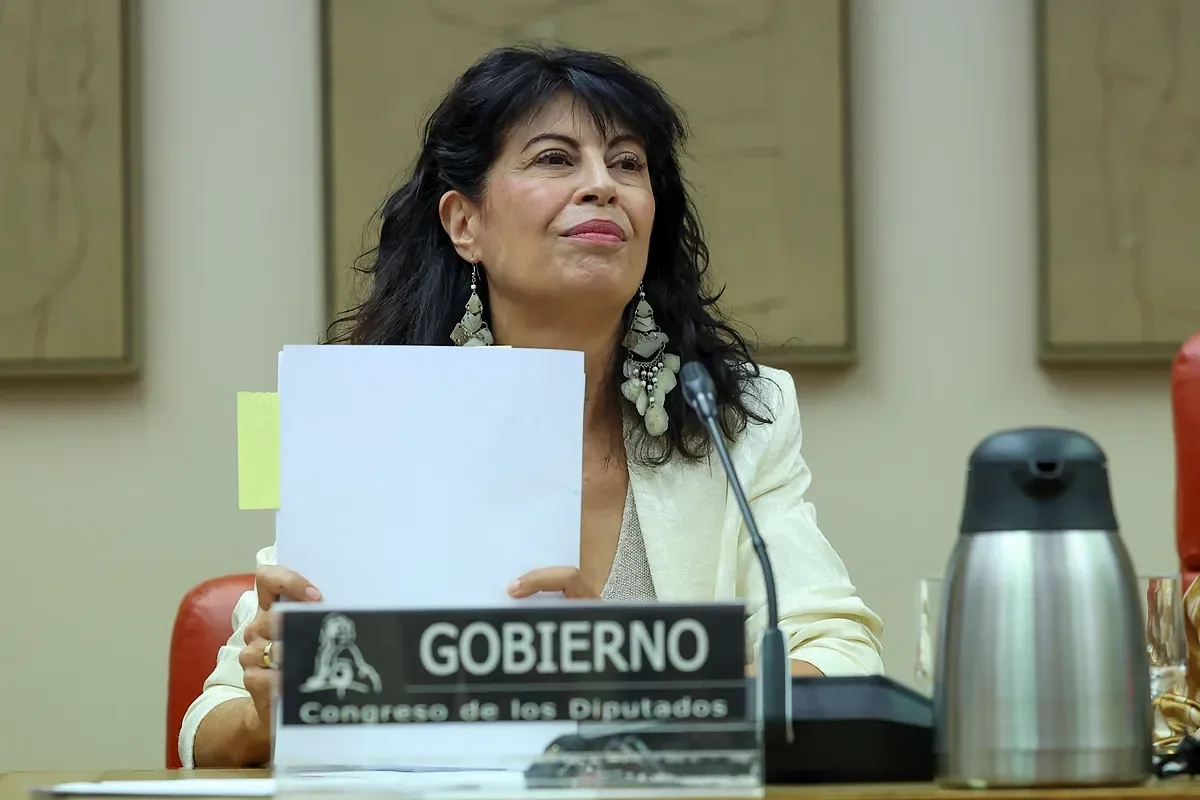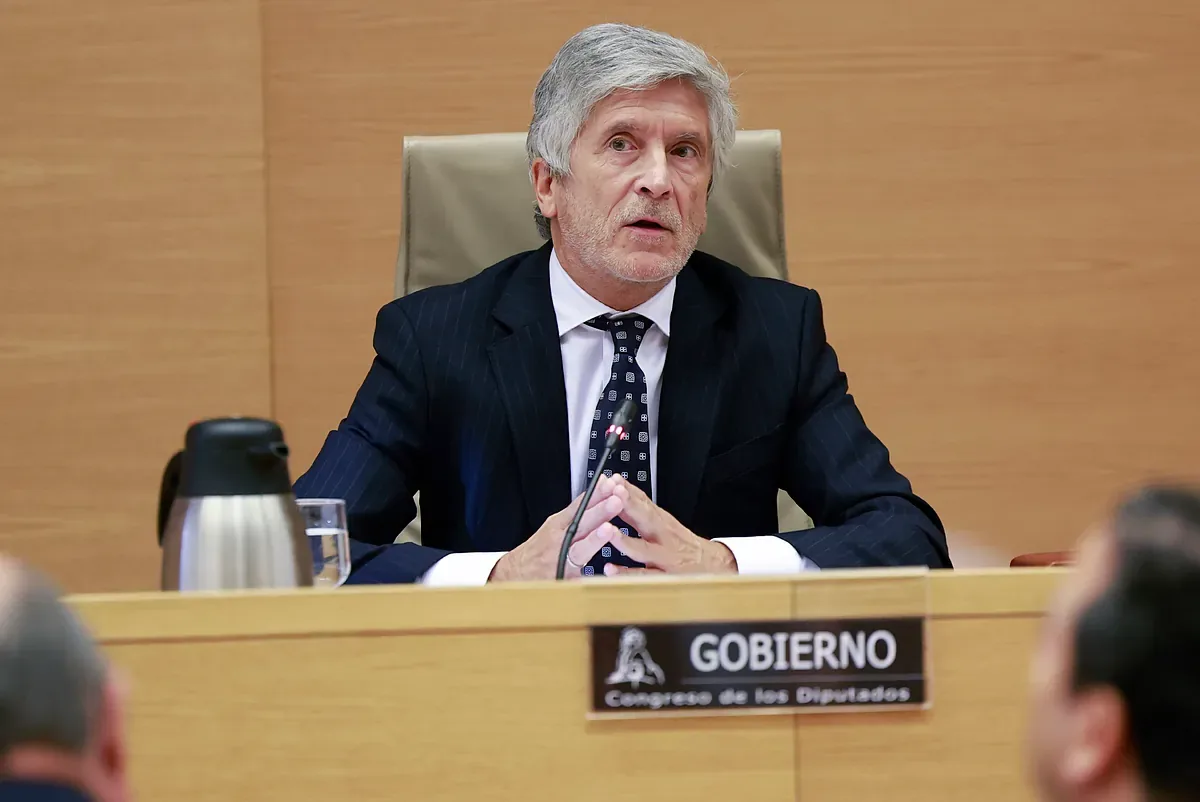




Margarita Robles: “There are interested actors who have probably favored this crisis or are using it with a clear political purpose of destabilizing Spain and the European Union.” Félix Bolaños: “There is no evidence that Morocco led or encouraged the entry of thousands of people at the Ceuta border on July 30.”
These are the two opposing versions offered from within the Government regarding the presumed responsibility of Rabat in the surge that the autonomous city suffered a month ago: one, the minority view, put forward solely by the Defense Minister in her appearance in Congress on Tuesday, but generally shared by the parliamentary partners of the coalition; the other, the official one from La Moncloa, upheld yesterday by the head of the Presidency and Justice portfolio in his own accountability in the Lower House. It is taken for granted that the Interior and Foreign Affairs officials, Fernando Grande-Marlaska and José Manuel Albares, will not deviate today from the line of exonerating the neighboring country from any hint of blame, which they have consistently defined as “a reliable partner.”
In his speech yesterday, Bolaños responded firmly to the criticisms of this position conveyed by all groups and, indirectly, also to his colleague Robles. He warned that “insinuations and suspicions” cannot be “thrown” at a neighboring country “with which cooperation and good neighborly relations must be maintained,” specifically recommending to the PP and Vox “an accelerated course in basic diplomacy” in case they ever come to lead the country and generally rebuked: “Disrespect is being shown without any proof to Morocco.”
Furthermore, the de facto political vice president publicly disavowed the Defense Minister for having stated on Tuesday in Congress that the CNI warned about what could happen at the maritime border of Ceuta. “The Government had no prior or precise information about the magnitude of the entry of 70,000 people. This is the reality,” he emphasized, thus refining the narrative with which Interior has tried to justify from the start of the migration crisis why security was not reinforced.
The pro-Moroccan version of this crisis was set by Pedro Sánchez himself in his so far only visit to Ceuta, on July 31, in which he denounced “an attack on the integrity of Spain” while at the same time praising the “cooperation” of the neighboring country. And this is the script followed by all the ministers who have spoken on the subject, including Ángel Víctor Torres, who since Wednesday has been responsible for coordinating the response to this emergency—and who also spoke in Congress yesterday—except Robles, who is also the only one who has warned about the “confirmation of the proliferation of hybrid attacks and threats.”
Read more Raphinha and Fermín dress as ‘9’ to beat an Athletic that clung to Unai Simón
The position of the partners, on the other hand, is closer to that of the head of the Armed Forces and the CNI than to Moncloa’s argument. Two of the Government’s most loyal allies this legislature were particularly forceful yesterday: Bildu urged it to stop being “doormats” with the argument that “you don’t have to be Pericles” to see that Morocco has not cooperated, while ERC pointed out that “with even a little knowledge of diplomacy” it is obvious that “something similar to what happened in Ceuta would not be tolerated” from France or Portugal and that this makes it “difficult” for them to maintain parliamentary support for the coalition.
Even from the Sumar ranks, they demanded that the Government’s main partner speak about the “Moroccan despotic regime” and also took the opportunity to reproach the 180-degree turn regarding the Sahara in 2022, when Sánchez’s Government abandoned the historic position of neutrality and proximity to the UN framework to support Rabat’s autonomy plan. The PNV, in turn, demanded that it is necessary to know why the neighboring nation “abandoned” surveillance in the hours prior to the massive entry and now rejects the repatriation of bodies, while Junts stressed that the espionage with Pegasus of the president and several ministers has been met with “silence and thank-you letters.”
Bolaños dismissed all these arguments and those of the PP and Vox— even harsher—arguing that “very serious claims about Morocco without evidence” were being made, only “conjectures.” Likewise, he framed the statements of several ministers from the country of Mohamed VI demanding sovereignty and the “liberation” of Ceuta and Melilla as “an electoral struggle” ahead of the general elections to be held on September 23 and not in “the reality” of bilateral relations with Spain.
For his part, Torres conveyed yesterday the Government’s commitment so that the autonomous city that received a surge of people similar to its population returns to “normality as soon as possible,” although 29 days after the jump there is not even an official estimate of how many irregular immigrants remain there. The deadline, extendable, set by the Government is December 31, although the Territorial Policy Minister said they will “try to shorten everything.”