





Amadou Abdulkarim holds his mobile phone at face level while making a video call to a relative. On his phone screen appears the face of a woman. It is his mother, who is in Sudan. “I am fine. Don’t worry. I love you very much, mom, you know that,” he tells her.
After hanging up, the boy’s smile fades. Amadou is about 6,400 kilometers away from his home. He says he comes from a village in the Sudanese region of Darfur. He talks to his mother from the vicinity of the crowded Temporary Stay Center for Immigrants (CETI) of Ceuta, located on the outskirts of the Spanish autonomous city.
Last Wednesday, when Ceuta had not yet experienced the human avalanche from Morocco with more than 50,000 people that arrived two days later, he patiently waited to be able to enter the facility and enjoy a roof, a mattress, hot water.
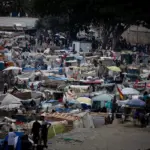
Once he does, he will request humanitarian asylum in Spain. Meanwhile, this 22-year-old spent his days lying on cardboard and under plastic tarps, on the roadside ascending to the metal gate of the CETI. At that moment there were already more than 1,000 people like him waiting their turn on the street, between a road and a wooded hill.
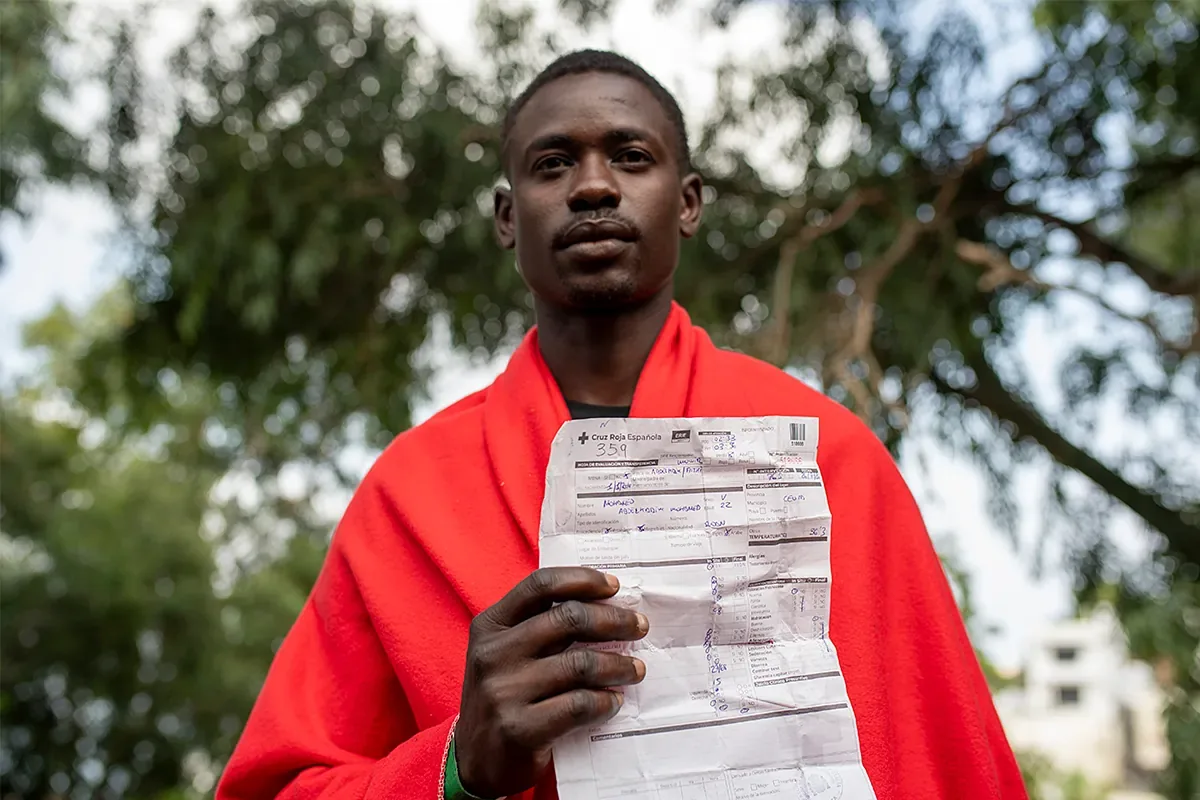
The boy shows a paper they gave him with his data and his admission request. At the top, written in pencil, is the number 359. These are the people who arrived before him here.
Amadou reached Ceuta by swimming last weekend. He jumped into the sea from a beach in Castillejos, on the other side of the border with Morocco. Since he does not know how to swim skillfully, he held onto a black float and propelled himself with his feet. He arrived at dawn. It took him five hours to make a journey that would take 10 minutes on foot. Soaked, he began to walk in no particular direction until someone told him where the CETI was.
“Life in my country has lost meaning. It’s not life. They kill us, we die of hunger…,” says the boy. Crónica manages to speak with him thanks to the Arabic translation provided by a young Moroccan who is also waiting to enter the reception center and through the limited English Amadou speaks.
“There is war. There is a lot of insecurity. Women are raped. Young people are forced to fight. What could I do? I knew I could die on the way. But I didn’t care. I think it was more likely there,” adds Amadou, who has four siblings.
—How long did it take you to get to Ceuta?, the journalist asks.
—Two years. Other boys from Sudan who are also around here took three years, going from country to country. It is a very hard journey. Now I am happy.
—How many countries have you crossed to get to Spain through Ceuta?
—I left Sudan through Chad. Then, I went to Niger. I crossed the Sahara Desert. I think I also passed through Mali, Mauritania, until I reached Morocco. It’s hard to describe the route well. Sometimes, you don’t know where you are. I have lived on the street, I have been beaten…
—Was it very hard?
—I prefer not to remember. I don’t want to talk about it.
Sudan has been at war since April 2023. Since then, the Sudanese Armed Forces (SAF) and the Rapid Support Forces (RSF) have been fighting. It is estimated that between 11 and 12 million people have fled their homes due to the fighting. The conflict broke out over disagreements about the integration of paramilitaries into the national army during the political transition after the fall of Omar al-Bashir, the former Sudanese president, overthrown in 2019 by a coup d’état. He was later imprisoned, tried, and convicted on multiple corruption charges.
“I just wanted to escape and go home”
A recent journalistic investigation by the Associated Press news agency has managed to narrate the experiences of child soldiers recruited for the war under death threats.
The American agency gathered exceptional first-hand testimonies revealing the dangers faced by tens of thousands of children and adolescents believed to have been recruited by all sides for the war. In its investigation, AP interviews six former child soldiers who were kidnapped and forced to fight with the RSF.
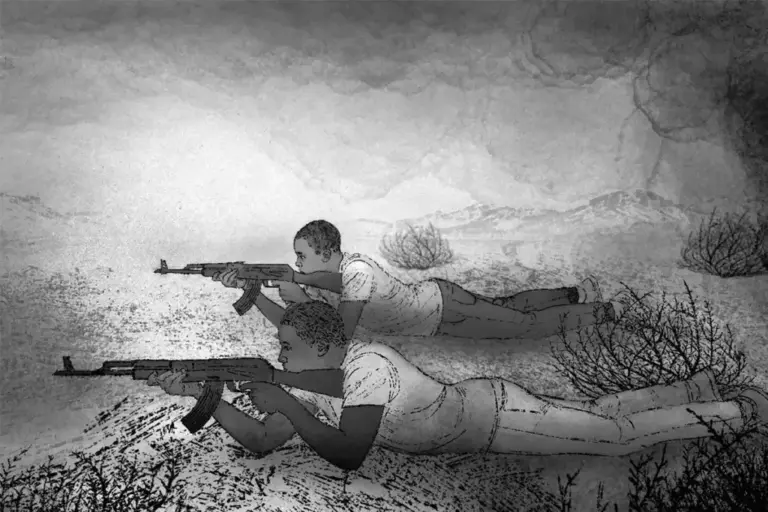
The boys spoke on condition of anonymity for fear of reprisals. Two of them said they were trained by Colombian mercenaries. According to human rights groups, these were recruited by a company in the United Arab Emirates linked to the state to fight with the RSF. The Sudanese armed forces accuse the UAE of arming the RSF. Additionally, a report by the United Nations (UN) reported tracking arms shipments to the RSF from that Gulf federation, which includes Dubai. The United Arab Emirates denied these accusations to AP.
Read more Some Moroccans who stormed Ceuta arrive at the beaches of the Campo de Gibraltar
The UAE stated that its investigation into the company in question found no links to mercenary activities in Sudan. They condemned atrocities committed by all parties and expressed support for efforts to end the conflict.
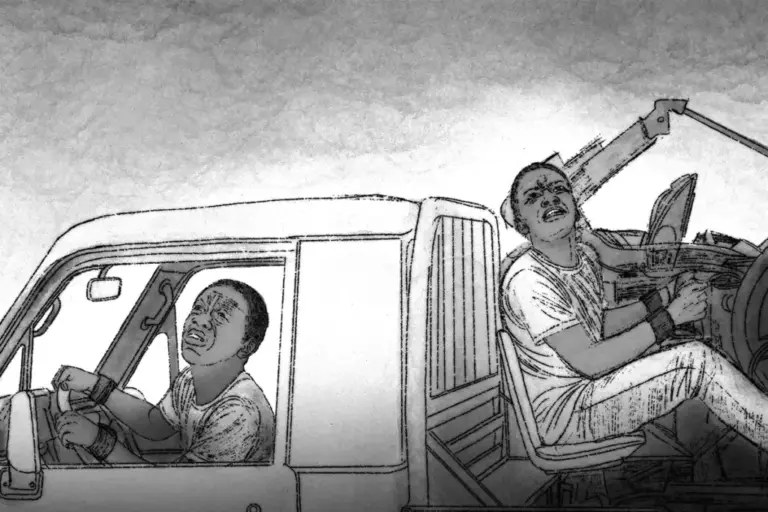
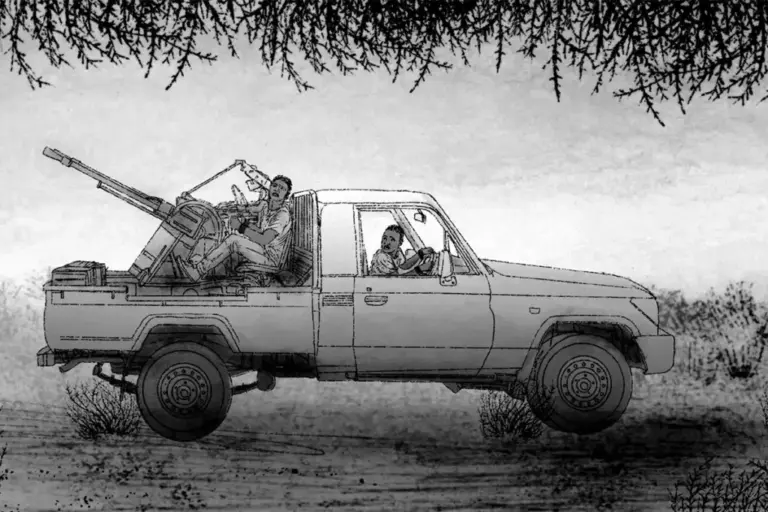
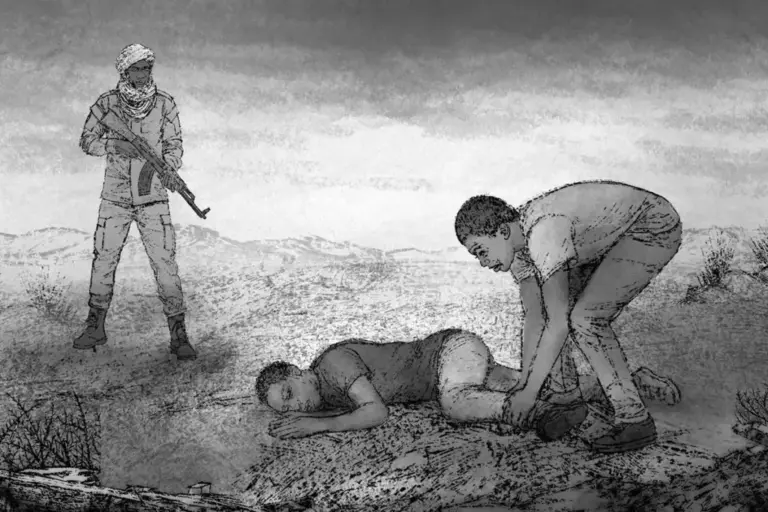
One of those children said one of his captors tied him with shackles to an anti-aircraft cannon mounted on a pickup truck while Sudanese warplanes attacked. He said he saw another child who had been chained to the steering wheel.
While their captors sought shelter, the boys were ordered to stay and shoot down planes over the capital, Khartoum. If they tried to escape, they would be killed. That minor is now 17 years old. He added that those who ordered him tied to the cannon were Colombian mercenaries providing military support to the Sudanese RSF against the army in the war, now entering its fourth year. Another boy said he was forced to carry out artillery attacks and was beaten for disobedience.
“I was very scared. I just wanted to escape and go home,” said the minor who was chained to the anti-aircraft weapon, who broke down crying during the interview as he touched the scars from the approximately 18 months he was forced to fight.
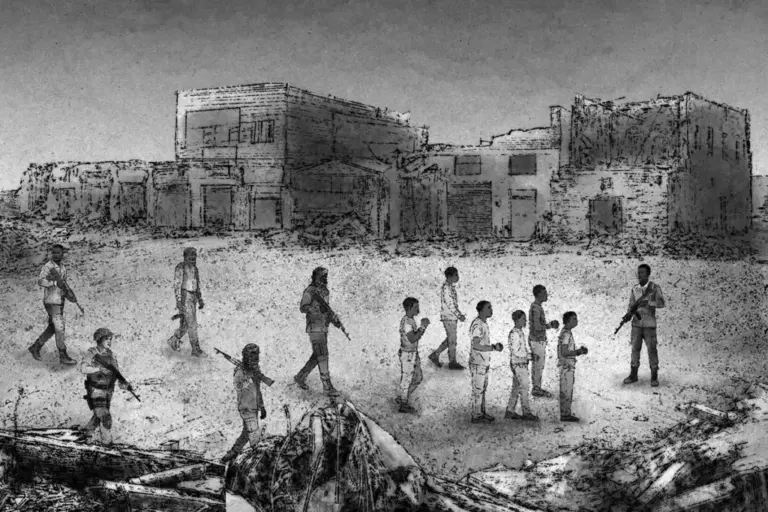
The AP report states that the boy said RSF fighters detained him in a market in Omdurman, a city neighboring Khartoum, where he was selling cigarettes. The paramilitaries were looking for deserters and captured him by mistake. He was 15 years old at the time. Without ever having held a weapon, he was sent to the front in Khartoum. The scars on his head and under one eye mark where he was hit by shrapnel.
Later, they took him to an RSF base in Omdurman, known as the Central Reserve Camp, where he was held with dozens of other children. Their hands were tied all the time. Even while eating. “We were not allowed to bathe. Instead, they poured water on us while we remained tied up,” he emphasized.
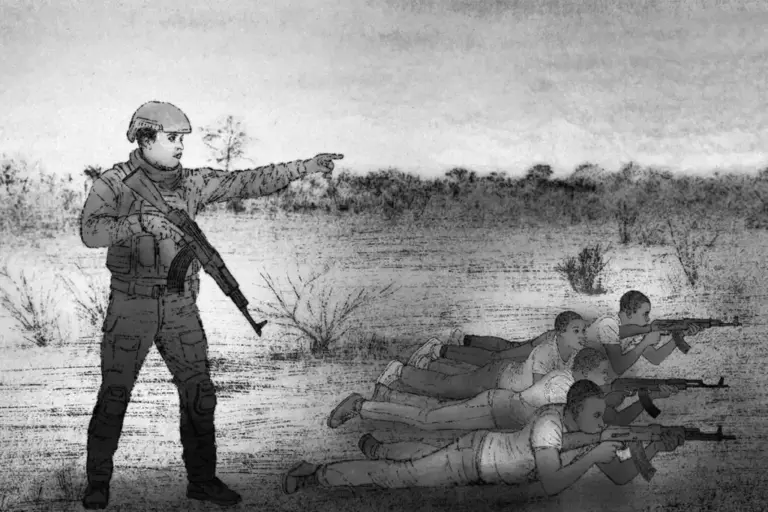
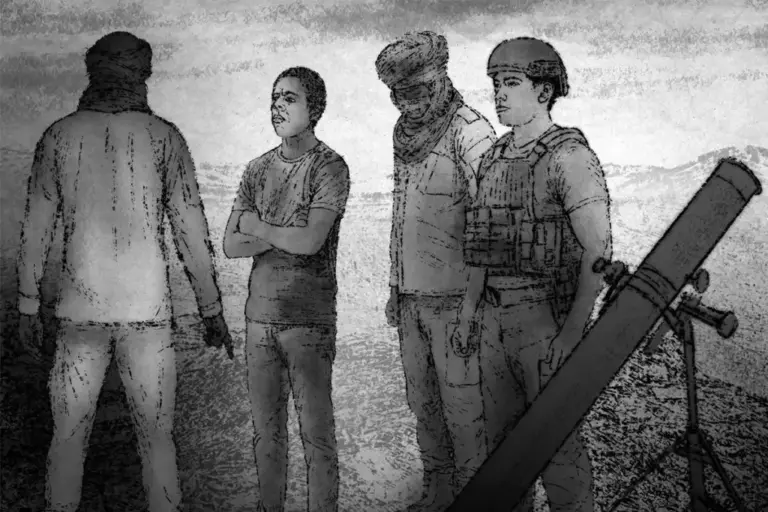
He indicated that there were dozens of foreign mercenaries at the base, described as Colombians by the RSF fighters. Through interpreters, they taught the children how to use anti-aircraft cannons. He said they told the RSF fighters to tie the children to the weapons so they could not escape.
WILDLY CHAINED
“When the planes flew over [the area], the Colombians retreated to their bunkers, leaving us outside chained to the vehicles,” the teenager recounted. He was forced to shoot but emphasized that he was too scared and never hit the target.
Another minor, also 15 years old, said the Colombians and the RSF used drones to select targets. When he refused to shoot, they beat him, sometimes with a stun baton. On one occasion, he said, a Colombian beat him until he lost consciousness.
The NGO Save The Children denounces that the war being fought in Sudan for more than three years “has become one of the most devastating crises for children worldwide.” It speaks of a “total collapse.” According to data from the Sudanese Ministry of Health, at least three babies have been born every minute amid the conflict, between April 2023 and April 2026.
“This means 5.6 million births in extremely precarious conditions: overcrowded shelters, health centers without electricity or basic supplies, and a severe shortage of qualified medical personnel,” the NGO denounces.
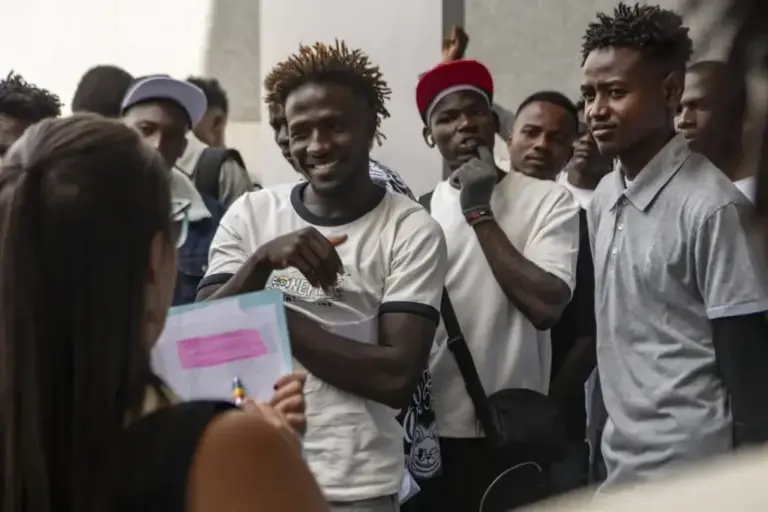
Last Wednesday, the same day Crónica spoke with Amadou at the gates of the CETI in Ceuta, a group of 39 sub-Saharan Africans who had left that center were around the city’s maritime station to be transferred to the peninsula by ferry. Various autonomous communities will take care of them there.
Most were young black men from Sudan. There were also people from Mali, Chad, and other sub-Saharan countries, they said. One of the boys, 21 years old, Sudanese, agreed to speak with this reporter on condition of anonymity. Before leaving, he says: “It took me three years to get to Ceuta. I came by sea. I didn’t care about losing my life in the water. Now I have the opportunity for a new life in Spain, in Europe…”