






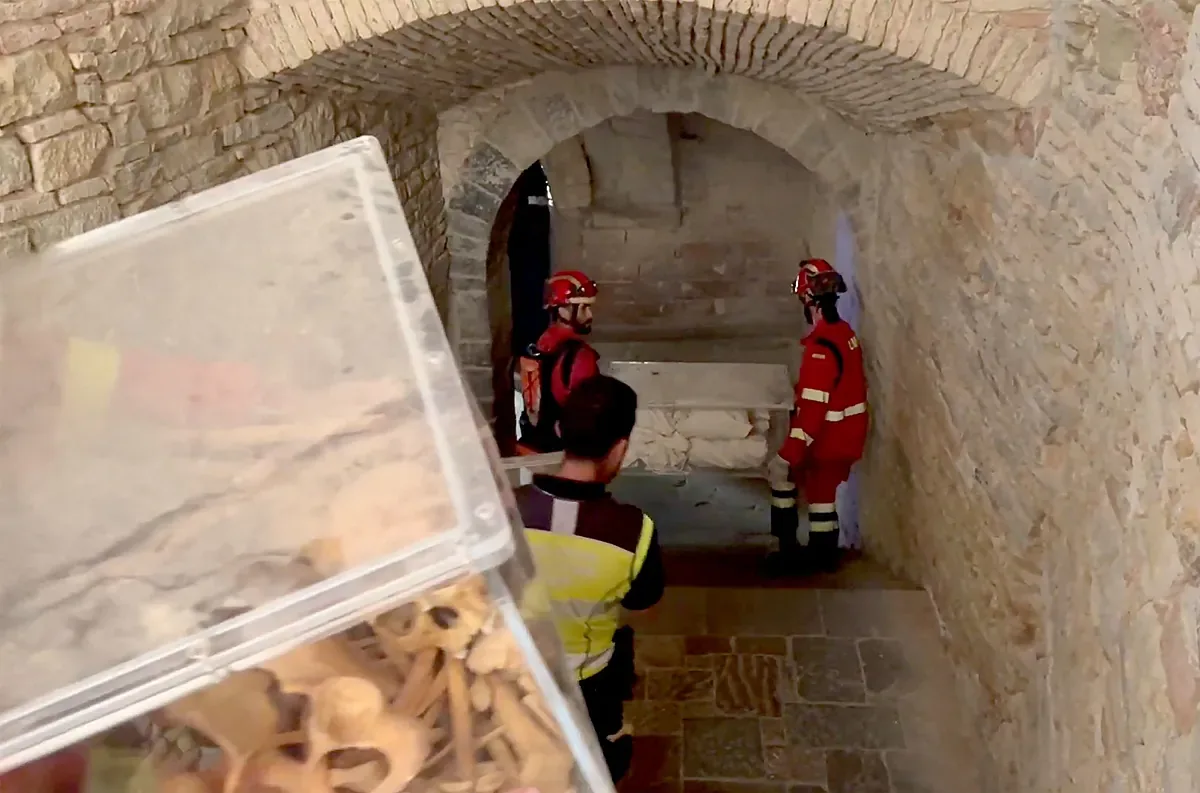
Between 1984 and 1986, a group of archaeologists found in one of the caves of San Juan de la Peña, the funerary remains of the exclusive kings of Aragon. Under 11 lead chests, there were 13 burials in which lay the bones of the monarchs, their wives, and their descendants. These remains are what the Military Emergency Unit (UME), the Civil Guard, and the Cultural Heritage technicians of Aragon had to remove on Thursday afternoon from the Romanesque temple of Huesca due to the advance of the fires that began in Las Peñas de Riglos and threatened the building.
Placed in plastic urns, some even leaving the bones visible, the remains had to be transferred to the Archaeological Museum of Huesca where they are now kept in the reserve area, meaning they are not visible to the public as they were not in the monastery either. Among the rescued items are also paintings, jewelry, and replicas of the Holy Grail – which, according to Aragonese tradition, remained in this complex for 350 years -. But the truly important ones are the remains of kings Ramiro I, Sancho Ramírez, and Pedro I and their families and the military suit of the Count of Aranda.
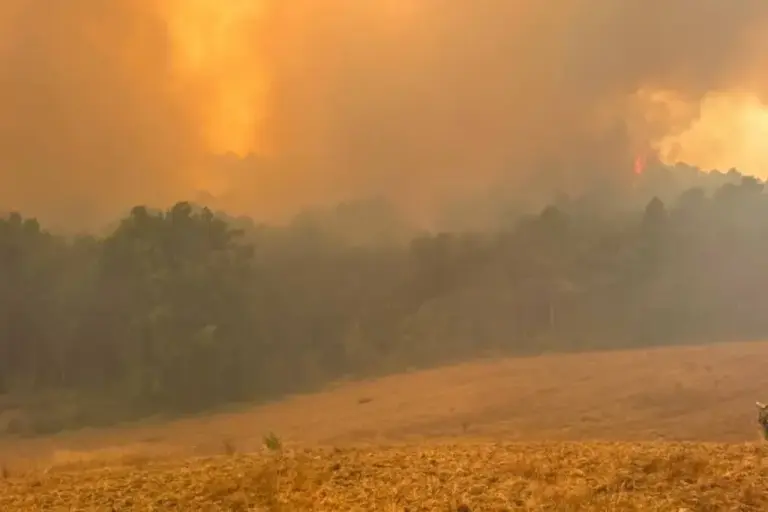
Four new municipalities evacuated after a flare-up at the tail of the Las Peñas de Riglos (Huesca) fire
- Editorial: EUROPA PRESS Zaragoza
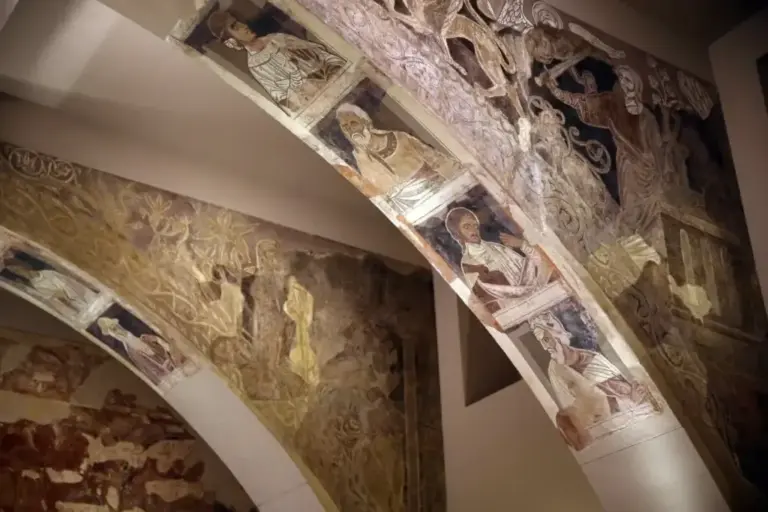
Last attempt by the MNAC in the dispute over the Sijena works: accuses the judge of violating the Constitution and insists it lacks the technical capacity to return them
- Editorial: CRISTINA RUBIO Barcelona
What is the real value of these remains found in the 80s? José Ignacio Lorenzo Lizalde, archaeologist and director of the excavations that allowed finding these bone sets, explains it in a phone conversation with this newspaper. «Aragon is the only European kingdom that preserves its exclusive kings, there is not a single kingdom in Europe that has the remains of its Royal Family from the 10th and 11th centuries. It is an incredible heritage, of incalculable value, not only symbolic but also physical».
Moreover, the remains that rested in San Juan de la Peña – and that will return there as soon as possible, according to the Aragonese Government – are in an almost perfect state of preservation because the Royal Pantheon in which, for several centuries, they were buried functioned as a refrigerator to facilitate that preservation since until the two interventions that began in Christmas 1984 the temple had been abandoned for more than a century.
«If we had only found a tooth of the kings there, we would already have had a very valuable asset, but there appeared 13 intact burials and 11 chests that came from the time when the neoclassical Pantheon was made. Above all, the interesting thing is that in the wooden boxes the monarchs were buried, but also the wives, the children, and the grandparents. That is the great value that must be given to that finding», emphasizes Lorenzo Lizalde.
The Government of Aragon reports that the entry into San Juan de la Peña, located in the heart of the Aragonese Pyrenees, has been «quick» and «exemplary». The operation, which involved the deployment of the UME and the Civil Guard, was directed by the Cultural Heritage technicians of the Aragonese Government as they are the ones who have located the exact place where the royal remains are found. «Right now we are focused on extinguishing the fires and no further comments will be made about the remains until those works are completed», sources from the Aragonese Government indicate.
On the monumental complex’s own website, considered the cradle of the Crown of Aragon, it is detailed that it will remain closed «until further notice» without yet establishing an exact day for its reopening and that money will be refunded to those who had already purchased tickets online. In fact, the roads that allow access to the place from Bernúes and from Santa Cruz de la Serós are also closed to traffic due to the fire.
The monumental complex of San Juan de la Peña is composed of the Old Monastery, which is covered by a huge rock that gives it its name and dates back to the 10th century; the New Monastery, built in the 17th century after the damage caused by a fire in 1675; an interpretation center, recently built over the ruins of the New Monastery; and the Romanesque church of Santa María, which is located about seven kilometers away, in the town of Santa Cruz de la Serós.
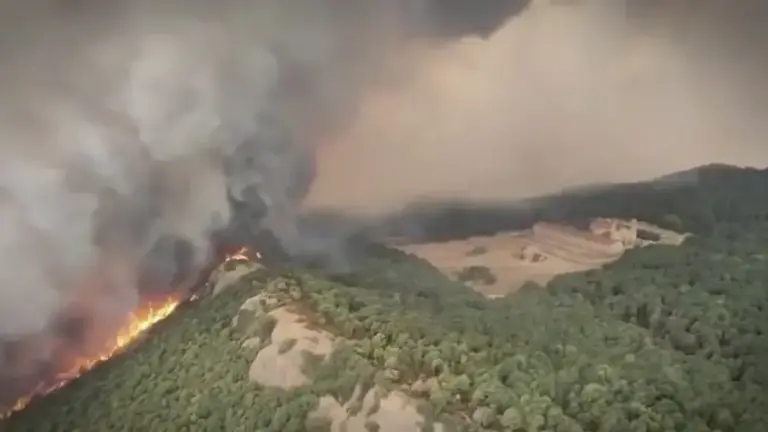
It was early Thursday afternoon when the flames of the fire almost reached the feet of the monumental complex, forcing the intervention that would end up removing the remains of the Aragonese kings from there. The vice president and minister of Presidency, Justice, Culture, and Sport, Mar Vaquero, acknowledged on Thursday afternoon that «critical moments were experienced between 1:00 p.m. and 5:00 p.m.» that day in this peculiar building.
Precisely that peculiarity of the complex, built under the rock itself, helped the flames have more difficulties to make their way and could cause greater damage to the goods. Although the danger from the flames seems to have decreased in recent hours, the Government of Aragon reports that work is being done cautiously to prevent any damage and also that keeping these remains safe is now «an absolute priority».