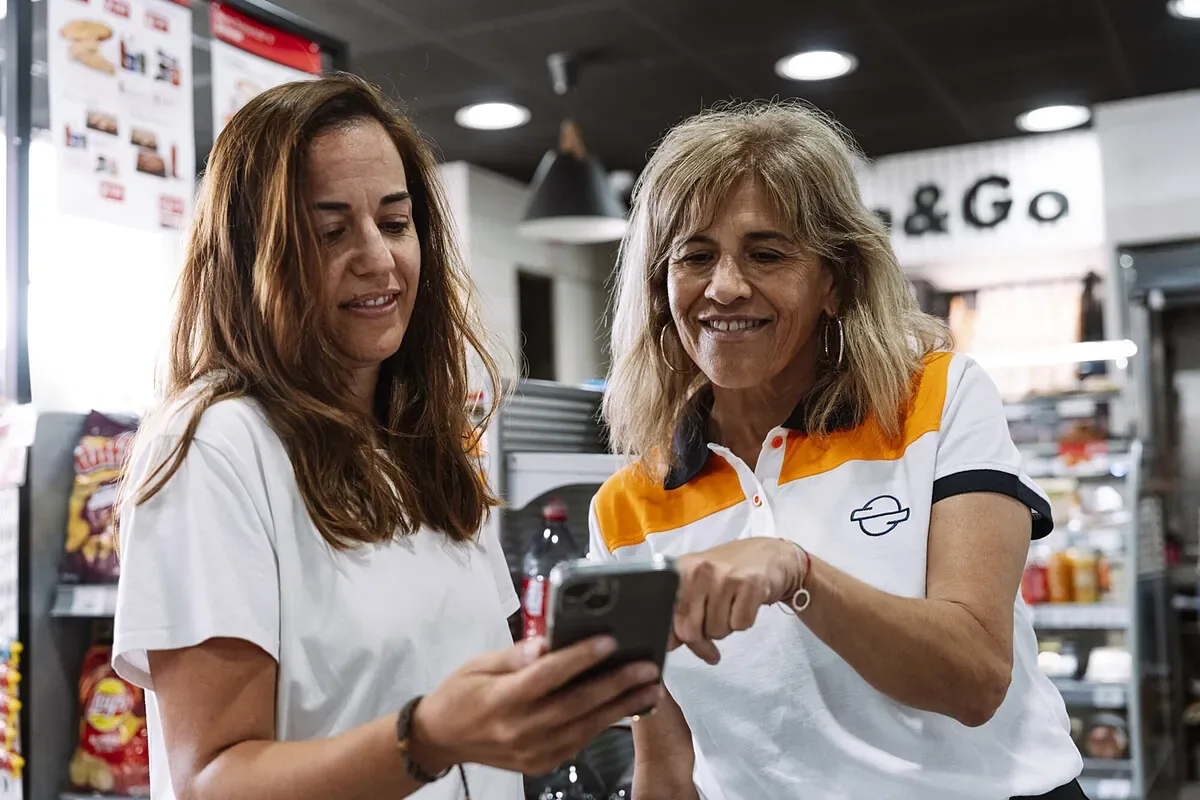





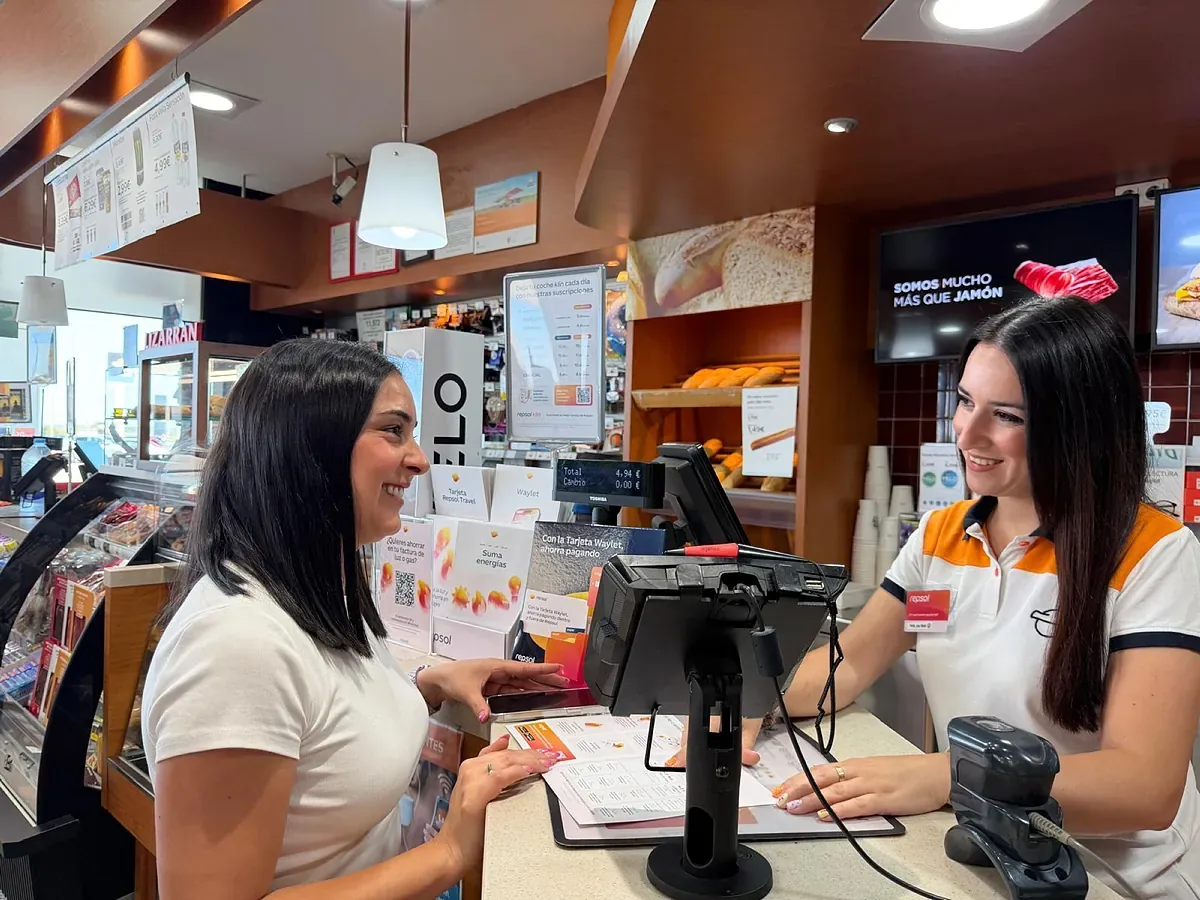
There was a time when stopping on the highway was an annoying chore: refuel quickly and rush off. Today, however, the experience is different. Service stations have become a place to eat, cool off a bit, stretch your legs, solve last-minute unforeseen events, and, above all, where thousands of stories intersect.
Read more The president and CEO of Plus Ultra resign, investigated for the loan to the airline
Nobody knows this ecosystem better than those who serve behind the counter. Through their eyes and their daily routine, we delve into the journey from the other side of the pump.
Sunday afternoon and the rush to return from the beach
Matilde Morales has spent almost her entire working life at the Repsol service station in Chucena Sur, on the highway connecting Seville with the beaches of Huelva. She arrived at 18 for a summer reinforcement while finishing high school, and today, as manager, she feels the business is her own home. She knows better than anyone when the mood of the road is going to change.
On summer weekends, the atmosphere transforms completely. “On Sundays, it’s non-stop. Customers come rushing because they don’t want to get caught in traffic,” explains Matilde. Being located on the main return route, the afternoon customer is very defined. The flow is dictated by the Huelva beaches, as the manager relates: “On Sunday afternoons, everyone coming back from the beach takes their soda bottle, their water… They always stop because this road has a lot of traffic, and they make a stop halfway.” The station has become the meeting point for cars returning together from Matalascañas, Punta Umbría, or Isla Cristina. Drivers agree to meet there for coffee, wait for stragglers, and continue the route.
About 120 kilometers away, Sara Barcala manages a 24-hour service area located on the A-381, the highway connecting Jerez de la Frontera with Algeciras (Cádiz). While in winter her usual clientele are hauliers, trucks heading to the port of Algeciras, and excursion buses, in summer tourists overwhelm the facilities. This is the time when the station becomes a key point of the Operation Crossing the Strait. “Now in summer, you’re constantly with people: those crossing the strait, those with an early ticket, those who need to sleep, those who want to have dinner, people coming for beach holidays, and those who have a breakdown or something happens and come in for help,” Sara recounts.
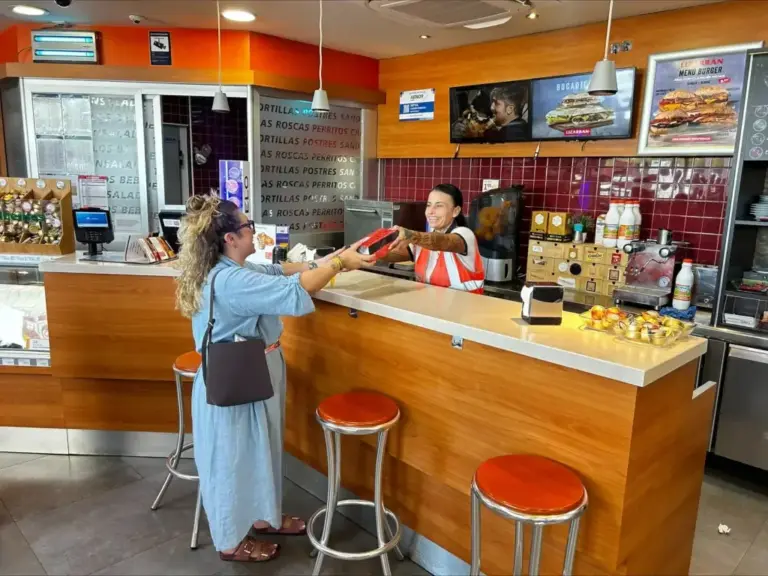
Both agree that these stops are, in reality, a relief in the middle of the route. As the manager in Jerez summarizes: “Since everyone has to pass through here, we are the reference point because there is absolutely nothing around, and suddenly, here we are with everything.”
Where the journey begins and ends: a quick coffee and a lifesaver for unforeseen events
When the journey exceeds four hours under the sun, priorities change, and stretching your legs becomes an obligation. Details such as finding well-refrigerated spaces or well-maintained facilities dictate the success of a stop. Matilde emphasizes that the cleanliness of the restrooms is non-negotiable for her team: “The bathrooms must be impeccable. That’s why on busy days, we check them every half hour,” she assures.
This same demand extends to the commercial offer, designed to solve lunch or a break without having to deviate from the route. Today, these areas feature Starbucks coffee to clear your head alongside menus and sandwiches from Enrique Tomás or Lizarran, a quick way to sort out a meal before returning to the asphalt.
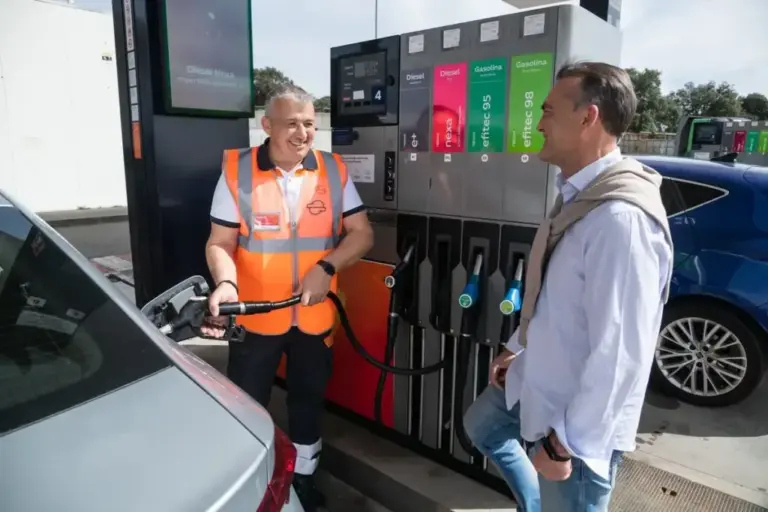
In addition, stations frequently act as “lifesavers” for summer logistical unforeseen events. Sara details that oversights with ice and coolers are commonplace. Customers come in a hurry and, seeing that they have everything there, breathe a sigh of relief. “Thank goodness you were here,” is often the most repeated phrase at her counter.
This offer is complemented by conveniences that facilitate the journey, such as free Wi-Fi —key for an urgent email or for children to entertain themselves for a while—, children’s play areas to burn off energy, and outdoor tables sheltered from the sun to mitigate accumulated fatigue.
Smiles and faces that are also part of the journeySmiles and faces that are also part of the journey
At gas stations, the differentiating factor remains human interaction. Matilde explains that when they notice a driver is tired or overwhelmed by traffic jams, they try to reduce their stress level before they return to the asphalt: “We suggest they have a coffee, a glass of water… We invite them to stop, because it’s not good to drive with that level of stress or fatigue. We give them candies to clear their head a bit, we seat them at a cool table and suggest they take a walk before getting back in the car.”
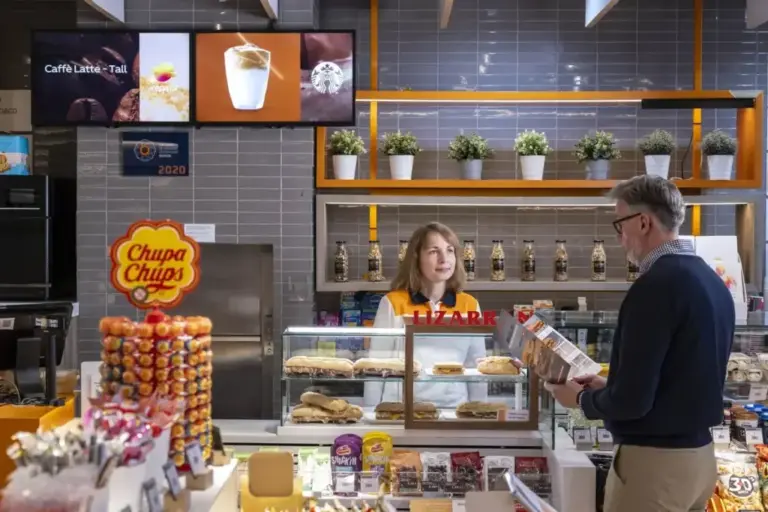
This closeness builds bonds that cross Spain from end to end. Sara highlights that, for many summer travelers, stopping at her station is already a sacred summer ritual where she is just one more part of the itinerary: “People eventually look for you. Those who go on vacation year after year, stopping on the way there and on the way back, see you and say: ‘Oh, how happy I am to see you’re still here another year!’ They remember your face, your name… They call you Sara, Sarita… They remember you, and you remember them, where they’re going, their families… It’s beautiful to see how we are part of their journey.”
”See you next year” at the pump
When August draws to a close and cars resume their journey with trunks loaded and the melancholy of returning, service areas experience their particular end of season. It’s a time for goodbyes among those who only see each other once a year but recognize each other instantly on both sides of the counter. That quick exchange of words, often while paying for the last coffee of the trip or collecting the ticket, summarizes the true spirit of these breaks on the asphalt: a sincere “See you next year” that officially closes the holiday cycle.
Ultimately, beyond liters of fuel, emergency ice, or minutes of respite before traffic jams, these stations remain the only place where the highway regains its human scale. A key place to make the journey home much safer, more bearable, and, above all, real.
This text has been developed by UE Studio, Unidad Editorial’s creative firm for branded content and content marketing, for REPSOL
Read more Ukrainians defy Zelensky and demand Fedorov’s return as minister of defense