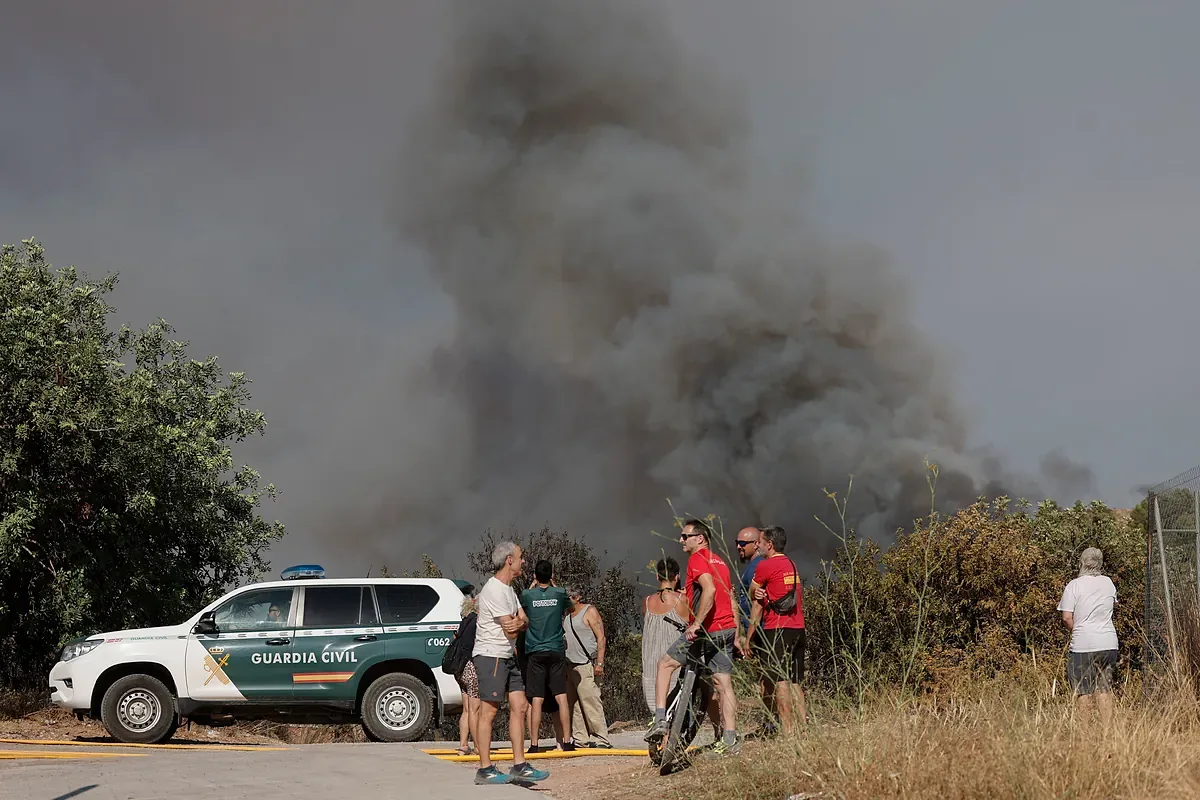

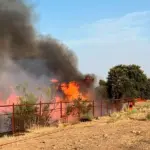

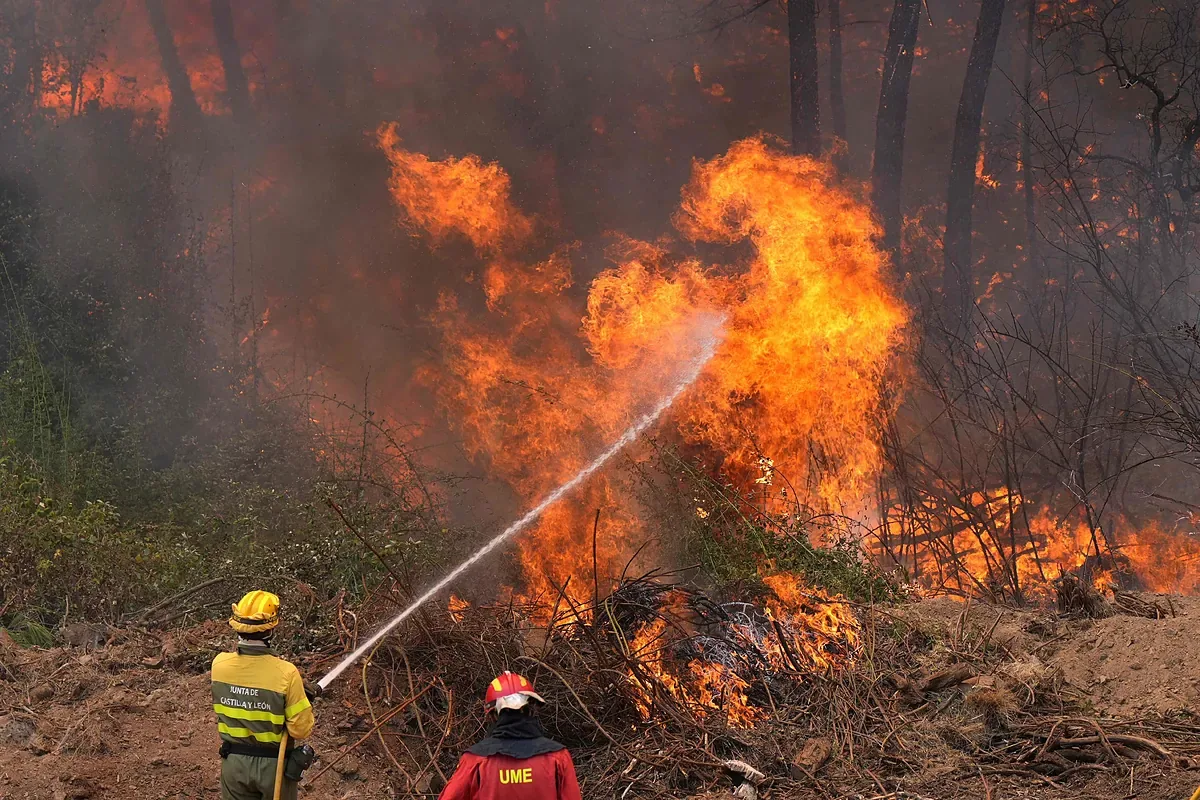
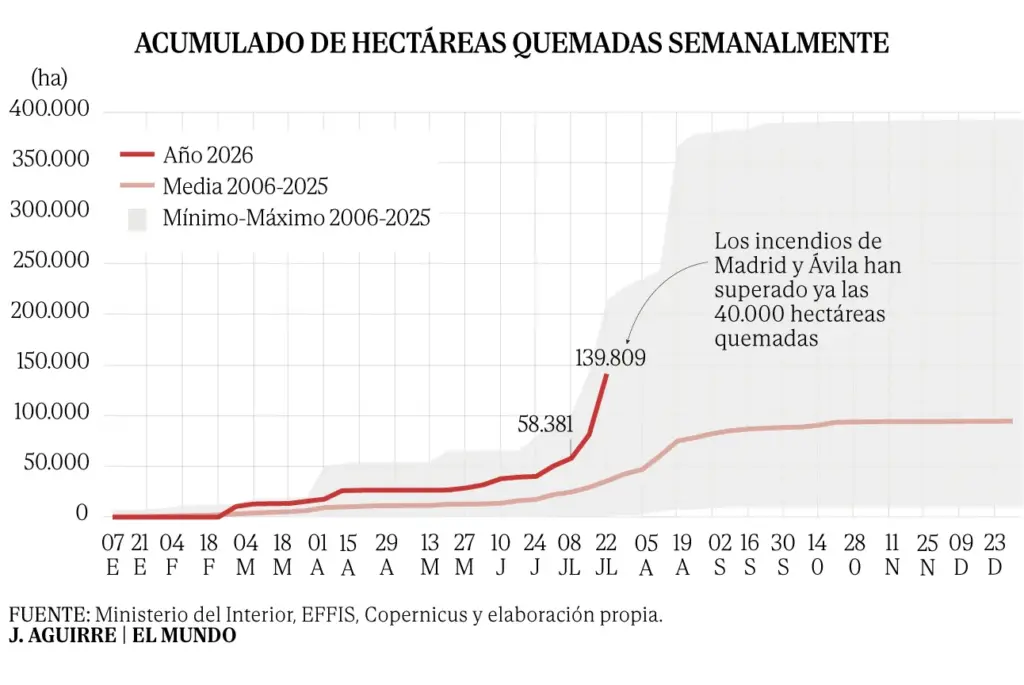
The proximity of the Ávila fire to the one in Madrid -the worst in its history- is leaving behind the most extreme and destructive scenario possible. The uncontrolled advance of the flames, due to their association with the wind, has already left more than 40,000 hectares burned, 30 villages evacuated, the extension of the national emergency to Almorox (Toledo), in addition to posing a tough test for the professionals fighting them on the front line. “We are completely overwhelmed,” one of the commanders fighting the fire in Madrid tells EL MUNDO. “The situation is extremely serious,” he adds.
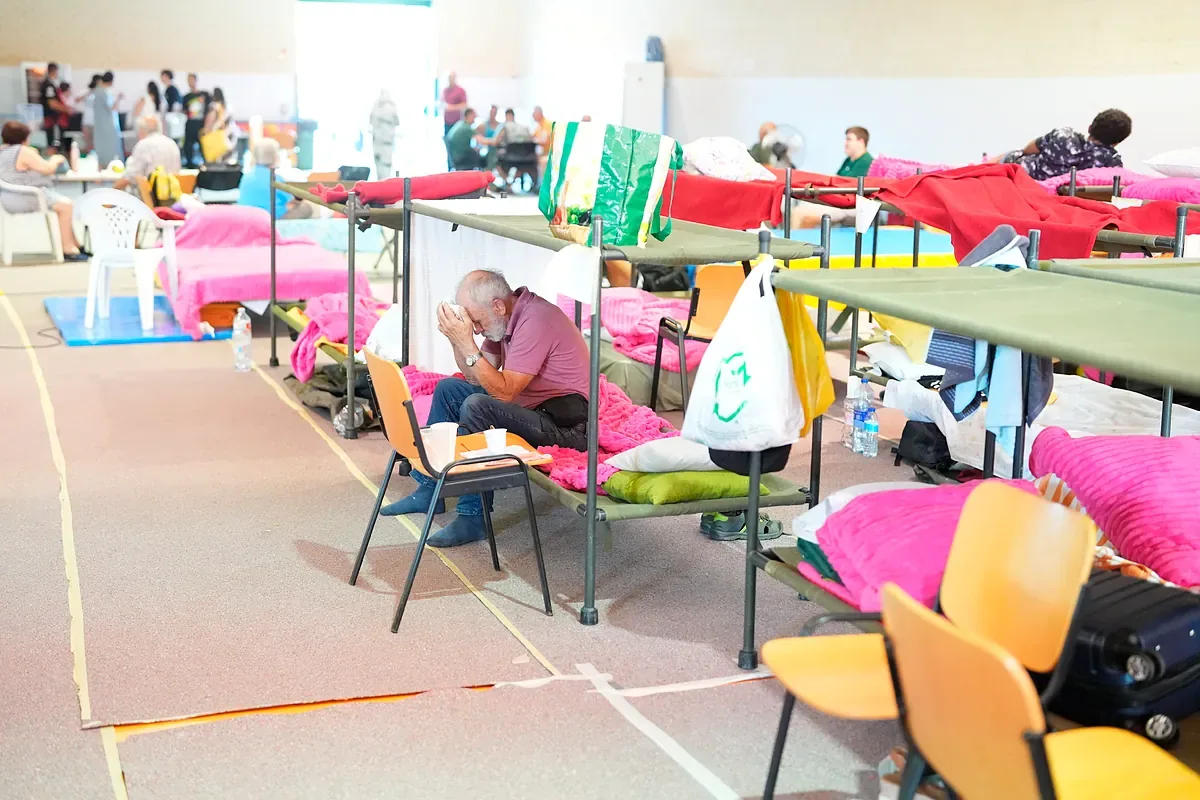
To this fire -which has driven more than 60,000 people from their homes- are added, almost simultaneously, three other large fires declared in Andalucía, Manises (Valencia), where a 78-year-old man died yesterday and five other people remain hospitalized, and Vall de Uxó (Castellón), which forced the evacuation of some 15,000 people from 15 villages. In the Toledo fire, two urbanizations were evacuated. The provisional joint balance results in thousands of hectares burned, massive evacuations -some 75,000 people- and unprecedented pressure on emergency services, in addition to a debate on prevention work and the resources used by the Administrations.
The Ávila and Madrid flames take on special relevance insofar as they keep the Guardia Civil and Firefighters “overwhelmed” by “anomalous” fire behavior that has placed them in an unknown scenario despite the experience many of them have accumulated. The rural patrols of the Instituto Armado are overwhelmed. The evolution of the fire and its intensity have pushed agents to the limit. “We have never experienced anything like this; it’s a disaster. We are overwhelmed,” insists a commander on the ground. His view coincides with that of another firefighter consulted by this newspaper, who emphasizes the “extraordinary” casuistry occurring in the fires of both communities. “The emergency is so big and so out of the ordinary that we are overrun,” says an agent serving in the Community of Madrid.
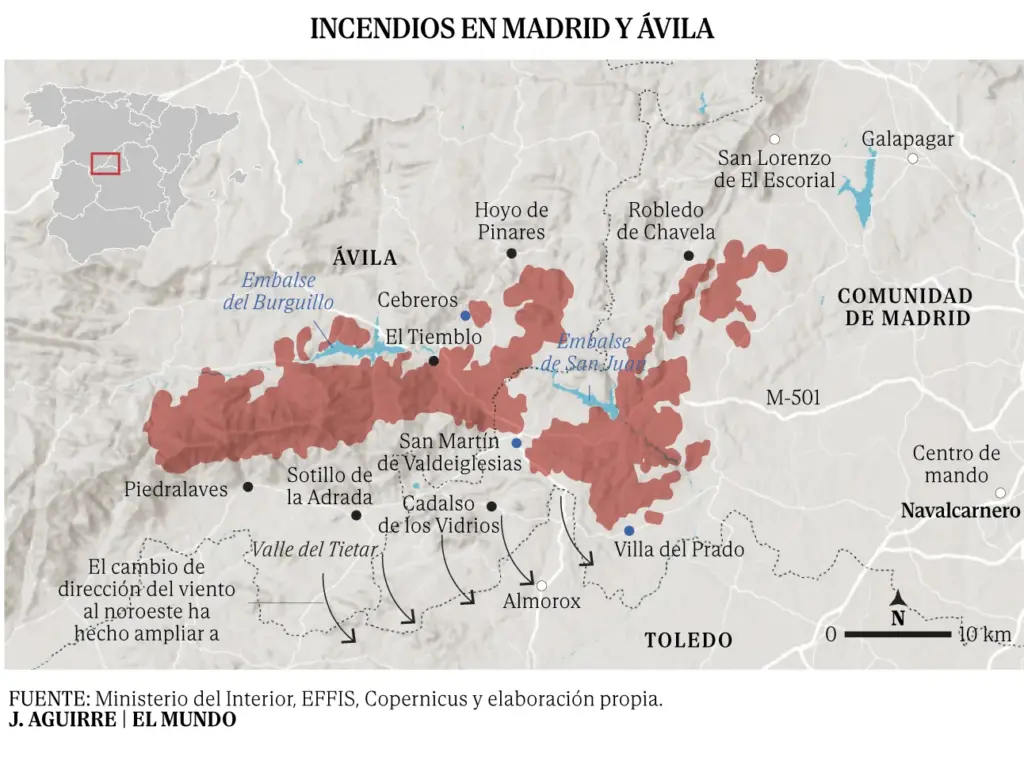
The extreme unpredictability of the fire is marking the entire emergency. The fire has evolved in such a changing and difficult-to-anticipate way that even the Advanced Command Post had to be relocated yesterday from Cenicientos to Navalcarnero, two municipalities in the Community of Madrid 50 kilometers apart. This is an exceptional decision.
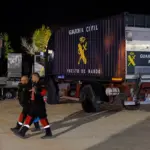
“This has never been seen before, we are totally overwhelmed,” says another Guardia Civil commander deployed in the Ávila area. The agents are responsible for evacuating citizens and leading them to safe areas. However, given the magnitude of the fire and the number of villages the fire has attacked or threatened, they confess not having the necessary resources to cope with their work. Overexertion and “sleepless nights” have been the solution to the deficiencies they work with.
The commanders of the Instituto Armado agree that the “only” solution to effectively contain the flames is the arrival of aerial means from other countries. Spain has activated the European Civil Protection Mechanism to reinforce the fight against the large fires in the Community of Madrid and Ávila, requesting four large-capacity amphibious aircraft. Greece was the first country to accept the Spanish request. Italy also contributes two other aircraft. International aid will be completed with the sending of two seaplanes by Turkey. In addition, Portugal is mobilizing 200 firefighters to collaborate in extinguishing the fire and will incorporate extinguishing vehicles and logistical support.
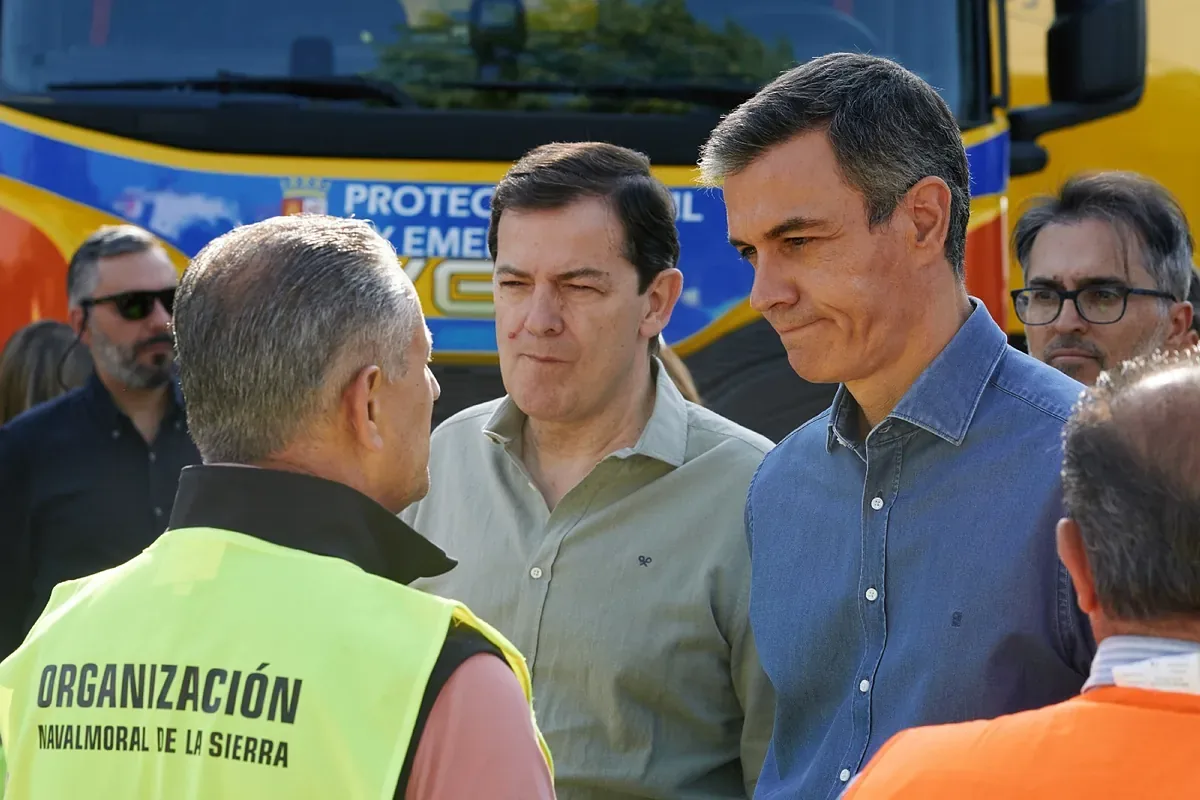
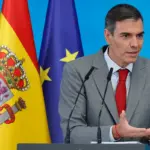
Given the proximity of the Ávila and Madrid fires, it was decided yesterday to create a unified emergency command to treat the fire as one and not as two independent foci as had been done until now. The decision was made after the meeting, in the morning, of the State Coordination and Management Committee of the State Emergency Plan (CECOD). Pedro Sánchez attended the meeting, where he coincided with Isabel Díaz Ayuso.
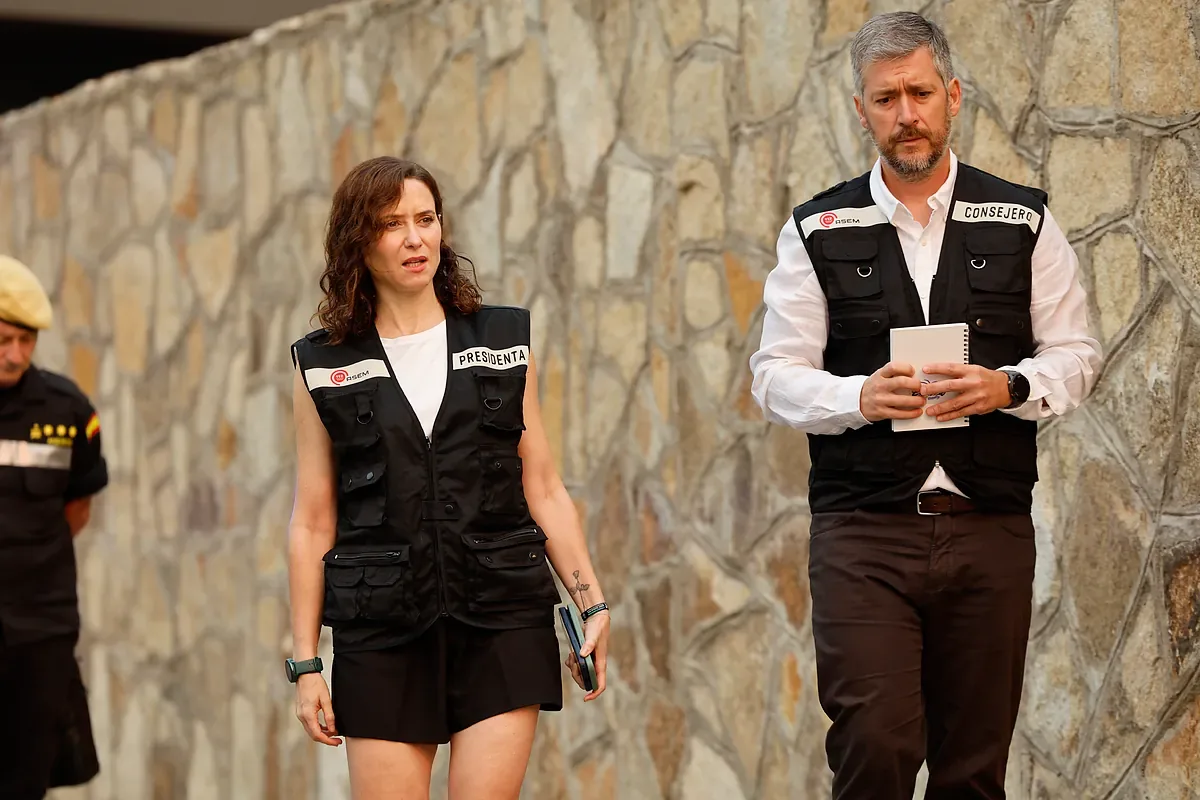
The President of the Government and the President of the Community of Madrid greeted each other at the Advanced Command Post early in the morning, in a cold encounter followed by a meeting between both leaders and other officials responsible for emergency coordination. There was no hint of a political quarrel throughout the day, all aware that the meteorological scenario the area faced yesterday was “complex.”
The President of the Government highlighted that “all administrations” were putting “all resources in a coordinated manner for an effective response to the fires” and Alberto Núñez Feijóo, from Galicia, defended that “the only important thing is to work together” in the face of the emergency. The political truce did not prevent, however, Sánchez and Ayuso, deep political rivals the rest of the year, from maintaining their distance yesterday in their meeting at the Advanced Command Post: there was no joint appearance before the media, as usually happens when the head of the Executive travels to an area affected by fire -he intervened alongside Emiliano García-Page last Wednesday in Guadalajara and with Juanma Moreno a few weeks ago in Almería-.
From La Moncloa, they conveyed that a joint appearance was offered to the team of the Madrid president, but Sol declined it. Sources from the Madrid executive explain that Ayuso had planned, “before knowing that the President of the Government was coming,” to speak to the media later, at the end of her meeting with the mayors of the area. In any case, after meeting with Sánchez and before the head of the Executive appeared, the popular leader learned that her town, Sotillo de la Adrada (Ávila), was going to be evacuated and she traveled there to collect her personal belongings.
Throughout the day, the tone of the top political leaders reflected the complexity of the moment. “The situation remains complex,” Sánchez warned early in the morning, cautioning about the uncertainty regarding the evolution of the wind and its intensity. Hours later, Ayuso spoke in the same tone: “We are at a very critical moment,” she said from Cenicientos, which was evacuated shortly after. “What we are going to see from now on is perhaps even worse, because the winds are still reactivated,” the Madrid president also warned, again describing the situation as “unprecedented, never seen before.”
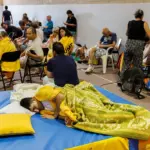
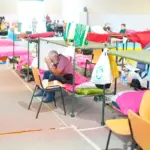
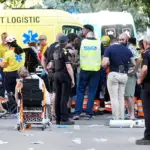
In this context, all authorities placed “safeguarding lives” as the absolute priority, as well as assisting evacuated and confined people, whose numbers only grew yesterday. There was a constant trickle of municipalities for which evacuation was decreed in Ávila, given the evolution of the fire that originated in Burgohondo on Wednesday and which throughout yesterday threatened to converge with the fire in southwestern Madrid. This Sunday, Sánchez will travel to the Ávila municipality to follow the evolution of the emergency from there. More than 1,200 interveners from the Military Emergency Unit, 1,085 agents from the Guardia Civil, 220 agents from the National Police, and 110 personnel from Civil Protection worked yesterday to combat the flames in the Ávila and Madrid fires alongside the Fire Department.