




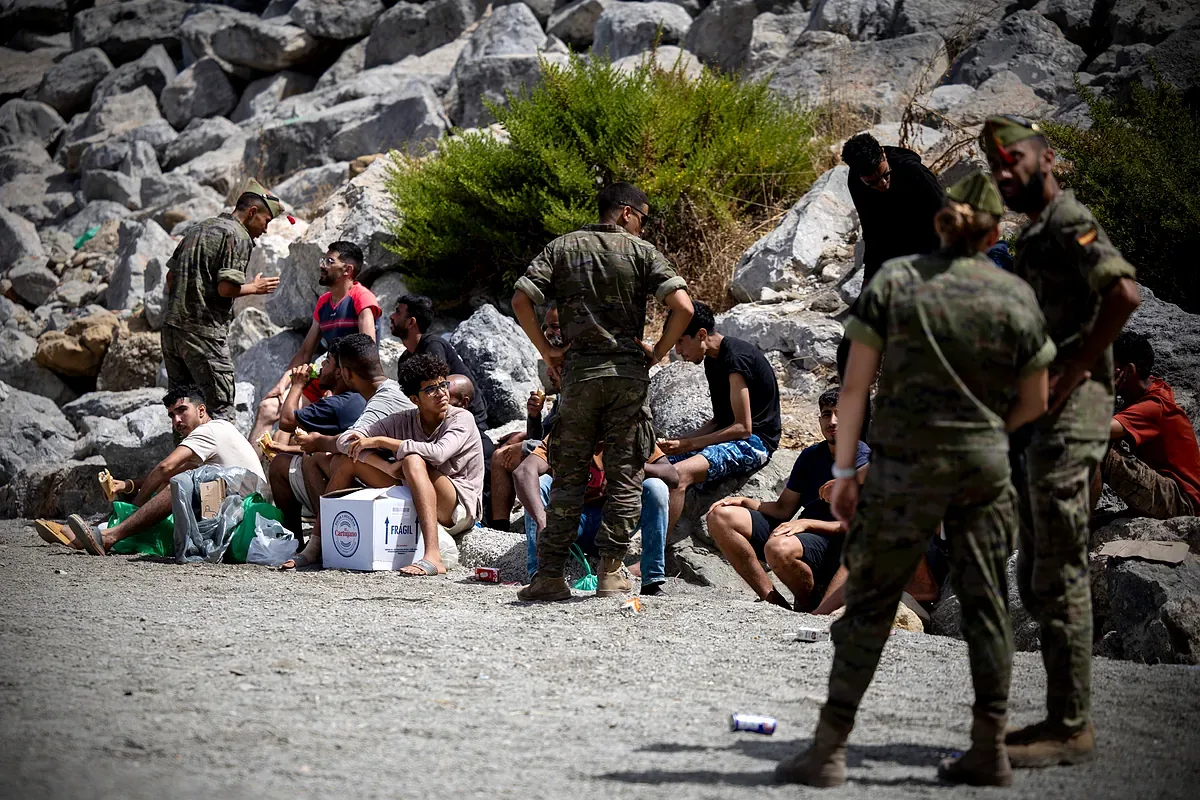
The General Command of Ceuta has ordered the cancellation of all leave for its military personnel stationed in the autonomous city from next Thursday, August 13, until further notice, except in exceptional cases, according to Defense sources confirmed to Efe.
The order, signed by the general chief of the General Command of Ceuta, establishes that these exceptional cases must be “duly justified and authorized” by the head of the corresponding unit, who may grant authorization to continue with the leave.
Italy’s justification for maintaining the suspension of the Schengen area with Spain has been that, “as announced by the Spanish authorities themselves,” by August 15 “a new migratory wave is expected in Ceuta“. The Ministry of the Interior does not confirm this scenario, but does admit that “the National Police and Civil Guard are monitoring this issue on social networks to have the necessary information to make the decisions that are pertinent at each moment” and that “continuous monitoring is being carried out”.
The president of the Spanish Troop and Navy Association (ATME), Marco Antonio Gómez, explained in statements to Efe that the order to suspend leave means that all personnel who were enjoying their vacations on the Peninsula or in another country must return, while the “exceptional cases” are at the discretion of the unit chief.
ATME relates this order to the “serious situation” experienced in the autonomous city after the massive entry last week of 72,000 people from Morocco and in view of a possible new mass entry next Saturday, the 15th, for which calls have been detected through social networks.
According to the association, there are thousands of personnel stationed in Ceuta as it is a “highly militarized” city, distributed among different units such as the Legion, the Ceuta 54 Regulars Group, the Montesa 3 Cavalry Regiment, or the Engineers Regiment.
Economic compensations
Gómez has defended that the association understands this decision from the “responsibility” of their work but they ask to think about “the day after” and wonders if the Ministry of Defense will compensate the affected military personnel for the transportation or accommodation expenses lost due to having to interrupt their vacations.
“We have South American colleagues who are in the Armed Forces and have been saving all year to pay for a ticket and go with their family for 10, 15 days… What happens to them?”, lamented the president of the association, who hopes there will be some flexibility and that the exceptionality will be applied for this type of cases.
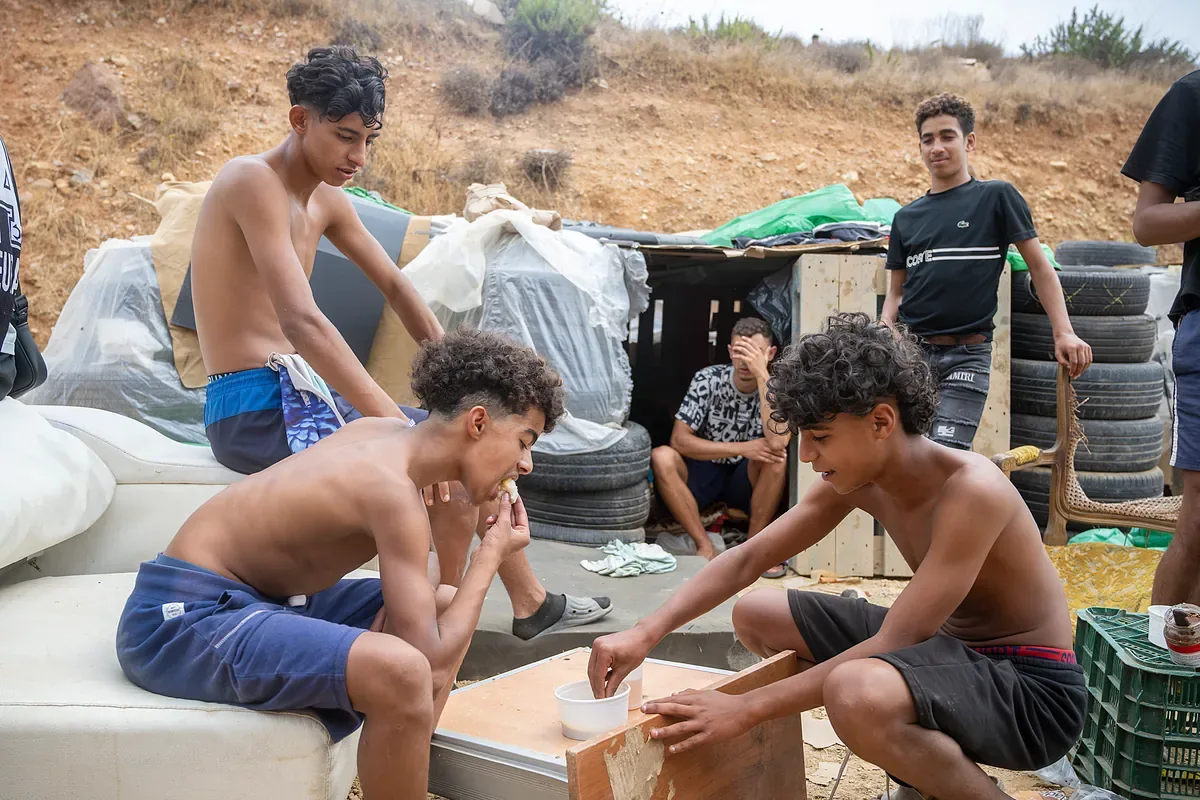
Regarding the condition of the thousands of personnel serving these days in Ceuta, the president of ATME pointed out that they are “very worried” because there are still thousands of immigrants who remain in the city living on the streets.
To attend to these exceptional circumstances and, moreover, to do their usual work, they are working “very intense” shifts, with eight hours patrolling, eight hours resting, and another eight hours on alert during which they must be at the barracks, which is leading to a “huge wear”.
Gómez has defended the work of these personnel and explained that they are “helping” the State security forces and bodies, always complying with the law and handing over immigrants to the National Police, Civil Guard, and Local Police. “Our military do not put anyone at the border and send them back to Morocco,” he emphasized.