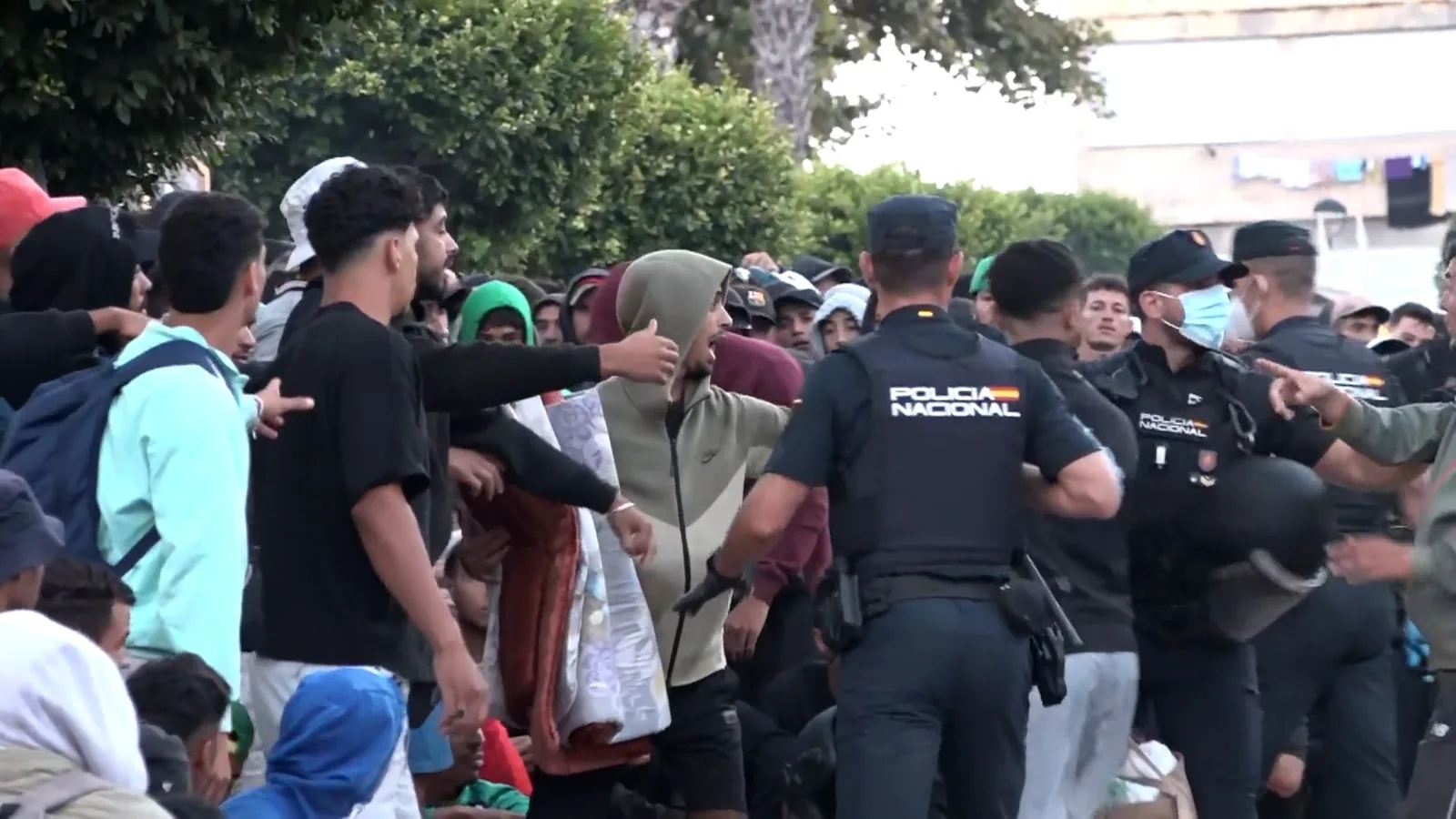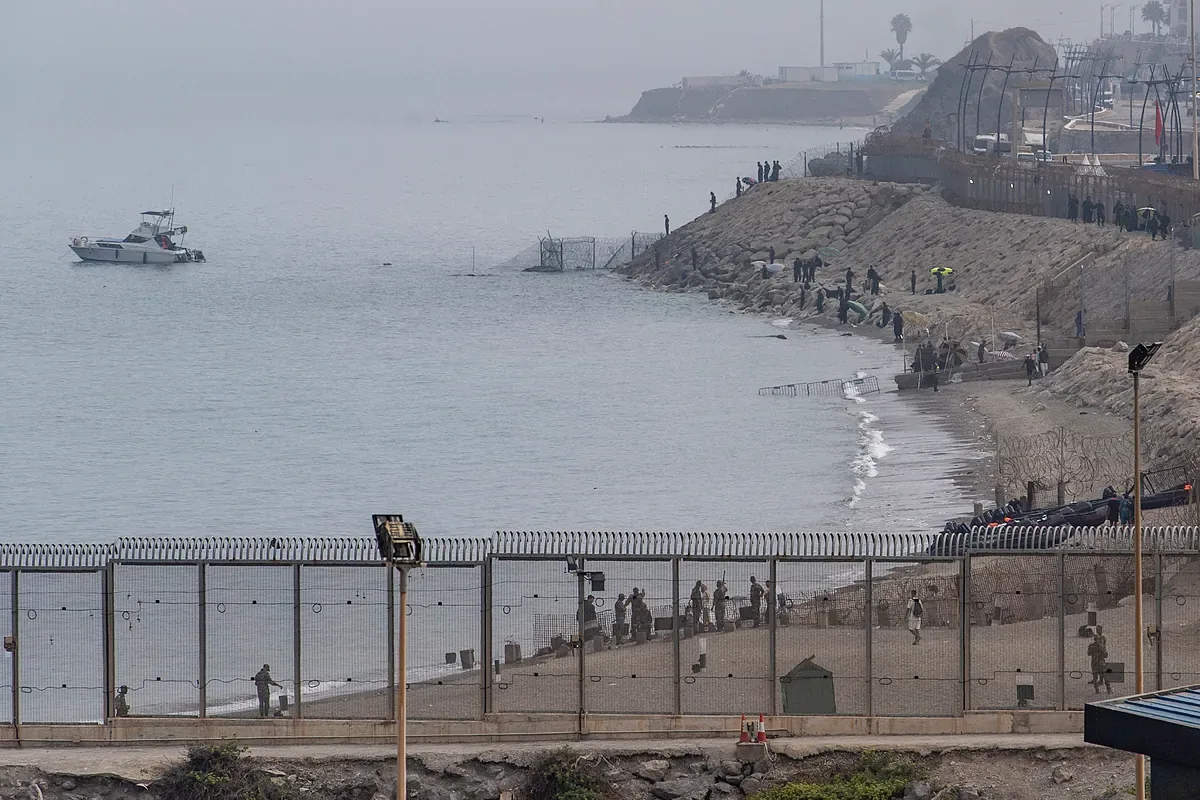



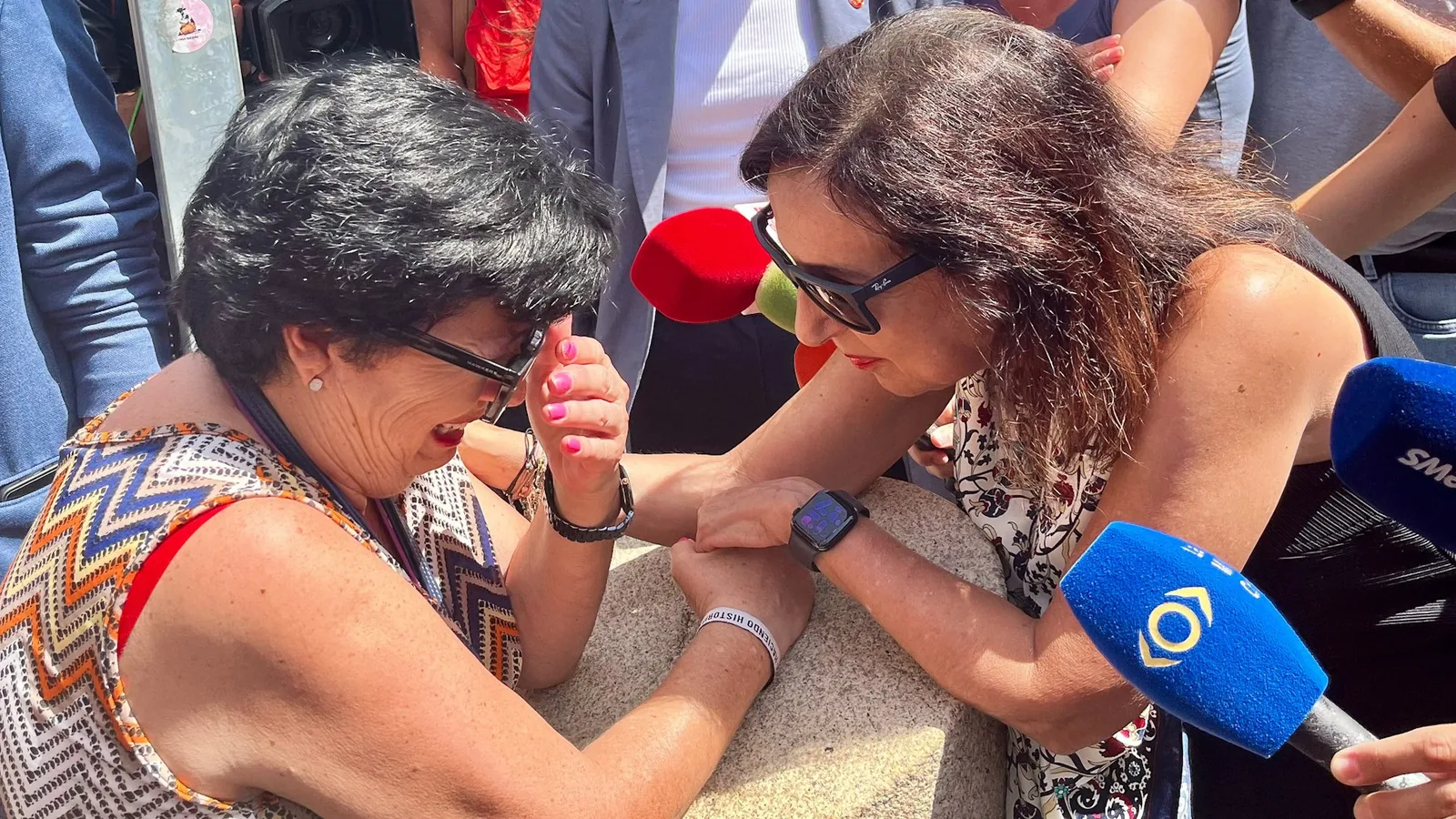
Only four minutes lasted the appearance of Margarita Robles this Wednesday before the media from the autonomous city that two weeks ago received an avalanche of 80,000 immigrants from Morocco, the equivalent to practically its entire population. She wanted to convey a single message and did so firmly: “Any aggression against Ceuta or Melilla is an aggression against Spain as a whole. Ceuta and Melilla are untouchable.”
In those 260 seconds, the Minister of Defense issued up to 12 veiled warnings to Rabat for its presumed responsibility at least for lax control of its border during the massive crossing of thousands of people swimming, but also regarding its sovereignty claims over the Spanish territory in the African continent. The Justice official of the neighboring country, Abdellatif Ouahbi, said this week in an interview on a Saudi television that it remains a “pending” issue.
“What happened on July 30 cannot happen again and it must be very clear that Ceuta and Melilla are Spanish, no, very Spanish, beyond that,” emphasized, with a tone of deep indignation, the highest authority of the Armed Forces, to whom she thanked for their work in this migratory crisis. Although she did not explicitly mention Morocco at any time, the clarity of her message left no doubt about its intended recipient.
In this way, Robles openly distanced herself from the strategy defined in Moncloa to avoid any hint of criticism of the Alawite country and to confine the blame for the mass arrival at the Ceuta border exclusively to the mafias that traffic in people. About them, the Defense Minister also said this Wednesday that she hopes “the full weight of the law” falls on them for the “humanitarian drama” that has caused at least 83 deaths, the number of bodies rescued from the sea by Spanish authorities.
During the last two weeks, both the Prime Minister, Pedro Sánchez, and the Ministers of the Interior, Fernando Grande-Marlaska, Foreign Affairs, José Manuel Albares, and Justice, Félix Bolaños, have strived in all their public statements to present Morocco as a “reliable partner” and praise its “cooperation” in the repatriation of irregular immigrants. No matter how much journalists have asked them in the press conferences they have held – six in total – they have not moved an inch from this position.
In line with such a strict directive, and unlike what Robles later stated, Marlaska did try to downplay this Wednesday the references to the sovereignty of Ceuta and Melilla by the political representative of the kingdom of Mohamed VI. “For me, they have no significance. For me, the significance they have is that cooperation with our neighbors is absolutely extraordinary and exceptional in absolutely positive terms,” he stressed.
The Moroccan government itself questioned the effectiveness of that collaboration by announcing hours later that it is studying suspending the application of the extradition agreement with Spain citing problems in handing over people requested by its courts. Minister Ouahbi, in statements to Efe, also criticized Sánchez’s government for “accepting” and “regularizing” people who arrive irregularly in its territory and boasted that Rabat tries to prevent departures through its borders.
The only thing that has changed in the discourse of the Spanish authorities these days is what Albares proclaimed on Tuesday with force, in a nod to the European Union partners who have questioned their migration policy these days, that they are working with Rabat so that “even the last person who has entered irregularly returns.” Marlaska emphasized that message on Wednesday directly warning “the irregular immigration networks and anyone who intends to enter irregularly” that “there is no place in Spain, nor in Ceuta, nor in Melilla, nor in the rest of the cities for those who want to enter by violating the law.”