




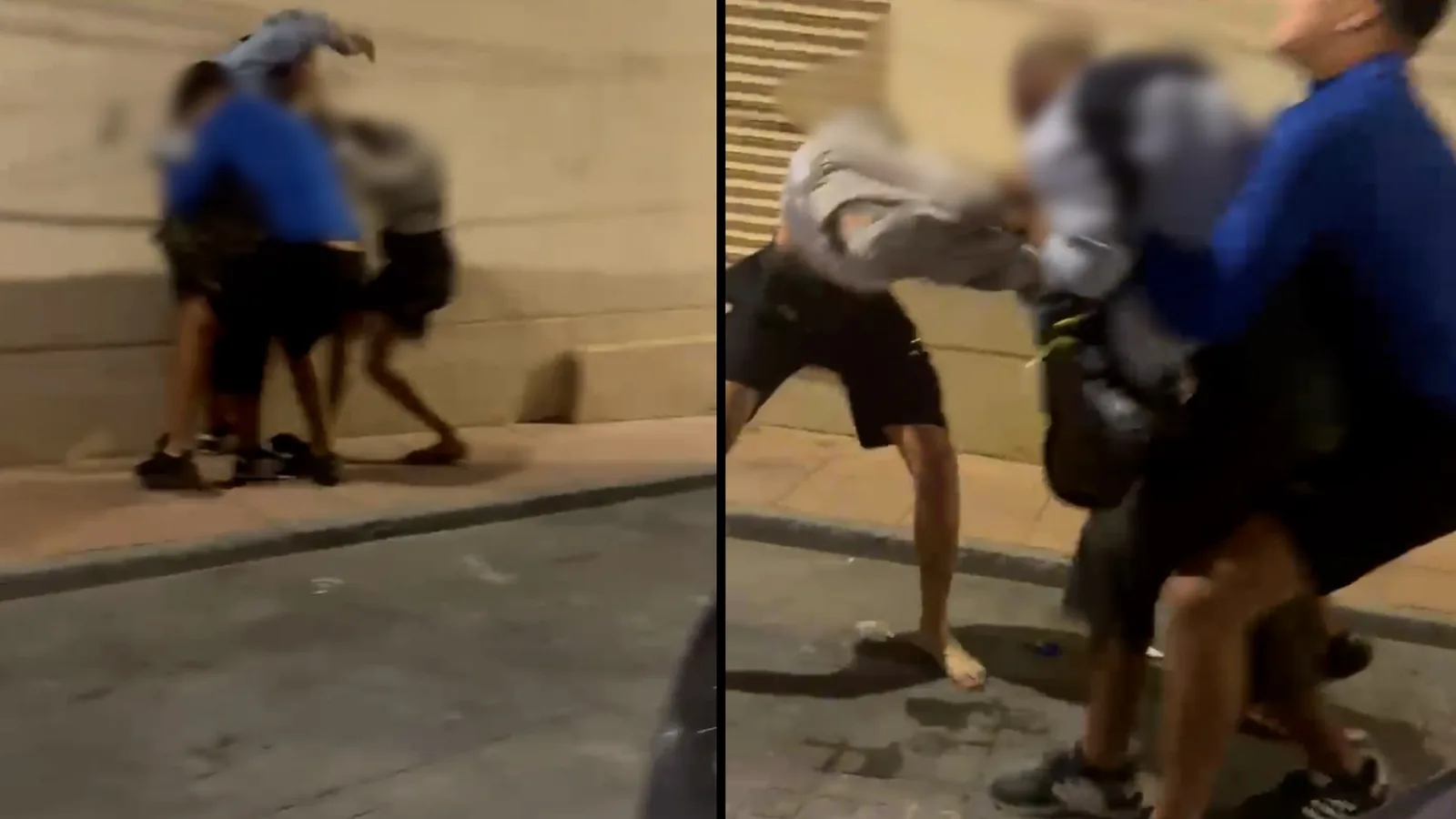
Around midnight, the National Police station in downtown Ceuta is busier than usual. Constant comings and goings, reports, and people waiting. A scene that, according to those there, has been repeated since the massive arrival of migrants on July 30.
“We can’t keep up”, summarizes, laments, one of the officers.
Among those waiting is Mohamed, a 23-year-old migrant who has just reported an assault by another. According to his account to this newspaper, the conflict began days ago. They were two of the 80,000 people who crossed the border by swimming. Mohamed began to associate with neighbors from the Hadú area and his compatriot… “You don’t sit with the Spaniards, you are one of us,” he says he was reproached.
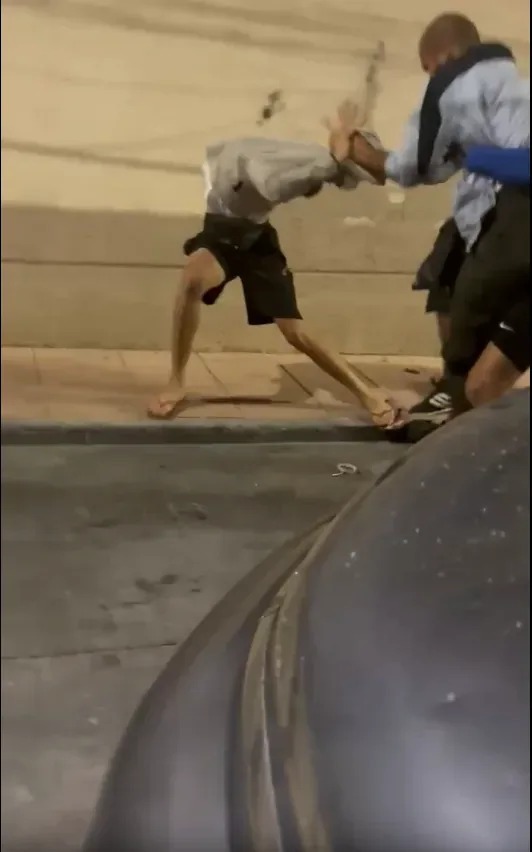
Mohamed ignored the threats. Since then, he says, he started to repeatedly encounter his attacker on the street and suffer assaults. The situation finally exploded on Saturday night. He says the young man who assaulted him approached under the pretext of asking for a cigarette and unexpectedly pushed him, leading to a fight of which EL MUNDO has graphic evidence, while another migrant tried to hold back the attacker. Afterwards, the attacker tried to suffocate him by placing a t-shirt around his neck. “I’m going to kill you,” he said, “and the people of Ceuta won’t defend you.” He shows the mark of the attempted suffocation on his neck.
His case is one of many that this police station records every day. On one night, this past Saturday, the situation left by the avalanche of the 30th can be summarized. Ceuta lives a triple tension: alongside neighbors who report insecurity and assaults, there are also migrants who are victims of violence by some locals and migrants who are victims in survival battles or quarrels among the newcomers. The Security Forces especially warn that these will increase as they run out of money.
A few meters from Mohamed, a woman of about 50 years old still speaks nervously. She explains that minutes earlier a man had lunged at her and then made inappropriate touches, in a chain of obscene gestures. “If I don’t do anything to you, it’s because I don’t want to,” she says he told her. She is paralyzed, in shock.
The woman reconstructs what happened before the officers while, in another area of the station, a 17-year-old teenager with a sad expression sits silently. He looks scared. He does not speak Spanish and keeps his hands clasped while waiting. He has also come to report an assault. But this time the roles are reversed: the attacker is a local citizen and the victim is the migrant.
“I didn’t know him at all,” he tells this newspaper through a translator. “He just kept saying: ‘Come on, get out. To your country’.” The minor shows visible bruises and has a bandaged leg. Sitting next to him is Munir, a 27-year-old Ceutan who claims to have witnessed the whole scene. The man he accuses of attacking the teenager was, until that very day, his boss.
Read more Front page of EL MUNDO Monday, August 24, 2026
“The boy did nothing. He just passed in front of the place where we work. Suddenly, my boss ran out and started punching and kicking him,” he explains. “He ended up pushing him down some stairs.”
Munir didn’t hesitate for a moment: “When I saw my boss hitting him, I had to defend the boy. I took him to the hospital and then to the Police,” he recounts. He says the ambulances were overwhelmed and he decided to transport him himself.
He then returned to his workplace: “I told my boss that this is not how you treat people.” His superior’s response was blunt: “‘You’re fired. Get out.’” Munir looks at the young man he helped and concludes: “But you know what? I don’t care. Today I will sleep peacefully.”
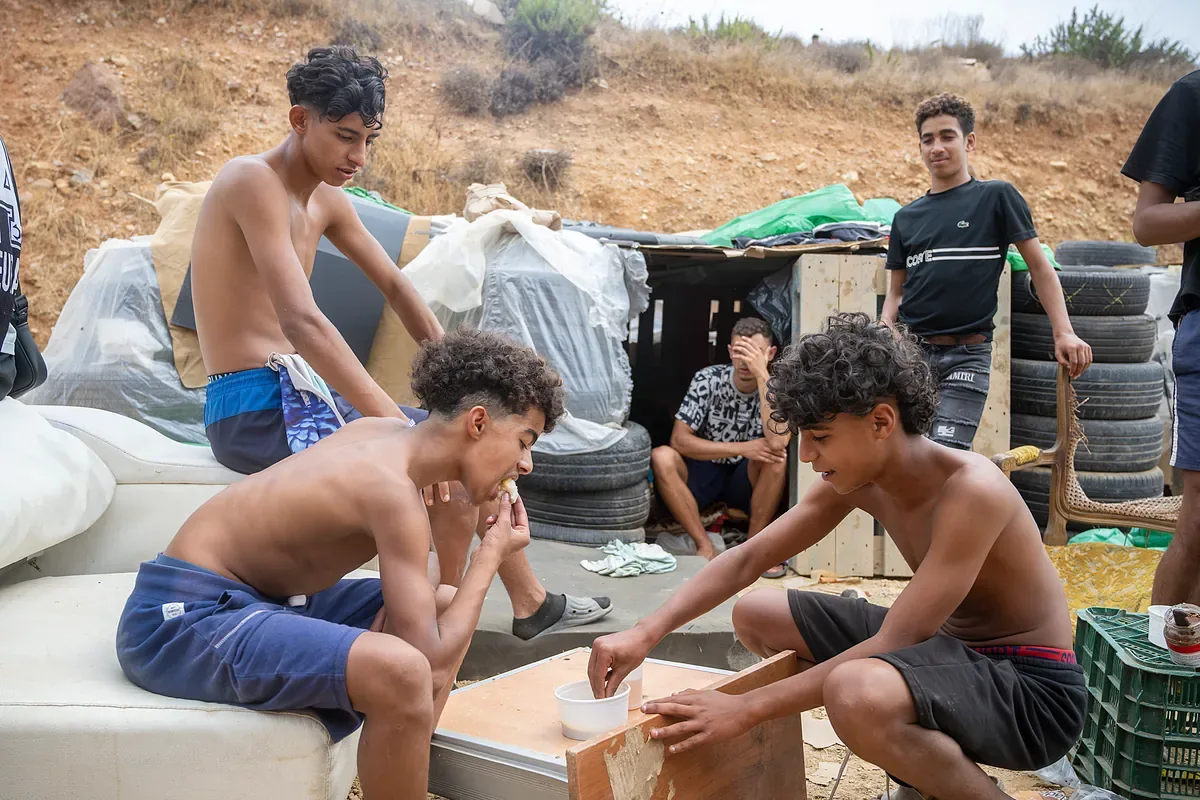
Different violences intertwine in this autonomous city where homeless people and those with rationed food have been wandering for almost a month.
While several of the people who came to report talk with EL MUNDO, another minor arrives at the police station entrance. He does not want to report. He wants to stay there. The officers tell him he must go to the tents set up to accommodate migrants. The boy listens but does not move. His expression changes. “No, here,” he pleads. He is afraid.
It is another face of a crisis that has filled the streets of Ceuta with uncertainties and fears. Among those who cause disturbances and those who suffer them, there is another difficult reality to accept: people who arrived the same way, crossed the same border, and endured the same journey, once inside, have positioned themselves on opposite sides of the violence.