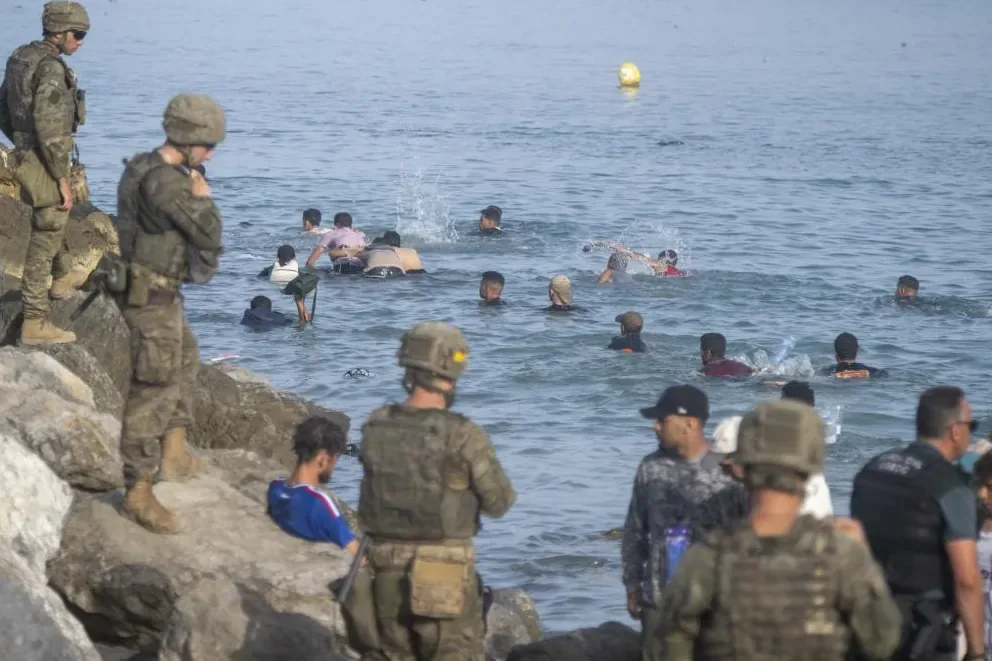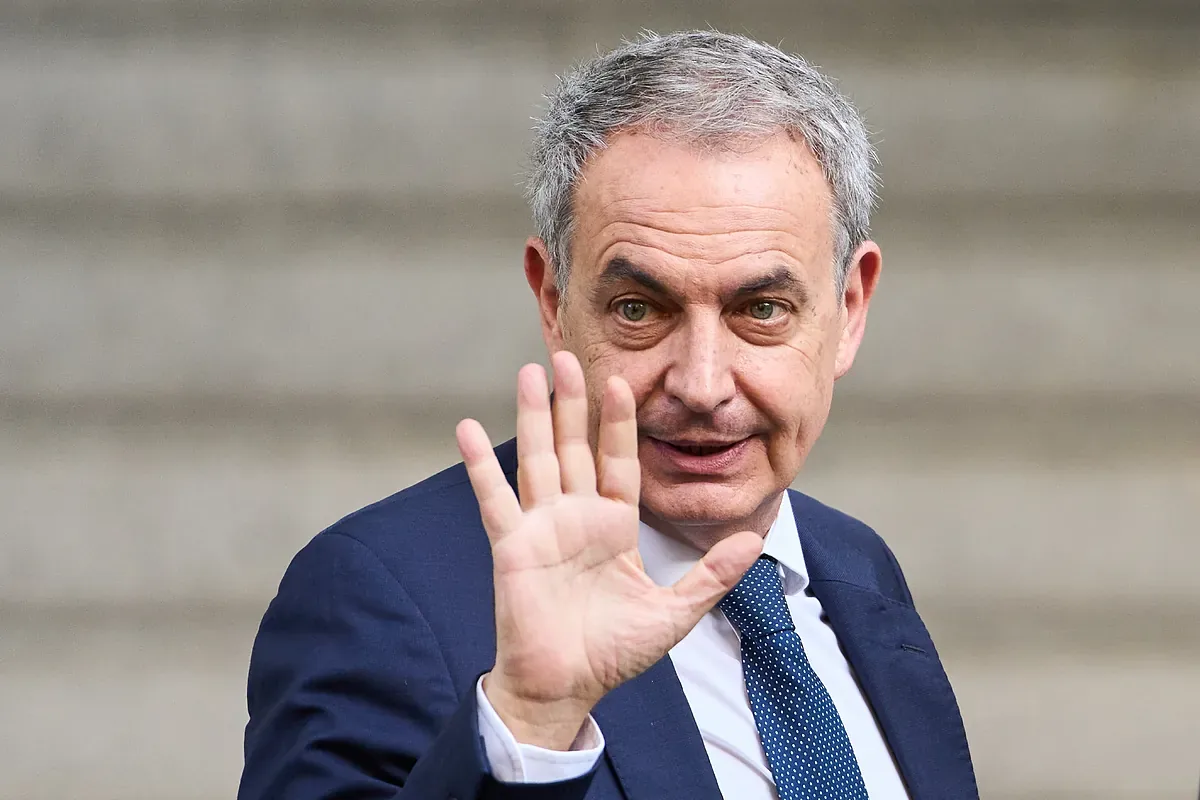




In the worst possible country, the events of July 30 in Ceuta, and the 27 days that followed, represent more than just the grand finale of an era. Corruption, the collapse in Parliament, the deterioration of public services, the lack of prospects for young people, the politicization of institutions, concessions to peripheral nationalism, even the most convoluted pardons, are scourges that short memory privatizes for Sánchez, but one would have to distort history greatly to erase them, to varying degrees, from the record of González, Aznar, Rajoy or Zapatero. In fact, Feijóo would have to be perfect, or Scandinavian, so that after four years, or however many correspond, none of this affects him. And, as a prelude, his dealings with Ayuso, trapped in a penthouse all summer and partly saved by the Government’s disaster in Ceuta, are not promising.
The best thing that can be said about all democratic presidents is that they had a successor. And so it will be with Sánchez and may it always be so.
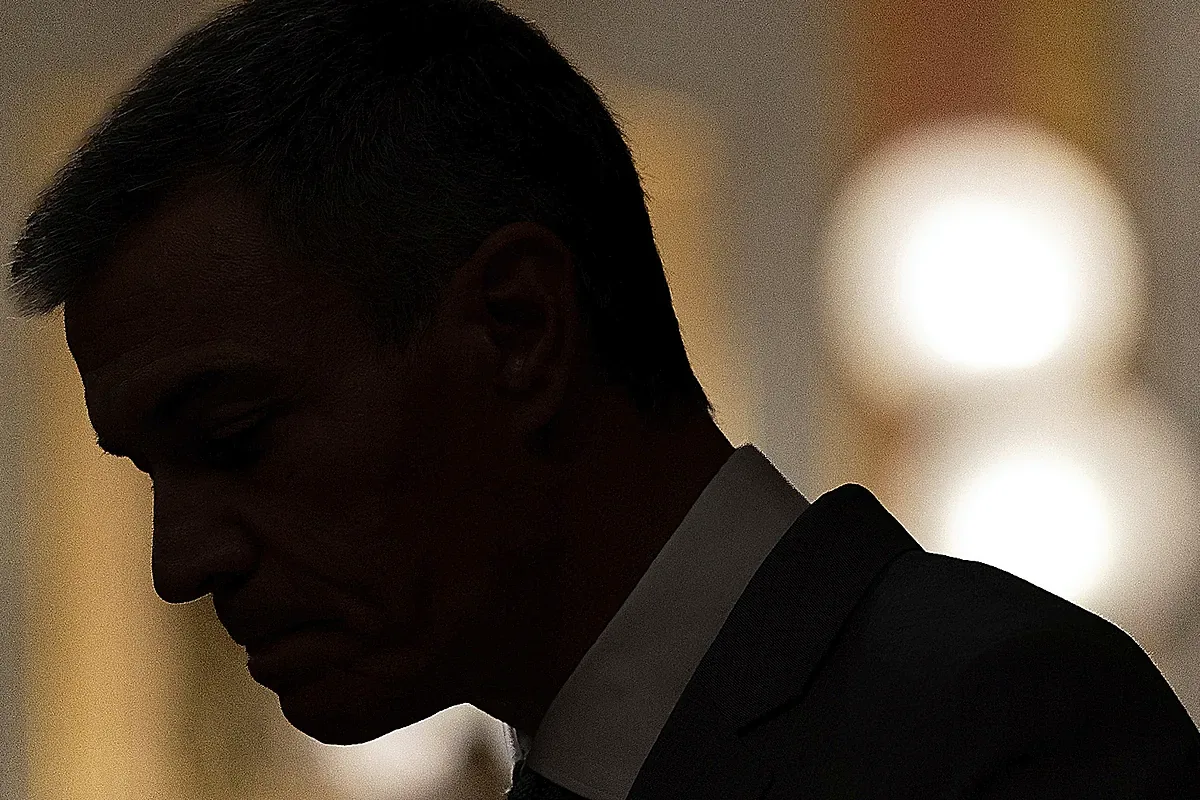
But what matters today is precisely Sánchez, and his singular significance, with a starting note and a farewell note: that amnesty and this Ceuta 30-J. If barely a trace remains of the first’s failed/torpedoed implementation – with Puigdemont still in Waterloo – the second has a whole world ahead.
Ceuta/Morocco will be the first dossier and potentially the most destabilizing for Feijóo, since the integrity of its territory is the principle of any nation. As a preview of the future, what happened in these 27 days. No shock from the endless scandals of these eight years has unsettled Moncloa more or compromised the opposition’s tomorrow more. The Ceuta crisis also exposes Spanish espionage, intensifies the clash with Europe, and widens the gap between Sánchez and Felipe VI. Government, PP, Intelligence Services, EU, and the Royal House are all hit and eroded. What more could one ask for?
Of all the Sánchez Spain has known, he has now revealed himself as the burrow politician. Although he arrived late to Covid and bore responsibility for the blackout, the management of the dana or the thousands of hectares burning, he activated crisis centers within hours and sketched economic plans. It mattered little if they were later fulfilled, but his presence never faded as it did this August.
He only set foot in Ceuta once in 27 days, and declared in a way the right has made so its own that it asks him to repeat it: “An attack on territorial integrity.” The president has not even spoken again, which forces one to question whether the paralysis is deliberate, if it hides something still concealed, or if it is just another concession to Rabat.
The crisis broke out on the day Morocco celebrates its throne day for the greater glory of Mohamed VI. At the Alaouite summit in Madrid, González and ministers Marlaska, Elma Saiz and Planas were announced. The first and the last attended, despite the assault on Ceuta with the Moroccan gendarmerie dozing. Saiz skipped that party and has been the most stable presence in Ceuta; Marlaska was the first to arrive, along with Sánchez.
The other essential ministers, if it was about an attack on national integrity, Albares and Robles, did not arrive until the third week, with divergent speeches. The Foreign Minister, from the homage to Morocco; the Defense Minister, vehement in the claim of the “very Spanish” Ceuta and Melilla. Mónica García, from that other dying half of the Government, arrived on August 16. And instead of focusing on calming the health tension, she preferred to throw darts at Vivas, the lone man who held the Spanish flag all month.
At some point, Torres went to Ceuta. From today he is – 27 days late – coordinator of the involved Ministries. Torres has even replaced Sánchez at the official appointment to watch the eclipse. Because the president decided to disappear. If he does not return right now to Ceuta, the only conclusion will be that the distance is further evidence of Morocco’s blackmail, the constant variable for decades, whoever occupies Moncloa.
In the hours after 30-J, analysts speculated on reasons behind Morocco’s neglect in the avalanche. Sánchez’s visit to Algeria, nationality granted to Sahrawis, regularization, the fight to host the World Cup final… After 27 days, with none of these hypotheses disproved as the cause of a relaxation “that got out of their hands,” a greater possibility has emerged. If Franco in his twilight had a Green March to illegally occupy the Sahara, the yielding Sánchez has had his 30-J.
Read more Airbus staff confirm indefinite strike in initial votes
The neighboring country, the hostile neighbor, has allowed the return of most of the 80,000 migrants to regain Europe’s indulgence, so that the fear that Rabat uses migrants in a hybrid war like Belarus in Poland does not grow.
But at the same time, Morocco has taken advantage of this crisis to put on the agenda its claim over two Spanish cities it considers occupied, while toying with the Government. It asks for the return of minors knowing that the legislation forbids it; blocks the passage of coffins of those it sent to death; blames Spain for not locating the relatives of the deceased… And it does not ask for the return of adults who still wander on the other side of its border, whose repatriation is somewhat less illegal. The tension on the other side of Tarajal, at a level that does not compromise them, is its best investment.
After a month, Rabat gave no explanation about the failures in its Security – paid for by the EU -. Morocco sponsored a tide that became a successful invasion drill, with a retreat and until next time. Vivas said here yesterday: “Who assures us that tomorrow they won’t bring in 200,000 and take Ceuta down?” It allowed the invasion with the same shamelessness it showed to prevent the repeat on August 15, that is, to not lose the consideration of reliability before Brussels. That 15-A Moroccans did not stand out among the assailants, the vast majority on 30-J. Only Morocco wins, a millimeter each day of 50 years, against Spain, where the crisis only leaves bad omens.
The EU has discovered that Ceuta is in Africa, and it does not seem the best news. The excess of Meloni and others thinking that those thousands entering would soon spread across Europe was tempered upon learning that all migrants from Ceuta would have to pass a new filter to reach the Peninsula, to Europe. Thus, Ceuta, in the imagination of so many ultra-excited leaders, has become an Albania. The migrants from Ceuta are a problem on another continent.
The frenzy of August led to a historic rupture between Spain and Italy and, in parallel, Sánchez faced such massive isolation (22 countries against regularization) that it is intolerable for, or exposes, one who needs polarization to survive in his countdown.
Two notes round out the tableau:
1. Zarzuela. Vivas’s insistence that Felipe VI wanted to visit Ceuta was a disloyalty that cannot be blamed on the president of the autonomous city, a convenient ventriloquist after meeting the King. Later we learned that a minister had supposedly asked Felipe VI to call Mohamed VI to give him “thanks” for the “help” in repatriations. And then it seemed Zarzuela itself denied the previous. A tangle not clarified that clearly worsens the distance between the Head of State and the Presidency of the Government.
2. Génova. So many times Feijóo was reproached for not making himself understood that his courage against Morocco’s “blackmails” and his promise that Ceuta and Melilla “are not for sale,” “for centuries,” should be praised.
Those words bind him from the first day of Government. But they are also hope, what corresponds to a democracy, in an unequal struggle with an autocracy, which should start being called by its name and responded to as necessary the day after the storm.
Read more Serious altercations, with attacks on the Police, during the Sitges (Barcelona) festivities