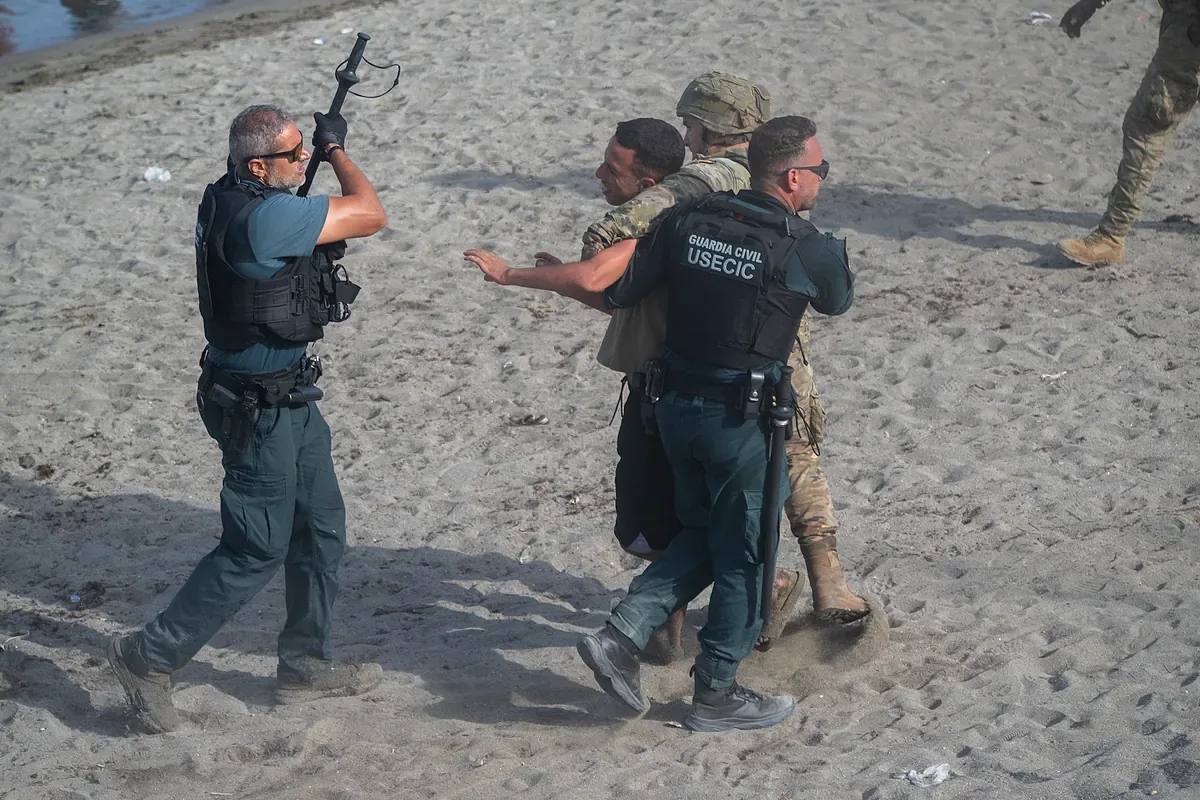




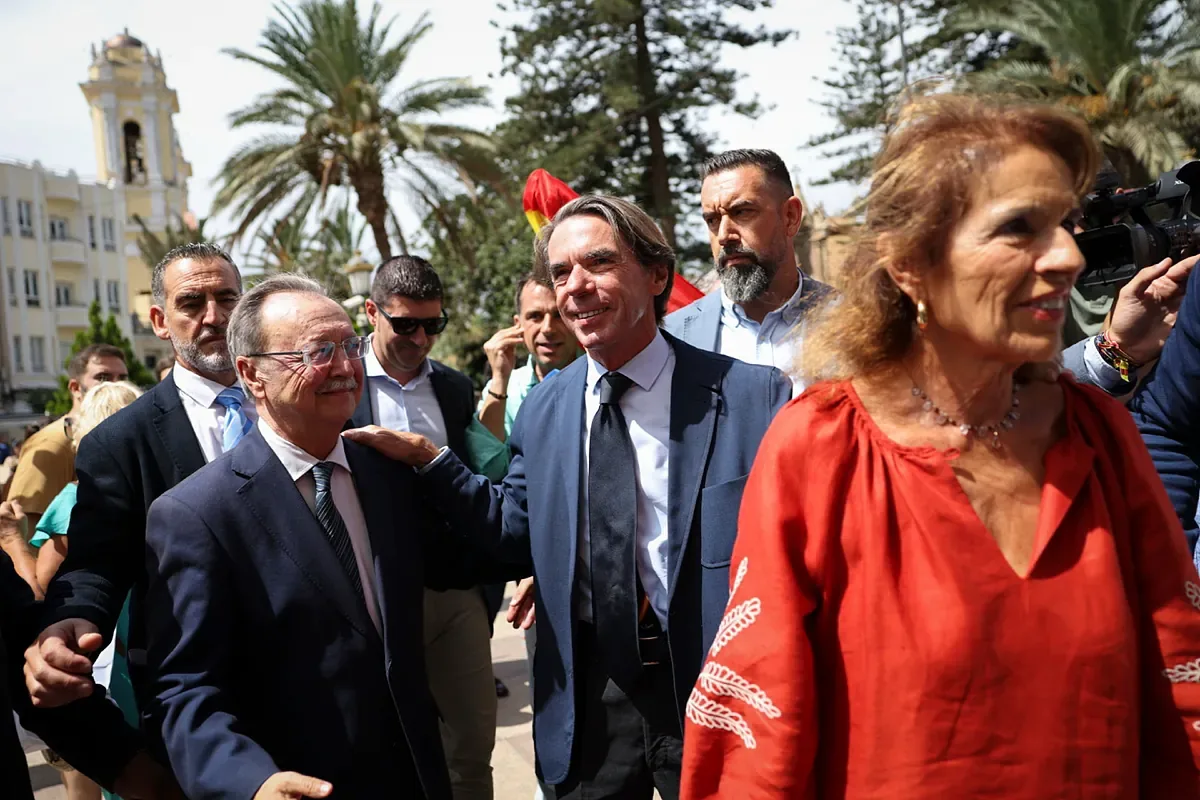
The former Prime Minister, José María Aznar, visited Ceuta this morning to show his “total support” and “solidarity” to the residents of the autonomous city and, specifically, to its president, Juan Jesús Vivas. After a private meeting, he delivered a brief speech in which he criticized the current Government’s passivity in the face of the migration crisis. “National integrity does not take vacations”, he said in a statement without questions from the press. “In such a situation, only firmness is appropriate, because weakness is and will always be provocative.”
Aznar has explicitly aligned himself with the line set by the current leader of the Popular Party, Alberto Núñez Feijóo, regarding the situation in Ceuta. “The territorial integrity of Spain has been violated,” emphasized the former prime minister. “Whoever assaults our border cannot remain here.”
His intervention was also an amendment to the overall international strategy of Pedro Sánchez’s government, which according to Aznar has led it to face the current situation without adequate external support. “A foreign policy is needed that does not leave Spain isolated, at the mercy of any extortion, without allies to count on in crises,” said the former prime minister, who concluded: “Ceuta is Spain and the future of Ceuta is the future of Spain”.
Aznar visited the autonomous city accompanied by his wife, Ana Botella. Also part of the delegation was Juan Bravo, Deputy Secretary of Finance, Housing, and Infrastructure of the Popular Party. This is an endorsement from the party leadership of the former prime minister’s initiative, whose announcement caused some surprise even among some of his supporters.
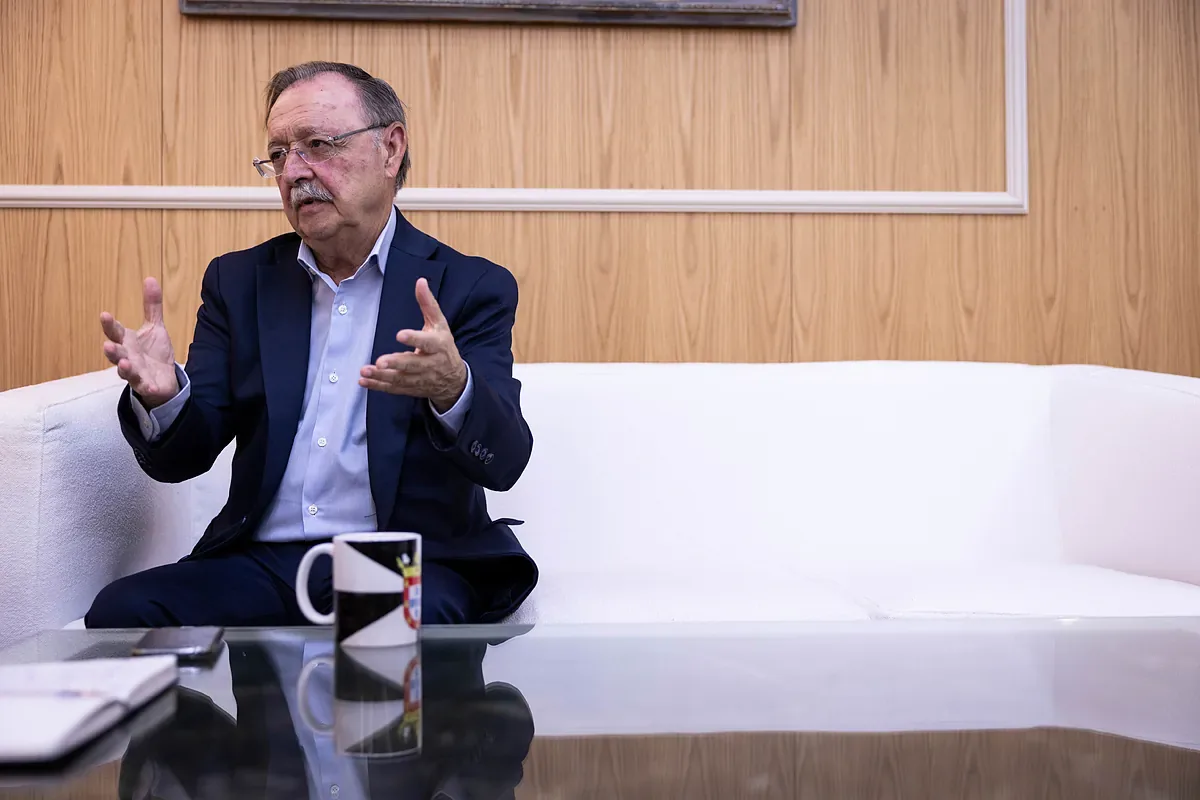
Before Aznar’s intervention, the president of Ceuta welcomed him with a thorough speech in which he detailed all the initiatives he took in favor of the autonomous city during his eight years in La Moncloa. “The Perejil crisis tested how far Spain was willing to defend Ceuta,” recalled Vivas. “Aznar’s response was unequivocal: that our sovereignty is non-negotiable and is defended with all the means of the State. It should always be like this.”
For Vivas, there are only two positions regarding the Spanishness of the city: “Either you are with Ceuta or you are serving other interests, whether partisan or electoral.” He also reiterated his demand for the immigrants who arrived a month ago – “when I say all, I mean all” – to leave as soon as possible. And finally, he demanded that the responsibility for the defense of Ceuta not fall solely on the autonomous city, but on the entirety of the Spanish State.