




The Government has forced the approval of the new financing model despite having only secured the vote in favor from the Generalitat of Catalonia and the Canary Islands Government. The rest of the non-foral regime communities, both from the PP and the PSOE, have voted against it, according to sources familiar with the result of the vote in the Fiscal and Financial Policy Council who spoke to EL MUNDO.
Socialist and PP communities have thus united against the Government’s financing model in the Fiscal and Financial Policy Council this Friday, but opting to participate without supporting the boycott of the Community of Madrid. Both the socialist Finance ministers of Castilla-La Mancha and Asturias and those of the PP communities – with the exception of the Canary Islands – anticipated a vote against the model presented by the Minister of Finance, Arcadi España, which is the one agreed last December with the leader of Esquerra, Oriol Junqueras.
The minister of Castilla-La Mancha, Juan Alfonso Ruiz Molina, announced to EL MUNDO that he would request at the CPFF meeting that the proposal be withdrawn or, failing that, that Arcadi España renounce his casting vote.
The minister can push through the system change with the support only of the Generalitat of Catalonia – the Canary Islands’ support has also been guaranteed – despite having 13 other common regime communities against it. However, if the minister abstains, Catalonia and the Canary Islands would not be able to stop the rejection of the majority. Ruiz Molina argues that this would be the democratic option, because the alternative is to impose the model on the majority of the autonomous communities.
For her part, the Finance minister of Andalusia, Carolina España, declared before the meeting on Canal Sur that she will vote against it, but hopes that the Cortes, which must subsequently make a decisive vote, will later reject the model.
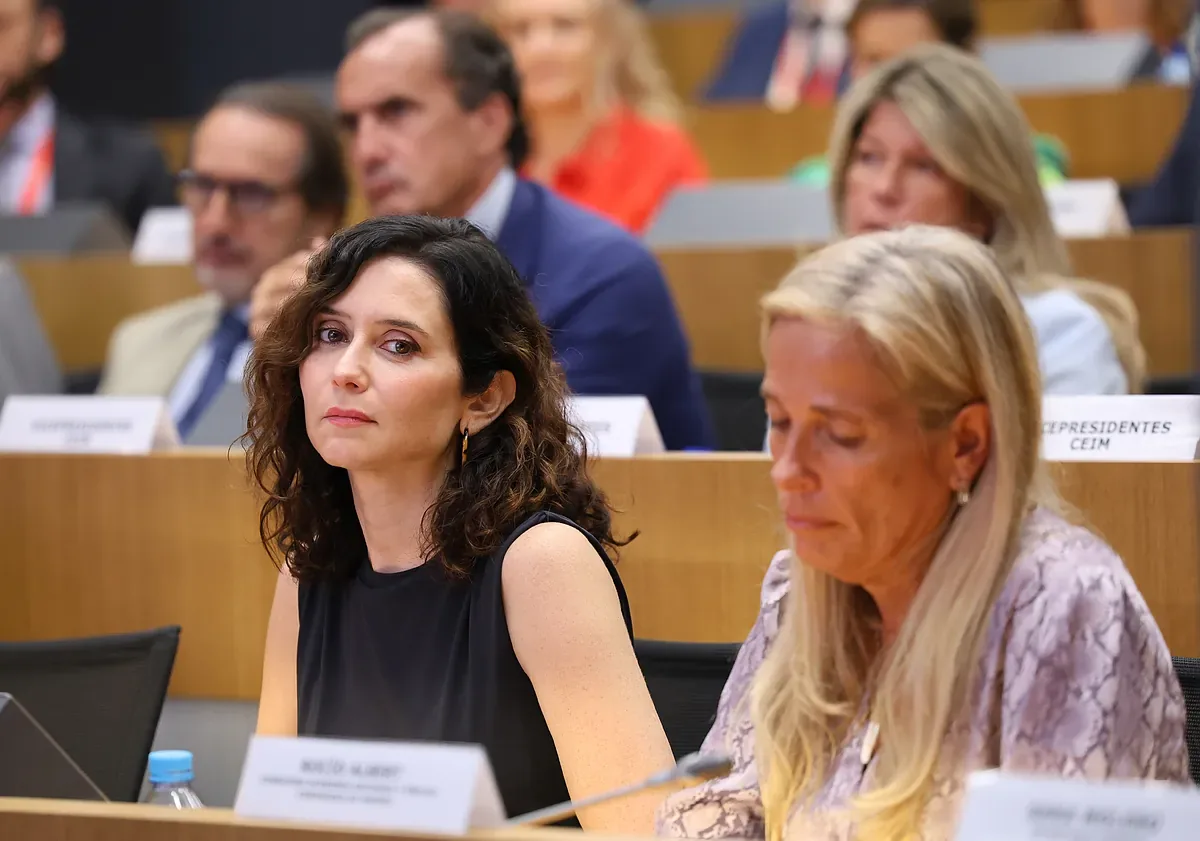
Carolina España, like most of the PP ministers, does not support the Government of Isabel Díaz Ayuso‘s boycott attempt, considering it ineffective. The Madrid Finance minister, Rocío Albert, announced this Thursday that she will not attend the CPFF and proposed to the others not to attend to prevent a quorum to approve agenda items.
However, various PP ministers consulted maintain that this tactic would only delay the process but could not neutralize it. The Ministry of Finance could consider the procedure completed as it has merely consultative value since the decisive factor will be the Parliament.
For his part, the minister’s intention is to pass the vote in the CPFF this Friday without renouncing his vote and to trust that Junts will end up supporting him in Congress. In any case, if in the end there is no change of model, the President of the Government, Pedro Sánchez, will be able to claim before Junqueras that he fulfilled the pact that also allows Salvador Illa to continue governing in the Generalitat.
The PP leadership denies a break in unity. The PP spokesperson in the Congress of Deputies, Ester Muñoz, stated this Friday on Radio Nacional that the party respects that an autonomous community, in this case Madrid, “within the scope of its competences,” is absent from today’s Fiscal and Financial Policy Council, where the proposal to reform the autonomous financing system will be approved. “It must be respected. It is an autonomous community that, within the scope of its responsibilities, decides not to attend this meeting,” she declared. For Muñoz, “what is really important” is that a vote will take place, with the PP communities and some socialists against “a financing system that has been made outside of all Spain.”
For his part, the president of Castilla-La Mancha, Emiliano García-Page, declares himself “outraged” with the central Government. “It is enormously painful that it is a Government that permanently self-titles as left-wing, that agrees on the most unsupportive, most unjust, most unequal model of Spanish democracy. It treats those who have the most better and those of us who have the least much worse,” he declared on Antena 3.
Support for Ceuta
On the other hand, the PP Finance ministers have signed a declaration, including Albert, supporting Ceuta in which they set out their demand for state backing. “We consider that the State guarantees all sufficient human, material, and financial resources to address the emergency, fully recover normality, and prevent extraordinary costs from compromising the city’s budgetary stability or the adequate provision of public services to its citizens.” They do not mention the reception of immigrant minors in Ceuta, although the central Government has also not been insisting in recent days on a possible distribution.
The Finance minister of Ceuta, Kissy Chandiramani, has been highly applauded by the other communities behind closed doors during her intervention in the CPFF when describing the difficulties the city is going through and demanding urgent financing.
Read more The weight that Sánchez carries