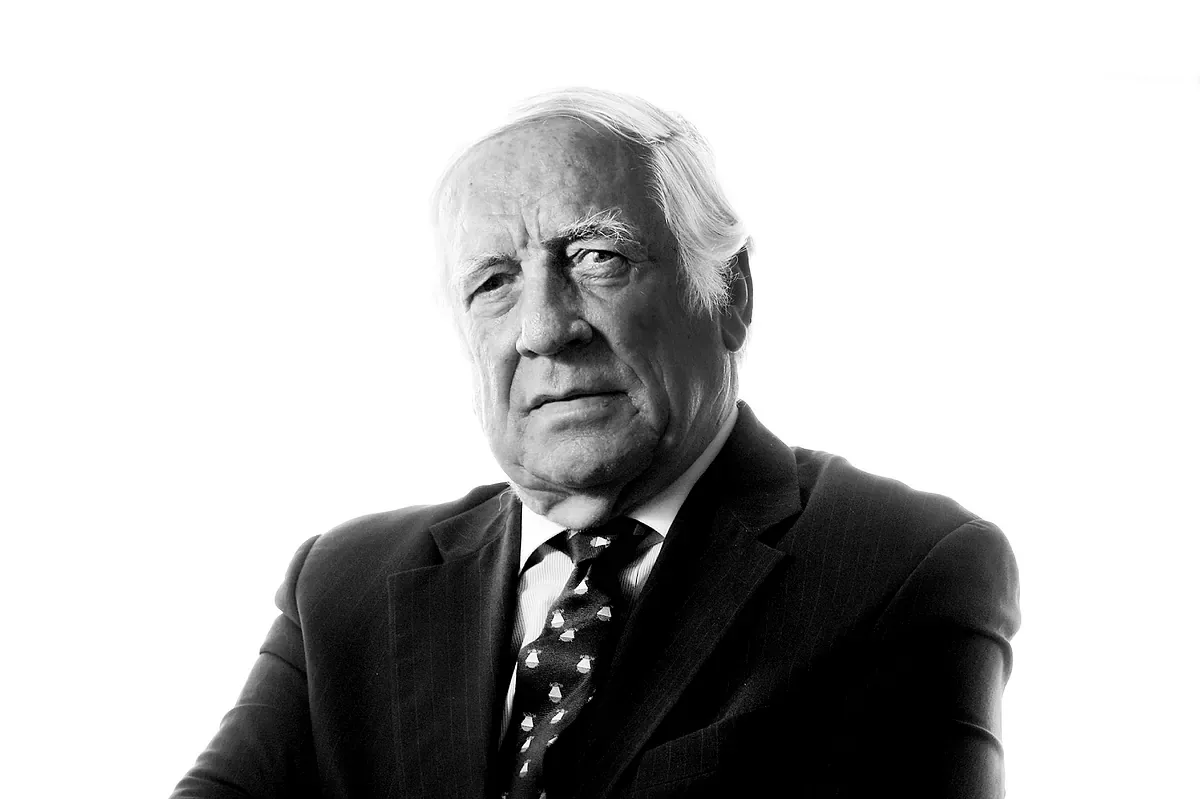





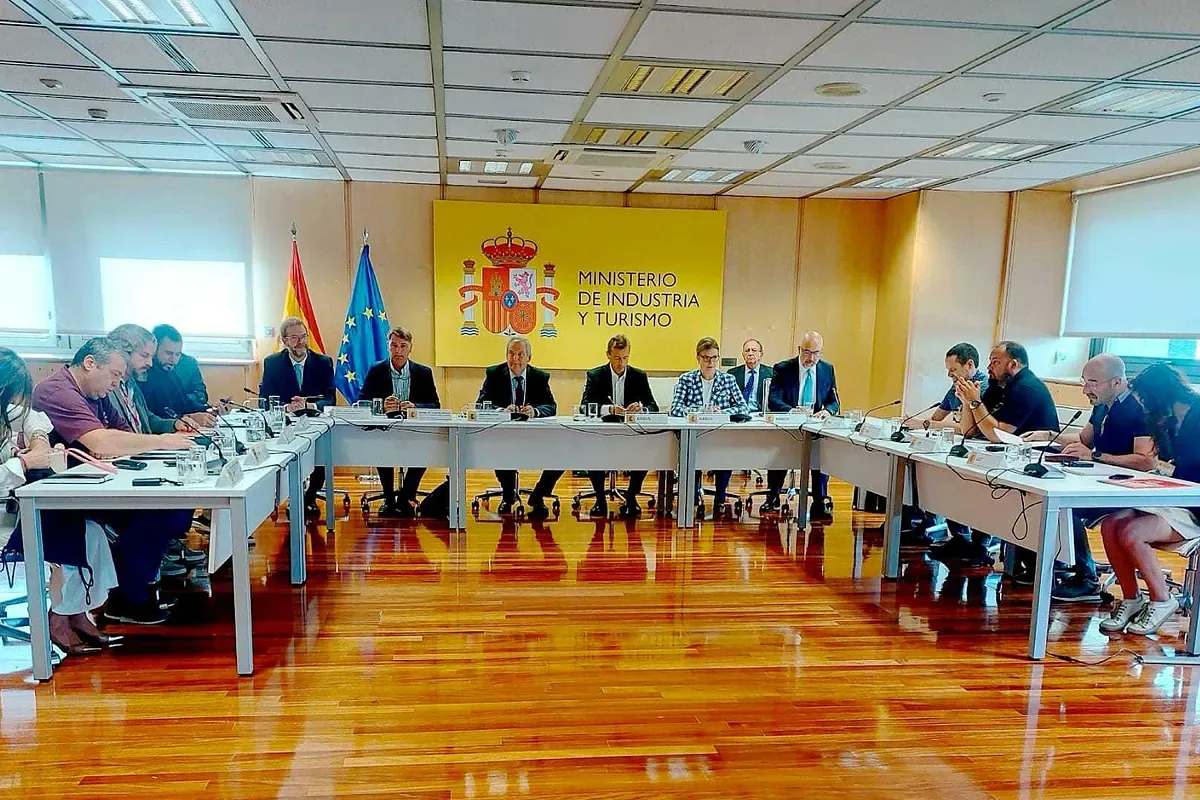
The Minister of Industry, Jordi Hereu, announced today after the meeting (lasting almost two hours) with the Airbus unions UGT, CCOO, SIPA and ATP, that an agreement has been reached between the parties and it will be voted on in a referendum by the company’s workforce.
“Those who were in favor of this agreement were called to this meeting and, therefore, we are not in an assembly process, but in a meeting to certify a great agreement for the future of Airbus,” Hereu stated. On the other hand, CGT explained that “despite being called, they took us to a separate room, CGT on one side and ÚTIL on the other. They took UGT away. After waiting for an hour, personnel from the Ministry came and invited us to leave.”
The unions signing the agreement represent more than 80% of the negotiating table. Hereu explained that “it includes the recovery of purchasing power lost in the past and therefore it is the CPI plus the recovery of this in a few years. It addresses every element of labor policy and therefore from mobility, cafeteria or flexibility. It is an approach that guarantees the competitiveness, the industrial viability of Airbus Spain”.
Regarding the Bradford concept or temporary incapacity supplement, the Company has withdrawn the appeal before the Supreme Court, agreeing to the total elimination of the supplement withdrawal, the refund of amounts in October, and the creation of a joint working group to negotiate a new absenteeism control system.
Regarding salaries and the recovery of purchasing power, the agreement lasts 4 years, and includes the commitment to pay the real CPI and the recovery of purchasing power of 7.95% distributed proportionally over 4 years. An “April Effect” is established in 2028. Increases will be applied as follows: in January 2026 it will be the real CPI plus 2%, in January 2027 the real CPI plus 2%, in April 2028 the real CPI plus 2%, and in April 2029 the real CPI plus 1.95%. The recovery of purchasing power will be done over four years and, for all years, a 0.5% Individual Salary Review (RSI) and 0.5% for promotions are established. Additionally, a one-time payment of €2,000 gross non-consolidable, paid in October 2026, is set to compensate the “April effect” for workers hired by the Companies as of the referendum validation date.
Regarding remote work, the maintenance of the remote work policy and respect for individual agreements, including 40% remote work, is determined. Those individual agreements that include 2 days of remote work will be respected, and this commitment will also apply to new hires.
In terms of vacations, the existing agreement is maintained, with two weeks of mandatory vacation instead of three, and two weeks of flexible vacation instead of one. A more precise wording is added (something requested by all unions from the beginning), including that vacation scheduling is agreed between the worker and their supervisor, taking into account business requirements and personal circumstances equally.
Regarding work schedule flexibility, those positions that are objectively compatible with voluntary flexibility in start and end times of the workday will be identified. This measure will not apply to positions linked to production, where it is necessary to guarantee the continuity of productive activity and compliance with established schedules.
In the Bromo Project, for people joining the Joint Venture, the maintenance of the conditions provided in the Collective Agreement is agreed from day one until a new collective agreement exists. This includes full access to Airbus’s internal job market, as well as the maintenance of seniority, without a probation period.
“The proposal incorporates final improvements and specific clarifications. It is a proposal that improves conditions while ensuring that Airbus in Spain maintains a strong and competitive position,” the company stated, something opposed by one of the unions calling the strike, CGT, which says “the Government has not improved anything.” The industrial giant also commits that the referendum in September on the agreement will this time be binding, unlike the previous one.
The impact of the strike
The Minister of University, Industry, Energy and Innovation of the Junta de Andalucía, Jorge Paradela, urged yesterday Thursday to “redouble efforts” to reach an agreement “as soon as possible” at Airbus since, as he warned, “the strike is already having an effective, clear and visible economic impact” on the financial results of Andalusian auxiliary companies: 150 companies and 16,400 direct jobs, according to Europa Press. And between the stoppages in July and those in August, the strike has already lasted a month, plus another three weeks of vacations.
The Chamber of Commerce of Seville and the Metal Employers Federation (Fedeme) also appealed yesterday to Airbus and the unions to “intensify their efforts to reach an agreement as soon as possible that allows ending the labor conflict in the shortest possible time, based on acceptable and reasonable agreements” and also to “safeguard the auxiliary industry.”
After continuous failures in negotiations, Airbus has been reporting delays in deliveries and that the company’s reputation was being affected. According to a report circulating among workers, and made by them , each delay in deliveries of planes like the A320 means the company loses 32 million euros in revenue for the quarter.