




Independents and socialists allied on the Diada against a common enemy: Aliança Catalana. After learning through the survey published yesterday by EL MUNDO that the far-right party is in a position to become the second force in the Parliament, both Junts and ERC as well as the leaders of the PSC attacked the exclusionary discourse of Sílvia Orriols, who absorbs votes from all of them to continue her meteoric rise in the Catalan political scene.
Read more Sánchez and Mazón, parallel stories to exonerate themselves because «nobody could…»
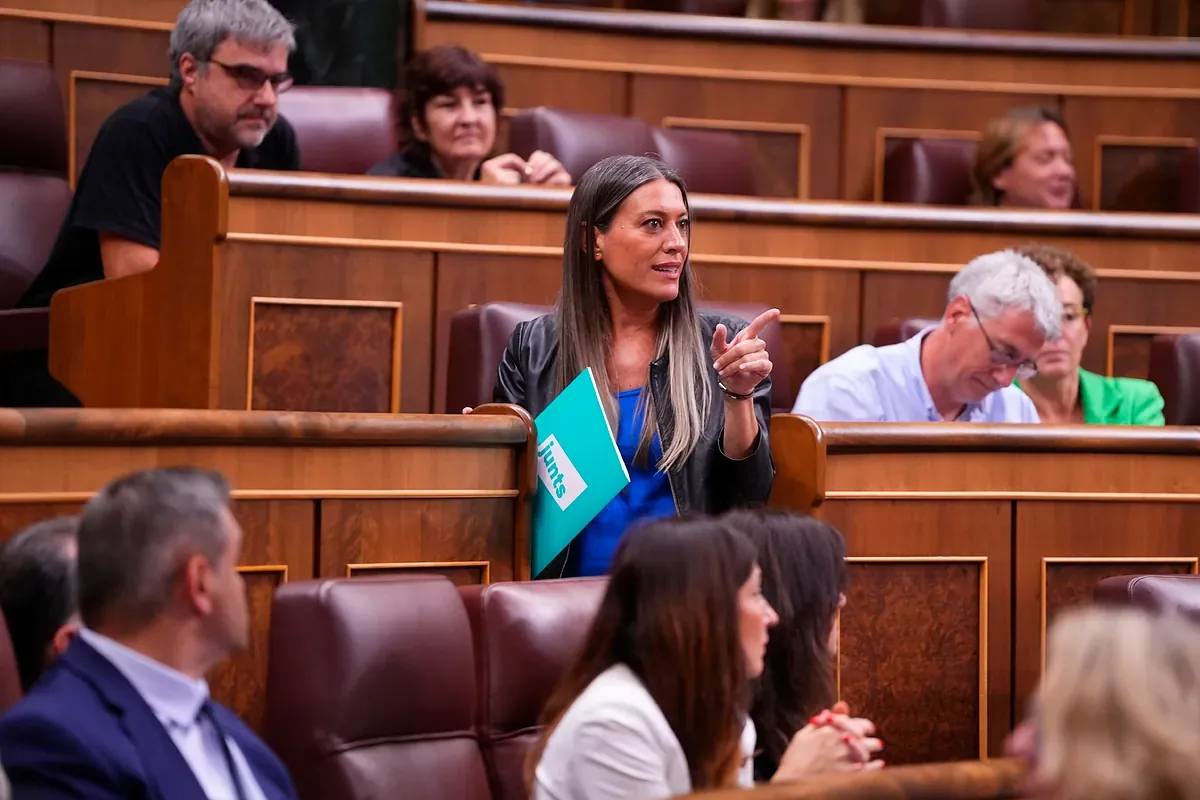
That Aliança Catalana could go from its current two deputies to 28, surpassing the party of Oriol Junqueras and sweeping away that of Carles Puigdemont, from which it would steal more than 25% of its voters, was enough stimulus for ERC and Junts to issue practically identical messages during the September 11 celebration, despite their deep and chronic differences.
But beyond absorbing a quarter of the neoconvergent voters, Aliança’s dizzying rise at the polls would be explained by receiving votes from all parties across the Catalan parliamentary spectrum. So much so that a third of them (32%) would come from left-wing forces. According to the Sigma Dos survey, Orriols would benefit from 107,000 votes from the progressive side, most of which would come from the PSC (56,700) and Esquerra Republicana (44,400).
The CUP, also an independentist party but located at the opposite end of AC in the rest of its ideology, would give 5,600 of its votes to the far-right party born in Ripoll (Girona) in 2020. Comuns, the Catalan party that in the Congress of Deputies is part of Sumar, would be the one that best stemmed the flow of support towards Orriols, losing only 360 voters.
From the right flank of the Parliament, Aliança would capture 172,400 ballots from those who chose Junts in 2024, 30,800 from Vox, and 24,000 from the PP. The numbers reflect that the mayor of Ripoll and deputy in the regional chamber would manage to attract to her cause about 112,000 people (33.4%) who two years ago voted for non-independentist forces.
Diada
“Let’s not turn the revolt of smiles into a revolution of hatred among us because it would be lethal for the country,” said the secretary general of the neoconvergents, Jordi Turull, after the highest institutional authority of his party, the president of the Parliament, Josep Rull, stated that Catalonia “is a country that does not ask people where they come from, but where they want to go,” thus confronting the anti-immigration discourse of Aliança.
In similar assessments, the republican Junqueras considered that “the best response to hatred is an inclusive project.” “Whoever is concerned about the weakening of national identity should know that the best way to strengthen it is to include everyone who wants to feel involved,” he asserted, while his number two, Elisenda Alamany, claimed an “open Catalan identity against those who want a closed Catalonia.”
Read more Unpaid mortgage with house for sale: NPLs reach individuals, the latest and risky way to buy a home
Socialist representatives also spoke of “an open, plural, and diverse Catalonia, advancing from coexistence, respect, and what unites us.” This was expressed by the Prime Minister himself, Pedro Sánchez, on his social networks. It was also expressed by the president Salvador Illa in his institutional speech when asking to stop “hatred” and was insisted upon by the spokesperson of the Government, Sílvia Paneque, after the traditional offering to Rafael Casanova, the mythified conseller en cap of Barcelona during the War of Succession: “We are an open country, together we are stronger.”
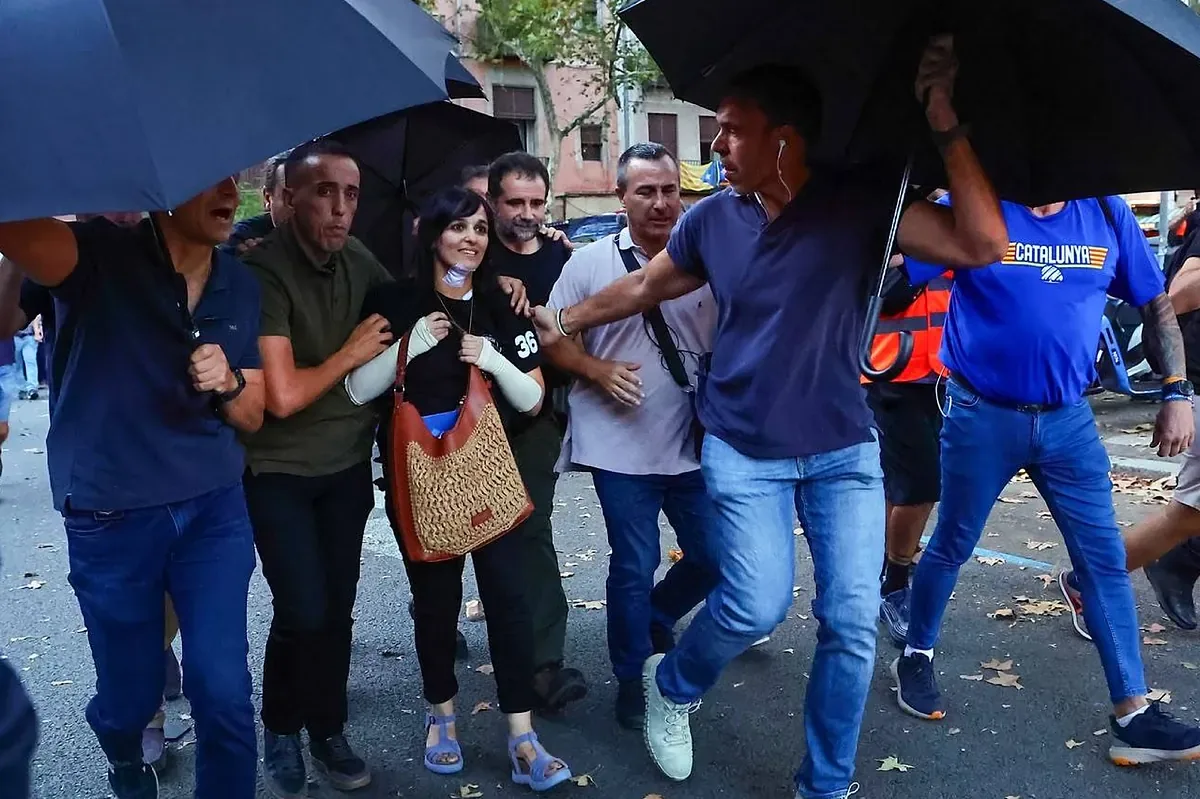
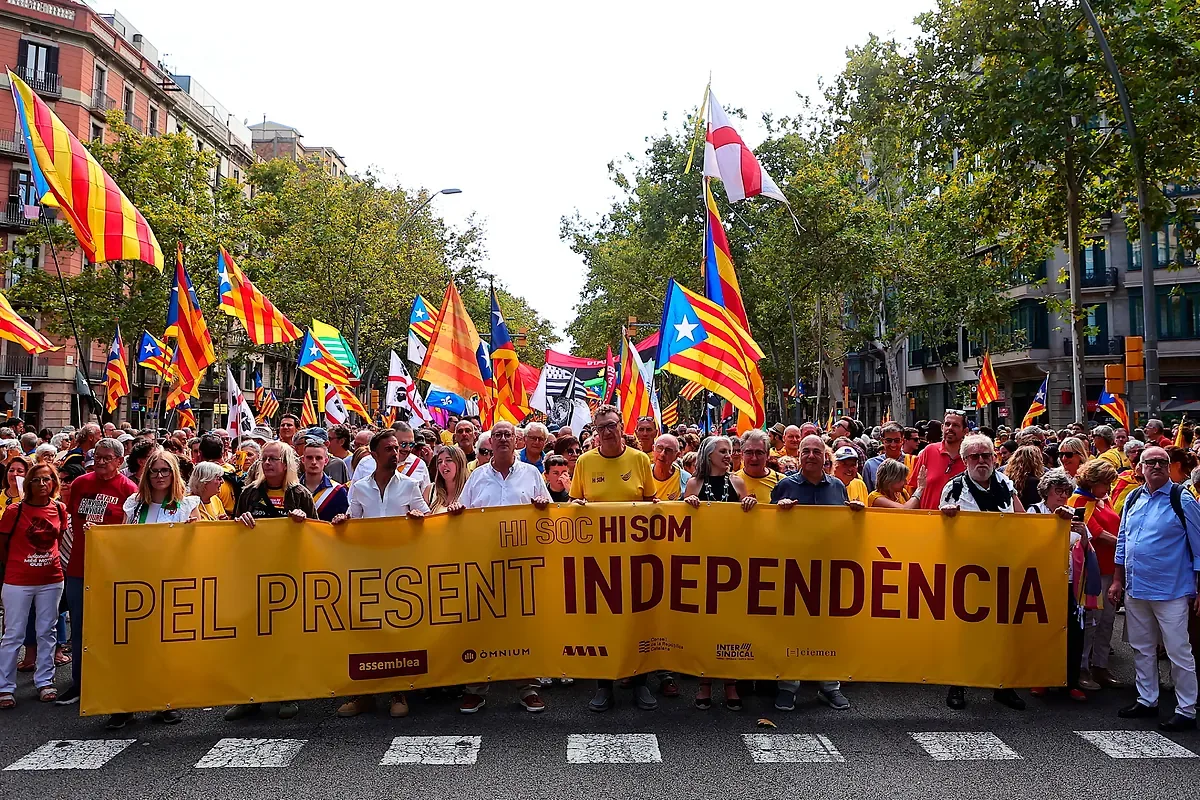
Orriols attended the secessionist Diada demonstration in Barcelona for the second time, despite the reluctance of its organizers for her to do so. Xavier Antich, president of Òmnium Cultural, who designed the gathering along with the ANC, called for a “sovereigntist front to stop the monsters of the far right.” But this did not intimidate the mayor of Ripoll, who demonstrated flanked by mossos who had to protect her from a large group of young independentists who surrounded the Aliança delegation at the end of the gathering.
Already on the eve of the Diada, Orriols had to be escorted away from the CUP youth, who wanted to forcibly prevent her access to the Fossar de les Moreres. On Thursday afternoon, the president of Aliança stood in the most symbolic place in Catalonia for independentists, as it is where the martyrs of 1714 were buried, and said: “It is time for the political caste to lose privileges and positions. The leaders we trusted betrayed us. None of their insults or labels will make us give up. We are not going to Ithaca, Switzerland, or Waterloo, we are heading towards the free Catalan State.”
Besides the united opposition to Aliança, the Diada was again marked by minimal participation. The secessionist demonstration that yesterday marched through the streets of Barcelona gathered only 45,000 people, according to the City Council. It is true that this figure improves by 17,000 attendees compared to last year’s edition, when 28,000 demonstrators gathered in the Catalan capital, but any comparison with the previous decade is dizzying. The large demonstrations of the independence process peaked in 2014 with 1.8 million participants.
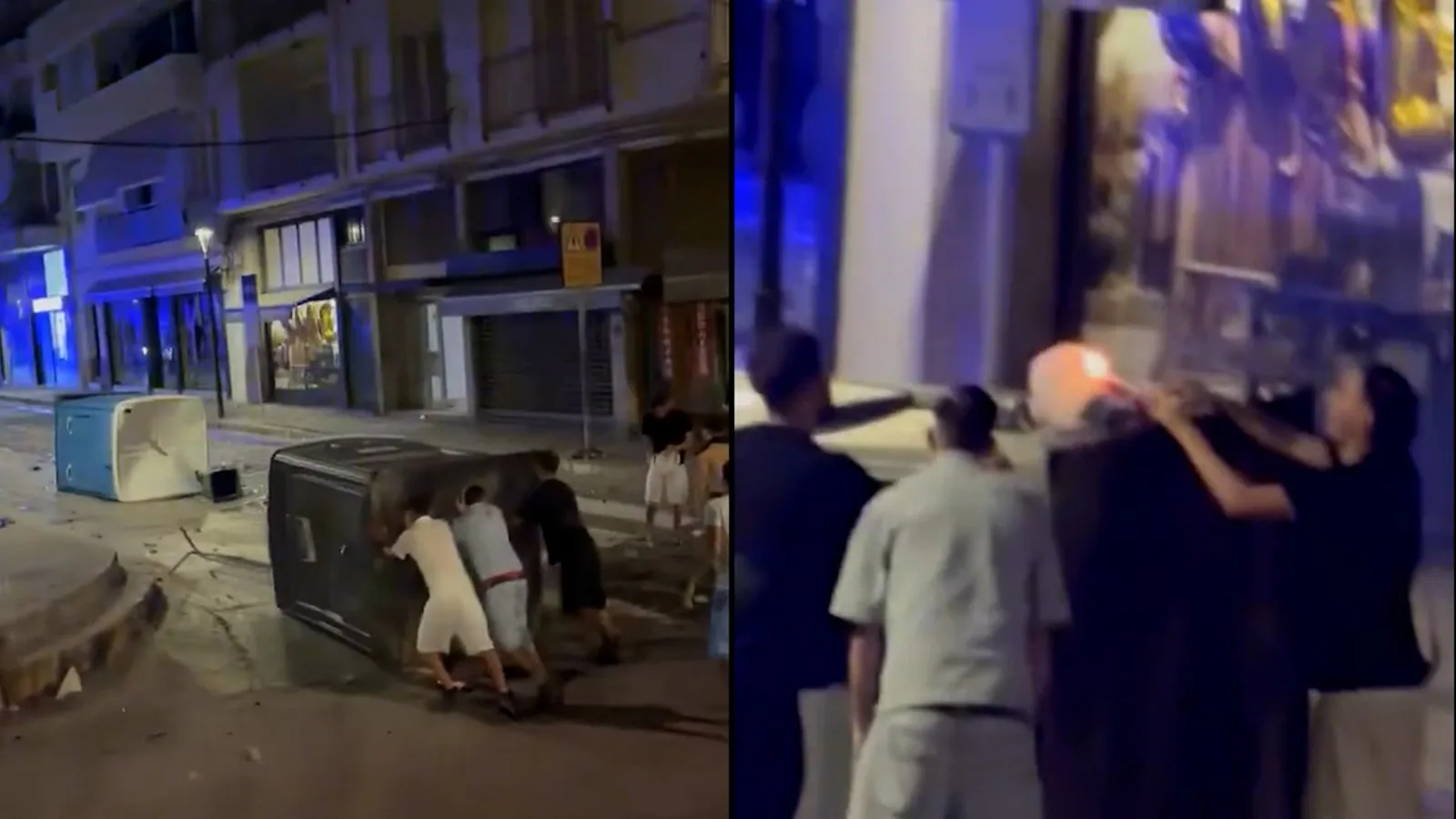
The day recorded some incidents. In the Arc de Triomf area, several independentists burned containers, forcing the intervention of the Mossos d’Esquadra, who also charged in Jacint Verdaguer square to prevent a direct confrontation between members of the radical independentist left and members of the ultra organization Núcleo Nacional.