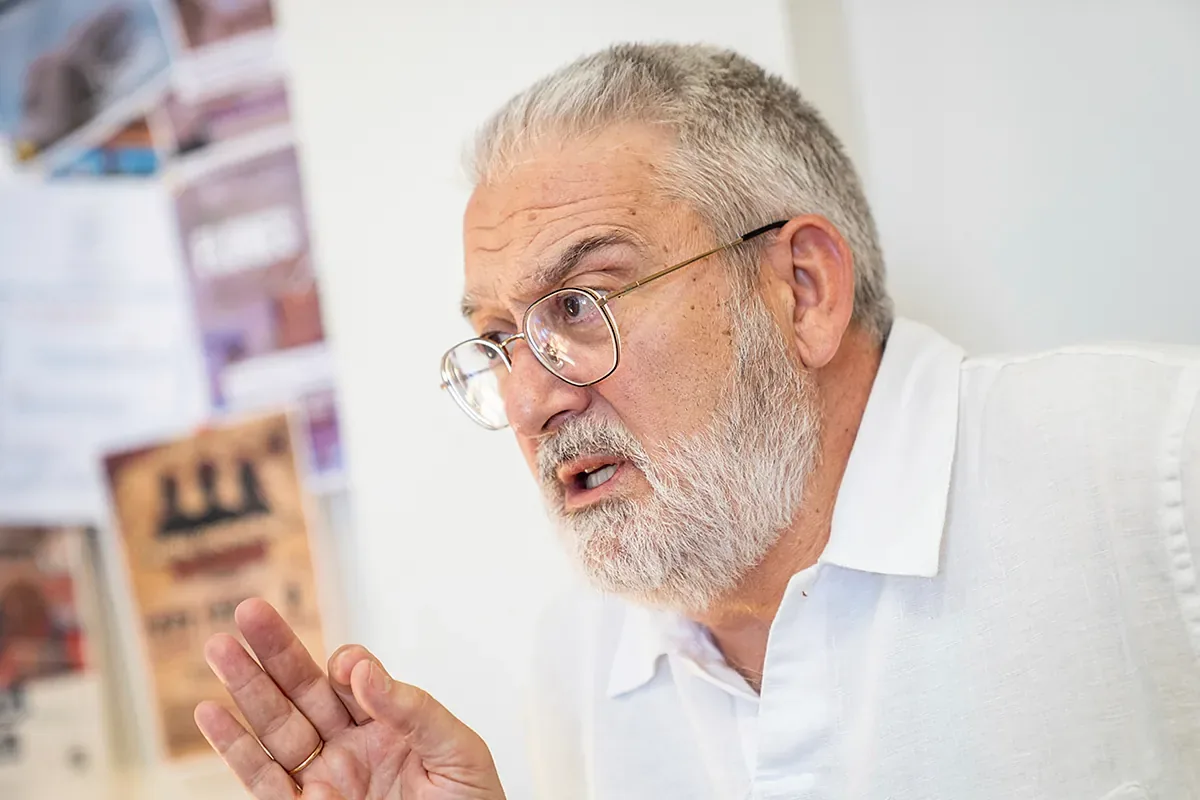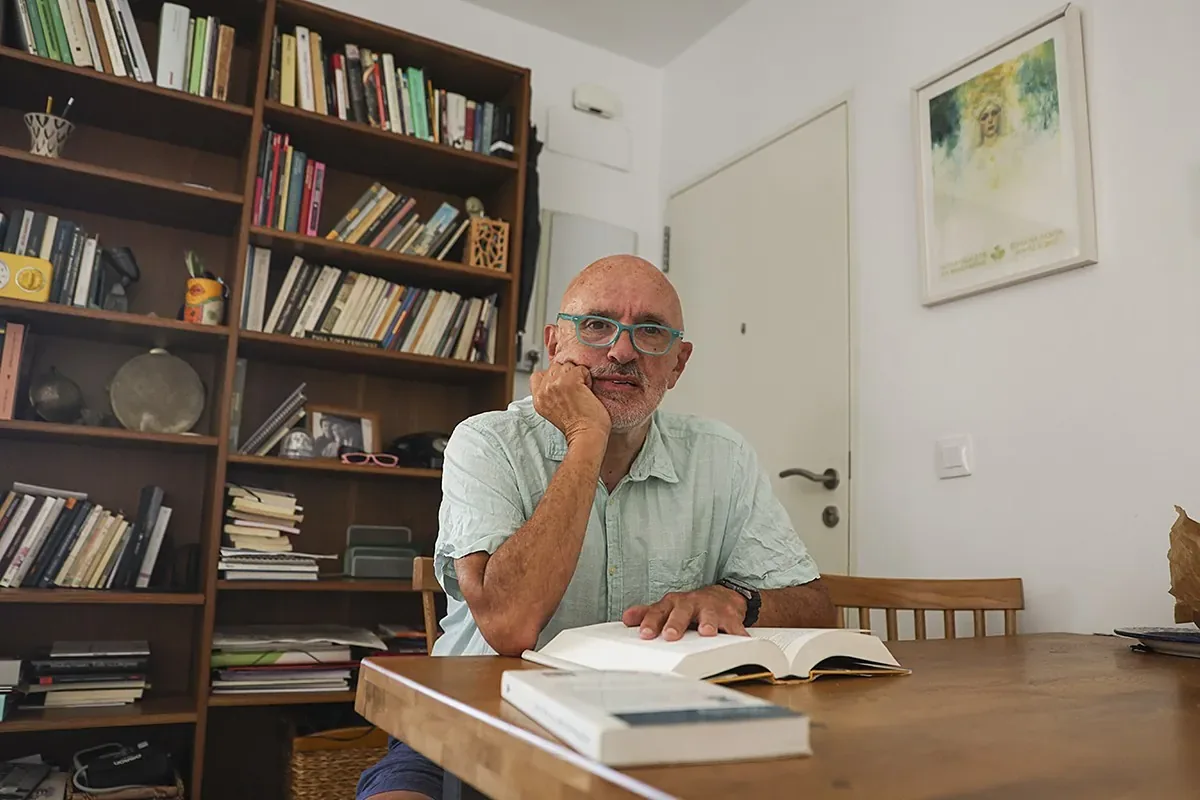





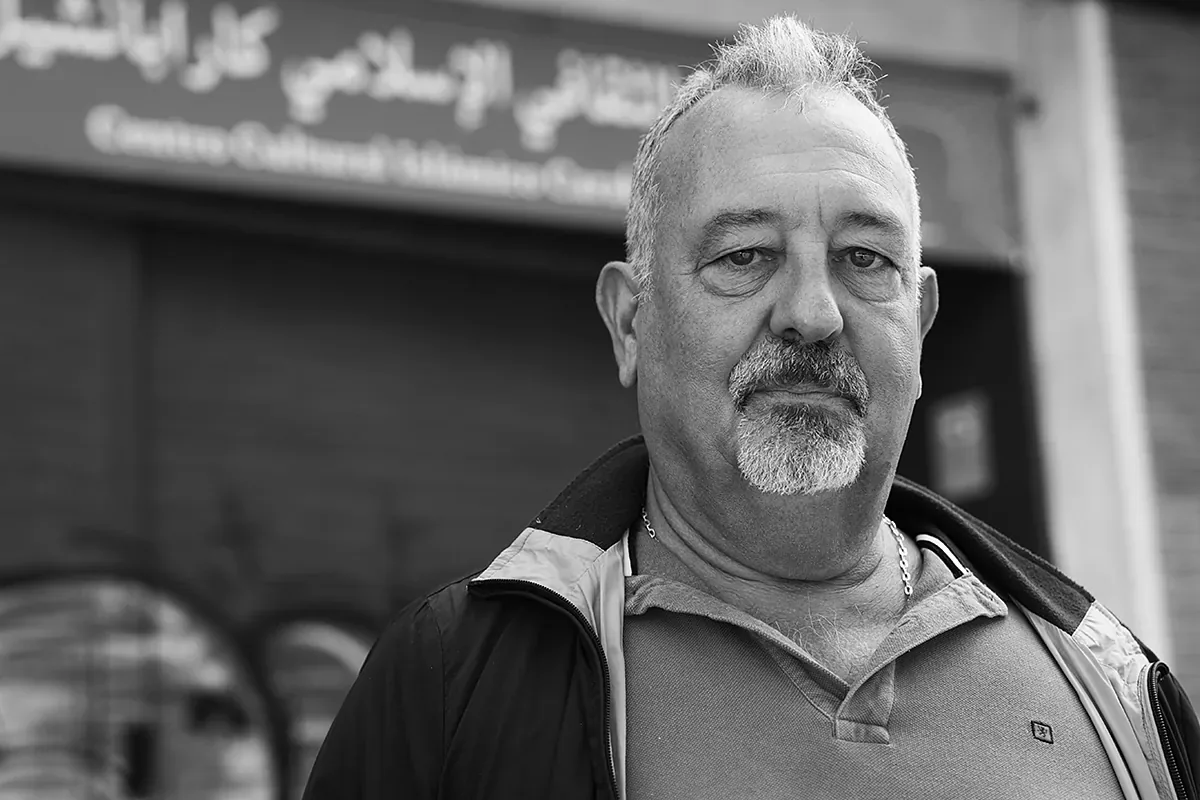
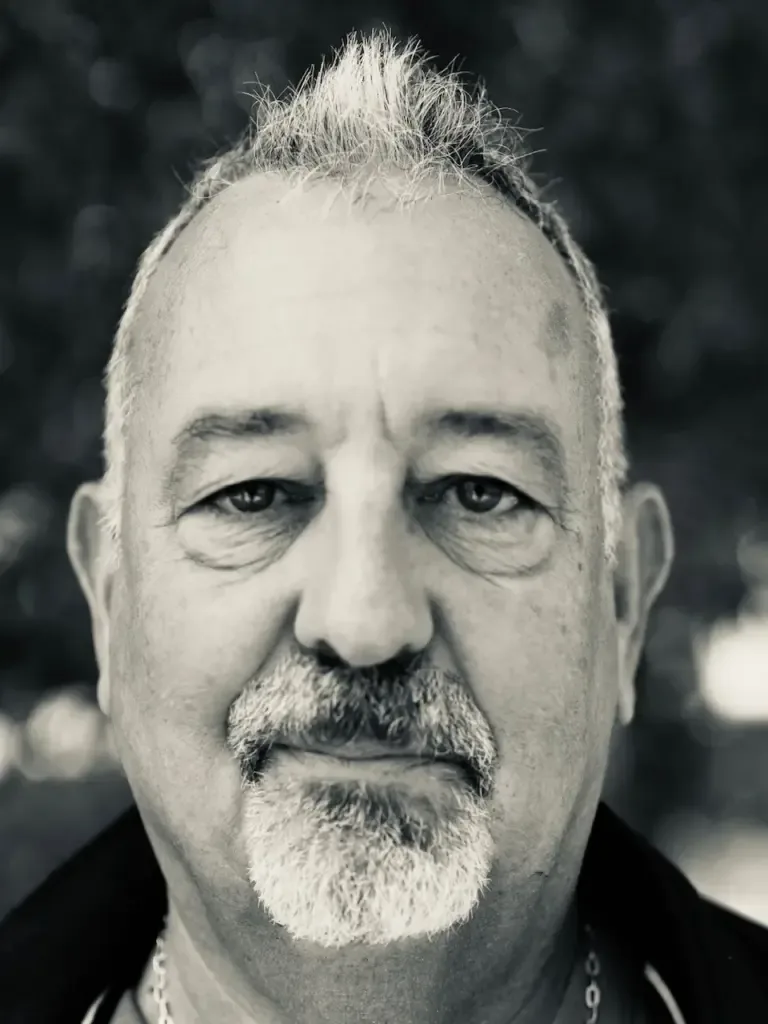
Chief Commissioner Luis Mayandía, on the day of his farewell, gathered dozens of people including subordinates, high-ranking officers, and powerful members of the security services of the embassies, including their intelligence services. We were there in June and this National Police officer was leaving behind a career where he stood out for his fight against illegal immigration, human trafficking, and slavery. He now speaks directly of an “invasion” following what happened in Ceuta. Alongside him, we analyze it. He does not hold back anything.
We met near one of the nerve centers of immigration control, at the Provincial Brigade of Foreigners and Borders. On his way, the police receive him as if he were a rock star who has returned to the venue where he played his first songs. Thanks to operations he led, hundreds of criminals were taken off the streets and many victims of sexual exploitation were freed. He also revealed cases of menas-erasmus, visa sales, the relationship between immigration mafias and drug trafficking…
His last position was head of the Central Unit for Illegal Immigration Networks and Document Falsifications (UCRIF). That is, also head of the agents of the National Immigration and Borders Center (CENIF) who presented to the judge of the National Court María Tardón the report pointing towards Morocco and troubling the Government. He defends them vigorously: “It is very difficult to attack a professional report when the unit has been making such assessments for years and their work has even been recognized by political leaders.”
Previously, Mayandía held responsible positions in geostrategic locations. He was Interior attaché at the Spanish Consulate in Tangier and deputy coordinator of the police cooperation center in Tangier-Med. He worked with the gendarmerie and Moroccan police. Few with his experience can be so blunt. He says it again: “It is an invasion. It is a hybrid war and nothing has been done to prevent it.”
Question. You have worked for decades in the Police. What has led you now to speak publicly?
Answer. Throughout my career, I have worked with absolute loyalty to whoever has been my boss, regardless of the political color of the party they belonged to. They are people freely and democratically elected or who have come to government within the democratic game. Now, once retired, I have taken a step forward because I consider that we live in a situation that forces me to rebel as much as possible. I want everyone to know what, from my point of view, is being hidden.
Q. How long were you in Mauritania and Morocco?
A. I was four years in Mauritania. Then I spent two years in the State Secretariat, in the Directorate General of International Promotion, and later I spent another four years in Morocco, at the Tangier Consulate, responsible for Tangier and Tetouan.
“Days before, I received information from colleagues warning that something extraordinary was happening”
Q. In Mauritania, you had to detect before others what was happening with immigration.
A. I went as Interior attaché, although with a profile very related to immigration. The cayucos crisis broke out there and I was one of the first to warn that it was happening. My General Foreigners Police Headquarters listened to me, but the Ministry of Foreign Affairs seemed to consider me crazy. That was when the cayucos began to arrive, in 2005.
Q. What relation does that have with what is happening today in Ceuta and Melilla?
A. It is related because it shows that there have always been police officers who knew and know perfectly what is happening. We have been monitoring the situation around Ceuta and Melilla for years, including the camps where sub-Saharan people concentrate. That must be said.
Q. What exactly does monitoring a situation like that mean?
A. It is very simple. You make a plan, prevention, and risk study. You locate a place that worries you and determine what events may occur: an assault on a border fence, an attempt to enter by water, or an assault by land. Then, preventive measures are supposed to be adopted to try to reduce the consequences and, depending on the probability and severity of the event, you must foresee contingency measures. In Ceuta, there were two fundamental factors: the probability that something would happen and the severity of what could happen.
Q. What happened then?
A. That we had a phenomenon with considerable probability, because there were already precedents, and whose consequences could be enormous. We have been warning for years that it could happen. There was a serious precedent in 2021.
Q. Who benefits from what you call invasion?
A. It has not benefited Ceuta, Melilla, or the rest of Spain. Morocco has, because I consider it a hybrid war tool against Spain, used to exert pressure.
Q. What do you understand by hybrid war?
A. The use of certain phenomena, in this case migratory pressure on a border, as a tool to achieve political objectives. In Morocco, the concept of the so-called Greater Morocco has existed for decades, which aims to include territories that historically have not been part of Morocco as a modern state. From my point of view, using Ceuta and Melilla within that claim is a historical fallacy.
Q. What was Spain’s main mistake?
A. Inaction. Preventive measures that, in my opinion, should have been adopted since 2021 were not taken. Do not reduce the police, Civil Guard, and Army presence in Ceuta: increase it. Human and material presence must also be deterrent.
Q. What other preventive measures would have been necessary?
A. Logistics. Ceuta is very small. You cannot send reinforcements if you do not have the capacity to house them, feed them, and provide them with means to work. You cannot send 500 police officers and then discover that there is no physical space even to install their workstations. The infrastructures should have been planned to be able to react to an emergency. By the way, the invaders have high-speed wifi and mine do not even have decent beds.
Q. And what role should the Army play?
A. The Army has a fundamentally deterrent and support function. You cannot expect the Army to act as a police unit. That is what the Police and Civil Guard are for. But behind it, there must be a sufficient military force so that anyone trying to enter illegally knows there is a response capacity.
Q. You have also spoken about the need to establish operational plans.
A. It is fundamental. It is not enough to have human and material resources. There must be orders and operational plans that allow immediate response. You cannot face an emergency situation and have to ask for permission for each action. It must be established beforehand what each unit can do and under what circumstances.
Q. Do you think there is fear to act?
A. Yes, because whoever makes a decision may end up personally responsible for its consequences. Imagine that on the day of the assault the senior police chief had decided to use all available force and that action had caused 13 deaths instead of the 140-plus who died. Who would be responsible for those 13 deaths? The one who gave the order.
Q. You talk about using force. What exactly does that mean?
A. You have to distinguish between violence and legitimate use of force. When the Police use force with a specific, just, and lawful objective, we talk about a logical and rational use of force. That force is granted by the State to the Police because the citizen has delegated to the institutions the legitimate exercise of force.
Q. What happens when a population feels abandoned?
A. It is very dangerous. When the population feels that the institutions responsible for their security have failed, they may reclaim by themselves that right of defense they had previously delegated to them. Then citizen patrols appear. And the paradox occurs that the Police end up having to protect the invaders from those patrols.
Read more A 21-year-old Spanish student on exchange is murdered in Mexico
Q. Is that already happening in Ceuta?
A. To some extent, yes. And it is a very dangerous situation. You have to distinguish between subjective insecurity and objective insecurity. Subjective insecurity is the fear a person has of suffering a crime even though the statistical probability is low. But when a population lives a situation where there is really a risk, we no longer talk only about perception. There is an objective dimension, such as the increase in rapes.
Q. Has the profile of illegal immigration arriving in Spain changed?
A. When irregular immigration began, you saw more women, children, and people of very different physical profiles. Now, young men who are physically very strong predominate. They are muscular. That does not mean that all immigrants fit this profile, but there has been a transformation in certain migratory flows.
Q. How do you explain that change?
A. Africa has a huge population and a growth rate much higher than Europe’s. Europe, moreover, is aging. We have to decide what migration policy we want. If we want to replace our lack of population through immigration, it must be said clearly. And if we want to control illegal immigration, that must also be said. To fight illegal immigration, simplifying a lot, there are three possibilities: prevent them from leaving, prevent them from arriving, or repatriate them when they arrive. And about the second, that would be abandoning them to their fate and we cannot allow that. No one risks their life more to save them than the Police, the Civil Guard, and Maritime Rescue.
Q. Why are those who arrive illegally not repatriated?
A. Because there are legal limitations and because, in my opinion, there is not enough political will to do so. When after the events in Ceuta it was announced that all would be returned to Morocco, I told my wife it was impossible to return them all that way. The first hours could have a certain treatment, but then other legal guarantees came into play.
Q. What role do communications and technology play in everything that is happening?
A. It is fundamental. Mobile phones allow knowing movements and concentrations of people. Telephone networks allow detecting how many terminals are connected to certain antennas and, in certain contexts, obtaining information about movements. In Morocco, there is also a very developed intelligence structure. Even an apparently insignificant figure like the informal parking attendant can be part of a local information network. When something happens in a neighborhood, the Police can go to those people to know who has been there and when.
Q. Did you have prior information that an extraordinary concentration was taking place in the Tetouan and Castillejos area?
A. Yes. Days before, I was already receiving information from colleagues who were there and warned that something was happening because there was an extraordinary concentration of people. That is why I find it hard to believe that the Moroccan services did not know there was a concentration of that size.
Q. Do you consider that Morocco has sufficient capacity to know those movements?
A. Without any doubt. Moroccan intelligence services are, in my opinion, the most powerful in Africa. Morocco has enormous technological capacity and a very developed tradition of intelligence and security.
“It is very difficult to attack a report when the unit’s work has been recognized for years by its political leaders”
Q. The Government has questioned, with its statements, whether coordination between the Police, Civil Guard, and Spanish intelligence services is really effective.
A. Anyone who has worked on the ground knows that we are very coordinated. I spoke with the CNI, with CIFAS, with the Civil Guard, and with other agencies. If I received information that could affect the Civil Guard and was not directly within my unit’s competence, I communicated it to them.
Q. And was that coordination reflected in intelligence and risk assessment reports?
A. Obviously. The unit I led had been making risk assessment reports for many years. It is a professional and specialized job. I have received congratulations from the Interior Minister several times for the quality of the reports made by the General Foreigners Police Headquarters. I do not understand why the professionalism of those who prepare them is now questioned simply because the conclusions are not liked.
Q. How important is the report prepared before the events in Ceuta?
A. Very important. The report shows that there was prior knowledge of the situation and that the risk had been warned. The declassification of documents has allowed verifying that we were in possession of information pointing in that direction. The important thing is to understand that we did not have a crystal ball. We could not know the exact number of people nor the exact time. It is like a football match: you know the match is being played, but you do not know when a certain player will score.
Q. Do you trust the people who prepared that report?
A. Absolutely. I know them personally, I have worked with them, and I know their professionalism. I would put my hand in the fire for the person who replaced me. He is a conscientious, honest, and professional person. He has no political color when he puts on the uniform.
Q. And there has been an attempt to discredit that report…
A. Yes. As I repeat, it is very difficult to attack a professional report when the unit has been making such assessments for years and their work has even been recognized by political leaders. The professionalism of a unit cannot change because a certain report is uncomfortable.
While driving his car, an SUV with many kilometers, he recalls before leaving how immigration mafias live. “I remember when we seized the car of a human trafficker. He had one with 580 horsepower. Worth 180,000 euros. This is also a business. They earn 280,000 euros per trip transporting immigrants who can pay. I’ll tell you the current price per person: 14,000 euros, which is not declared to the Treasury,” he says ironically.
“Without integrity, I could be rich. I have been offered up to 24,000 euros for a visa in Mauritania. Curiously, a month or month and a half later, I met the one who had offered me that money in Las Palmas. I told him: ‘Someone accepted the 24,000.’ He replied: ‘No way, it was 28,000 because your refusal raised the price.’ I denounced the sale of visas in our consulates in Morocco and that caused me to be expelled from Morocco. Spain expelled me from Morocco, which made my life impossible.”