








A 21-year-old Canary Islands student, who was studying Early Childhood Education at the University of Granada, was murdered last weekend in the city of Cuautla, Mexico, where she had been participating in a university mobility program for a month. According to the country’s authorities, the young woman suffered a violent assault and died from multiple stab wounds.
Claudia Tacoronte Aguilera, originally from Santa Brígida (Gran Canaria), was already in her fourth year of studies and had moved to Mexico in August for a stay at the Autonomous University of the State of Morelos. The events, which occurred on Saturday night, are being investigated as a femicide although the motive for the attack is currently unknown, although some media outlets in the country suggest it could have been a violent robbery.
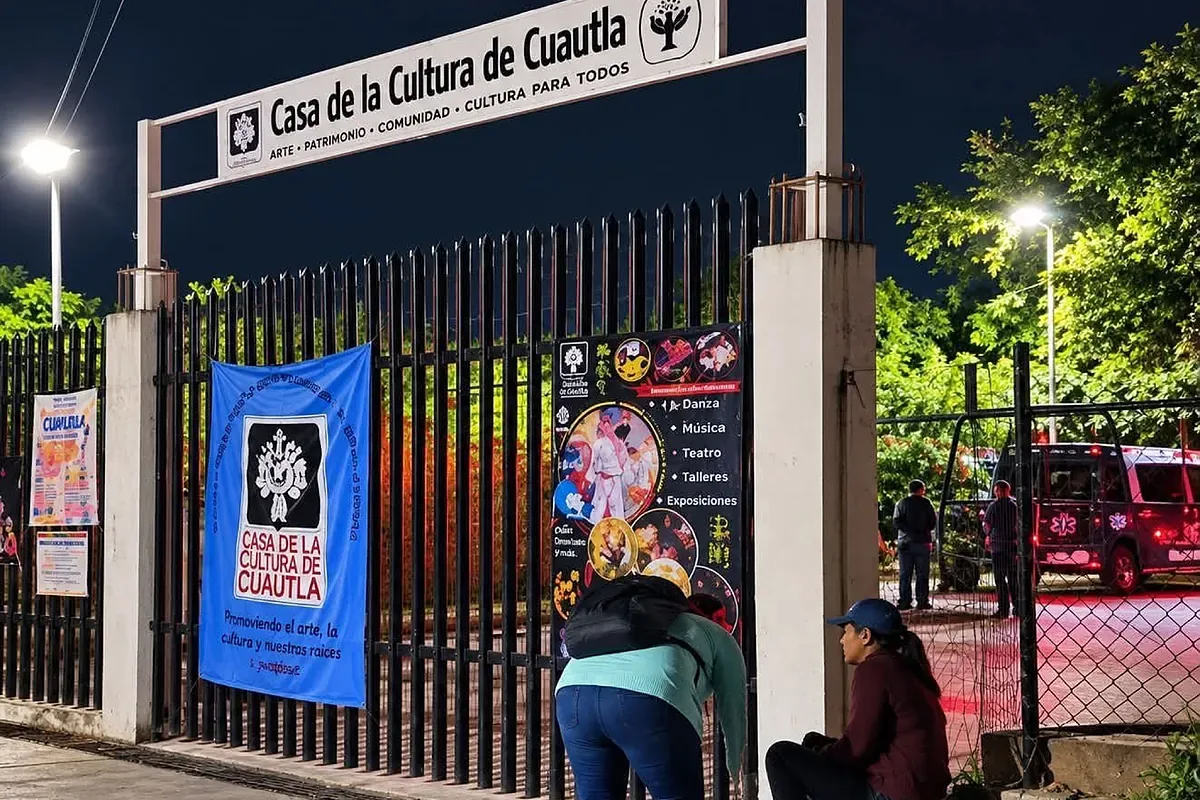
The young woman was near the Casa de la Cultura and, apparently, according to initial investigations, sought refuge inside the building, where she was found with several stab wounds. The medical personnel who arrived at the scene found her body already lifeless. The Casa de la Cultura of the municipality of Cuautla was celebrating the National Medicinal Plant Festival this past weekend, an event that promotes traditional medicine and brings together experts from across the country.
The victim’s family lives in El Monte, in the municipality of Santa Brígida, and Claudia attended secondary school at IES Nelson Mandela in Tafira. She later enrolled in the Early Childhood Education degree at the University of Las Palmas but decided to continue her studies at the University of Granada.
Currently, the University of Granada (UGR) has about 3,000 students spread across different destinations worldwide in various exchange and mobility programs, and it is also a destination for several thousand incoming students, making it one of the most international universities in Spain. There are currently 27 students from UGR in Mexico, who have been contacted to offer support and the possibility, if they wish, to return to Granada, facilitating all the arrangements for academic return.
After gathering the educational community this morning to observe a minute of silence in memory of the Canary Islands student, the dean of the Faculty of Education Sciences, Katia Caballero, stated that the news of Claudia’s violent death was “a very hard blow for everyone” at the University, which is going through “very sad” times. The dean also explained that students receive information about the dangers of the areas they travel to, with recommendations on what activities to do or how to move around. “Nothing like this has ever happened in all the years we have had these types of programs,” Caballero repeated, distressed.
According to the Vice-Rector for Students, Juan Luis Benítez, the University is in contact with Claudia Tacoronte’s family and the consulate to initiate the repatriation protocol. A psychological support team has also been appointed to assist the young woman’s classmates who may need it in the coming days.
“Immediate and thorough investigation”
The governor of Morelos, Margarita González Saravia, confirmed the crime and assured that state authorities established contact with the Spanish Consulate in Mexico to provide support to the young woman’s family, who was in the country as part of an academic exchange at the Autonomous University of the State of Morelos (UAEM).
The UAEM expressed in a statement its “deep indignation” over the student’s death, identifying her as Claudia Tacoronte Aguilera, who “was undertaking an academic exchange stay” at the institution and who “unfortunately was a victim of femicide in events that occurred at the Casa de la Cultura de Cuautla“.
“The Autonomous University of the State of Morelos expresses its deepest condolences to her family, friends, classmates, the University of Granada, the institution she came from, as well as to the Spanish Government and society,” the university stated.
It emphasized that the university activated “the corresponding institutional protocols and mechanisms” once it became aware of the events to “keep communication and support channels open with the family, through the University of Granada and with the Spanish consular authorities, as well as to attend to any requirements that, within their respective competences, may be necessary.”
The UAEM has also requested from the Morelos Attorney General’s Office and the competent authorities “an immediate, thorough investigation with a strict gender perspective to ensure justice and prevent impunity,” before calling to “act responsibly and sensitively” when addressing the case and reporting on what happened.

Stabbing attack
According to AFP, Claudia Tacoronte Aguilera was attacked with a knife. The Spanish student was at the National Medicinal Plant Festival on Saturday when she was the victim of “an alleged robbery with a knife,” reported the local Casa de Cultura, the site where the event was held.
Governor González Saravia has lamented the young woman’s death and expressed her “solidarity” with her family, loved ones, and the UAEM community, while noting in a social media statement that “since the facts became known, the competent authorities have been working in a coordinated manner on the case.”
“The State Attorney General’s Office initiated the investigation and activated the corresponding protocols; that institution will be responsible for determining the circumstances of what happened and, if applicable, the responsibilities,” emphasized the governor of Morelos.
González Saravia has guaranteed that the authorities will contribute “to clarifying the facts” and will work to improve the safety conditions for women, youth, and members of the university community in Morelos.”
The Morelos prosecutor, Fernando Blumenkron, highlighted in statements to the press that “the State Attorney General’s Office intervened from the first moment in the body recovery with a femicide protocol, which is one of the instructions given for any violent death of a woman”. “We are investigating,” he concluded.
The University of Granada condemns the murder
The University of Granada expressed its rejection and condemnation this Monday and wished to convey its “deepest condolences, solidarity, and affection” to the family, relatives, and friends of the young woman “in these moments of such profound pain,” and calls for a minute of silence at 11:00 a.m. at the entrance of all University of Granada workplaces.
“As a public institution committed to knowledge transfer, the defense of human rights, and the construction of critical thinking, the University of Granada reiterates the imperative need to eradicate all forms of violence against women,” it states.
The University of Granada’s governing team has made itself available to the Spanish consular authorities in Mexico, as well as to the young woman’s family, to provide the necessary support at this time.
The rector of the University of Granada, Pedro Mercado, expressed his “deep sadness” and “institutional anger” over this murder and has made himself available to the family to “help and accompany them in this ordeal and the trip to Mexico.”
Later, the president of the Public Universities of Andalusia association and rector of Pablo de Olavide University in Seville, Francisco Oliva, explained that they are studying what steps to take regarding other students currently in Mexico participating in mobility programs. In statements to Europa Press, Oliva admitted being in “shock” after learning the “terrible” news. Mexico, he recalled, is one of the favorite destinations for students who decide to undertake stays in Latin America.
In a joint statement, the public universities of Andalusia demanded a “transparent and swift investigation that allows justice to be done as soon as possible.” “We share this pain and dismay with the entire university community of Granada and with those who hosted her during her stay. The public universities of Andalusia unite in her memory, reaffirm our commitment to the dignity of people, the urgent need for peaceful coexistence, and the rejection of all forms of violence, especially against women simply for being women,” the public institutions add in the note sent to the media.