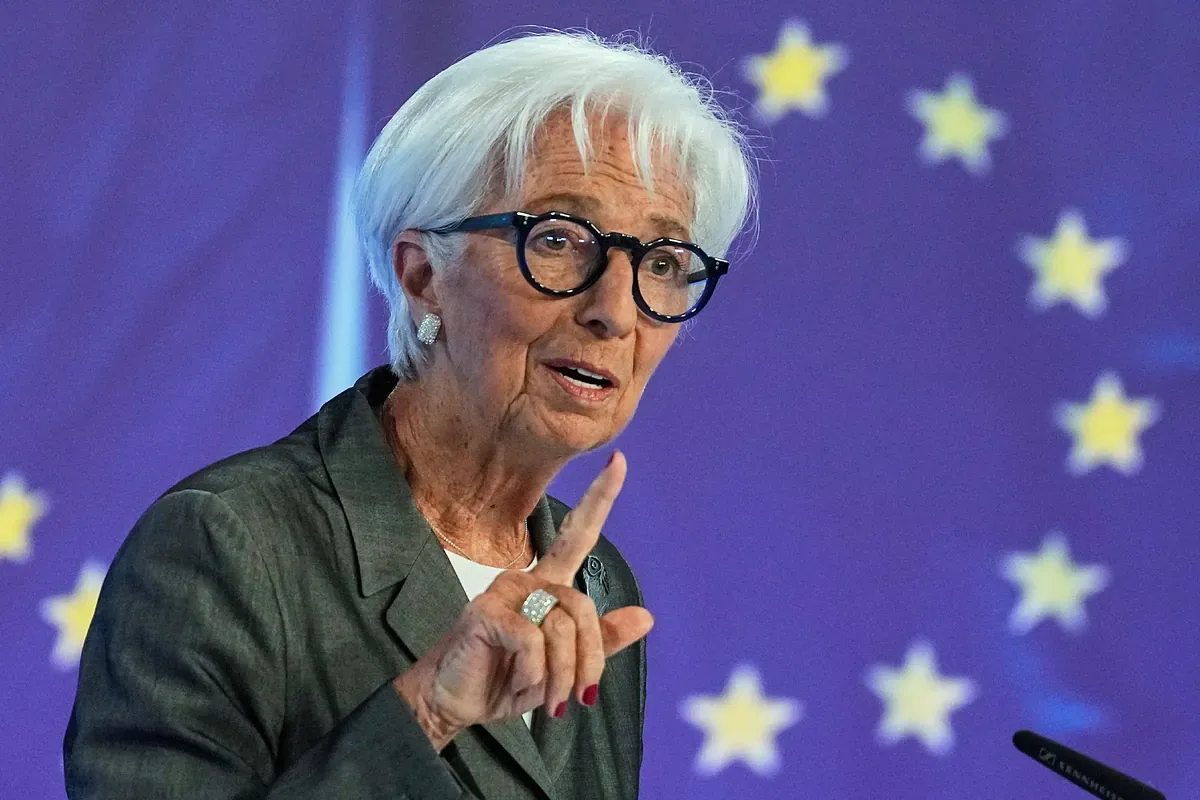







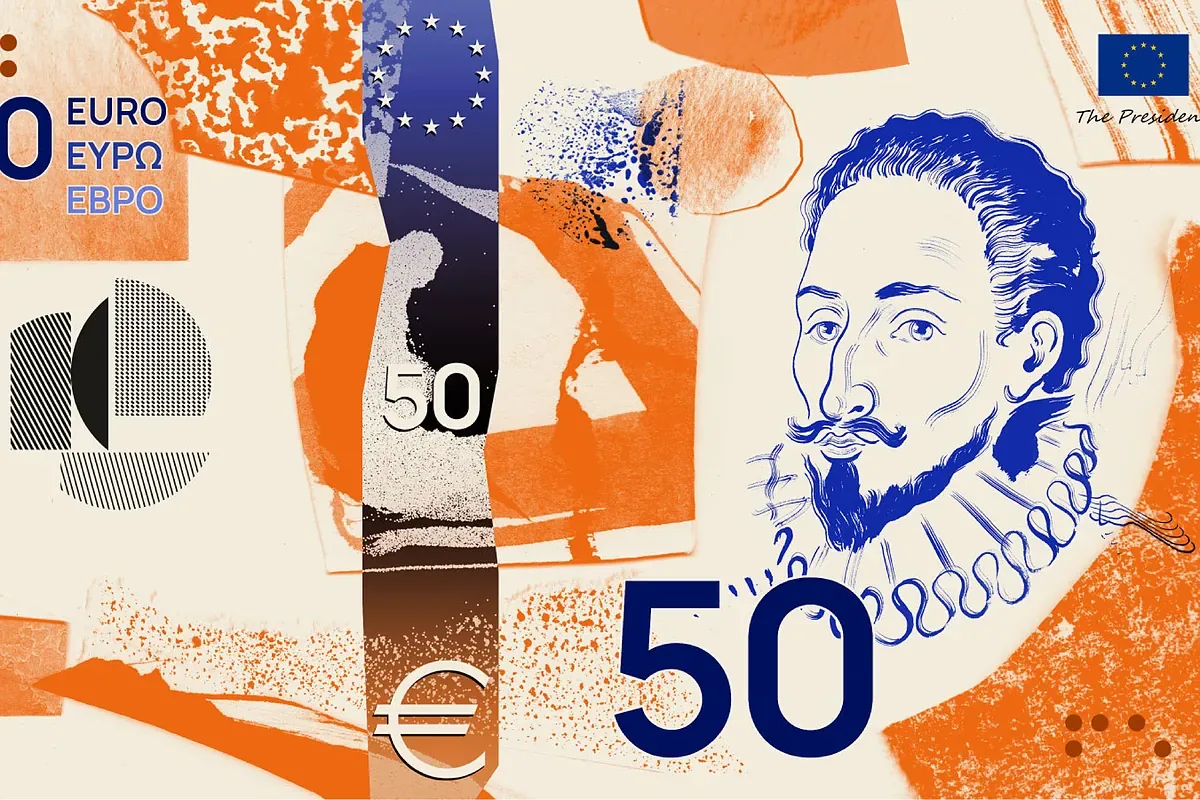
With more vibrant colors and two themes on the table, the European Central Bank (ECB) unveiled this Thursday the definitive designs that have been selected for the new image of European banknotes. Under a blue cloth and placed on two panels, Christine Lagarde, the president of the central bank, presented the two finalist themes (already known): European culture and rivers and birds. There are ten different designs, five for each branch, with more vibrant colors, a kind of silkscreen, something more Warholian or with an almost photographic portrait appearance. Vote here for your preferred theme.
It has not been a simple process. The ECB has been working on the new banknote design since 2021. Since then, different consultations have been held to assess the theme that will be used in the new image of the European currency, which will not be known until the end of this year. Only one of the ten available options will be selected by a jury, designers, ECB members, and citizens themselves. “We want to ensure that the voices of Europeans are heard. We are the ones who print the banknotes, but in the end, the banknotes are yours,” explained ECB President Christine Lagarde, who today did a double duty after appearing before the media to communicate the latest decision on monetary policy.
Marie Curie, Cervantes, Beethoven and a wide variety of birds, among the options for the new euro banknotes
- Editorial: EL MUNDO
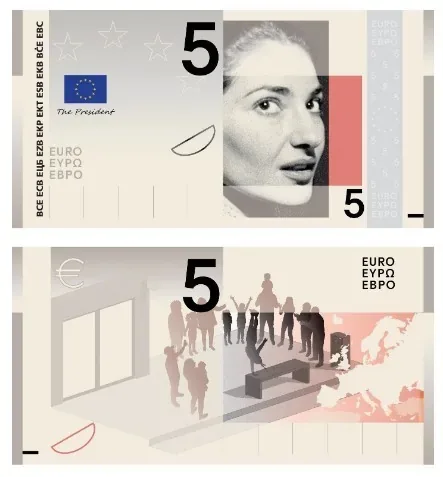
“We are very fortunate to have a great cultural heritage in Europe,” stated Christine Lagarde. “These banknotes help encapsulate that culture,” explained Lagarde in reference to the first proposal linked to European culture where the face of, for example, Nobel Prize in Physics winner Marie Curie appears on the 20 euro banknote, and that of composer Ludwig van Beethoven on the 10 euro banknote. On the reverse, a concert is shown, on the 5 euro banknote a gathering of friends dancing, or on the 20 euro banknote, a library. The Spanish writer Miguel de Cervantes appears on the 50 euro banknote.
Regarding the second theme, ‘rivers and birds’, the ECB president explained that it “symbolizes having no barriers and freedom, in addition to the connection with nature.” “They remind us of our responsibility towards nature,” she emphasized. These designs show different birds alongside buildings of relevant institutions. The ECB headquarters appears on the 20 euro banknote and the European Parliament on the 5 euro banknote.
Lagarde has encouraged citizens to participate in a public consultation that will run from this Thursday until September 21. Citizens’ opinions will not be the sole decision criterion, but they will influence the final choice.
What are the current banknotes composed of? Designed by the German Reinhold Gerstetter, who was commissioned to update the image of the banknotes in 2013, the theme of the European paper was based on the ‘eras and styles’ theme of the original series. On the obverse of the banknotes, windows and doors of different styles are featured: the classical style appears on the five euro banknote; the Romanesque style on the 10 euro banknote; the Gothic style on the 20 euro banknote; the Renaissance aesthetic on the 50 euro banknote; the Baroque and Rococo on the 100 euro banknote; and 19th-century iron and glass architecture on the 200 euro banknote.
On the reverse of the banknotes, there is a geographical representation of the continent that has evolved as countries have been incorporated since the creation of the monetary union. In addition, other elements are included, such as the name of the currency, the euro, in Latin and Greek characters in the first series, and also in Cyrillic alphabet in the Europa series after Bulgaria’s accession to the European Union. It should be noted that all series are in circulation, with the same validity.
Also included are the ECB acronym in the ten linguistic variants and the signatures of the four presidents the European Central Bank (ECB) has had since its creation: Willem F. Duisenberg, Jean-Claude Trichet, Mario Draghi, and Christine Lagarde.
The two finalist proposals represent two very different ways of symbolizing Europe. While “European Culture: shared cultural spaces” aims to pay tribute to personalities who marked the history of the continent, “Rivers and Birds: resilience in diversity” focuses on European natural heritage through river landscapes and native bird species.
European Culture: shared cultural spaces
Maria Callas will represent the 5 euro banknote. The Greek-American soprano is considered one of the great figures of 20th-century opera. She revolutionized operatic interpretation and left a profound mark on European music. The reverse will show street artists performing music, dance, and theater, entertaining passers-by.
Ludwig van Beethoven will occupy the 10 euro banknote. The German composer and pianist is one of the great references in classical music. His Ninth Symphony, which includes the ‘Ode to Joy’, inspired the official anthem of the European Union. On the reverse, a music festival will appear with a choir of children and young people singing.
Maria Skłodowska-Curie will be the protagonist of the 20 euro banknote. The Polish-French physicist and chemist was a pioneer in the study of radioactivity and became the first person to receive two Nobel Prizes. Her legacy places her among the most influential scientists in history. The reverse will represent a school or university with a teacher and students, with notebooks and books on the tables.
Miguel de Cervantes will appear on the 50 euro banknote. The Spanish writer, author of Don Quixote de la Mancha, considered the first modern novel and one of the most influential works of universal literature. The reverse will show a library with adults reading printed and digital books, while a boy and a girl try to reach a book from a shelf.
Leonardo da Vinci will preside over the 100 euro banknote. An Italian artist, engineer, and scientist of the Renaissance, his legacy in disciplines such as painting, anatomy, and engineering made him one of history’s great geniuses. The reverse will feature adults and children contemplating examples of urban art, contemporary art, and other works in an exhibition space.
Bertha von Suttner will head the 200 euro banknote. The Austrian writer and pacifist activist was the first woman to receive the Nobel Peace Prize. She dedicated her life to promoting disarmament and the peaceful resolution of conflicts. The reverse will include a tree-lined square where adults and children converse, stroll, and play.
Rivers and Birds: resilience in diversity
Mountain spring and a wallcreeper will represent the 5 euro banknote. The design shows a mountain spring accompanied by a wallcreeper, a bird that inhabits high-altitude rocky areas and symbolizes European alpine ecosystems. The reverse will feature the European Parliament surrounded by citizens visiting the institutions.
Waterfall and a kingfisher will occupy the 10 euro banknote. The design represents a waterfall alongside a kingfisher, a characteristic bird of clean-water rivers and streams, associated with the richness of fluvial ecosystems. The reverse will feature the European Commission during a guided tour for a group of young people.
River valley and a colony of bee-eaters will star on the 20 euro banknote. The landscape shows a river valley accompanied by a colony of bee-eaters, migratory birds of intense colors that inhabit the sandy banks of rivers. The reverse will feature the headquarters of the European Central Bank alongside a group of visitors.
Meandering river and a white stork will accompany the 50 euro banknote. The design combines a winding river with a white stork, one of the most representative birds of the continent and a symbol of European wetlands. The reverse will incorporate the European Council and the Council of the European Union.
River mouth and an avocet will illustrate the 100 euro banknote. The proposal represents the river mouth alongside an avocet, a characteristic bird of wetlands and coastal areas. The reverse will illustrate the European Council and the Council of the European Union.
Seascape and a northern gannet will preside over the 200 euro banknote. The design shows a seascape accompanied by a northern gannet, a bird that inhabits the coasts and cliffs of the European Atlantic and symbolizes the continent’s connection to the sea. The reverse will be dedicated to the European Court of Auditors.