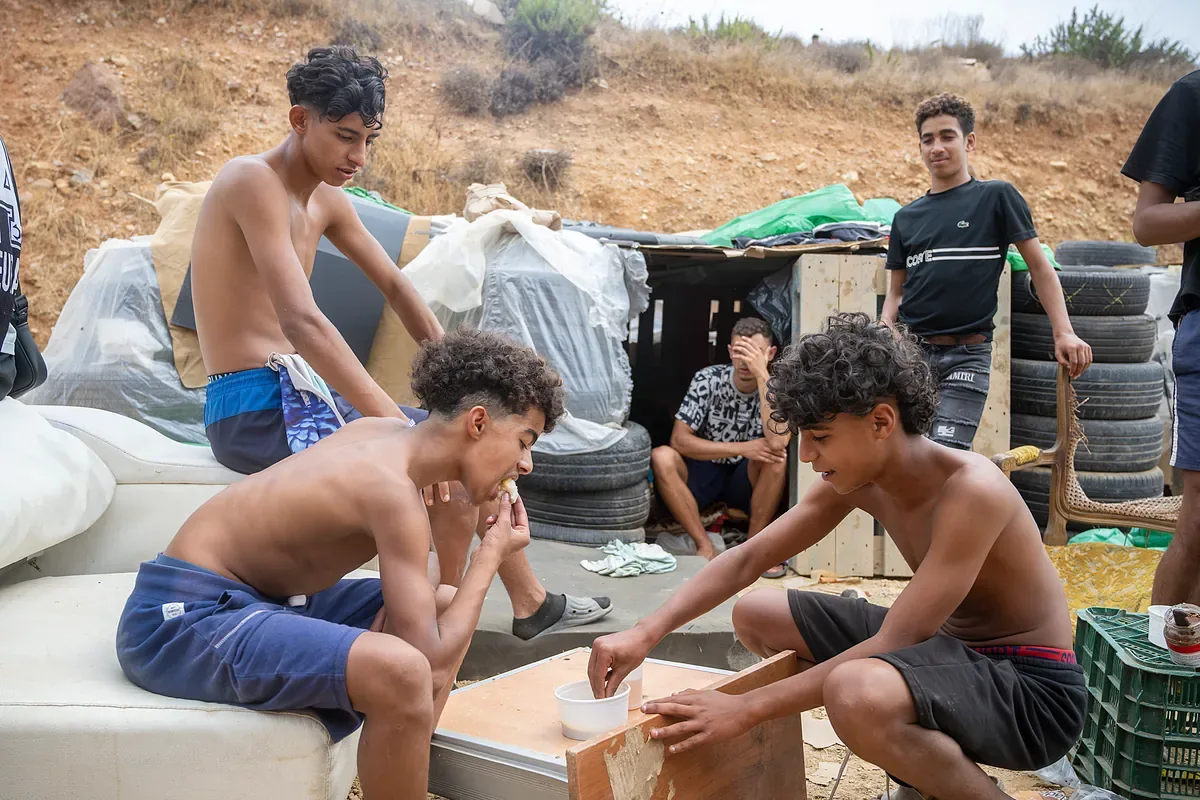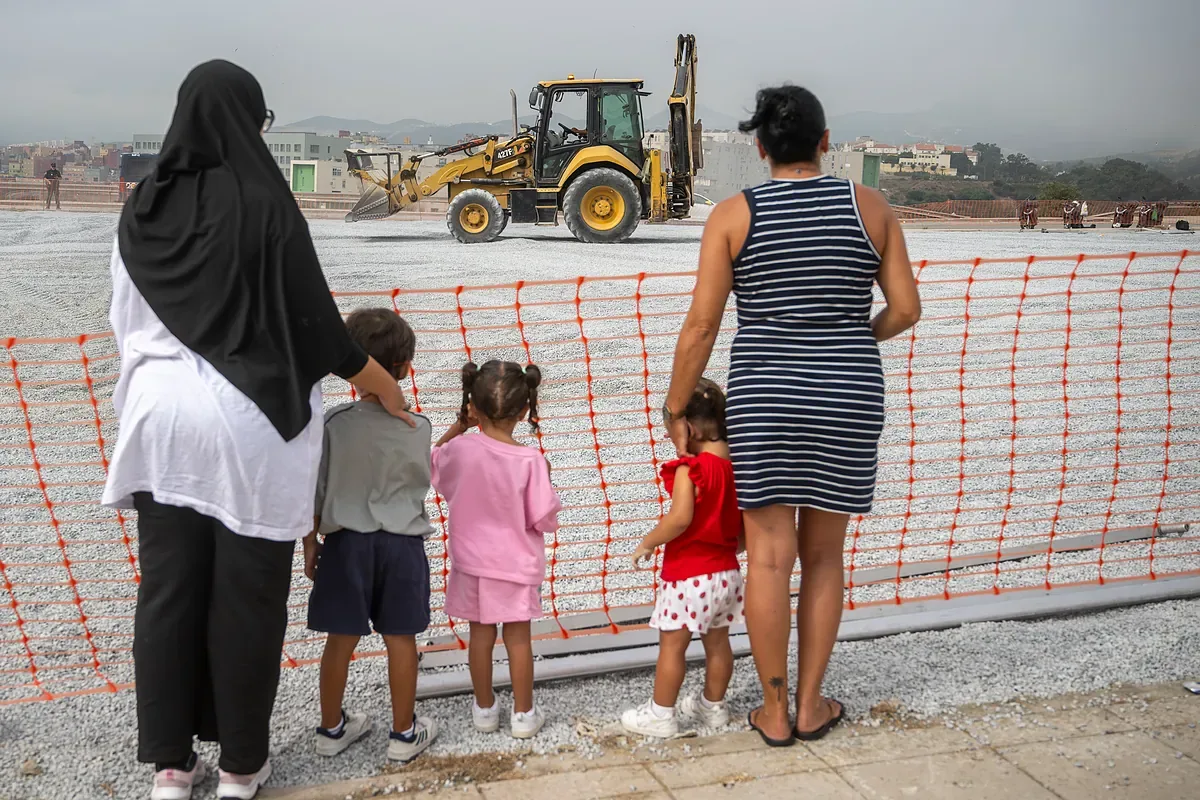




Ramesh Chandiramany has experienced the worst of this latest migration crisis away from home. A Ceutan, although born in Pune (India), he chose to go on vacation just before the worst migration surge in the history of the autonomous city (and all of Spain) was recorded, as well as the most tragic, with nearly a hundred deaths. But he has suffered it as if he were here. After all, he has lived through every single crisis that periodically shakes the autonomous city.
Read more Europe retires Pedro Sánchez’s migration model
He retired a decade ago and for many more years he ran an electronics distribution company. He was then, and still is now, the president of the Hindu Community in Ceuta, one of the four religious communities – along with the Jewish and the majority Christian and Muslim ones – that coexist in a city where multiculturalism is not an empty slogan.
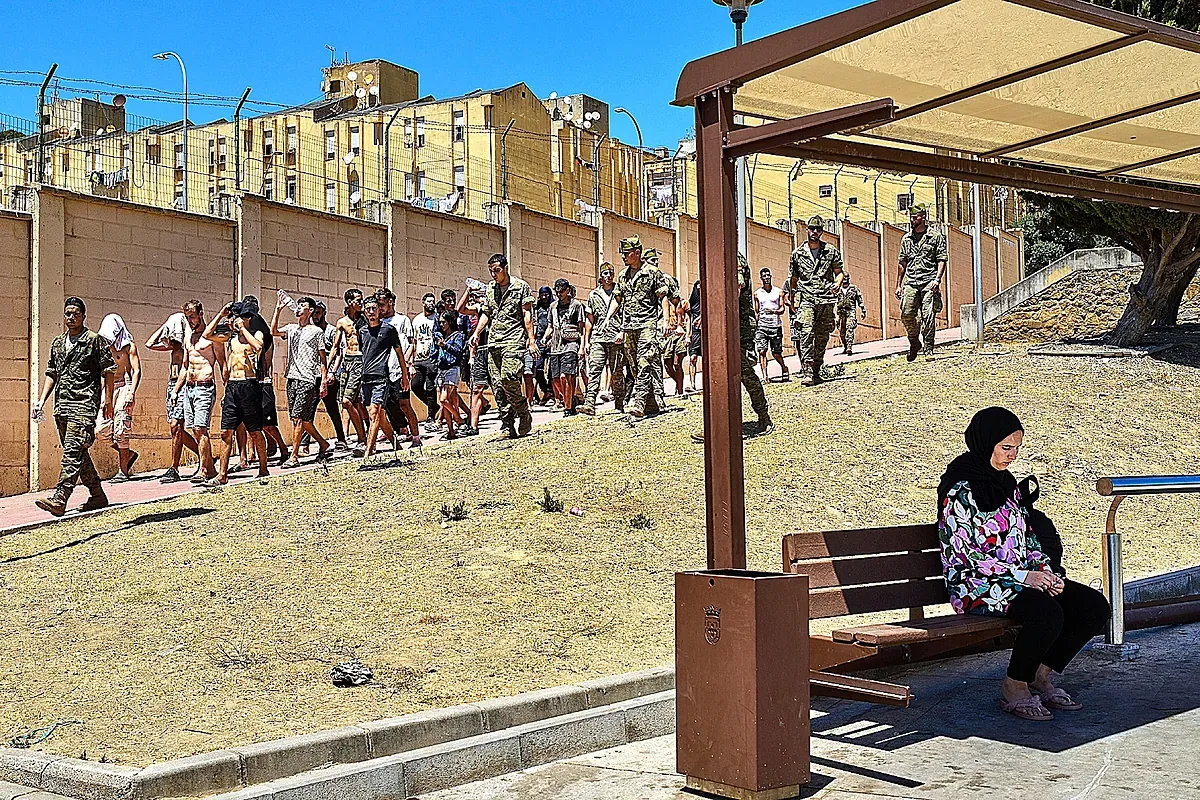
Ramesh settled with his family in the city so long ago that he has no other memory than that of the Mediterranean that bathes its shores and has been a witness to its recent history, sometimes turbulent. Over all these years, beyond the arrival of more than 60,000 migrants who stormed the border between Thursday and Friday, he says he has felt the Moroccan threat every day. “The border and the country that surrounds us condition us day to day, in everything,” he states.
Uncertainty is, he says, the word that best defines the daily life of the Ceutans and also “our near future.” Because, he explains, “Morocco makes it clear that it can take the city away from you in ten minutes, everything is up in the air.”
Something broke in 2021, the closest precedent of a crisis like the current one – 15,000 people entered through the border amid the passivity/encouragement of the Moroccan authorities – and with the post-pandemic border closure, a relationship of trust, he says, between Ceuta and Morocco has not been recovered.
Historically, recalls Francisco García, president of the Federation of Neighborhood Associations, life in Ceuta has been conditioned by the course of relations between Spain and Morocco or, as the neighborhood leader complains, by “Morocco not liking what the current president does” and then “taking us hostage.”
The worst, Ramesh emphasizes, is that this uncertainty has materialized into fear that Morocco will escalate and unleash its annexationist ambitions after a “first invasion,” referring to the massive assault of 2021, and “now the second.” “We all remember the Green March,” he points out, referring to the invasion, with civilians, of the Spanish Sahara by the father of the current Moroccan monarch, Hassan II, in November 1975.
In case of doubt, García insists: “The same thing happened in the Sahara, they sent civilians ahead.”
Uncertainty is also a word widely used in the offices of the Ceuta Government to define daily life in the city. It is lived “under pressure,” says the first vice president of the autonomous government, Alejandro Ramírez, who admits that episodes like the one experienced these days “condition everything” and represent a burden for the progress achieved in recent years in the North African city.
“It already happened to us in 2021, it was something similar that now multiplies by ten” and has a direct and resounding impact on the city’s own management. For example, the contingency fund is already “completely exhausted” and the blow to local budgets is devastating considering that the migration surge could mean a bill of nearly one hundred million in total accounts that do not exceed 300.
Without focusing on this specific crisis, Ramírez acknowledges that “we are used” to suffering the consequences of immigration as a “Moroccan pressure weapon” in what is, he highlights, the only European Union border in Africa along with Melilla.
The migration phenomenon is so present that there is not a day, he says, that he does not have to answer – he is also spokesperson for the government presided over by Juan Jesús Vivas – local press questions about the irregular entries that have occurred that night.
It is the consequence of the “abandonment by the central Government” and a position of weakness against the Moroccan neighbor with whom Ceuta shares eight kilometers of land borders. “We feel abandoned to our fate” and we are, he adds, “besieged by daily uncertainty.” “The reality is that Morocco, when it decides, only takes 24 hours to invade the city,” he states bluntly. “Who says it won’t do it again in two weeks?” asks the also Minister of Environment, Urban Services, and Housing.
Despite everything, the constant threat on the other side of the border, Ceuta had managed in the last five years to leave behind the economic dependence of its condition as a border city, partly forced by the unilateral closure decreed by Morocco due to the pandemic which it then maintained and which sank the local economy along with the Covid-19 pandemic.
Ceuta, Ramírez emphasizes and is endorsed by the Ceuta Chamber of Commerce, has managed to give a turnaround to its economic model in barely five years, with a determined commitment to attract technology and online gaming companies taking advantage, to a large extent, of the opportunity provided by Brexit which shook the economic board in Gibraltar and instilled fear in some investors previously sheltered in the Rock.
The data provided by the local Chamber of Commerce help to get an idea of the path traveled since then: the digital and technological sector already represents 12% of Ceuta’s GDP and generates approximately 1,300 direct jobs (plus another 1,052 indirect) with salaries that, on average, are around 50,000 euros annually and unemployment, adds the autonomous vice president, has gone from 14,000 to 8,000 unemployed, with a “historic record” of Social Security affiliations of 24,000 workers.
The president of the Ceuta Chamber of Commerce, Karim Bulaix, states in the past tense that “we were very subjected to what happened at the border” but that “everything has changed.” Although that may now be affected by the impact generated by last week’s migrant surge because “money is cowardly” and the image left of the city is one of instability.
Bulaix complains that it would have helped if the lesson of 2021 had been learned because that crisis “taught us what the threat was and that we had to take measures, but none were taken.”
If Ceuta’s life has been conditioned all these years it was because of that and because, moreover, Europe has not assumed that it must get involved in the protection of its southern border. “We don’t understand how it has happened,” he stresses, and believes that this would be the ideal moment for Kings Felipe and Letizia to make the official visit that monarchs have never made to the autonomous city to make clear “that Ceuta is Spain.”
The Ceuta Government launches the same idea, although the first vice president understands that this “depends on diplomatic relations.” But, he points out, “now any gesture would be welcome.”
All for breaking or easing the siege in which Ceuta has lived for decades, even longer than that maintained by Sultan Muley Ismail between 1694 and 1727, 33 years of siege that the Ceutans resisted because “we are resilient,” as Bulaix adds.