



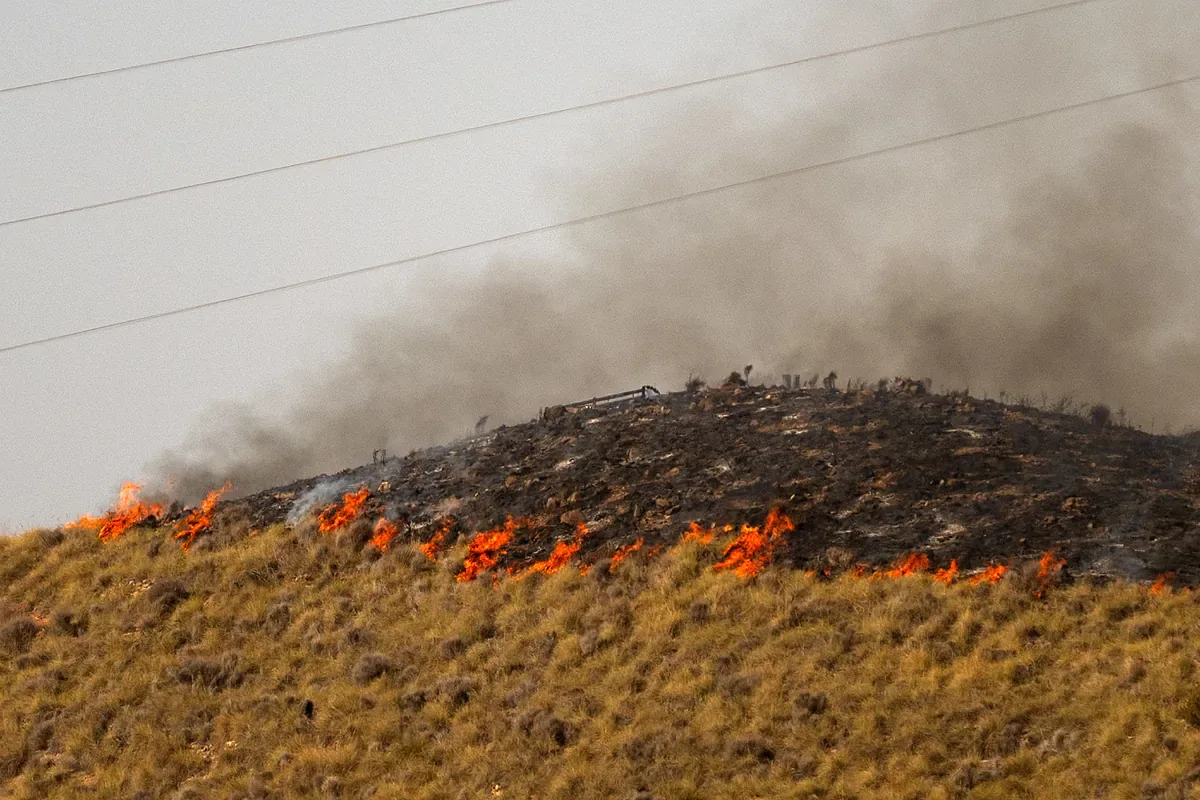
“When you have a garden you know you have to take care of it, work it, and protect it. The forest is not a garden or a park, but we also have to manage and intervene in it because not doing so means giving wings to fires as terrible as this one.” Although there is still much to clarify about what happened in the tragic Los Gallardos fire, Verónica Rodríguez Vicente, PhD in Forestry Engineering and specialist in forest management and planning, is clear that behind the speed with which the flames spread – some estimates speak of 100 meters per minute – there is a cocktail mixing ideal temperature, wind, and humidity conditions for fire with vegetation that has grown and expanded without any control.
According to this specialist, in recent years we have been seeing fires of exceptional characteristics and virulence for two main reasons: “Much more extreme climatic conditions and forest environments that are increasingly less managed.” Forest areas are becoming more extensive, among other reasons due to the progressive abandonment of extensive Agriculture and Livestock tasks, Rodríguez Vicente clarifies. And yet, in general, the attention that this expanding vegetation deserves is not given, she laments.
“If the forest advances under extreme conditions, which causes a greater load of plant fuel and, at the same time, the appropriate conditions for more fires to occur are present, the cocktail is served,” emphasizes this PhD in Forestry Engineering, who stresses that this group of professionals has been demanding for years that forest management and planning be a state priority. Among other things, to prevent catastrophes like the one that occurred in Almería.
“Good forest management guarantees less intervention in fire extinction,” she highlights. It is essential to carry out good forest management, but territorial planning is also fundamental, so that the combination of different forest uses allows interrupting and breaking the continuity of plant fuel – the vegetation areas – “both horizontally and vertically,” explains Rodríguez, who gives a clarifying example: “If there is a mass of trees, like a pine forest, it is necessary to separate it with a road or a forest track, so that continuity can be broken and intervention can be carried out if necessary.”
However, although there are differences between the different areas of Spain, unfortunately many times “what we find is a forest territory that is the result of abandonment, it is forest that has naturally advanced, with practically no intervention,” she points out. In that sense, she calls for a commitment to a national forest policy. “We need a State pact on forest policy and not short-term patches that do not address the problem,” Rodríguez demands.
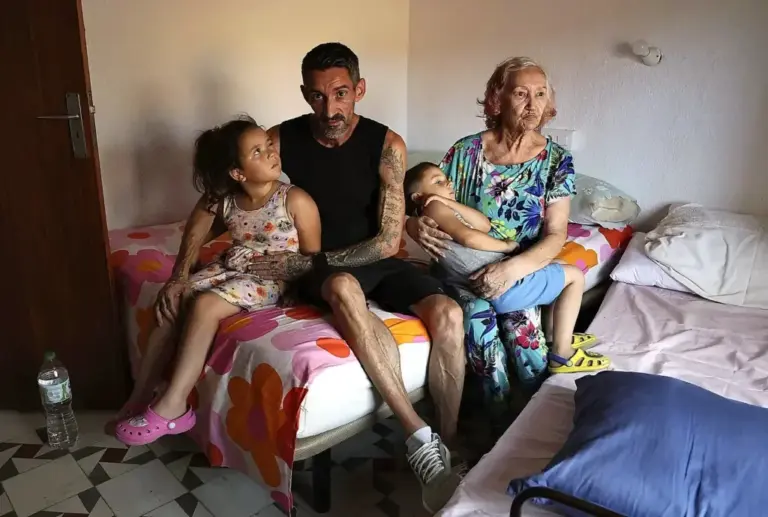
Evacuated from their homes due to the Los Gallardos fire: “My mother experienced the DANA in Paiporta, I was just operated on, and now this”
- Editorial: CANDELA IBÁÑEZ (Special correspondents)Antas (Almería)
- Editorial: SERGIO GONZÁLEZ (PHOTOGRAPHS)
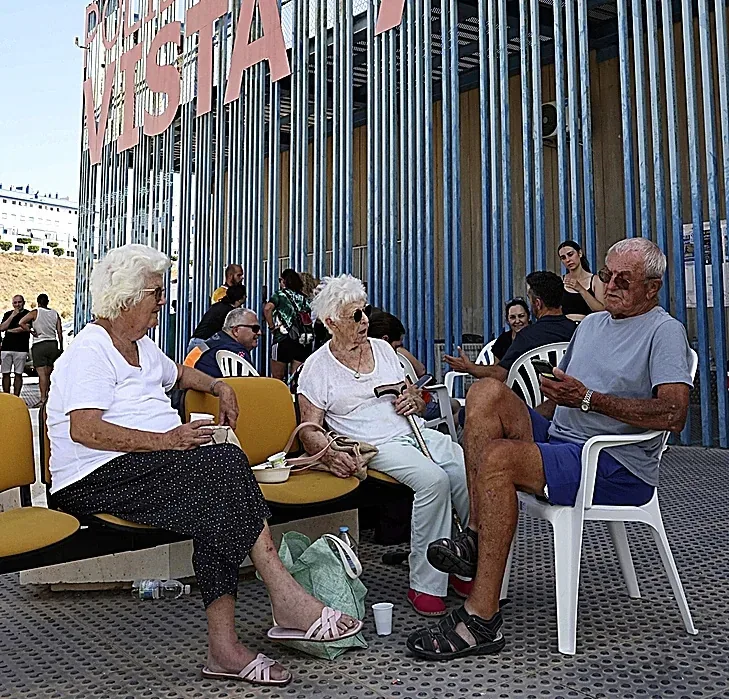
“We are staying here, we have nowhere to go,” British retirees resisting in the Los Gallardos campsite despite the evacuation
- Editorial: ESTHER GÓMEZ (Special correspondent Los Gallardos (Almería))
The same demand was made a few days ago by the authors of a report from the Royal Academy of Engineering, which warned that although the number of fires occurring in Spain has decreased in recent years, what has alarmingly increased are their size and intensity. Thus, the organization estimates that in the years 2022 and 2025 more than 300,000 hectares were burned, figures not seen since the end of the last century. In 2025, the fires declared on the peninsula released as much energy as a 1,000-megawatt nuclear reactor generates in a year, the document emphasizes, insisting that “for every 2,700 hectares consumed by flames, the energy released equals the power of the Hiroshima nuclear bomb.”
The text speaks of “the new era of mega-fires in Spain”, recalling that five of the 10 largest fires recorded in Spain since 1968 have taken place after 2022.
The report also highlights that, although most fires are still caused by human activity, lightning is now the main cause of these mega-fires that complicate extinction efforts. Additionally, the text concludes that the main fuel burning in these fires is not eucalyptus or pine forests, but the accumulation of scrub and other types of vegetation that grow without any control.
Read more The Los Gallardos fire, contained and stabilized: All evacuees will be back in their homes today
However, for Fernando Ojeda, professor of Botany at the University of Cádiz and head of the research group Function, Ecology, and Biodiversity in Mediterranean Ecosystems at the Institute of Vitivinicultural and Agri-food Research (IVAGRO), neither the esparto grasslands nor the thyme fields have contributed most to the fire’s spread in this Los Gallardos fire or previous fires. In his opinion, although most of the vegetation in the Almería area affected by the fire that has already left 13 dead is composed of this type of semi-arid vegetation, the presence of Aleppo pine in the area has contributed to the fire’s expansion.
“Many areas have been forested to prevent desertification and forest formations of pine have been created that are more visually appealing than the esparto grasslands but burn very easily,” he points out.
“From my point of view, in addition to this global change scenario we are experiencing, we are reaping what was sown in the second half of the 20th century, with forestation that favors the fire advancing quickly and with large flames.”
In that sense, the professor recalls, already thinking about the future recovery of the area, that a landscape without trees can also be a functional and healthy ecosystem. “The flora destroyed is not equal to death. That good intention people have after a fire to plant trees underestimates nature,” Ojeda emphasizes, stressing that scrublands are not dirty forest or degraded vegetation stages, but valuable biodiversity reservoirs that should not be artificially forested” and in whose ecosystem fire also plays a role.
Eduardo Rojas, a forest engineer and professor at the Polytechnic University of Valencia, recalls that Spain today has much more vegetation than it did 80 or 90 years ago. “When you see photographs from the Civil War you can see that there was great deforestation at that time. Much forest has recovered and today we have more forests than Germany, France, or Italy, which has many positive aspects. But it must be taken into account that this biomass generates a risk and, therefore, that territory must be managed.”
All actions against fires, Rojas continues, have focused on extinction, “the patient’s condition has not been addressed, in how the forests and the territory in general are,” he emphasizes. And that is where action must be taken, he recalls. For example, by removing dead vegetation, creating spaces in tree masses, clearing undergrowth, promoting extensive livestock farming in some areas, using crops like vineyards that can serve as natural firebreaks…