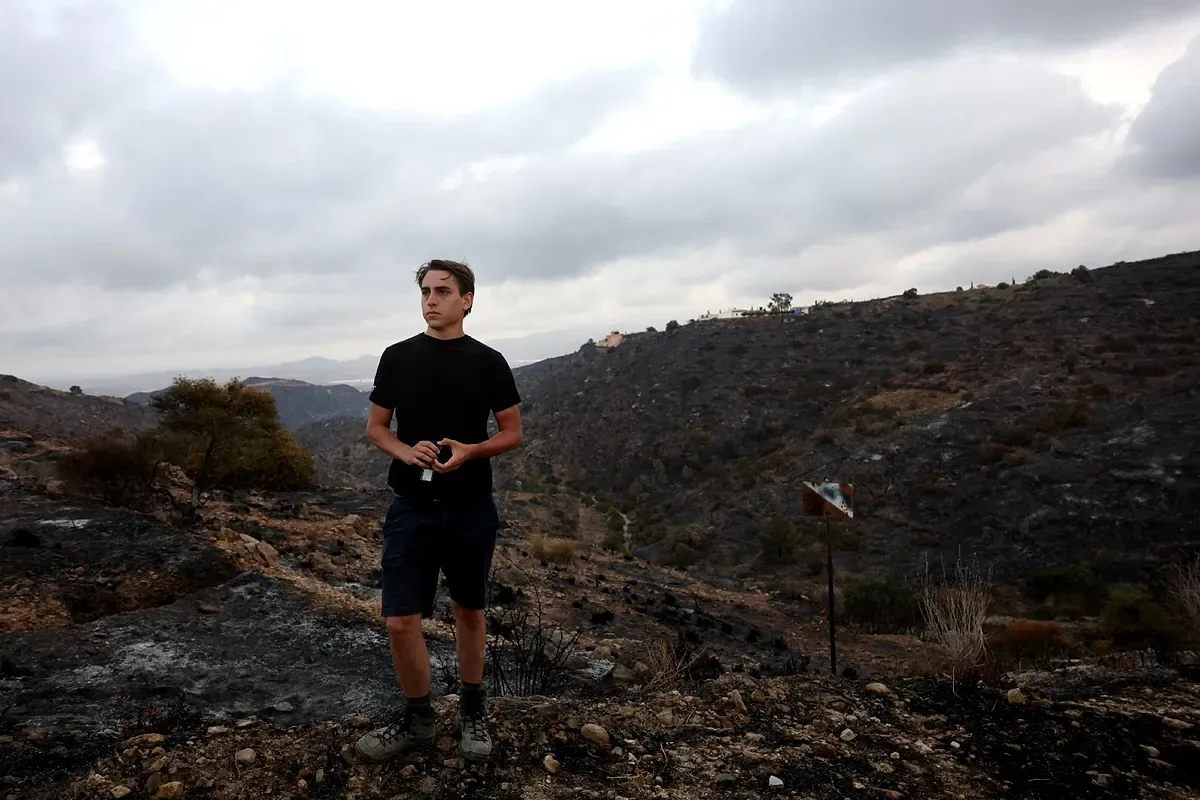




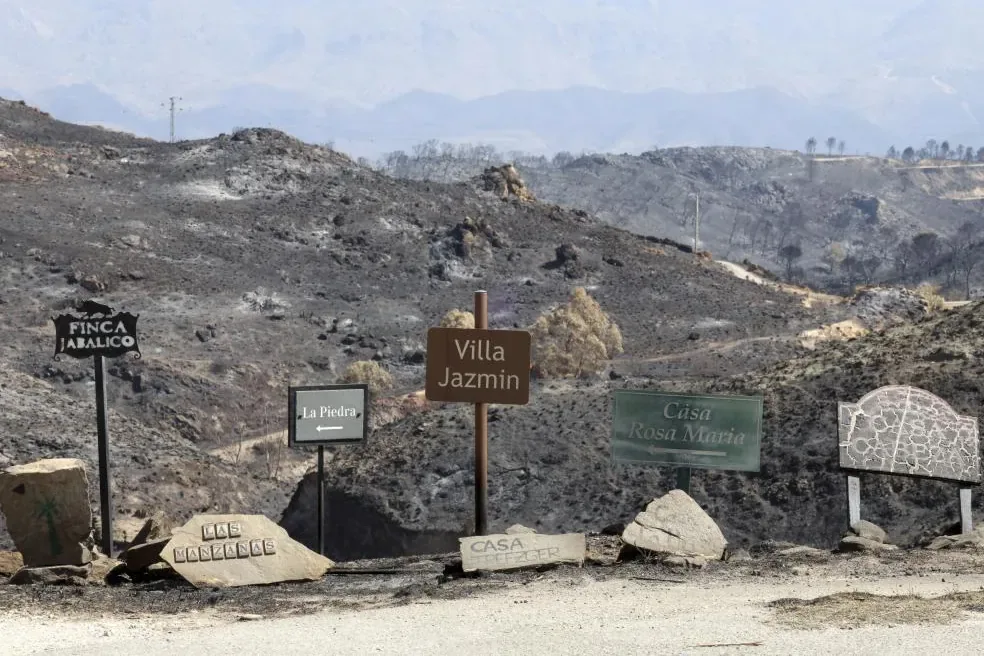
Between Bédar and Los Gallardos, in Sierra Cabrera, “everything is death and desolation,” two Civil Protection volunteers who participated in the large search carried out this Sunday in the areas most affected by a fire that has so far claimed the lives of 13 people – one died just last night at the Torrecárdenas University Hospital – and which has become the deadliest in the history of Andalusia, lamented.
Read more Experts warn about forest management problems: «The forest territory is the result of abandonment»
Fatigue was visible on their faces; they had spent much of the day walking among ashes and under the full sun through areas now considered safe, and they spoke among themselves, unaware of what was happening around them.
So far, in addition to the deceased, there are at least 23 people unaccounted for, and eight families have filed missing person reports, having more than suspicions that their relatives may have died or been seriously injured in the fire. Up to 500 calls have been received requesting information about the whereabouts of neighbors who might be in Los Gallardos these days.
The son of Belgian citizen Stanislas Verdonckt, Thomas, is one of them. Thom has confirmed that his father was in Bédar and was caught by the fire. The young man spoke with him while Stan was preparing to flee with others, but since then he has heard nothing more, so everything points to him not having escaped the flames alive.
Nothing is known either about the couple Christine and Michael Chard, British nationals who moved to this small town in Almería more than fifteen years ago. British media report that some neighbors recall seeing them with a group entering a dirt path in the Paraje del Curato as the fire approached, but the path they took was a dead end, and along that route, eight of the 13 fatalities caused by the fire have been found.
There is also no news of Max and Ane or Stefan. They, like the Chards, were near the Paraje del Curato.
Among the twenty or so missing and unlocated people could be the 13 recorded fatalities, but families will still have to wait a few days for confirmation.
The condition in which the bodies were found, some completely charred, has not allowed traditional identification, and it has not even been possible to determine the gender or age of the victims, making naming them very complicated and requiring DNA testing. At this point, dental records and biological material provided by relatives are key.
The Civil Guard is working tirelessly to locate the missing and identify the victims. To do this, they have scrutinized the remains of vehicles found in the “death ravine” looking for license plates or chassis numbers, which would lead them to their owners or renters.
Additionally, the agents have a provisional list of residents in the area who do not answer their phones and who could also be among the deceased. Although this information is handled very cautiously, they have explained to EL MUNDO.
The Biology department of the Criminalistics service of the Civil Guard has already obtained the genetic profile of those who died in the Los Gallardos fire. Despite this, the victims have not yet been identified, as the relatives with whom the biological samples can be compared are traveling to Spain.
‘Comb’ of the area
The fire is under control, and the leadership of the operation that has fought the fire these three days considers the area now passable, so not only has it authorized the gradual return to their homes – for those who still have them – of more than 1,400 evacuated people, but it has also allowed the deployment of more than a hundred personnel to comb the area one last time.
They were mainly looking for the mortal remains of possible new victims. No one wanted to be the first to say it openly and aloud, but after the devastating passage of the flames, there is no hope of finding anyone alive.
No more deceased have been found, and that, considering that about twenty people are still unaccounted for, “is good news,” sources close to the Civil Guard Command in Almería told this newspaper.
The operation involved members of the Second Emergency Intervention Battalion BIEM 2 (UME), Civil Protection volunteers, and a hundred personnel from different Civil Guard units. From helicopters and drones of the Air Service (SAE) of the Armed Institute to the Reserve and Security Group (GRS) of Seville, to the Nature Protection Service (SEPRONA) and the Canine Unit, which included dogs specialized in rescuing people in the search.
Read more The Los Gallardos fire, contained and stabilized: All evacuees will be back in their homes today