




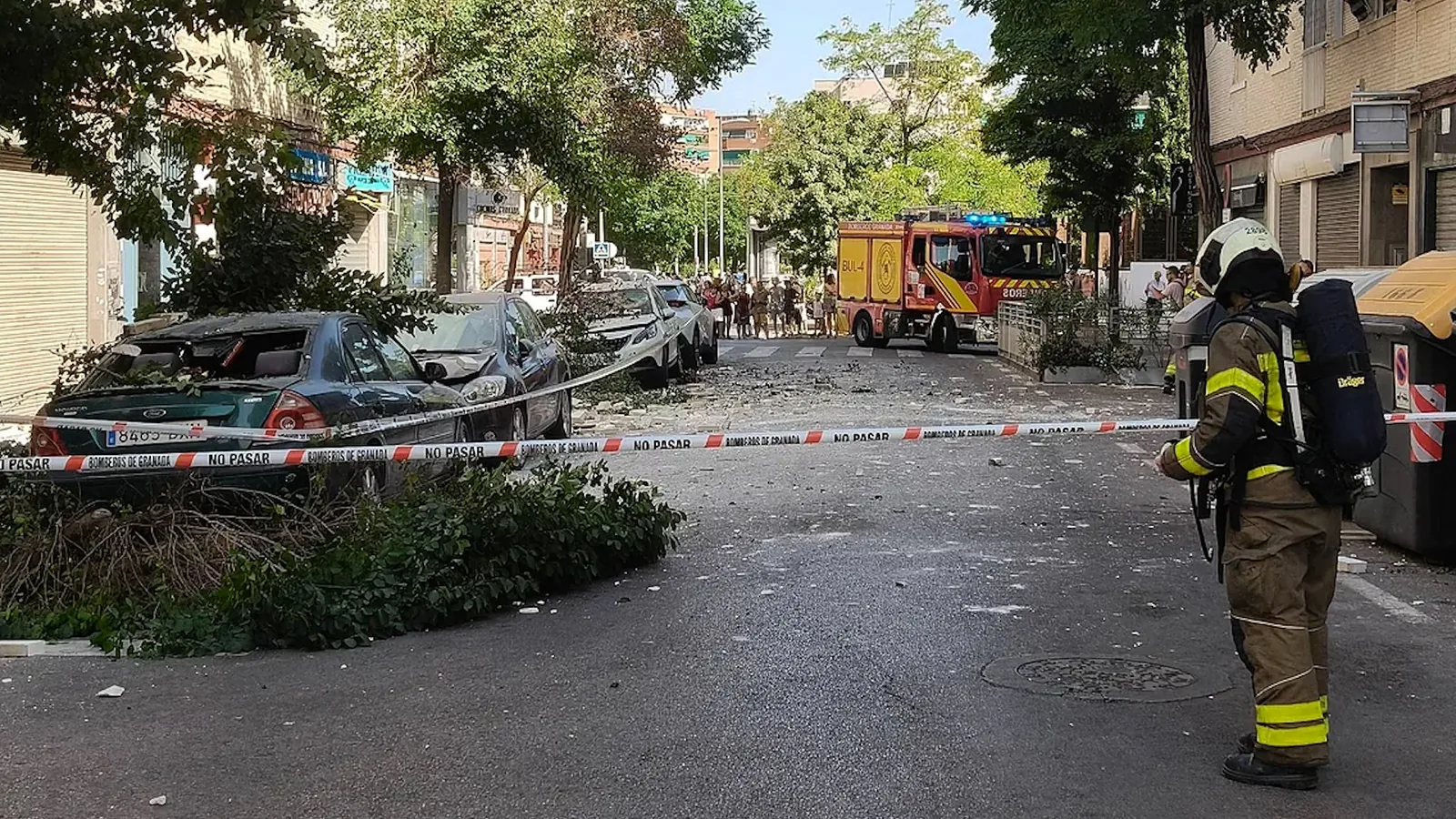
Widespread evacuations of shopping centers, hotels, and buildings in Granada, where the National Geographic Institute (IGN) recorded an earthquake of magnitude 4.8 on Tuesday with an epicenter in Gójar (Granada), very close to the municipality that was the scene of another earthquake of magnitude 5 early Saturday morning. After the earthquake, several strong aftershocks have been recorded, which have been especially felt by the population throughout the metropolitan area. In total, there have been seven consecutive earthquakes, including aftershocks, four of them above magnitude 4, according to the Junta de Andalucía.
In response to the seismic movements, the Andalusian Health Service (SAS) has decided to suspend, as a preventive measure and for safety reasons, non-essential healthcare activities in all health centers throughout the province of Granada during Tuesday afternoon. Therefore, there will be no medical consultations and scheduled surgeries are suspended. Urgent and oncological activity is maintained, and essential healthcare is guaranteed.
As a result of the earthquakes, three people have suffered minor injuries, including a minor who was taken to the hospital, according to information provided to EL MUNDO by the Junta de Andalucía. The first vice president and Minister of Tourism, Justice, Deregulation, and Local Administration, Antonio Sanz, specified that the falling debris after the tremors caused the minor injuries of the three affected. They were not the only ones attended by medical personnel, as twelve medical assists were also recorded, mainly related to anxiety attacks.
The 112 emergency teams have handled more than 500 calls related to the earthquakes throughout Tuesday, requesting medical assistance or resolving doubts, as detailed by Sanz. The Junta de Andalucía has kept the emergency phase, operational situation 1, of the Andalusian Emergency Plan for Seismic Risk in Granada active, aiming to ensure coordination of all necessary resources.
In the capital of Granada and in the municipalities of the metropolitan area, there is “concern, nervousness, and anxiety attacks”, as acknowledged by the mayor of Granada, Marifrán Carazo, in an interview on Canal Sur Radio, which is broadcasting testimonies from Granada residents who felt the earthquake while shopping in a mall. “People were screaming, running, and shelves fell down”, a young man recounted.
The main tremor occurred at 10:37 a.m. at a depth of 5 kilometers. Subsequently, the agency, dependent on the Ministry of Transport, Mobility, and Urban Agenda, detected at least two aftershocks in the same region: the first at 10:53 a.m. in Churriana de la Vega, with a magnitude of 4, a second at 10:57 a.m. in Padul, which reached a magnitude of 2.9, and a third stronger aftershock in Alhendín with magnitude 4.2. One hour later, at 12:39 p.m. in Gójar, another earthquake of magnitude 4.2 was recorded.
After the earthquakes, the Alhambra Board has preventively evacuated the Nasrid Palaces and the Alcazaba, interrupting public visits in both areas. Sources from the monument have reported that a technical team is continuously analyzing the situation to assess the impact of the tremors, while visits continue for now normally in the Partal and the Generalife.
Several shopping centers, hotels, and office buildings in the capital have also been evacuated, where hundreds of people were on the streets mid-morning. Workers from the Granada delegation of Canal Sur also had to leave their headquarters and are broadcasting for the radio from the street.
The Granada City Council has decreed the “temporary” closure of “all municipal buildings and facilities open to the public” following the earthquakes. In the emergency situation, Mayor Marifrán Carazo has called for calm among residents and advised them to get information through official channels. “We cannot cause alarm but we must stay alert,” she added.
In an initial very early assessment, the mayor confirmed damage to cornices, but municipal services are deployed to carry out a “thorough inspection” of buildings to check the consequences of these new earthquakes. Severe structural damage “we have no record of,” Carazo clarified, who also has no record of injuries in the capital.
Read more Europe pressures Spain to return migrant minors in Ceuta for being «covered by EU Law»
Among the buildings inspected are four schools with daycare service this summer. They do not suffer worrying damage, so the service will continue to be offered. In the coming days, all educational centers will be inspected to ensure safety at the start of the school year. For now, the city council maintains its essential services active but has suspended planned activities during Tuesday.
These new movements add to the intense seismic activity recorded over the weekend. Last Sunday, the IGN counted more than thirty earthquakes in the Vega de Granada and the southern slope of its metropolitan area, most between 1.5 and 2.5 magnitude, although about ten were felt by the population.
Of that Sunday series, only one exceeded magnitude 3: an earthquake of magnitude 3.1 located in Armilla at 4:40 a.m., which prompted various alert calls to 112 from neighboring towns such as Las Gabias, La Zubia, and Ogíjares. Also notable were other tremors felt by residents, such as the magnitude 2.8 in Ogíjares (6:27 a.m.) and another of 2.1 at 6:43 p.m.
The series of aftershocks since the main tremor on Saturday (which occurred at 1:04 a.m. with an epicenter in Alhendín at 2 kilometers depth) has had epicenters in municipalities such as Granada, Ogíjares, Armilla, Gójar, La Zubia, Churriana de la Vega, and Alhendín. Given this scenario, the Junta de Andalucía keeps the pre-emergency phase of the Seismic Risk Plan active in the province of Granada.
Surgery suspension
The Andalusian Health Service (SAS) has suspended scheduled healthcare activities in Granada due to the seismic movements. The vice president of the Junta, Antonio Sanz, has called for calm and prudence and emphasized that all decisions being made prioritize the safety of citizens, patients, and professionals. “We are continuously monitoring the situation and acting with the utmost caution. The priority at this time is safety, and therefore, we are adopting all necessary preventive measures,” he stated.
The measure adopted by SAS will facilitate, according to the Junta, the review and evaluation of healthcare facilities and will be reassessed during Tuesday afternoon. Urgent and oncological activity is maintained, and essential healthcare is guaranteed.
Structural damage in health centers
Initial inspections have detected structural damage in the health centers Zaidín Sur, Zaidín Centro, Bola de Oro, and Casería de Montijo, whose situation is being evaluated to determine the extent of the damage and the measures that need to be taken.
A meeting is scheduled for this afternoon to jointly assess the incidents recorded, review the results of the facility inspections, and adopt appropriate measures.