



The journey between Moroccan pseudo-war paranoia, Spanish summer sluggishness, and the return to full alert of Mohamed VI’s regime consists of 7,199 steps, takes 76 minutes, and, according to the smartphone’s health app, burns exactly 438 calories.
Read more The great triumph of a united region: «Justice has been done with Almaraz»
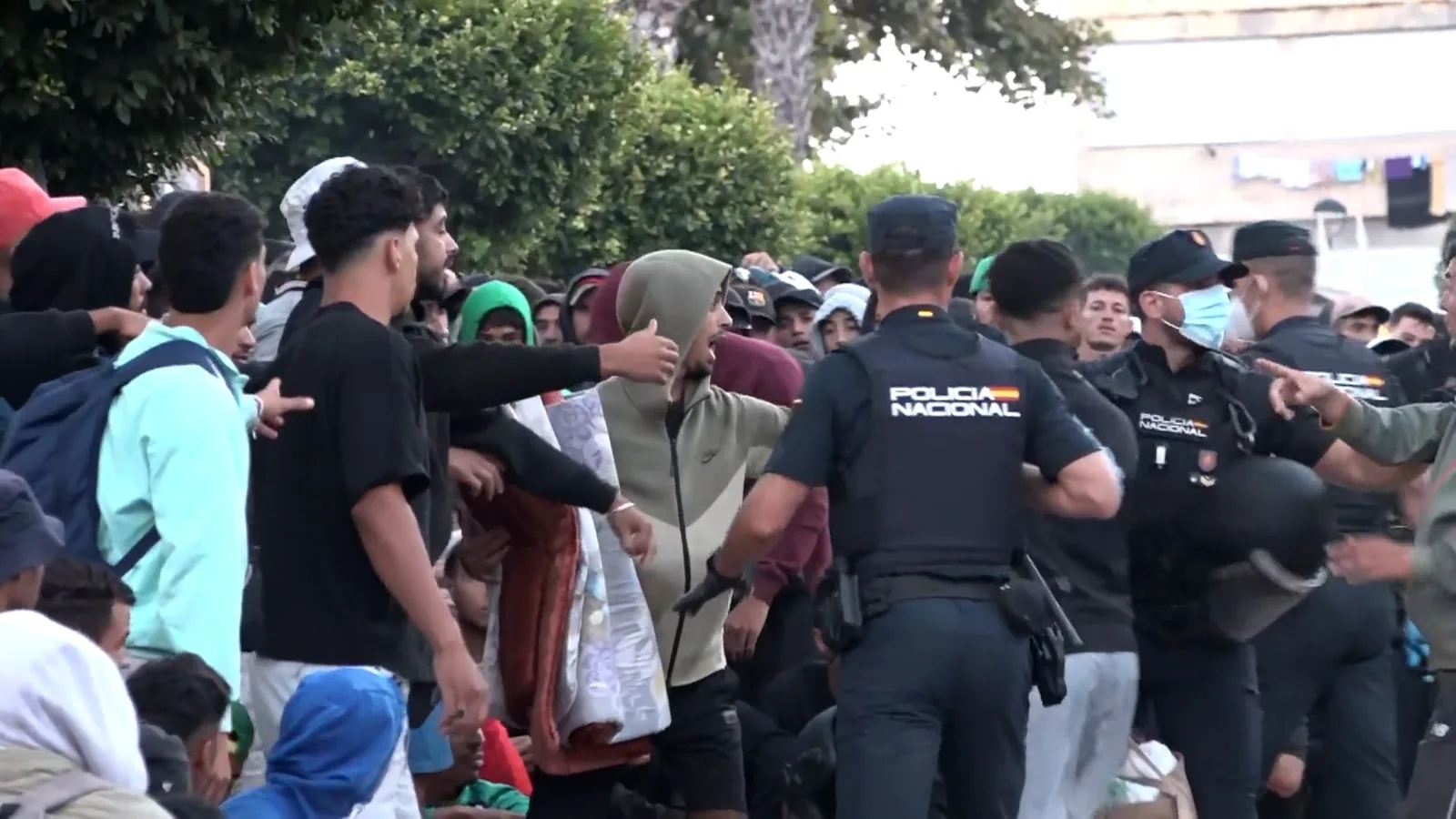
These are the data of a round trip between Castillejos and Ceuta, on both sides of the Moroccan border, in the midst of the emergency caused by 15-A, the day marked by thousands of young people under the hashtag #haraga to, allegedly, cross into Ceuta uncontrollably. But it also serves to see how the two governments, Moroccan and Spanish, have faced the same event in radically opposite ways. While Rabat has deployed a swarm of security forces to secure its border, an apparent calm marks the work dictated from Madrid for the Ceuta operation.
The journey begins at noon at El Mirador, the roundabout on the outskirts of Castillejos where Moroccans have set up their first checkpoint. A soldier inspects the vehicle suspiciously and asks in French: “Haven’t you already passed here at nine in the morning?” After persistent denials, he finally gives in: “Okay, park nearby and come back on foot.”
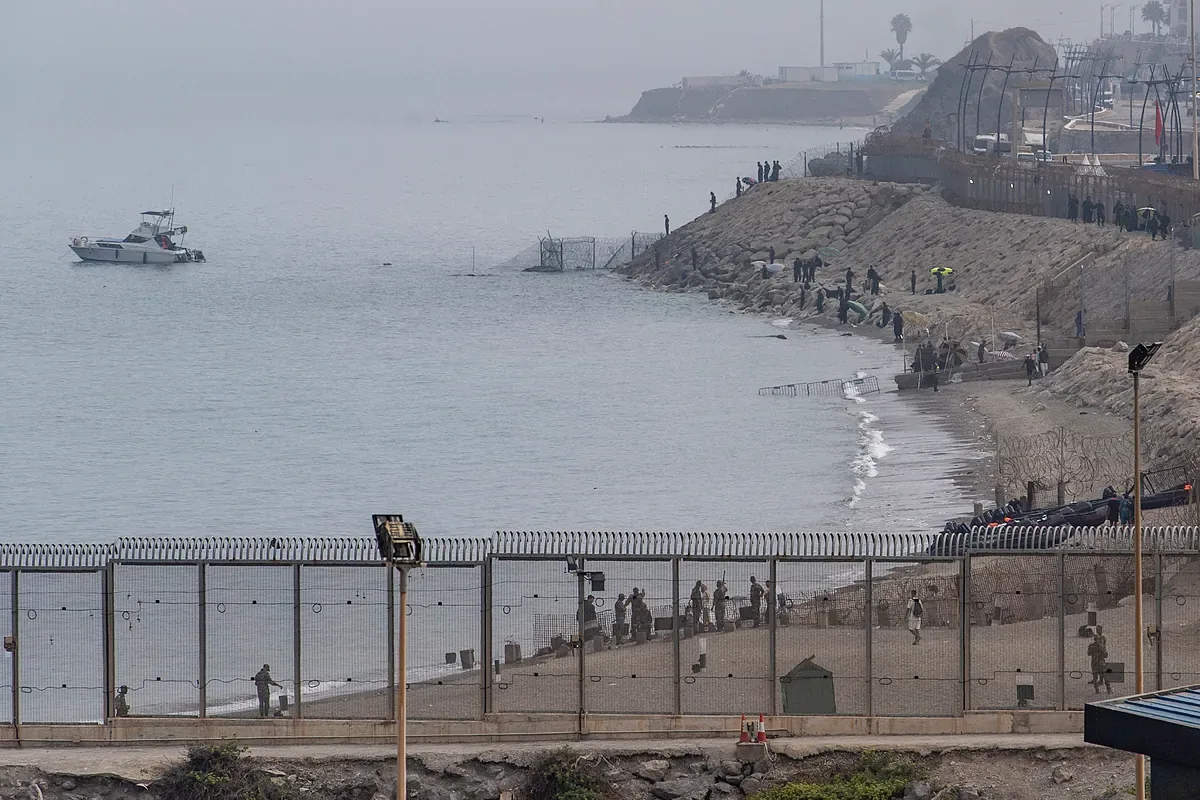
Three agents handle the passport before allowing passage. Ahead lies a long walk along the sea, where kilometers of newly installed concertina wire glisten. Dozens of police cars, riot vans, and army vehicles patrol this long kilometer of asphalt through which barely two taxis pass in fifteen minutes. A private yacht with three swimmers adds a surreal touch to the scene.
At the end of the journey appears the ‘ground zero’ of the Alaouite deployment for 15-A: the border esplanade. More than a hundred vehicles of all kinds, from police cars to riot trucks weighing hundreds of tons, are perfectly packed on the road. The persistent buzzing of a drone is the soundtrack of an almost apocalyptic scene.
Some soldiers scan the coast with binoculars. Others exchange data with serious expressions. Further on, two mustached men consult a map on their tablet… But, let’s not fool ourselves, many are also napping inside buses, armored vehicles, and other martial equipment.
The hyperactive atmosphere suddenly calms upon entering the customs area. Two-thirds of the passport control posts are empty. The agents gathered there barely suppress yawns. So much alarm over 15-A, with its announced overflow of border services, has ended up causing the opposite effect: they have never had so little work before.
A gendarme stamps the passport, another searches the backpack, and a third makes sure his colleagues have done their job. Bureaucracy proceeds smoothly. “Have a good trip,” says the last agent in Moroccan territory, now in Spanish.
In the long corridor separating both countries, we meet Amir, a man in his fifties with family in San Sebastián who is carrying two bags of bread to Ceuta. He quickly starts a conversation: “Are you from Madrid? Well, I know Lavapiés, Carabanchel, Aluche, Porla…”
Read more The latest blow to Sumar’s credibility: its green flag sinks with the PSOE in Almaraz
-Porla?
-Wait, no… Parla!
Amir says he had never seen the border so empty, even though he crosses it daily. When asked about 15-A, he says he doesn’t know anything. Or at least, he pretends perfectly.
A sudden blast of air conditioning interrupts the conversation. We are now in Spain, where ultra-modern computerized controls replace the manual work of Moroccan gendarmes. Here the agents are also idle, although they take it with better humor. “One more hour and I’m going home,” says a police officer based in Ceuta. “A quiet day, finally.”
After another walk, this time air-conditioned, the first street of the autonomous city appears. Here there are no riot vans, no armored vehicles, much less trucks. At most, some agents watch the exit from a nearby hill. Only a reporter from Antena 3, going live at that moment, indicates that something special is happening on the ground.
After a 180-degree turn, the same routine begins, now heading towards Castillejos. A bored civil guard scans the passport. Another inspects the backpack. A third says good afternoon… And the end of the air conditioning indicates that we have returned to Morocco.
The first Alaouite gendarme seems confused when he sees that the date on the Moroccan exit stamp matches the one he must stamp on entry. But he doesn’t dwell on it: he returns the passport and utters a phrase in Arabic with a circumspect expression. Better not ask what he meant.
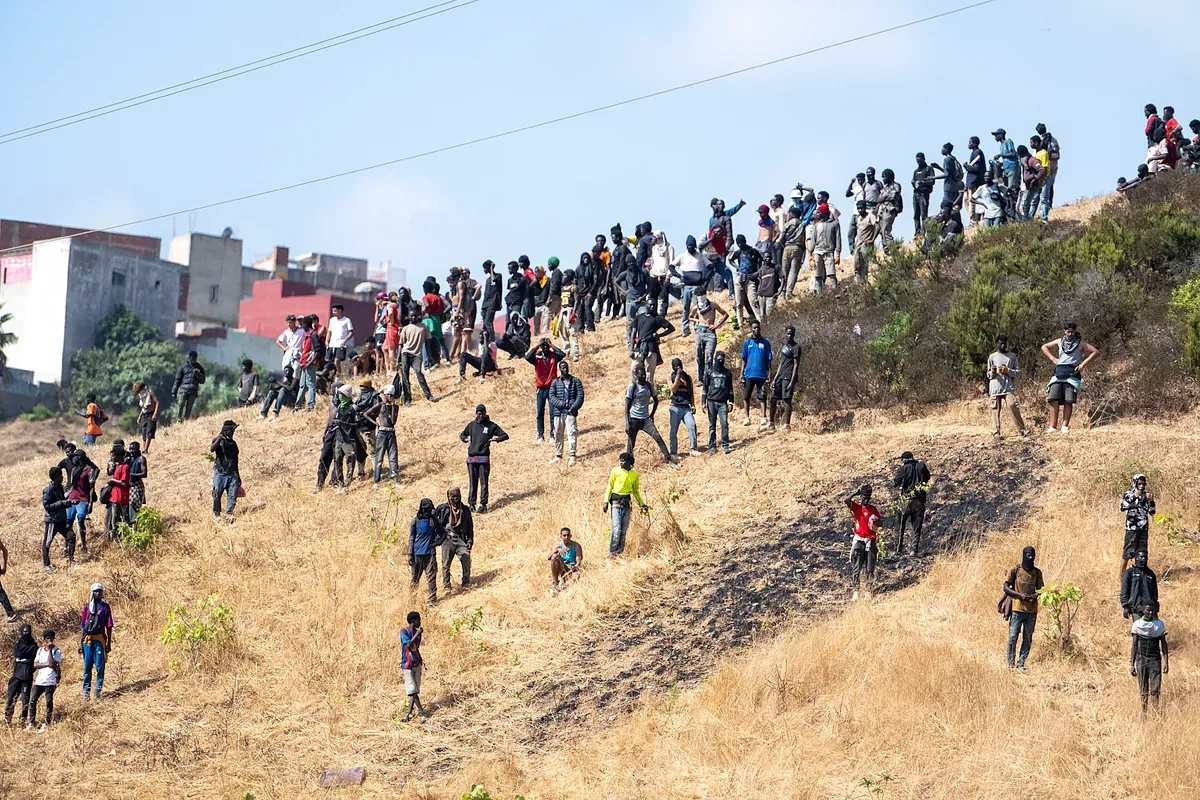
An hour later, the Moroccan border esplanade looks as busy as when we left it. Rumors circulate that several dozen sub-Saharan migrants have been detained on a nearby hill. But, for now, not a single Moroccan has thrown themselves into the sea heading for Ceuta. The heads of the operation seem happy as they order strong coffees at a small stall.
Returning to the initial roundabout, the same agent who mistakenly thought he had seen us early in the morning is still directing operations. Now, however, a white cap with colorful letters leaves no room for error: “Welcome back to Morocco, monsieur.”