









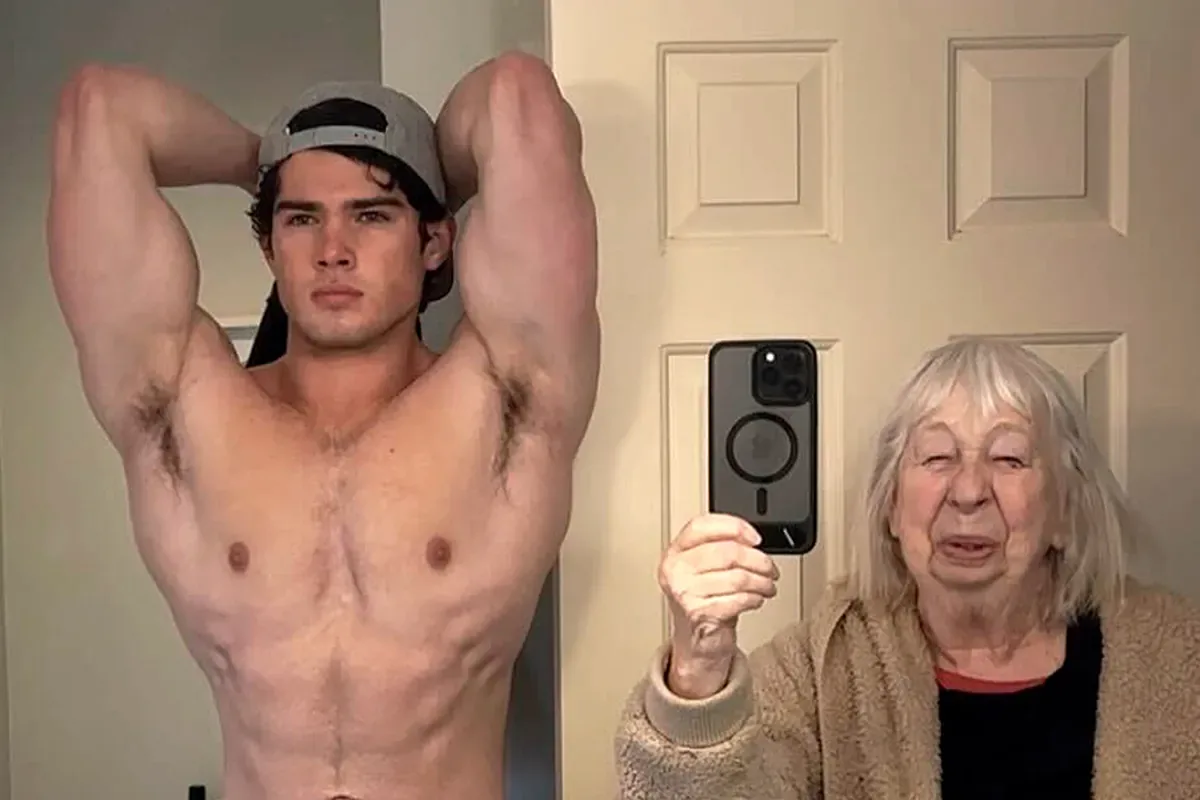
Not long ago, the recipe to improve one’s physique was quite simple: sign up for the gym, eat a bit healthier, and, if lucky, remember to apply moisturizer occasionally. Today, the internet proposes a much more ambitious path. TikTok is full of teenagers analyzing the angle of their eyes, comparing the length of their jaw to that of professional models, recommending chewing gum for hours to widen the face, or recording themselves gently hitting their face in hopes of stimulating bone growth. Male beauty is no longer cultivated: it is optimized. Or, at least, that is what looksmaxxing promises.
The term could be confused with one of the thousands of neologisms born and dying on the internet. But behind it lies something much more interesting; and dark. Looksmaxxing is not simply about looking better. It proposes understanding attractiveness as a sum of measurable, correctable, and theoretically improvable variables. As if the body were a video game character and each facial feature a statistic susceptible to gaining a few more points. “Although aesthetic pressure on men has always existed, it has never had the reach or intensity we see today,” says Lara Ferreiro, psychologist and author of Not One More Jerk!: The Definitive Method to Love Yourself and Find Your Perfect Partner.
The concept was born over a decade ago in forums linked to the so-called manosphere, especially in communities close to incels and the blackpill ideology, where physical appearance is presented as the main factor determining social and romantic success.
Ferreiro’s practice sees seas of young people with all kinds of problems. However, Ferreiro has noticed a drastic change in the concerns of the young men she treats. While a few years ago young people usually came for anxiety, low self-esteem, or relationship problems without that discomfort necessarily being related to their image, now “more and more patients arrive whose main concern revolves around their physique: musculature, fat percentage, jawline, height, hair, or even small details of their face.”
Looksmaxxing distinguishes between softmaxxing – gym, nutrition, facial care, or a better haircut – and hardmaxxing, which includes fillers, surgeries, operations to lengthen legs or modify the jaw, and highly questioned practices like bonesmashing, which involves hitting the face to reshape the bone. There is no scientific evidence that it works. But, so what? We are in the age of the algorithm.

Immersed in the ‘machoverso’: this is how hatred against women spreads online
- Written by: RODRIGO TERRASA Madrid
- Illustration: RAÚL ARIAS
A quick search on TikTok is enough to find videos of teenagers hitting their jaw with small rubber hammers or similar tools hoping to achieve a more angular face. The videos accumulate hundreds of thousands of views and present the practice as just another step in the male self-optimization routine, even though specialists warn they can cause injuries.
The scene is almost surreal but sums up how far some young people have embraced the idea that any physical feature can (and should) be optimized.
Ferreiro talks about a curious phenomenon: Barbie syndrome. “If a silicone doll is perfect, I can be too,” seems to be the mindset of a large percentage of young people. This syndrome, the psychologist explains, is understood as an “intense and irrational fear of not being perfect enough. Although it is not an official clinical diagnosis, many people experience such a high level of self-demand that they live any physical imperfection as a personal failure, which fuels anxiety and permanent dissatisfaction.”
Among girls, Alorah Ziva, Ashley Dalton, and That Girl Concept are hugely popular. Despite the media buzz around the recent surgery of Real Madrid’s Brazilian star, Vinicius Jr., who wanted to enhance his facial features through a chin surgery – an increasingly demanded procedure to improve profile and facial harmony – the main male reference in looksmaxxing is the streamer Braden Peters (alias Clavicular).

The controversial content creator, involved in a firearm incident in Florida and accused of objectifying women when he held a contest to impregnate models, dedicates his posts and streams almost exclusively to offering advice on improving physical attractiveness. In his videos, he analyzes faces of celebrities and followers, explains concepts like hunter eyes, facial harmony, or canthal tilt. He also recommends routines to maximize appearance and discusses aesthetic procedures with technical language that presents the face as a set of variables susceptible to improvement.
Just browsing his profile for a few minutes, you find titles like How to Look More Attractive, The Mistakes That Ruin Your Face, The Trait All Handsome Men Have. Or a ranking of celebrities based on their aesthetic potential. The format resembles that of a personal trainer, but gym exercises have been replaced by Spartan-inspired ideas about the jaw, cheekbones, and facial symmetry.
This cascade of terms, incomprehensible to most, was equally confusing to Ferreiro, although prolonged contact has allowed her to become familiar with it. The language, she analyzes, “is never neutral.” “The way a person talks about their body influences how they perceive and relate to it. When a teenager incorporates terms like hunter eyes, facial harmony, glow up, or mogging, they are not just describing physical traits: they adopt an almost scientific way of understanding beauty, where personal value is closely tied to appearance,” she says.
Read more Cover of EL MUNDO on Saturday, August 1, 2026
Looksmaxxing has developed its own vocabulary that turns beauty into a mathematical discipline. It is no longer enough to say someone is attractive. Now the tilt of their eyes, the prominence of the brow ridge, the proportion between the three thirds of the face, the length of the subnasal groove, or facial symmetry are analyzed… The conversation resembles more an architectural plan than a chat about aesthetics. Never before have so many teenagers spoken so fluently about anthropometry without opening an anatomy manual.
The number of patients with insecurities emerging from this type of content, confirms the psychologist, is overwhelming. “Insecurities have changed a lot,” she explains. And she continues: “A few years ago, most boys were mainly concerned about weight or having a more athletic body. Today, the concerns are much more specific and detailed.”
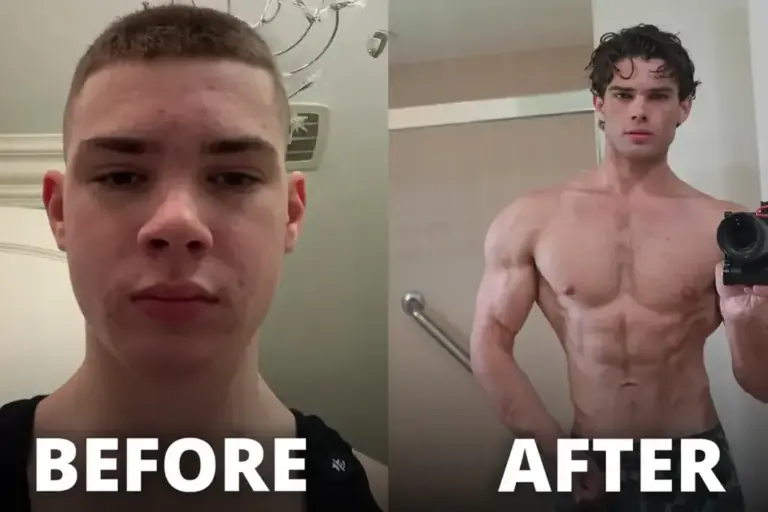
In that universe, there are also terms that function as social categories. Chad represents the practically unattainable male ideal; Normie is the average man; to mog means to physically surpass another; blackpill summarizes the belief that genetics completely determines a person’s romantic fate. Attractiveness ceases to be a subjective perception and becomes a permanent classification, almost like a sports league where each face occupies a specific position.
The jump of these codes to mass platforms has been especially rapid. A report published by Ofcom shows how many young people come across this content through seemingly innocent videos about personal care, exercise, or men’s fashion. The algorithm takes care of the rest. What starts as a facial cleansing routine can end, just weeks later, showing recommendations about jaw surgery, chin implants, or experimental procedures to modify facial structure. The transition is usually not abrupt; precisely there lies part of its effectiveness.
The popularity of the phenomenon has even given rise to a new generation of creators specialized in evaluating other people’s faces: Alpha M (Aaron Marino), Brad Mondo, 1stMan… Some accumulate millions of followers analyzing photos of celebrities or anonymous users, scoring facial features and proposing concrete improvements. The message is seductive because it turns something as uncertain as attractiveness into an apparently objective to-do list. “It is a very dangerous message,” warns Ferreiro. “That physical attractiveness depends solely on effort and that if you don’t reach that ideal, it’s because you haven’t taken enough care of yourself. That idea installs a permanent feeling of insufficiency because there always seems to be a new version of yourself to reach.”
From Psychology, the expert says, it is known that these types of beliefs favor “dysfunctional perfectionism and conditional self-esteem.” Thus, one’s worth ends up being measured by “how close they get to an aesthetic standard that is also changeable and unattainable.”

Several researchers warn that the phenomenon goes far beyond an aesthetic trend. Another study published in 2025 in Sociology of Health & Illness analyzed more than 8,000 comments posted in one of the main looksmaxxing communities, with millions of monthly visitors. The researchers observed a constant pressure toward body dissatisfaction, normalization of increasingly invasive medical procedures, and a tendency to present surgery as a logical consequence of the desire to be more attractive. The body ceases to be enough as it is: there is always a new defect to correct.
In a way, looksmaxxing represents an evolution of the wellness culture that has been spreading on the internet for years. If during the last decade the female body was subjected to constant surveillance through filters, beauty routines, and impossible standards, now a growing part of the content aimed at men applies that same logic to the male face. The difference is that the gym is no longer enough.
More than about beauty, looksmaxxing talks about a generation that has learned to look at its reflection as if it were a permanently unfinished project. Because the internet no longer only sells the possibility of reinventing oneself. Now it also promises to redesign oneself.