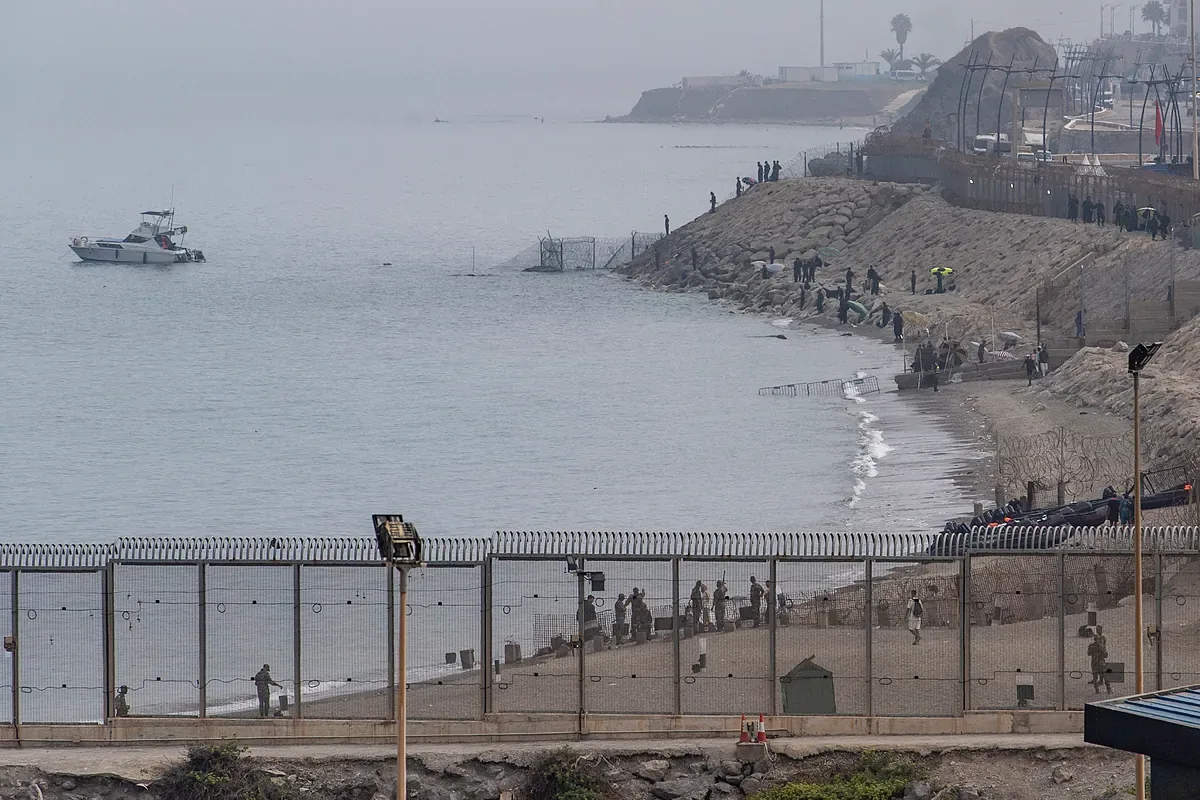


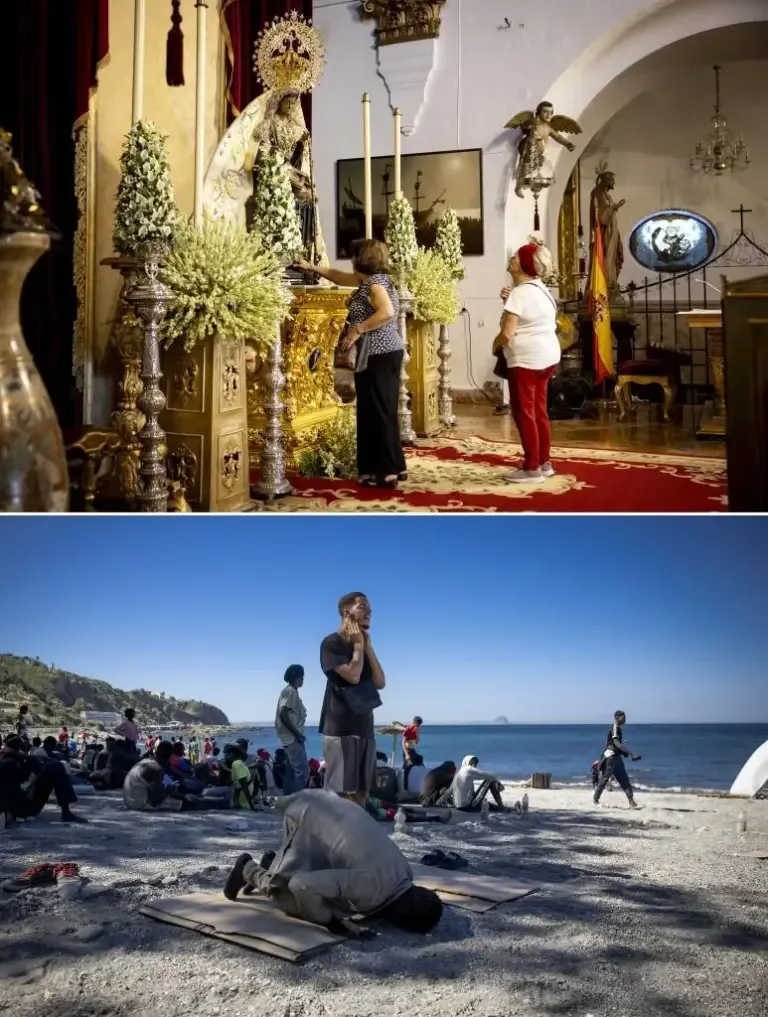
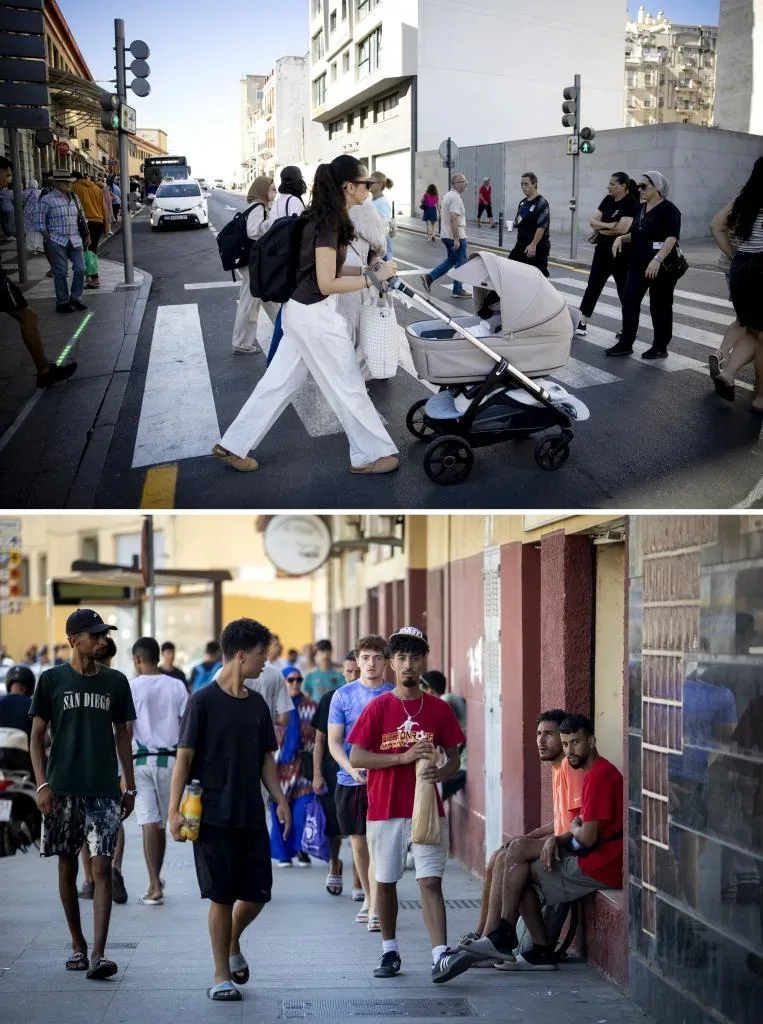
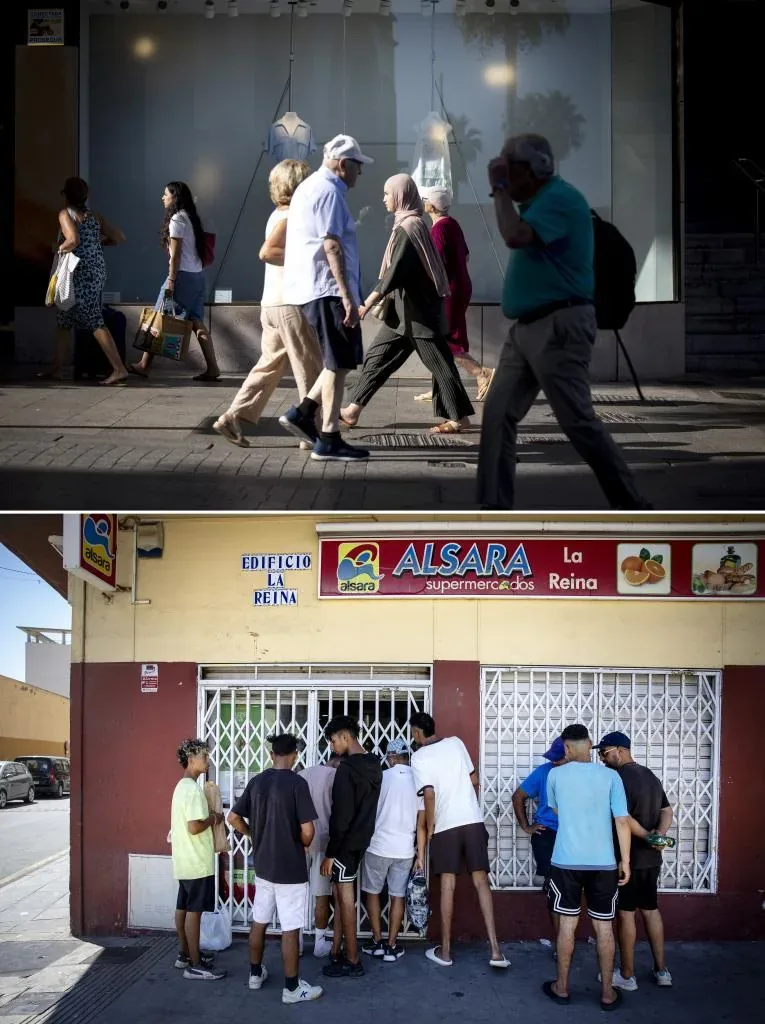
One week after the arrival of tens of thousands of immigrants through the coasts near the Tarajal border, Ceuta has split into three. Three distinct cities, separated by just a few kilometers and seemingly irreconcilable: the festive Ceuta of the center, the overwhelmed neighborhoods, and the beaches, where hundreds of people sleep around bonfires and pray in a mosque drawn with stones on the sand.
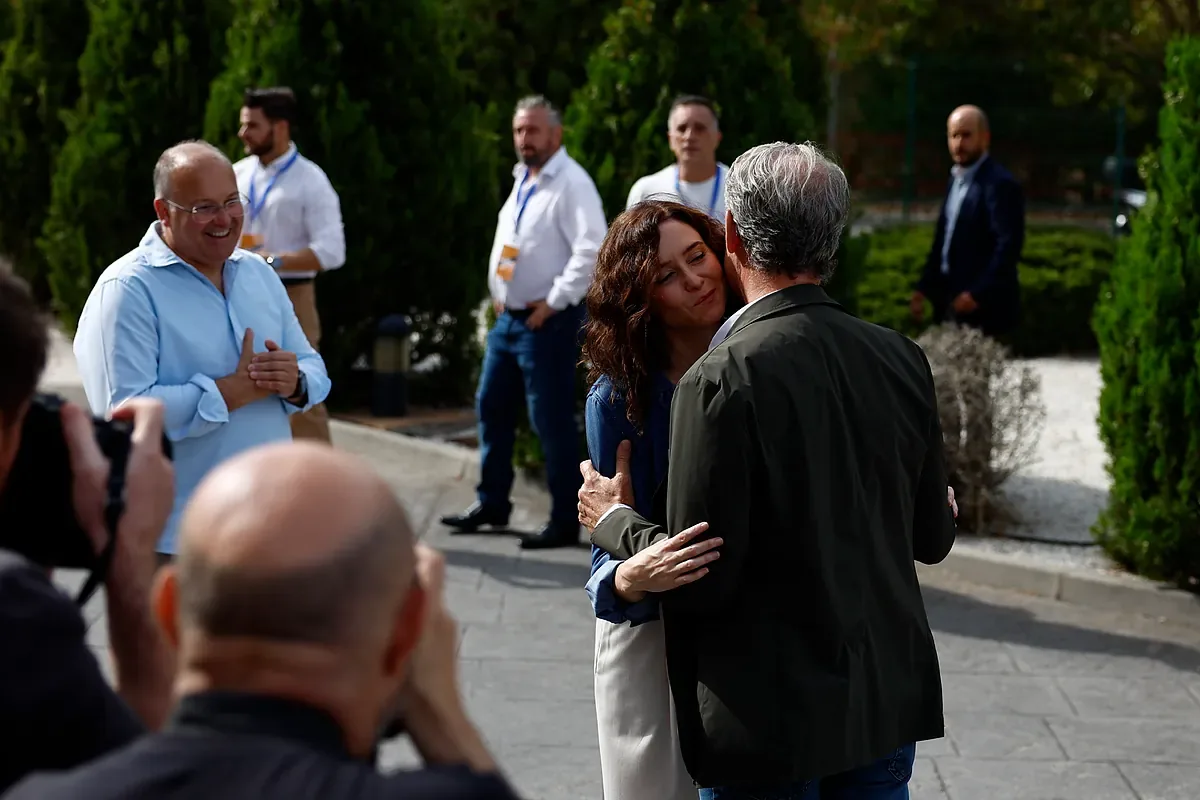
On Wednesday night, the president of the Autonomous City held a place of honor in the procession of the Virgin of Africa. Neighbors sang, threw petals from the windows, and praised the patron saint, while the bars along the route were packed. In the streets of the center, hardly any immigrants were seen, while in the neighborhoods most affected by the crisis their presence was overwhelming.
A few kilometers away, another group participated in their own liturgy. On a beach, several sub-Saharan immigrants had built an improvised mosque by tracing the outline of a temple on the sand with stones, sticks, and bottles. There were no walls or roof. It was a symbolic construction: an outline oriented towards Mecca around which the men gathered to pray.
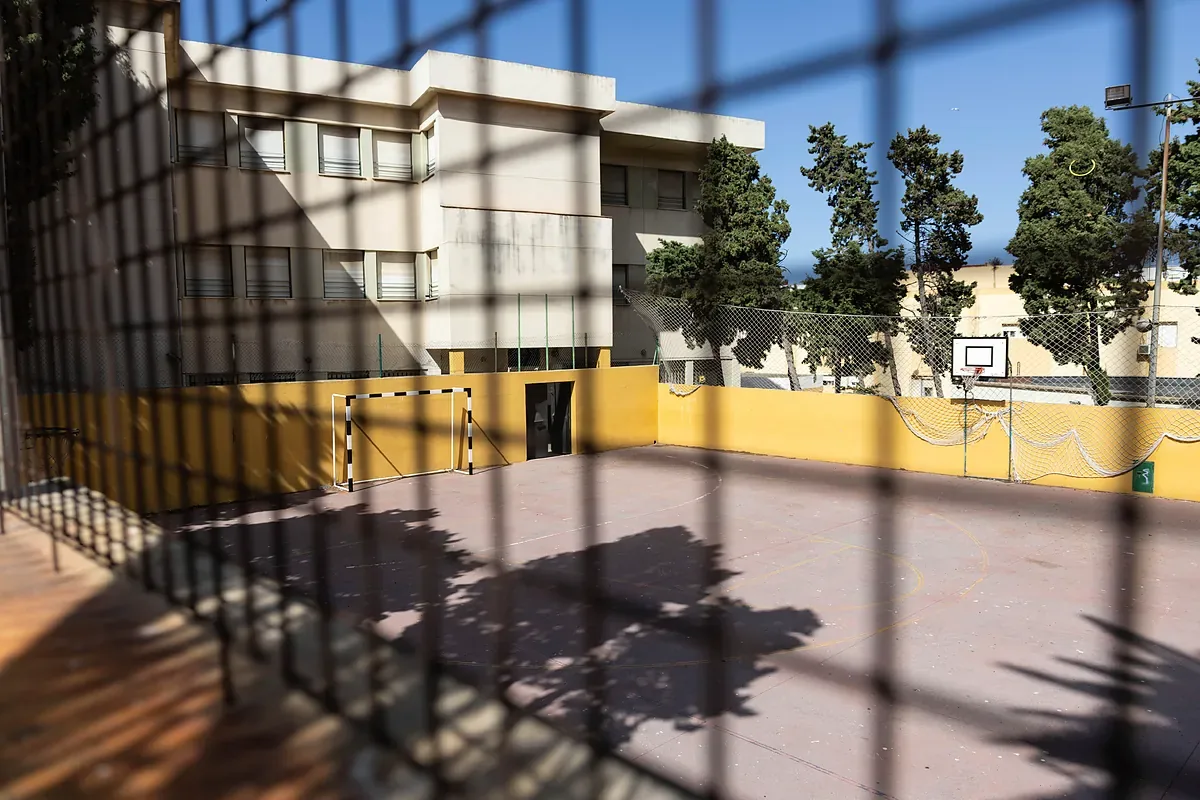
The celebration in the center, with shops open, bars full, and tourists strolling, contrasted with the situation in neighborhoods like El Príncipe, La Reina, or Los Rosales. There, neighborhood associations had set up a soccer field for about 150 women and girls who sought protection from gender-based and sexual violence.
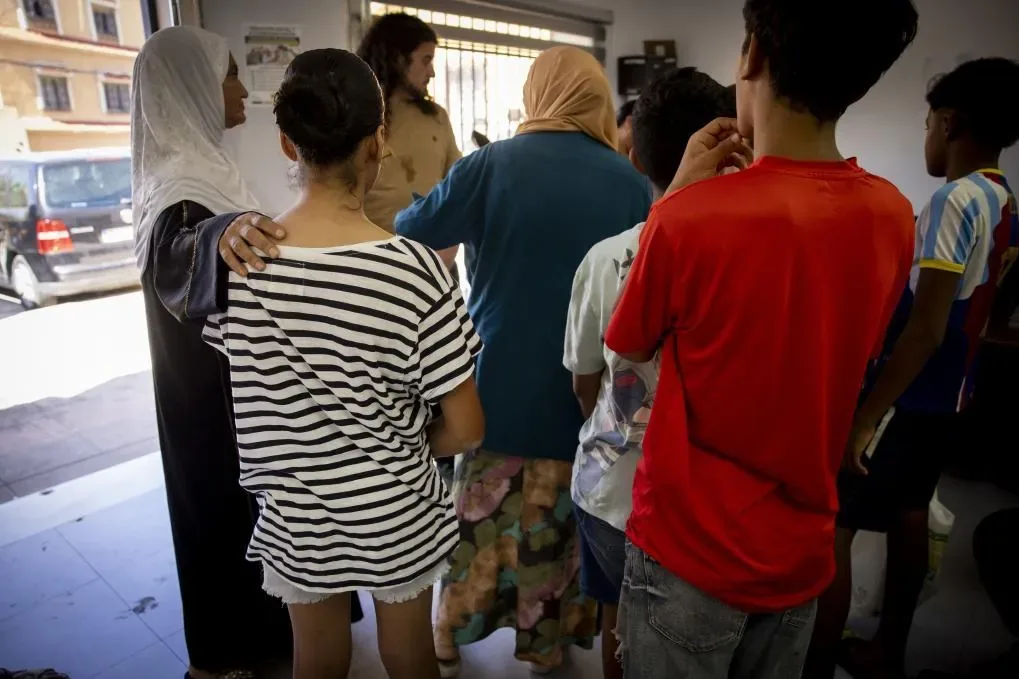
Ceuta had become a particularly dangerous place for immigrant women, teenagers, and girls who arrived without a roof over their heads. A few meters from that soccer field, a woman was crying inconsolably at the home of Sabah, a neighbor who has transformed her house into a soup kitchen, storage, and makeshift shelter.
The woman had crossed the border accompanied by her daughter. According to her account, “a man initially offered to host them in his house.” He seemed like a good Samaritan, but then “he tried to abuse” the minor. When the mother confronted him, “the man hit her and expelled them,” Sabah recounts.
Similar testimonies followed in El Príncipe. Rajaa, a grandmother from the neighborhood, took in Yuli, a teenager from Agadir, during the night after hearing cries for help at three in the morning outside her house. At first, she thought it was a fight, but her daughter warned her that “several men were abusing a girl.”
“I ran out of the house and started shouting at those sons of bitches,” Rajaa recalls. “They were five adult men, between 30 and 35 years old, known in the neighborhood.” Surprised by the woman’s intervention, the men “ran away because they thought she was recording them with her phone.”
The teenager spent the night at this neighbor’s house, who recounts what happened to EL MUNDO with helplessness: “We stopped a patrol car but they didn’t pay any attention to us.” At times she interrupts the story to hug the minor tightly and kiss her head. The girl remains hunched over and in an obvious state of shock. In a mix of Spanish and Dariya, Rajaa tries to comfort her: “I am not going to leave you. Now you are my daughter. You have me and, besides, you have a [new] sister,” she repeated referring to her own daughter, already an adult, while holding her tightly.
After what happened, the neighbor managed to get in touch with the teenager’s mother in Agadir. However, she received a surprising response: “I prefer you keep her. I want to live my life,” she reportedly replied. “The woman is a prostitute and totally neglects her daughter. It’s all horrible and inhuman,” Rajaa says, increasingly nervous and overwhelmed by the situation. Like other neighbors from Ceuta’s Muslim communities, she blames what happened on “the sons of bitches of the king of Morocco, Trump, and Netanyahu,” whom she accuses of “trafficking people.”
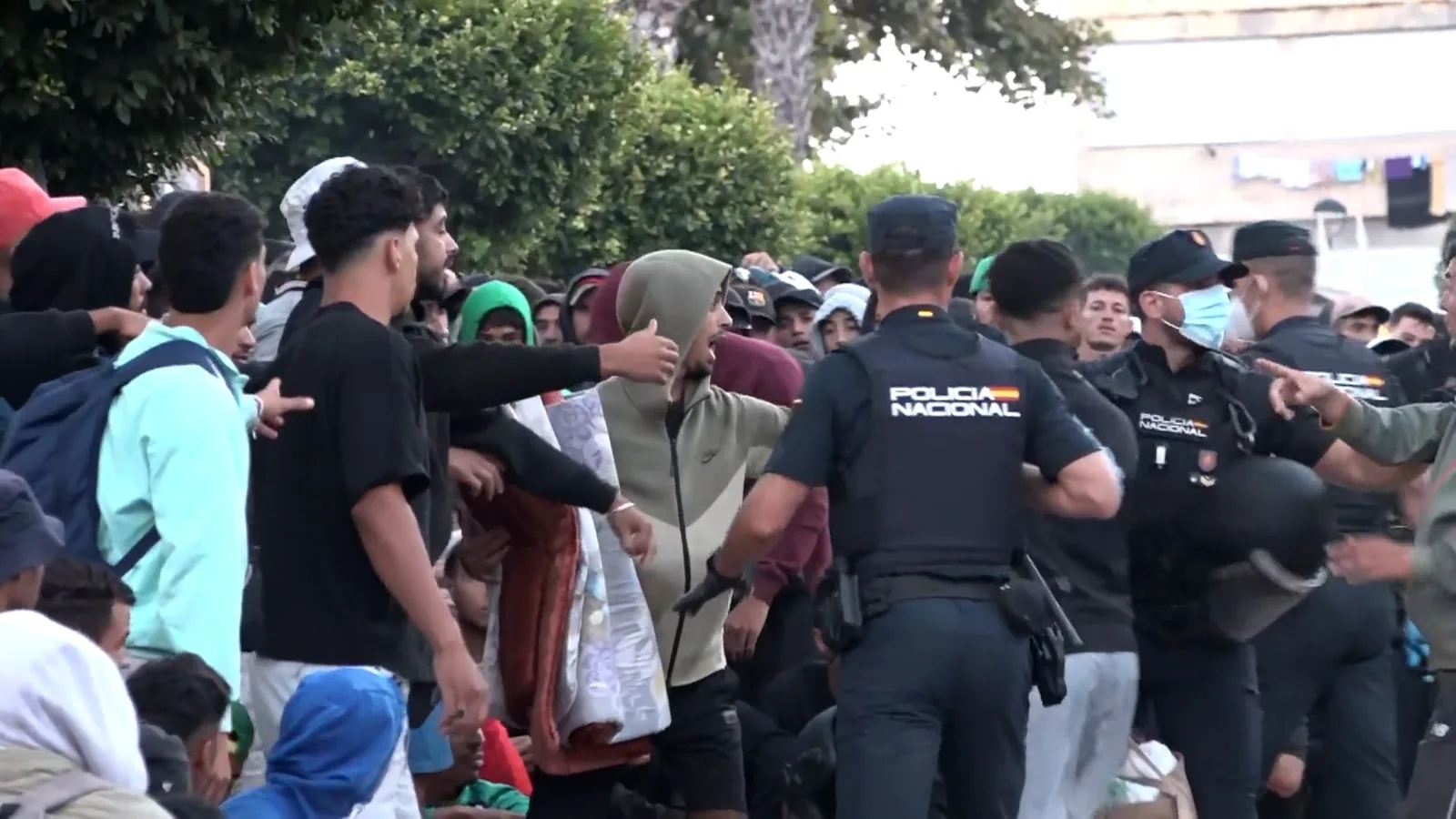
While Rajaa recounted what happened from El Príncipe, the apparent normality of the center was disrupted on Thursday afternoon by lines of minors in front of police stations. They arrived accompanied by volunteers, members of neighborhood associations, and workers from humanitarian organizations to be registered and try to find accommodation.
The Minister of Youth and Childhood, Sira Rego, had reminded days earlier that the law requires minors to be transferred to the Peninsula within 15 days from the time of registration. However, the presence of thousands of unaccompanied minors in the city was slowing the process. Near the church of El Príncipe, groups of girls continued wandering back and forth looking for a safe place to stay and medical care.
“I need to apply for asylum. I have a serious illness, scoliosis, and I need surgery,” one of them explained while asking journalists about the procedures to request international protection.
During his meeting on Thursday with King Felipe VI at the Marivent palace, Juan Jesús Vivas stated that the city “has not returned to normal.” The description fit better in some areas of the city than others. Since midweek, shops in the center were open, people were living their lives in the streets without incident, and on the eve of the procession, bars and nightclubs took advantage of the local holiday.
Finally, the third Ceuta stretched along the beaches. There, the immigrants, mostly sub-Saharan, slept next to bonfires and around the mosque built with stones, sticks, and bottles. They also took advantage of the presence of journalists to ask how they could apply for asylum or international protection.
Among them were people from Sudan, Mali, Palestine, Algeria, and Yemen. Besides a roof and food, they demanded information: an explanation about the procedures they should follow to “regularize, request protection, and be able to work.” “We think Spain is the best country in the world to migrate to. We believe Spain will live up to it. That is why we remain calm, but we need someone to tell us what we can do because we have been like this on the beach for a week,” a young Malian explained in French while pointing to the bonfires.
The young man insisted that among those sleeping on the sand were people with higher education. “Spain says it needs workers and here there are engineers, psychologists, and people who have studied at university and have a master’s degree,” he assured.
Meanwhile, near the Plaza de África, several municipal officers ordered a group of young people to leave the central area.
One of them stood still for a few seconds not knowing where to go when an officer snapped at him: “The border is that way.”
Read more King Felipe VI should not be pushed to act as a tightrope walker in Ceuta