







New setback within Renfe, this time in the Madrid Cercanías services: sources from the railway sector inform this media that three trains of the 453 model, the newly launched units from the Stadler brand, have been “suddenly withdrawn from commercial service” after one of the trains was left “at 50% brake“. In addition, they report incidents in the communication systems (switch) between the train cars.
Read more The Data Protection Agency detects the first possible attack carried out by an AI agent in Spain
In total, besides the affected one, two other trains would have been withdrawn as a precaution. Renfe neither confirms nor denies the figure, nor the reasons for the workshop visit of these vehicles. They downplay the matter: “Being in the workshop does not mean they have been withdrawn from circulation. It only means that inspections and improvements are being carried out to get them ready,” which are the usual procedures “that we carry out when a train enters service,” and which now take place at the best time, before the progressive introduction of the rest of the Stadler train package and especially, to mention adjustments and improvements to the manufacturers.
“Impossible so soon,” reject the same railway sources, who also specify that the incident has “direct safety implications since it cannot operate under normal conditions with half the brake available”.
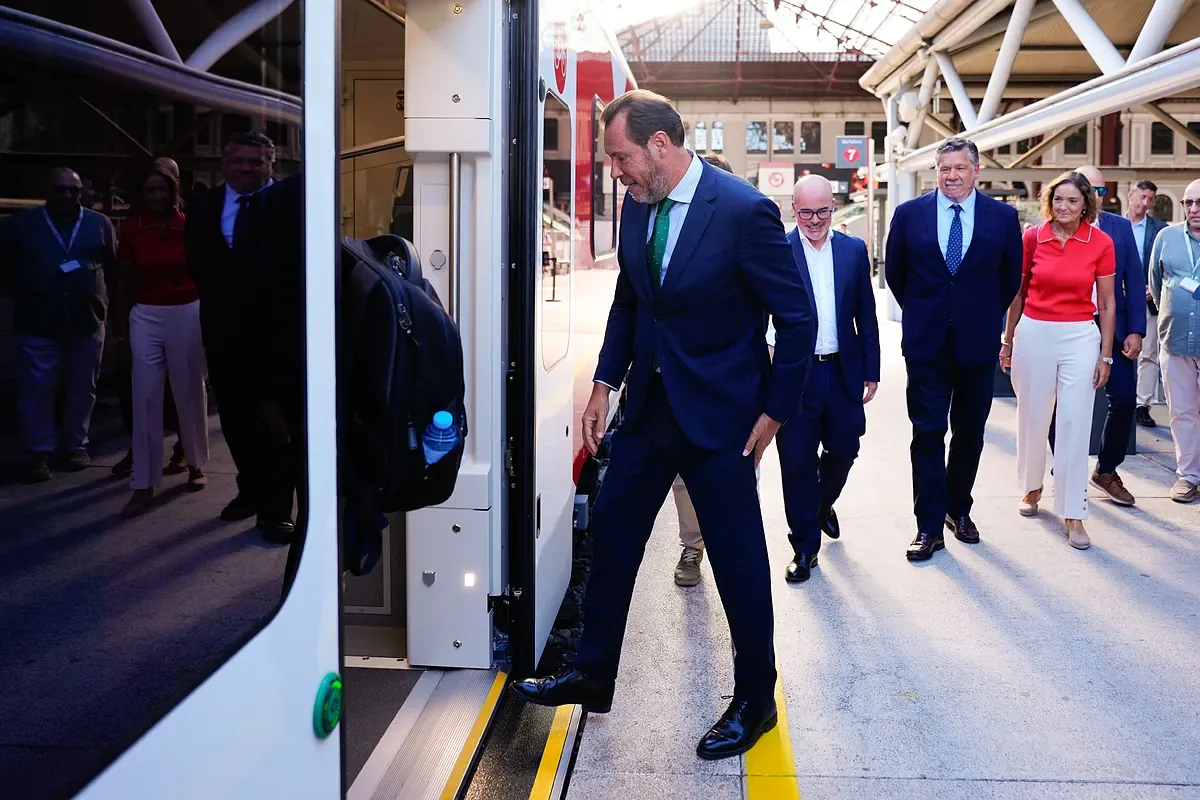
The withdrawal and workshop visit took place last Thursday night. That is, September 10. The trains were launched on August 31 with the presence of the Minister of Transport, Óscar Puente, who then stated that “this train is the future, with the qualities and characteristics that Madrid needed”. According to data collected by Europa Press, they were incorporated into the C-7 Cercanías line after having passed the relevant approval, commercial simulations, and tests under different conditions. A third unit joined on the 31st of the same month. With all this, they have been operating for less than 15 days.
“The incorporation of the new Stadler trains continues to develop as planned and represents a step forward in the modernization of the Cercanías fleet,” Renfe maintains. “To improve performance, accessibility, comfort, and the travel experience of our passengers,” is their official message.
Something that does not seem to be fulfilled for everyone, since from the drivers’ side they describe a process with interruptions, with “service tests, stopping and starting at each station, at each entry signal, some points are uphill and others downhill, opening and closing doors…”.
“With all new trains, a normal operation break-in is done and it is seen if there are issues that need to be adjusted and improved, such as software updates,” they continue detailing from Renfe. “The new Stadler trains provide service normally and, as with the rest of the fleet, they are subject to the usual maintenance procedures, supervision, technical verifications, and routine inspections“.
In total, 79 trains of this model are expected to circulate through the Spanish capital, although in 2026 only 16 convoys will arrive. The cost of the vehicle package was 1.306 billion euros, according to Europa Press.
Renfe Statement
Hours after the publication of this news on EL MUNDO’s website, Renfe sent an official statement reiterating that the workshop visit of its Cercanías trains is part of “the usual process of tuning the new trains to identify improvement opportunities and does not mean, in any case, their withdrawal from circulation“.
“Renfe works with the manufacturer Stadler to incorporate these adjustments, which will not only be added to the units already in service but also to the new trains that will be progressively delivered in the coming months,” the state company continues. “Renfe expects that the units currently completing this process will rejoin service in the coming days once the mentioned verifications are completed”.
Among the improvements and adjustments are “software updates and adjustments in different train systems, such as braking signaling and passenger information”. And they clarify that they are in contact with the manufacturer Stadler to incorporate these adjustments into the new units, which will be delivered “progressively in the coming months”.
Talgo on Valencia-Madrid
The Cercanías service is not the last service that has caused problems for Renfe in recent weeks. Last Friday, the state company was forced to withdraw several S106 trains from the Madrid-Valencia high-speed line after pressure from unions, who denounced the insecurity of these trains due to incidents in their bogies – which are the mechanical set of wheels and axles on which the train cars rest while running -. These same incidents had already forced the withdrawal of the same models on the Madrid-Barcelona route.
According to Cadena SER, the company agreed to replace the S106 in three Avlo services and four AVE services due to the impact on the journeys caused by the speed reduction voluntarily executed by some drivers on these services, citing safety problems.
On the other hand, Renfe has already communicated that it does not have replacement parts for these models from the Talgo company, to which it “maintains its demand to intensify technical analyses, determine the origin of the detected incidents, and complete a definitive response as soon as possible”.