








Companies like Repsol, whose business rises or falls depending on a raw material as volatile as crude oil, are used to reacting to unexpected plot twists. Now, the energy company has had to apply that same logic to its renewable business. In one year, the multinational has gone from celebrating the launch of the most powerful wind farm in its portfolio to recording an accounting hole of almost 300 million euros for this asset.
Read more Shooting with three fatalities in Isla Cristina: «I have the scare stuck in my body»
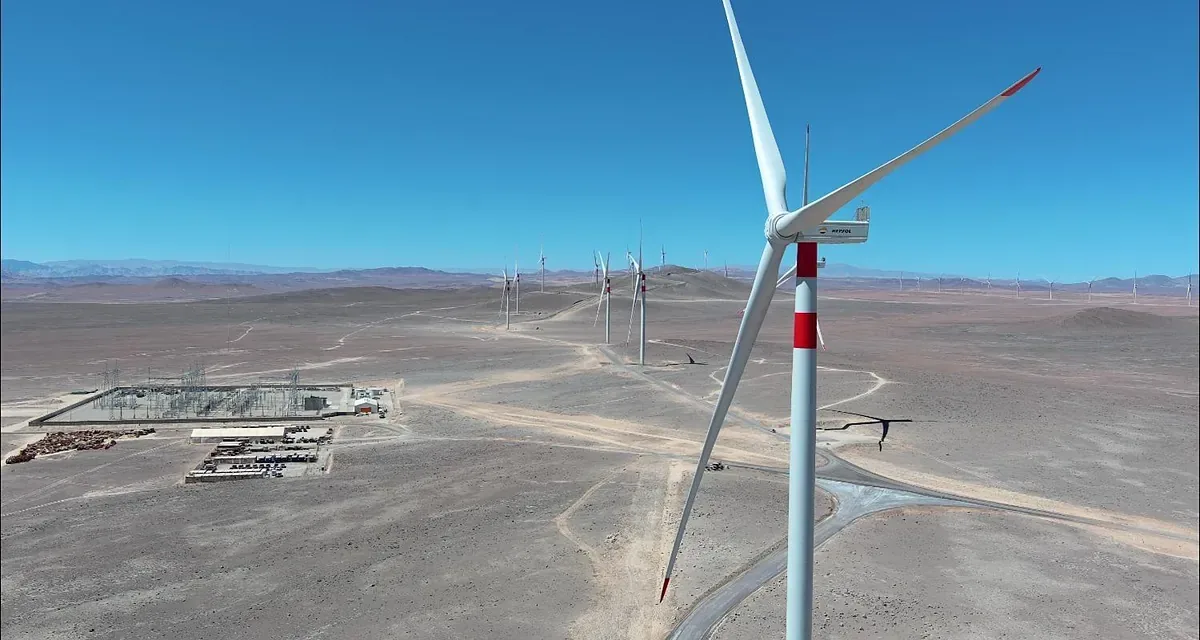
The Antofagasta project in Chile was designed to produce the equivalent of the consumption of 220,000 households in the country. But, for reasons beyond the company’s control, it is operating at half capacity. The Chilean power grid is so saturated that it cannot absorb the electricity coming from its wind turbines, which has disrupted the original business plan.
“After its entry into commercial production, cash flow forecasts for the project have been revised due to the structural congestion situation in the grid, which is causing high levels of production restrictions,” the company states in its semi-annual report.
In many countries that have experienced a rapid and massive deployment of renewables, mainly photovoltaic, technical restrictions are skyrocketing. That is, generators are being ordered to stop because the grid cannot absorb their electricity. There is more energy than demand, and consequently, spills increase, as the sector jargon calls wasted electricity.
Spain, for example, wasted three times more clean energy in the first half of 2026 than the previous year, according to the consultancy Aurora. In Chile, spills are out of control. In the first two months of 2026, the figure doubled compared to a year earlier. More than 40% of that electricity lost in the Andean country is concentrated precisely in Antofagasta, the region where Repsol’s wind farm is located.
Read more «Go back to your country»: a Ceuta journalist attacked during a protest over Elma Saiz’s visit
The oil company explains that spills are affecting “particularly the northern area,” where congestion has worsened, “mainly due to the increase in renewable generation.” The underlying problem is that the Chilean grid is not prepared to transport all the green energy generated in the northern area to the central zone, where demand is concentrated. Repsol has admitted that the situation shows no signs of reversing.
Phase two, at a dead end
Chile is a central market in Repsol’s green strategy. It entered the country in 2020 through Ibereólica, a Spanish renewables group that already had projects in the Andean territory. Both formed a joint venture (Repsol Ibereólica Renovables Chile). In 2023, the company led by Josu Jon Imaz decided to break that mold with the Antofagasta wind farm and acquired 100% of the asset by buying from its partner the part it did not control. This project was the first developed entirely by Repsol in Chile.
The total investment associated with this wind giant was estimated at around 680 million euros, although the plan included two phases. Repsol disbursed 400 million euros in the first phase, with an installed capacity of 364 MW, which began operating in April last year.
The group planned a second phase of another 450 MW, as well as complementing the turbines with batteries to maximize profitability. Today, all of that is at a dead end. “It has been agreed with local authorities (…) the temporary suspension of the development of phase II,” Repsol admits, which has recorded a value impairment of 293 million in its books.