



“All those who entered irregularly, whether minors or adults, must return to Morocco. It is the only way. There is no other route.” This is the message that the Popular Party has insisted on this Monday, somewhat comparable to what Vox defends and, at the same time, not far from what the Government has been proclaiming in recent days after the crisis in Ceuta. However, although the Interior Minister, Fernando Grande-Marlaska, already clarified last week that this return will not actually apply to “all” migrants remaining in the city, the main opposition party does maintain that this is possible: that all minors can return with their parents or Moroccan authorities and that there is no room for asylum concessions.
The PP has focused on this second point in the last week, after the president of Ceuta, Juan Jesús Vivas, requested last Thursday to suspend asylum concessions. Génova not only supports this claim but also argues that it is not appropriate to grant international protection to migrants who arrived in Ceuta because Morocco – the country through which they accessed Spain – is considered a “safe country” in the European Union. Therefore, according to the PP, there is no justification for not being able to make them return.
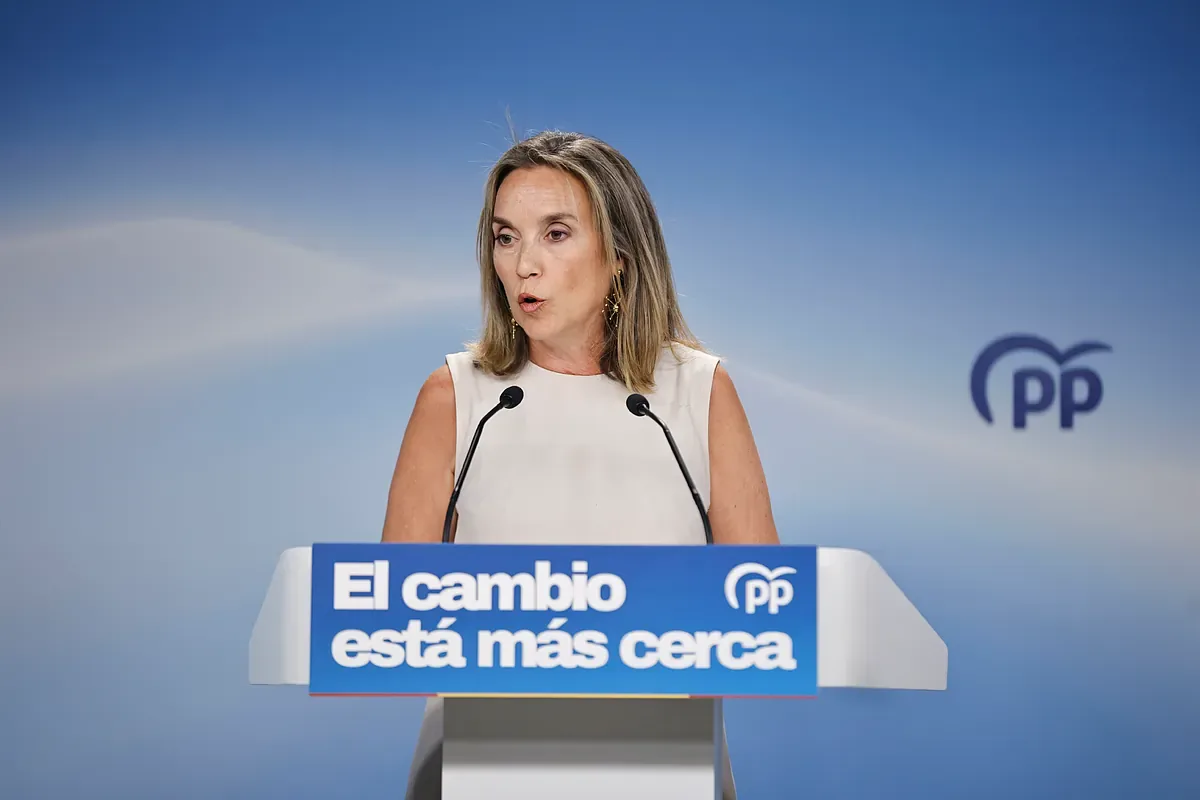
“Since mid-June, the consideration of Morocco as a safe country has come into effect,” said the PP’s Deputy Secretary for Institutional Regeneration, Cuca Gamarra, this Monday, “and that means there is no capacity to process asylum applications, but rather they must be denied, and therefore they must return to their country.”
Gamarra was referring to the decision made in the European Parliament that defines Morocco as a “safe country for its own nationals,” which, according to the European Pact on Migration and Asylum, allows for the acceleration of the processing of international protection applications submitted by Moroccan immigrants.
Those whose asylum applications are accepted have the right to remain in Spain, and while the request is being processed, migrants cannot be returned, which is why the return process continues to be delayed in Ceuta.
Read more Morocco advances in its military and technological alliance with the US amid the Ceuta crisis
That is why the PP calls for applying European regulations to speed up the processing of Moroccan applications, and under this argument, the party also demands that all be denied, even though European regulations state that there are cases of citizens from “safe countries” who can apply for asylum if a fear of persecution is justified. In any case, moreover, hundreds of migrants of sub-Saharan origin remain in Ceuta to whom the Moroccan ‘exception’ provided for in European legislation would not apply.
Secondly, regarding the migrant minors still in Ceuta – at least 1898 -, the PP considers that, since “they have been claimed by their own country of origin” – Morocco demands their return -, “they are not abandoned”. Furthermore, Gamarra pointed out that “there are bilateral agreements in force between Spain and Morocco to be able to articulate these mechanisms legally and diplomatically so that the children can be returned,” either to return with their families or “under the protection of the mechanisms their country has.”
Although the bilateral agreements between Spain and Morocco signed in 2007 include this possibility of return, Spanish legislation takes precedence, as the Supreme Court stated in a 2024 ruling. Therefore, before returning any child, a very protective procedure must be followed, listening to the child and gathering reports from the Prosecutor’s Office and child services. The procedure is very protective, and it is expected that, under this, many children will ultimately remain in Spain.
Read more Vivas will go to the Judiciary for the Government’s «passivity» in the Ceuta crisis