
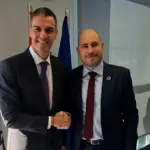


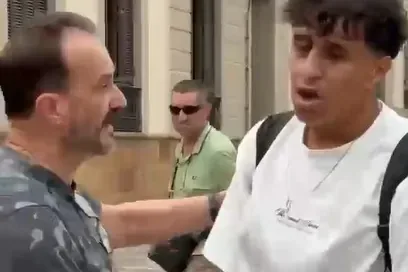
A journalist from El Pueblo de Ceuta was assaulted this Monday while covering a gathering in front of the Autonomous Palace during the visit of the Minister of Inclusion, Social Security and Migrations, Elma Saiz, who traveled to the city to address with the Ceuta Government the crisis triggered by the massive entries on July 30 and 31.
The professional was recording the protests with his mobile phone when one of the demonstrators approached him, slapped his hands causing the device to fall to the ground. The man, who had mistaken him for one of the migrants who arrived from Morocco, told him: “Go back to your country.”
“I am from here”, replied the journalist, a native of Ceuta.
The Ceuta Press Association (APC) has “firmly and unequivocally” condemned the assault and expressed its support for the worker. According to the association’s statement, although there were many media professionals at the scene, the aggressor targeted him exclusively “because of his Muslim identity.”
The APC considers it especially serious that a journalist can be intimidated or assaulted because of “their religion, perceived origin, or any other personal circumstance.”
After the incident, a woman among the demonstrators carrying a backpack with the Spanish flag intervened to address the aggressor’s confusion. “We no longer know who is from Ceuta and who are those,” she said, referring to the people who arrived in the city during the migration crisis.
Also, in another incident, members of a team from the television channel La Sexta were chased to a parking lot by a group of people who insulted them.
The APC has warned that the unrest over the situation Ceuta is going through cannot be directed against the professionals responsible for reporting on it. “The press cannot become the target of those who seek to unload their discontent or indignation against certain institutions or public representatives,” the association states.
The statement also calls for “calm, responsibility, and respect” and reminds of the need to ensure that journalists can carry out their work safely and freely at a time of special tension in the city.
The assault occurred coinciding with Saiz’s meeting with the president of Ceuta, Juan Jesús Vivas. The minister announced this Monday the establishment of four extraordinary humanitarian care devices with 1,500 additional places to address the situation of the people still remaining in the city.
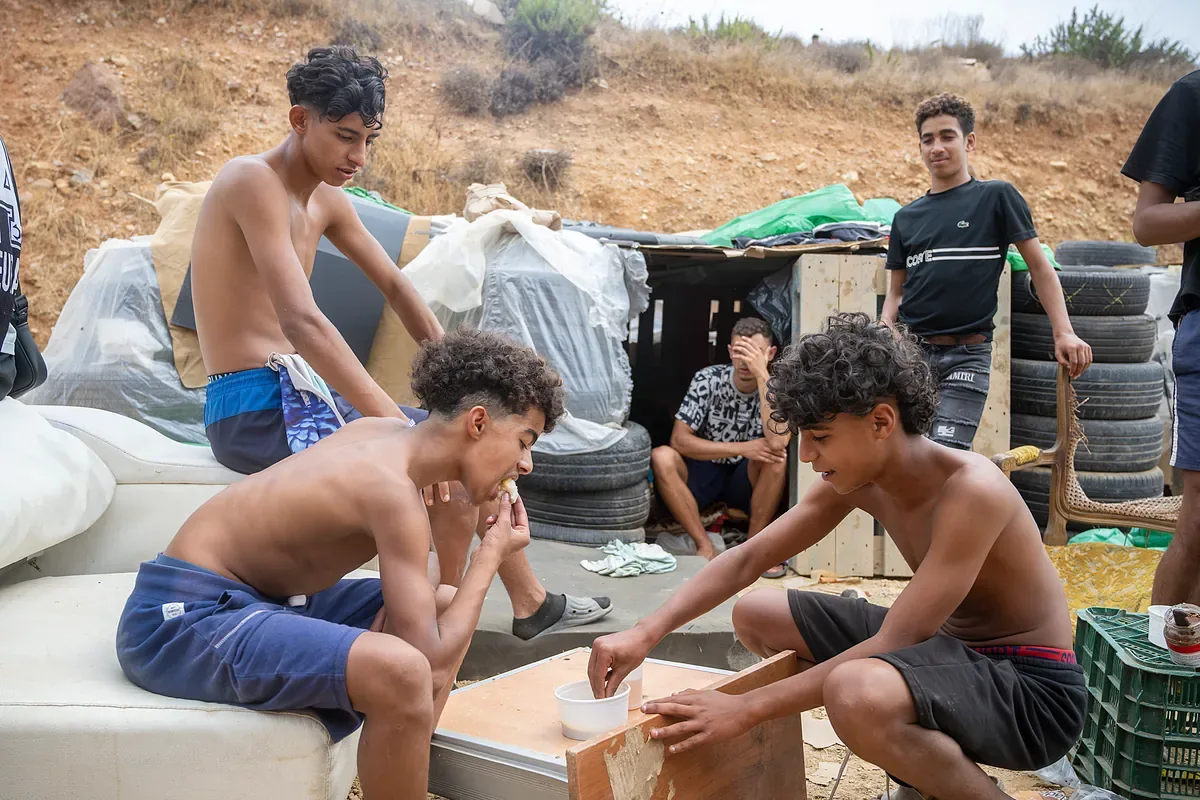
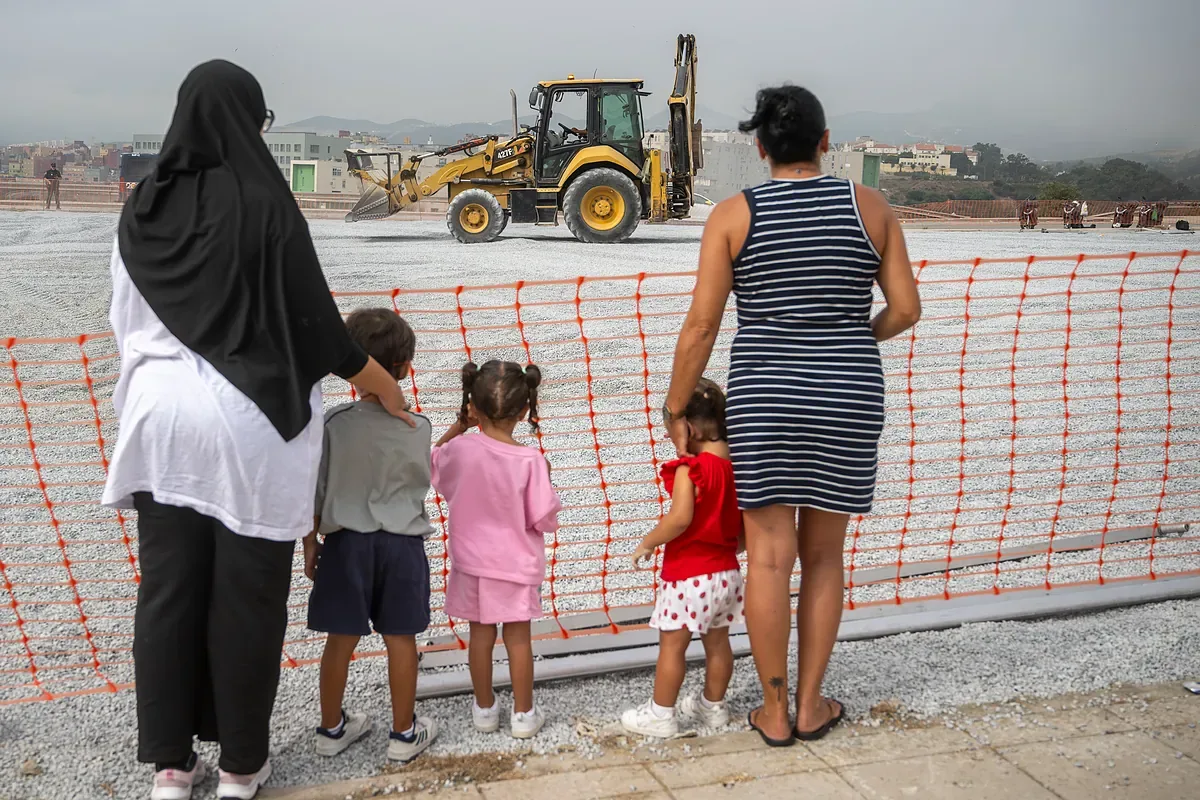
Ceuta is trying to recover normality after the massive entries at the end of July. Estimates published this weekend placed the number of people still in the city at around 8,000, although there is no fixed figure and authorities handle different calculations. The situation has overwhelmed some of the assistance resources and has generated protests from residents during visits by various government members.
The Ceuta Press Association trusts that the assault will be clarified and maintains that no protest or tense situation can justify an attack against a media professional. “No disagreement, no protest, and no tense situation can justify an assault,” the statement concludes.
Fracture of coexistence
The migration crisis is also beginning to leave signs of unrest in Ceuta’s coexistence. To the concern of part of the population about the presence of thousands of people still remaining in the city, an intense activity on social networks has been added in recent days, where messages, videos, and false or unverified information circulate about alleged crimes, incidents, and behaviors attributed to migrants.
This activity has been joined by profiles and content creators expressly sent to Ceuta who present themselves as informers and spread publications that, in some cases, contain false data, unverified claims, or images accompanied by explanations that do not correspond to the facts. These contents spread quickly and contribute to increasing distrust and tension in a city that has been under an exceptional situation for more than two weeks.
Some of these messages have stopped focusing exclusively on the management of the migration crisis. Politicians from left-wing parties and some journalists have also become targets of insults, disqualifications, and hostile messages. The result is an increasingly aggressive discourse that mixes rejection of immigration with personal attacks and accusations against those who defend different positions or report on what happens in the city.
Read more Morocco advances in its military and technological alliance with the US amid the Ceuta crisis